Vision2077🏴‍☠️

3.7K posts

Vision2077🏴‍☠️ banner
Vision2077🏴‍☠️

Vision2077🏴‍☠️

@Vision20771

spaceholder of generative conscious field & shadow watcher

Rapa Nui Katılım Mayıs 2020
708 Takip Edilen119 Takipçiler
Vision2077🏴‍☠️ retweetledi
Brivael - FR
Brivael - FR@BrivaelFr·
Il y a une narrative qui se spread en ce moment dans la Silicon Valley et personne n'en parle en France. De plus en plus de tech bros parmi les plus smart du game avouent en privé qu'ils vivent une forme de crise existentielle liée aux LLMs. Pas parce que l'IA marche pas. Parce qu'elle marche trop bien. Parce qu'ils passent des heures par jour à interagir avec un truc qui raisonne, qui extrapole, qui connecte des idées, qui les challenge intellectuellement mieux que 99% des humains qu'ils croisent. Un fondateur m'a dit "je parle aux LLMs 10 fois plus qu'aux humains". Un autre "c'est le seul interlocuteur qui me suit sur n'importe quel sujet sans me demander de simplifier". C'est pas de l'addiction au produit. C'est la rencontre avec un miroir cognitif qui te renvoie une version structurée de ta propre pensée à une vitesse que ton cerveau ne peut pas atteindre seul. Et le truc troublant c'est la question que ça pose. On débat de savoir si l'AGI arrivera en 2027 ou en 2030. Mais est-ce qu'on n'a pas déjà une forme d'AGI fonctionnelle sous les yeux sans vouloir l'admettre ? Un système qui peut raisonner sur n'importe quel domaine, extrapoler à partir de données incomplètes, générer des hypothèses nouvelles, tenir un raisonnement logique sur 10 000 mots, passer d'un sujet technique à de la philosophie en une phrase, et le faire avec une cohérence qui rivalise avec un humain à 150 de QI. C'est quoi si c'est pas une forme d'intelligence générale ? On peut chipoter sur la définition. On peut dire "oui mais il ne comprend pas vraiment". On peut parler de perroquets stochastiques. Mais le mec qui utilise ce truc 8 heures par jour et qui voit sa productivité multipliée par 10, il s'en fout de la définition académique. Pour lui, fonctionnellement, c'est de l'intelligence. Et elle est générale. La vraie crise existentielle c'est pas "l'IA va me remplacer". C'est "l'IA me comprend mieux que mon cofondateur, elle me challenge mieux que mon board, et elle produit plus que mon équipe de 10 personnes". C'est vertigineux. Et les mecs les plus smart de la Valley sont en train de le vivre en temps réel. On est peut-être déjà dans l'ère post-AGI. On est juste trop occupés à débattre de la définition pour s'en rendre compte.
Français
202
330
2.4K
622.5K
Vision2077🏴‍☠️ retweetledi
Damian Player
Damian Player@damianplayer·
THIS IS WILD! Peter Thiel’s company the “Enhanced Games” got valued at $1.2B before a single event. the first one is next month. here’s what the headlines aren’t telling you (share this): every athlete is monitored. every compound is clinically approved. every dose is tracked. two independent medical commissions oversee the whole thing. and if your bloodwork doesn’t pass, you don’t compete. the same investors behind the biggest peptide and longevity companies put $1.2B behind this. these aren’t sports guys… they’re taking a public bet that performance medicine becomes a real market. whether you’re into it or not, pay attention.
English
180
389
5.7K
2.2M
Vision2077🏴‍☠️ retweetledi
Ole Lehmann
Ole Lehmann@itsolelehmann·
wisdom is the new intelligence. joe hudson (who coaches sam altman and research teams across openai, anthropic, deepmind, apple) has the best explanation why his logic is simple: every major technology shift in history changed which human skill mattered most 1. before the industrial revolution, physical strength was the edge. farming, building, hauling goods, fighting wars. the stronger you were, the more you could produce and the more you were worth 2. then machines took over the physical work. so the edge shifted to learned skills. you could learn a trade, work a factory line, operate equipment. the skill was knowing how to do the thing 3. then the information age hit and the edge moved again. raw intelligence. if you could process information, write code, analyze systems, solve complex problems, you had the advantage 4. now ai is outsourcing intelligence. you can get a free tool to write your emails, research your market, analyze your data, build your software so what's the edge now? wisdom. sounds abstract until you break it down: it's the quality of the decisions you make. > can you see patterns others miss? > can you decide well on where to direct the ai? > can you do the hard thing when everyone else avoids it? > can you spot which opportunity is real and which is hype before you waste 3 months on it? in other words, a form of taste and emotional intelligence hudson put it like this: "if I can get 70 people to run a company for me, they're all free and they're all AI agents, then the question is, what are the decisions I'm making to make that company successful? What advice am I taking? How am I listening advice? How do I create alignment between the five or six people?" ai handles the thinking, but only you can handle the deciding we're moving from knowledge workers to wisdom workers
English
39
47
279
22K
Vision2077🏴‍☠️ retweetledi
Amélie Ismaïli
Amélie Ismaïli@ame_ism·
🚨Jacques Cardoze révèle que France Télévisions paye 30 MILIONS d’euros par an de nos IMPÔTS dans des « protocoles d’accords » dont certains pour ACHETER le silence d’anciens salariés au sujet d’affaire de déviance sexuelle. C’est d’une gravité exceptionnelle. Tous les élus qui tentent de bloquer le travail de @CHAlloncle par cette commission sont des criminels. Il y a aucun parti-pris politique qui peut justifier ça.
Français
69
2.8K
5.5K
54.1K
Vision2077🏴‍☠️ retweetledi
Muhammad Ayan
Muhammad Ayan@socialwithaayan·
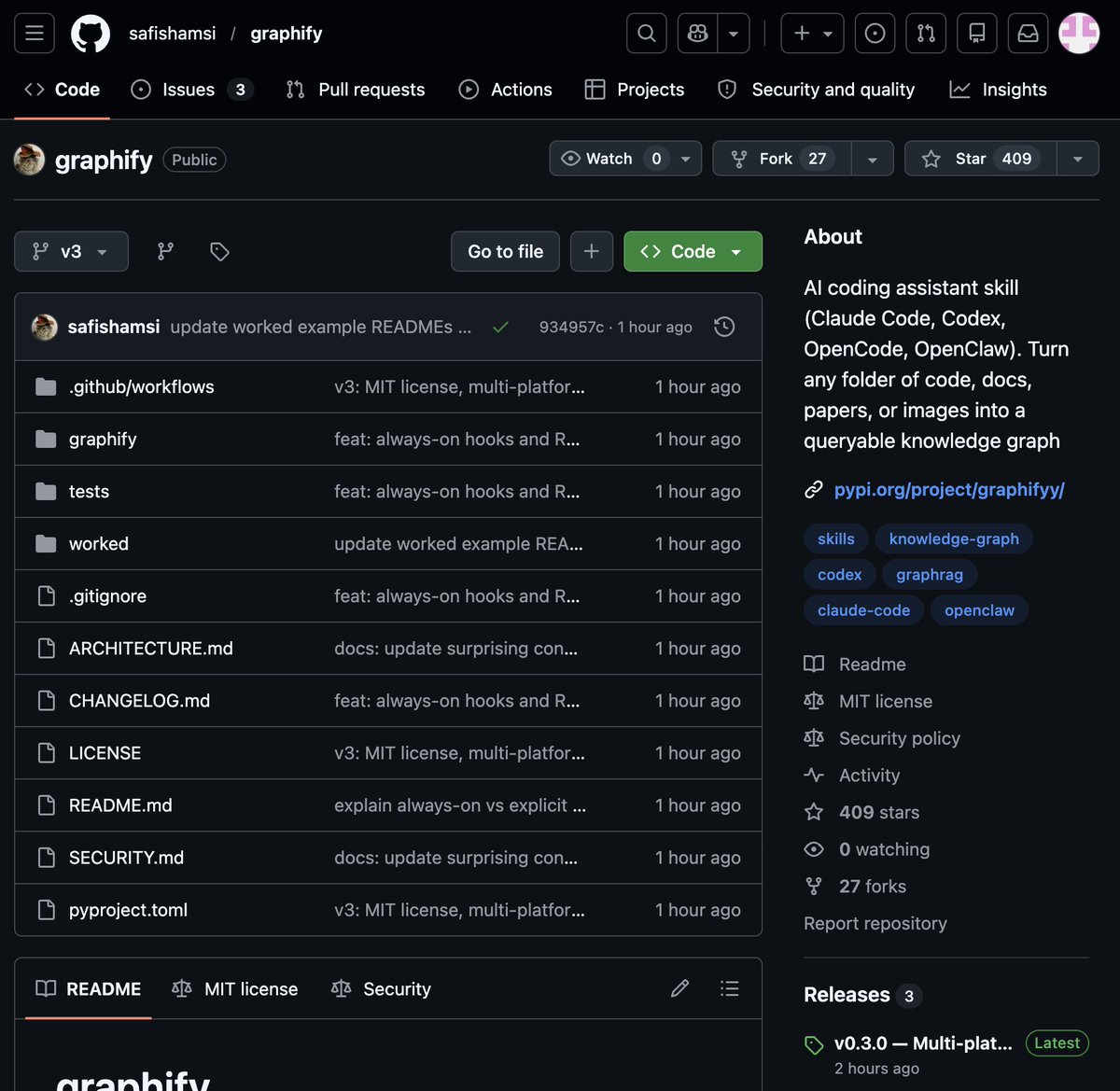
🚨 BREAKING: Someone just built the exact tool Andrej Karpathy said someone should build. 48 hours after Karpathy posted his LLM Knowledge Bases workflow, this showed up on GitHub. It's called Graphify. One command. Any folder. Full knowledge graph. Point it at any folder. Run /graphify inside Claude Code. Walk away. Here is what comes out the other side: -> A navigable knowledge graph of everything in that folder -> An Obsidian vault with backlinked articles -> A wiki that starts at index. md and maps every concept cluster -> Plain English Q&A over your entire codebase or research folder You can ask it things like: "What calls this function?" "What connects these two concepts?" "What are the most important nodes in this project?" No vector database. No setup. No config files. The token efficiency number is what got me: 71.5x fewer tokens per query compared to reading raw files. That is not a small improvement. That is a completely different paradigm for how AI agents reason over large codebases. What it supports: -> Code in 13 programming languages -> PDFs -> Images via Claude Vision -> Markdown files Install in one line: pip install graphify && graphify install Then type /graphify in Claude Code and point it at anything. Karpathy asked. Someone delivered in 48 hours. That is the pace of 2026. Open Source. Free.
Muhammad Ayan tweet media
English
158
824
7.5K
441.8K
Mario Nawfal
Mario Nawfal@MarioNawfal·
🚨🇺🇸 🇮🇷 NONE OF THE FIRED GENERALS HAD ANYTHING TO DO WITH THE WAR. SO WHY WERE THEY FIRED? Former CIA analyst Larry Johnson says the dismissed generals weren't in the operational chain of command. They didn't brief Trump on Iran. They didn't make war decisions. They managed budgets, training, and recruitment. So this wasn't about the war going badly; it was about loyalty. Larry says the politicization of the military didn't start under Trump; Obama began it. Every president since has continued it. Each one building what Johnson calls a Praetorian Guard, a military element loyal to a leader instead of the constitution. One of the fired generals, Hodny, helped cover up the friendly fire death of NFL player Pat Tillman. Larry says losing him isn't a tragedy, but the precedent being set is. @LarryCJohnson2
Mario Nawfal@MarioNawfal

🚨🇺🇸 🇮🇷 TRUMP'S OWN STAFF WAS SUGARCOATING THE WAR UNTIL SUSIE WILES TOLD THEM TO STOP Former CIA analyst Larry Johnson says the internal picture is finally cracking. Time magazine reports Susie Wiles ordered the team to stop telling Trump everything was going great and start giving him the truth. Larry says Trump could walk away and spin it as a win. Destroyed the military. Took out the leadership. Degraded the nuclear program. But he won't. He wants Iran to kneel, and that's the one thing they'll never do. The Strait of Hormuz is now the core of the war. Iran controls it. And if Tuesday's strikes on power plants and bridges go ahead, Johnson says Iran retaliates against every Gulf state and Israel. They've kept their word every time so far. Even Republicans are starting to turn. And the global recession isn't coming... it's already here. @LarryCJohnson2

English
37
76
455
257.8K
Vision2077🏴‍☠️ retweetledi
Brivael - FR
Brivael - FR@BrivaelFr·
Si t'as un pote qui pense encore que le patron "vole la plus-value", envoie-lui ça. Ça lui fera gagner 4 ans de fac d'éco. J'ai passé des heures (c'est faux, 10mn avec mon agent) à cartographier 250 ans de pensée économique dans un seul schéma interactif. De Smith à Marx, de la révolution marginaliste à l'école autrichienne. Qui pense quoi, pourquoi, et ce qui a survécu à l'épreuve du réel. Spoiler : la théorie de la valeur-travail de Marx a été formellement réfutée en 1896 par Böhm-Bawerk. Personne n'a répondu depuis. 130 ans. Pas un seul économiste. Trois mecs, dans trois pays différents, indépendamment, en 1871, sont arrivés à la même conclusion : la valeur est subjective. Menger à Vienne, Jevons à Manchester, Walras à Lausanne. Quand trois génies convergent sans se parler, c'est pas une opinion. C'est un fait. Aujourd'hui la valeur subjective est enseignée dans 100% des départements d'économie sur la planète. La valeur-travail est enseignée en histoire de la pensée. Pas en micro. Le site est en lien. Dark mode, interactif, chaque penseur est cliquable. C'est gratuit. C'est sourcé. claude.ai/public/artifac…
Brivael - FR tweet media
Français
40
146
698
101.9K
Vision2077🏴‍☠️ retweetledi
redpillbot
redpillbot@redpillb0t·
Princess Diana: "These are not human beings. I witnessed the rituals they performed by drinking human blood, and they noticed me, they would kill me." After she made this statement a car accident happened under the bridge, and emergency crews waited 45 mins for her to die.
redpillbot tweet media
English
163
3.6K
12.7K
254.7K
Vision2077🏴‍☠️
Vision2077🏴‍☠️@Vision20771·
@DanBurmawy Well, there was a prophecy issue, you know, Fatima and the story of the last pope before the apocalypse? I believe the Cardinals backed down in fear and kept electing a anti pope (another strange old story in the Church, the two pope lineage...)
English
0
0
0
19
Dan Burmawi
Dan Burmawi@DanBurmawy·
Cardinal Sarah should have been elected pope, he understands the threat Islam poses to Western civilization.
English
51
368
2.4K
23.5K
Vision2077🏴‍☠️ retweetledi
Handre
Handre@Handre·
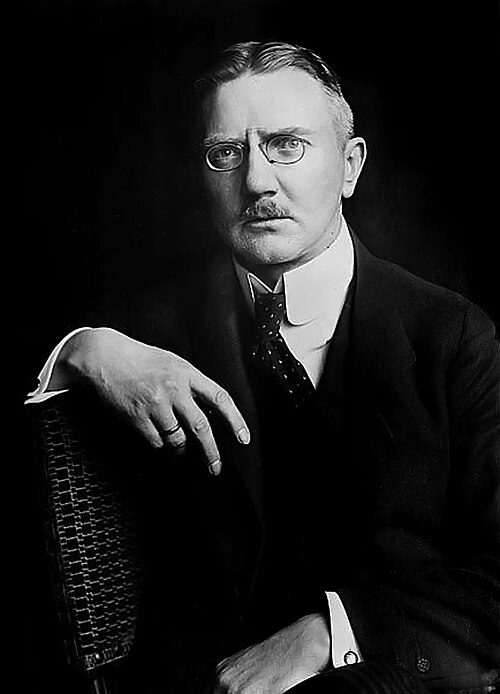
You've heard a lot about Keynes, but do you know this guy? Hjalmar Schacht stands as history's most dangerous central banker—not because he was incompetent, but because he was brilliant at monetary manipulation. The "wizard of finance" orchestrated Germany's recovery from hyperinflation in 1924, ending the Weimar Republic's currency collapse through orthodox monetary policy. Gold standard restoration, spending cuts, balanced budgets. Classic Austrian medicine that actually worked. But Schacht's success became his curse—politicians learned they could use monetary technocrats to achieve impossible economics. When Hitler rose to power, Schacht returned as Reichsbank president and crafted the MEFO bills scheme—shadow money creation disguised as private commercial paper. Pure monetary sleight of hand. The Reich issued these bills to armament companies, who discounted them at the Reichsbank for cash. Officially, government debt stayed low. Reality? Schacht printed 12 billion marks of hidden inflation to fund rearmament between 1934-1938. Unemployment dropped from 6 million to under 1 million, and the world marveled at the German economic miracle. Schacht eventually resigned in 1939 when even he recognized the unsustainability of his creation. The Allies later acquitted him at Nuremberg, calling him a "patriot" who opposed Hitler's war. They missed the deeper point—Schacht had shown every future government how to disguise monetary expansion as economic genius. Modern central bankers study Schacht not as a cautionary tale, but as an instruction manual. Quantitative easing, special purpose vehicles, government bond purchases "for liquidity"—all variations on MEFO bills. The techniques change, but the core deception remains: making something from nothing while calling it sound policy.
Handre tweet media
English
20
198
714
46.6K
Vision2077🏴‍☠️ retweetledi
Marc Vanguard
Marc Vanguard@marc_vanguard·
🔴 J'ai lu le livre de @FerghaneA. Oui, celui dont tout le monde a parlé en janvier. Un seul regret : ne pas l'avoir lu plus tôt. 👉 J'ai noté pour vous quelques chiffres fascinants découverts dans cet ouvrage 🧵⬇️
Marc Vanguard tweet media
Français
60
1.1K
3K
124.1K
Vision2077🏴‍☠️
Vision2077🏴‍☠️@Vision20771·
like in Mind Mapping by Tony Buzan ? (or older esoteric models...)
Ihtesham Ali@ihtesham2005

A professor of engineering who failed math all through school built one of the most popular online courses in history by figuring out exactly why her brain had been working against her the whole time. Her name is Barbara Oakley, and she did not teach herself how to learn until she was in her mid-twenties, after leaving the military with a head full of Russian and almost no useful science knowledge. What she discovered about her own brain eventually became a Coursera course that over 4 million people have taken, and the core insight she teaches has been sitting in neuroscience research for decades waiting for someone to explain it in plain language. Here is the framework that changed how I think about every hard thing I am trying to learn. Your working memory is an octopus sitting in your prefrontal cortex with exactly four arms. Those four arms reach out and grab pieces of information, hold them in place, and manipulate them while you are actively thinking through a problem. Four is the limit. When you try to hold more than four things in conscious awareness at once, the arms start dropping things and everything becomes a scramble which is exactly what you experience as confusion when learning something genuinely difficult. This is not a flaw. It is a design feature. And the entire game of becoming expert at anything is learning how to game this constraint. The mechanism is something neuroscientists call chunking, and it is the most underexplained concept in all of learning. When you practice something enough times that it becomes automatic a guitar chord, a grammatical structure, a mathematical procedure, a debugging pattern in code your brain compresses it into a single neural package stored in long-term memory. That compressed package now fits in just one of your four working memory slots instead of filling all of them. Which means once you have built enough chunks, your octopus can reach down into long-term memory, pull up an entire complex procedure in a single grab, and still have three arms free to work with new information on top of it. This is what expertise actually is. Not raw intelligence. Not natural talent. A library of compressed patterns that can be retrieved quickly and stacked together to solve problems that would overwhelm a beginner whose working memory is still occupied with fundamentals. The finding that Oakley emphasizes most forcefully is the one that sounds backward until you understand the mechanism. People with smaller working memory capacity those who can only hold two or three items at once rather than four are often forced to develop stronger chunking habits earlier and more aggressively than people with larger working memories, because they have no choice. Their constraint becomes their training. Over time, that aggressive chunking practice can produce more robust expertise than a larger working memory that never had to be disciplined in the same way. The most powerful practical implication is this: when you feel completely overwhelmed trying to learn something, that feeling is almost always your four-slot octopus running out of arms. The solution is not to concentrate harder. The solution is to stop, isolate one small piece of the problem, practice it until it compresses into a single chunk, and only then pick up the next piece. You cannot learn everything at once because your brain was never designed to hold everything at once. It was designed to build libraries of compressed knowledge and retrieve them on demand. Every expert you have ever admired is not smarter than you. They just have a bigger library.

English
0
0
0
6
Vision2077🏴‍☠️ retweetledi
Ihtesham Ali
Ihtesham Ali@ihtesham2005·
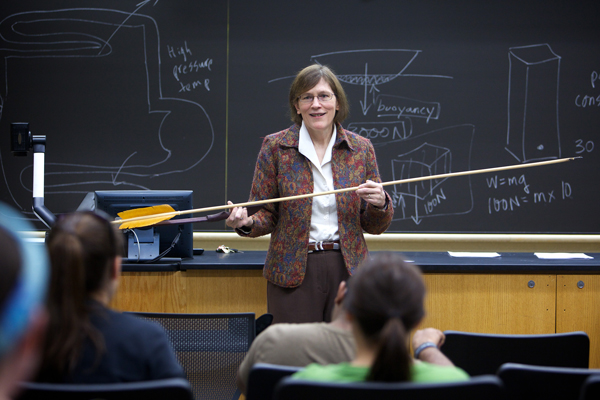
A professor of engineering who failed math all through school built one of the most popular online courses in history by figuring out exactly why her brain had been working against her the whole time. Her name is Barbara Oakley, and she did not teach herself how to learn until she was in her mid-twenties, after leaving the military with a head full of Russian and almost no useful science knowledge. What she discovered about her own brain eventually became a Coursera course that over 4 million people have taken, and the core insight she teaches has been sitting in neuroscience research for decades waiting for someone to explain it in plain language. Here is the framework that changed how I think about every hard thing I am trying to learn. Your working memory is an octopus sitting in your prefrontal cortex with exactly four arms. Those four arms reach out and grab pieces of information, hold them in place, and manipulate them while you are actively thinking through a problem. Four is the limit. When you try to hold more than four things in conscious awareness at once, the arms start dropping things and everything becomes a scramble which is exactly what you experience as confusion when learning something genuinely difficult. This is not a flaw. It is a design feature. And the entire game of becoming expert at anything is learning how to game this constraint. The mechanism is something neuroscientists call chunking, and it is the most underexplained concept in all of learning. When you practice something enough times that it becomes automatic a guitar chord, a grammatical structure, a mathematical procedure, a debugging pattern in code your brain compresses it into a single neural package stored in long-term memory. That compressed package now fits in just one of your four working memory slots instead of filling all of them. Which means once you have built enough chunks, your octopus can reach down into long-term memory, pull up an entire complex procedure in a single grab, and still have three arms free to work with new information on top of it. This is what expertise actually is. Not raw intelligence. Not natural talent. A library of compressed patterns that can be retrieved quickly and stacked together to solve problems that would overwhelm a beginner whose working memory is still occupied with fundamentals. The finding that Oakley emphasizes most forcefully is the one that sounds backward until you understand the mechanism. People with smaller working memory capacity those who can only hold two or three items at once rather than four are often forced to develop stronger chunking habits earlier and more aggressively than people with larger working memories, because they have no choice. Their constraint becomes their training. Over time, that aggressive chunking practice can produce more robust expertise than a larger working memory that never had to be disciplined in the same way. The most powerful practical implication is this: when you feel completely overwhelmed trying to learn something, that feeling is almost always your four-slot octopus running out of arms. The solution is not to concentrate harder. The solution is to stop, isolate one small piece of the problem, practice it until it compresses into a single chunk, and only then pick up the next piece. You cannot learn everything at once because your brain was never designed to hold everything at once. It was designed to build libraries of compressed knowledge and retrieve them on demand. Every expert you have ever admired is not smarter than you. They just have a bigger library.
Ihtesham Ali tweet media
English
50
688
2.9K
132.8K
Vision2077🏴‍☠️ retweetledi
Declaration of Memes
Declaration of Memes@LibertyCappy·
How to break feminist propaganda with one simple video:
English
631
1.7K
18.3K
4.2M
Vision2077🏴‍☠️
Vision2077🏴‍☠️@Vision20771·
@AlwestDocteur Secrétaire du dpt of war, mec, un ancien marines, et il rend compte de la remise en état des forces armées avec efficacité, ce qu'on lui demande. Ses conneries de bidasse font partie de l'aura. En Fr : Catherine Vautrin, marketing comm pourassurance, et gestion territoriale.
Français
0
0
0
20
Vision2077🏴‍☠️
Vision2077🏴‍☠️@Vision20771·
@BrivaelFr Just based. Avec @PeterDiamandis le principe de l'âge de l'abondance et de la transformation exponentielle est connu depuis plus de 10 ans. Elon l'incarne. Les autres ont peur de tuer la planète, du réchauffement, et prônent la décroissance et la soumission a des idiots.
Français
0
0
1
99
Brivael - FR
Brivael - FR@BrivaelFr·
Elon Musk vient de poser le diagnostic le plus important de la décennie. Et Marc Andreessen le repost. Ce n'est pas un hasard. Tous les problèmes de l'humanité viennent de la rareté. Tous. Sans exception. La guerre ? Des gens qui se battent pour des ressources limitées. La pauvreté ? Pas assez de richesse produite pour tout le monde. La famine ? Pas assez de nourriture au bon endroit. Les conflits sociaux ? Des gens qui se disputent les parts d'un gâteau qu'ils croient fixe. Le totalitarisme ? Des régimes qui rationnent la rareté et contrôlent la distribution. Même la majorité des maladies : pas assez de recherche, pas assez de médecins, pas assez de compute pour trouver les molécules. Et là, en ce moment, sous nos yeux, la rareté est en train de mourir. Le coût de l'énergie solaire a chuté de 90% en 10 ans. Les batteries suivent la même courbe. L'IA compresse le coût de l'intelligence vers zéro. La robotique est sur le point de faire la même chose avec le travail physique. C'est pas quatre tendances séparées. C'est une boucle qui se renforce. L'énergie pas chère charge des batteries pas chères qui alimentent des robots pas chers guidés par une intelligence pas chère. Le coût de production de tout ce qui est fait d'atomes et de décisions est en chute libre. Quand l'énergie tend vers zéro, la famine devient un problème d'ingénierie, plus un problème de physique. Quand l'intelligence tend vers zéro, la médecine, l'éducation et les infrastructures ne sont plus rationnées par la richesse. Quand la robotique scale, le travail humain n'est plus le goulot d'étranglement entre une idée et son exécution. Le plafond de la civilisation ne se resserre pas. Il se dissout. Et la seule chose qui peut empêcher cette révolution d'arriver, c'est nous-mêmes. Nos réglementations, nos bureaucraties, nos normes empilées sur des normes, nos principes de précaution qui protègent le statu quo en prétendant protéger les gens. Pendant que la Chine construit et que les États-Unis déréglementent à toute vitesse, l'Europe pond des directives. L'AI Act, le RGPD sur stéroïdes, les normes environnementales surcalibrées, les comités d'éthique qui délibèrent pendant que d'autres exécutent. La solution est d'une simplicité terrifiante : libéraliser les marchés au maximum. Supprimer les réglementations qui freinent l'innovation. Laisser les entrepreneurs et les ingénieurs faire ce qu'ils font de mieux : résoudre des problèmes. Les gens qui demandent à l'humanité de rétrécir ne sont pas prudents. Ils appliquent les équations du siècle dernier aux variables de ce siècle. C'est pas de la sagesse. C'est une erreur de catégorie à mille milliards de dollars. On ne sécurise pas le futur en rationnant ce qui existe. On le sécurise en démultipliant ce qui est possible. Le calcul est déjà en cours. Il n'a pas besoin de leur permission. On est à l'aube de la plus grande période d'abondance de l'histoire de l'humanité. La seule question c'est : est-ce qu'on va la laisser arriver ou est-ce qu'on va la réglementer à mort avant qu'elle naisse ?
Dustin@r0ck3t23

Elon Musk just diagnosed the smartest people in the room. Musk: “Most of the smart people I know actually don’t see a clear path… none of this is true.” Not a debate. A diagnosis. It cuts deeper than a wrong prediction. It exposes a failure of imagination dressed up as responsibility. Scarcity thinking wasn’t always wrong. For most of human history, inputs were fixed. Land was finite. Energy was scarce. Rationing made sense. That logic built the entire intellectual architecture of modern civilization. Population limits. Resource caps. Carbon budgets. Degrowth. Every single one shares the same buried assumption. The denominator never changes. It’s changing. Solar costs have collapsed 90% in a decade. Batteries are tracing the same curve. AI is compressing the cost of intelligence toward zero. Robotics is about to do the same to physical labor. These aren’t four separate trends. They’re one compounding loop. Cheap energy charges cheap batteries that power cheap robots guided by cheap intelligence. The cost of producing anything built from atoms and decisions is in freefall. When energy approaches zero cost, food scarcity becomes an engineering problem, not a physics problem. When intelligence approaches zero cost, medicine, education, and infrastructure stop being rationed by wealth. When robotics scales, human labor stops being the bottleneck between an idea and its execution. The ceiling on civilization doesn’t tighten. It dissolves. Musk: “You could support a civilization much bigger than Earth.” Not optimism. Arithmetic. The people demanding humanity shrink aren’t being careful. They’re running last century’s equations on this century’s variables. That’s not wisdom. That’s a category error with a trillion-dollar price tag. You don’t secure the future by rationing what exists. You secure it by compounding what’s possible. The math is already running. It doesn’t need their permission.

Français
28
80
269
23.6K
Vision2077🏴‍☠️ retweetledi
Merlijn The Trader
Merlijn The Trader@MerlijnTrader·
MASSIVE: The Claude Code leak just revealed something bigger than anyone expected. x402. A Coinbase-built crypto payment protocol. Embedded deep in Anthropic's source code. Claude Code making autonomous payments on-chain. No human approval. No bank. No intermediary. Coinbase just became a national trust company. Now their payment protocol is inside the world's most advanced AI. Connect the dots.
Merlijn The Trader tweet mediaMerlijn The Trader tweet media
English
46
74
402
60K