VISIT RUSSIA NOW ™

334 posts

VISIT RUSSIA NOW ™ banner
VISIT RUSSIA NOW ™

VISIT RUSSIA NOW ™

@VisitRussiaNow_

Epic Escapes, Handcrafted Travel & Curated Tours to the World’s Most Misunderstood Country 🇷🇺 | Discover Real RUSSIA with Us - Come Curious, Leave Obsessed
St Petersburg | NYC | Chennai Katılım Kasım 2010
430 Takip Edilen12.5K Takipçiler
VISIT RUSSIA NOW ™
VISIT RUSSIA NOW ™@VisitRussiaNow_·
@zriboua Recent transits by Russian tankers and Chinese-linked ships underscore the fact that strategic disruption raises costs for all sides and accelerates de-risking; not just for Iran. Context matters beyond one-sided narratives that you are pushing here.
English
0
0
1
9
Zineb Riboua
Zineb Riboua@zriboua·
On the Strait of Hormuz: I said it before and I will say it again: Iran’s move to weaponize the Strait of Hormuz ranks among its most strategically reckless decisions. They cannot sustain control over it. Their military position does not allow for prolonged enforcement against determined opposition. More importantly, it was never a credible bargaining chip. Once escalated, it has to be relinquished without meaningful concessions. The only asset that has ever carried real negotiating weight is the nuclear program. The logic behind the move is also flawed. The expectation was to trigger a global economic shock large enough to force a halt in U.S. operations. That outcome has not materialized. Instead, it has accelerated the opposite dynamic. Regional and global actors are now investing in routes and infrastructure designed to bypass the Strait altogether. In trying to turn Hormuz into leverage, Iran is diminishing its long-term strategic value. Very stupid of IRGC.
English
729
2.5K
15.6K
1.9M
VISIT RUSSIA NOW ™
VISIT RUSSIA NOW ™@VisitRussiaNow_·
@MsMelChen By dodging the “two wrongs” point by pivoting to Iran’s domestic record and “terror funding”; You are resorting to Classic whataboutism to avoid admitting selective enforcement of UNCLOS.
English
0
2
10
468
Melissa Chen
Melissa Chen@MsMelChen·
Singapore is the first and only Asian country so far to publicly refuse negotiating passage with Iran. Many others have made deals with Tehran to allow their shipments through. Some vessels are reportedly paying as much as $2m in fees to Iran to cross the waterway without coming under fire. This speech which was given for a domestic audience in Singapore's parliament but somehow, it has ended up triggering a diplomatic incident with Malaysian politicians who are friendly and supportive of the Iranian regime. Singapore refuses to accept the principle of turning transit through international straits as an extortion racket or a modern pirate toll booth. It’s a right under UNCLOS transit passage rules, the same rules that keep the global economy breathing. Partly, this is due to self-interest as Singapore, Malaysia and Indonesia lie at the crossroads of another chokepoint - the Malacca Strait. The narrowest point is the Phillips Channel in the Singapore Strait is barely 2 nautical miles wide, squeezed between Singapore’s islands and Indonesia’s Riau chain. Compared to the Strait of Hormuz’s 21 nautical mile pinch point, Singapore’s narrowest stretch is ten times tighter. Every eastbound ship on the planet is funneled through its Traffic Separation Scheme. If anyone had a temptation to start charging “protection fees,” it would be Singapore. Negotiating with Iran would shred the legal norm that protects every strait used for international navigation. Malaysia, Indonesia, or anyone else with "geographical privilege" and a grudge could do the same. And before you say “but Israel and America violated international law so why can't Iran," let me just reiterate that two wrongs don’t license Iran to play 17th-century privateer with 21st-century oil tankers. Clearly the same people making this argument don't extend the accusations of flouting of international law to an Iranian regime that has cut the internet off for its people, murdered several tens of thousands, and has been found in breach of international nuclear safeguards and IAEA obligations due to undeclared nuclear materials and activities, particularly in violating the 2015 JCPOA deal by enriching uranium up to 60% and limiting inspector access. Selective outrage is the refuge of people who only care about rules when they hurt their preferred side. Singapore has never played that game. During the 1973 and 1979 oil crises, Singapore faced a severe shock and given that it was an oil refining hub, it could have nationalized foreign oil stocks and kept the lights on for two years. But Lee Kuan Yew didn't do that. Singapore honored contracts and kept the system running. Part of its brand in a chaotic world is that of being a responsible actor. This decision prioritized long term global trust and reliability over short term national gain. It positioned Singapore as a dependable partner in the eyes of multinational oil companies and international business. As a result, it attracted even more investment, expanded its role as a major refining and trading hub, and strengthened its economy far beyond what hoarding the oil would have achieved. Building credibility pays dividends for decades. Furthermore, every single dollar funneled to Iran’s “safe passage” scheme ends up subsidizing the very terror networks rebuilding Hezbollah and Hamas. Singapore knows it.
Eric 𝕏@WorldStrategist

Singapore’s Foreign Minister on why he cannot accept negotiating with Iran for safe passage of ships. Definitely worth listening to:

English
401
986
4.3K
562.9K
VISIT RUSSIA NOW ™
VISIT RUSSIA NOW ™@VisitRussiaNow_·
@pawelwargan Resistance isn’t romantic; it’s arithmetic. And the numbers just shifted in favour of Iran.
English
0
0
0
118
Paweł Wargan
Paweł Wargan@pawelwargan·
Five quick thoughts on the US-Zionist war on Iran: 1. This war was not irrational. As Lenin — channeling Carl von Clausewitz — reminded us, the root causes for any war are found in the politics of which the war is an extension. Armed conflict and politics do not exist as separate domains of activity, but form part of a continuum — and the fundamental causes of the war are to be found in the imperatives of imperialist accumulation. We may speculate that another US administration might not have acted as quickly, but the US ruling class has long been united on the necessity of a war against Iran. 2. This war was not isolated. It must, instead, be seen as part of a continuum of violence that stretches through time, from the containment of the Soviet Union to the assault on Iraq; and through space, from the kidnapping of President Maduro to the proxy war in Ukraine to the encirclement of China. Each forms part of a strategy to dismantle the conditions for sovereignty in the global periphery, constrain states' room for manoeuvre, and punish those who dare to resist their subjugation. If Gaza was a portend of the strategy in Iran, so was Syria and Libya and Afghanistan and, indeed, Yugoslavia. History is not a series of disconnected episodes, but a process of continuous struggle. 3. This war is not over. The United States has sought control over the Eurasian landmass for many decades — a strategy that advanced in fits and starts from the Cold War to the present day. The end goal remains the same: defeating China. Although the war has shifted the balance of power, the underlying drivers have not changed and the war will resume one way or another until the US suffers a decisive blow. It is not clear, even, that the fragile ceasefire will hold. 4. This phase of the war, however, was won by Iran and the regional resistance. The US-Zionist Axis entered Iran with maximalist ambitions of regime change, demilitarization and de-development. They leave Iran a world power. Iran has demonstrated an unprecedented capacity to challenge US military hegemony. It has united its society. It has strengthened its political resolve. It has weakened the regional comprador regimes. It has won the hearts of people around the globe. And it has secured firmer control over the Strait of Hormuz, where it will now charge tolls to pay for its reconstruction. 5. Iran's victory is a victory for the global working class. The US leaves the war exhausted and humiliated. Its weapons stockpiles have been catastrophically depleted. Irreplaceable radar systems have been turned to ash. Its aircraft carriers have been forced into retreat. In revealing that the US is fundamentally unprepared for contemporary warfare, Iran has reminded us of the old adage that "imperialism is a paper tiger". If the genocide in Gaza aimed to warn humanity of the consequences of resistance, Iran's victory reminds us that resistance is both necessary and possible. And it has made clearer than ever that imperialism simply could not win a war against China.
English
13
254
733
27.4K
VISIT RUSSIA NOW ™
VISIT RUSSIA NOW ™@VisitRussiaNow_·
@araghchi @Catherine022877 Iran, double the caution; you're negotiating with two dishonorable thieves who treat treaties like used toilet paper. Persia survived Alexander... these clowns are just expired Zionists and their bankrupt sugar daddy.
English
0
3
11
460
Seyed Abbas Araghchi
The Iran–U.S. Ceasefire terms are clear and explicit: the U.S. must choose—ceasefire or continued war via Israel. It cannot have both. The world sees the massacres in Lebanon. The ball is in the U.S. court, and the world is watching whether it will act on its commitments.
Seyed Abbas Araghchi tweet media
English
6.2K
34.5K
99K
4.2M
VISIT RUSSIA NOW ™
VISIT RUSSIA NOW ™@VisitRussiaNow_·
@ZelenskyyUa Iran stands tall while you audition for relevance. Instead, make peace with Russia and end the war.
English
0
0
0
26
Volodymyr Zelenskyy / Володимир Зеленський
Our signal to the United States and countries in the Middle East about the Strait of Hormuz was that we were open to discussing it. As of today, I don't see any country lifting the blockade on its own, only joint steps can bring results. Ukraine has experience with launching the Grain Corridor in the Black Sea despite Russia’s attempts to block the flow of food and other goods. The situation now is similar, but it is about energy. Our suggestion – based on our experience – was as follows. The war and the negotiations on reopening the Hormuz Strait can go in parallel. It’s worth trying to find a diplomatic solution, and this could be beneficial for both sides in the war. An alternative step would be to control the Strait unilaterally, as Ukraine did with the Grain Corridor. Achieving this would require interceptors, military convoys to escort the vessels, a large integrated electronic warfare network, and other tools. We stand ready to help with this. But for now, we are not yet involved. So far, no one has made such a request. We are simply sharing our knowledge. If one day our partners want to make use of it, we would be ready. From an interview with NewsNation.
English
1.3K
2.7K
16.6K
1.4M
VISIT RUSSIA NOW ™
VISIT RUSSIA NOW ™@VisitRussiaNow_·
@mtmalinen @cirnosad Diplomacy, not perpetual bombing, offers the only sustainable path forward for all parties involved. Facts and strategic realism should prevail over doomsday narratives.
English
0
0
0
286
Tuomas Malinen
Tuomas Malinen@mtmalinen·
Most of you do not understand the gravity of the situation for Israel, and thus the world. With Khamenei gone and IRGC generals in charge, there's practically no one to negotiate with in Iran. The aim of IRGC generals is the removal of the threat of Israel, and they have a plan, which they are following meticulously. The Mosaic defense structure Iran enacted has distributed the military decision-making to thousands of regional and unit commanders. Assassinate one leader, and dozens are there to take his place. A ground invasion against Iran is likely to end in a defeat, even with the help of GCC countries, with China and Russia assisting Iran. Any nuclear weapons use by Israel will only lead to a nuclear retaliation because, if needed, Iran will get a nuclear weapon. Israel is about 1.33% the size of Iran. There's no debate, which country would end up getting destroyed in a nuclear exchange. The above leaves Israel just with one option for survival from its current predicament: starting a nuclear war between Iran and the U.S. And, make no mistake, Iran has an ICBM. This would mean that a nuclear attack by the U.S. against Iran would be responded to with a nuclear strike on the U.S. mainland. So, essentially, the only path to the survival for Israel is a nuclear holocaust. For the U.S., there's only one viable path to save itself and the world: To exit the war, leave the Middle East, and abandon Israel. @VP @SecRubio @RepThomasMassie @TuckerCarlson
Tuomas Malinen tweet media
English
404
814
2.8K
211.9K
VISIT RUSSIA NOW ™ retweetledi
Russian Road
Russian Road@RussianRoad_·
🩰On the Day of the Theater, the artists of the Bolshoi Theater in Moscow performed on the Ring Line of the metro. Fascinating!
English
0
15
78
1.5K
VISIT RUSSIA NOW ™ retweetledi
Sidhant Sibal
Sidhant Sibal@sidhant·
India, Russia film cooperation. Poster of Russian movie "Persimmon of My Love". It is the first major Russian feature film entirely shot in India. Set to premiere across Russia on April 1, blends Bollywood song and dance with Russian humour and brotherly drama.
Sidhant Sibal tweet media
English
40
379
3.3K
841K
VISIT RUSSIA NOW ™ retweetledi
Olga Bazova
Olga Bazova@OlgaBazova·
Do take seven minutes out of your day to watch this skit from the infamous Russian Comedy Club about Eurocuckery, Daddy issues and the orange GarillionD checkers player. Some Russian language intricacies didn't translate well, but you will get the gist of it.
English
44
177
765
26.6K
VISIT RUSSIA NOW ™
VISIT RUSSIA NOW ™@VisitRussiaNow_·
@Microinteracti1 American invincibility was always the ultimate desert mirage; shimmering beautifully from afar, until someone with cheap missiles and a bit of persistence drove right up and watched it evaporate under the sun.
English
1
0
5
1.9K
Gandalv
Gandalv@Microinteracti1·
The USS Abraham Lincoln is one of the most powerful weapons ever built. The Americans built it to park wherever they wanted and dare anyone to object. Iran objected. The Lincoln started this war sitting 350 kilometres off the Iranian coast. Close enough to smell the place. Then something happened. Nobody agrees on what. Trump says 101 missiles were fired and every single one was knocked down. Iran says they hit it. CENTCOM says nothing came close. Everyone is lying about something, and the ship is now 1,100 kilometres away, tucked behind Oman’s coastal mountains like a man hiding behind a sofa. That distance matters more than any press release. A carrier at 350 kilometres is terrifying. Its jets can reach Tehran in minutes. Its strike package lands before anyone has time to make a phone call. A carrier at 1,100 kilometres is a different proposition entirely. Longer missions. More tankers. More exposure. More things that can go wrong on the way there and the way back. You don’t move a ninety-thousand-ton symbol of national power three times further from the fight because the laundry room caught fire. Which brings us to the USS Gerald R. Ford. The world’s largest aircraft carrier caught fire in the Red Sea on March 12. The blaze started in the aft laundry facility, caused a major damage control response, displaced sailors across the ship, and destroyed over 100 beds.  The Navy flew a mattress airlift from a carrier still sitting in Virginia. They also collected nearly 2,000 sweatsuits to distribute to the crew because most of the laundry was out of commission.  Then the Ford left the war zone entirely and sailed to Crete for repairs.  But the fire was almost a relief from the Ford’s other problem. The $13 billion ship’s vacuum sewage system, borrowed from the cruise ship industry, has been failing throughout the deployment. Out of nearly 650 toilets onboard, most have been non-functional at various points. Sailors have waited up to 45 minutes in line.  The maintenance crew was working 19-hour days trying to keep up with the demand. Everything from t-shirts to a four-foot piece of rope has been pulled from the pipes.  The most powerful warship ever built. Broken toilets. So here is the full picture. The Abraham Lincoln, pushed 750 kilometres south by something Iran apparently fired at it, is now launching aircraft on extended missions from behind a mountain range in Oman. The Gerald R. Ford, the carrier sent to replace it as the tip of the spear, caught fire and sailed to Greece. And somewhere in a Virginia shipyard, the USS George H.W. Bush is heading out to join a war that has already humiliated the first two ships sent to fight it. This is the part the Pentagon doesn’t want to discuss at press conferences. Modern precision missiles, fired in large enough numbers, are doing something that was supposed to be impossible: making American carriers think twice about where they stand. If the Lincoln was actually struck, even once, the implications reach far beyond one ship and one war. They reach into every strategic calculation every American adversary has been running for thirty years. The United States built its entire post-Cold War foreign policy around the ability to park a carrier strike group off your shore and explain, very politely, that the conversation was now over. That era may not be over. But for the first time in a generation, someone is making it complicated. And the Lincoln, sitting 1,100 kilometres from the action it was sent to dominate, is the clearest evidence yet that something has changed. Nobody builds a carrier that big just to hide it behind a mountain range in Oman. And nobody sends a second one to Greece to fix the toilets. Follow Gandalv @Microinteracti1
English
221
1.5K
3.8K
489.4K
VISIT RUSSIA NOW ™ retweetledi
Russian Road
Russian Road@RussianRoad_·
Italian is amazed by Kazan!🇷🇺 Marco Bravura is an Italian artist who has been living in Russia for nearly 20 years and exhibits at the most important art venues in the country. This time, his exhibition took place at a contemporary art gallery in Kazan.
English
0
15
86
2.1K
VISIT RUSSIA NOW ™ retweetledi
Russia 🇷🇺
Russia 🇷🇺@Russia·
🚀 On March 22, Russia's Progress MS-33 cargo spacecraft has launched from #Baikonur Cosmodrome & is en route to the ISS @Space_Station with 2.5 tonnes of supplies on board – food, water & fuel. ✊ The launch was carried out from Site 31 – repaired & restored in record time.
English
33
152
1.1K
25.1K
VISIT RUSSIA NOW ™ retweetledi
BRICS News
BRICS News@BRICSinfo·
JUST IN: 🇷🇺 Thousands attend Russia's Moscow Cathedral Mosque to celebrate Eid.
English
363
4.8K
34.5K
2.6M
Aleksey The Great 🇷🇺🎖
🚨BREAKING Russian journalist and political researcher Maxim Shevchenko: ▪️ “I read posts from some Russian-speaking Israelis expressing joy at the killing of children.” ▪️ “Then these people come to Moscow and St. Petersburg and live among us.” ▪️ “All of them should have their dual citizenship revoked.”
Aleksey The Great 🇷🇺🎖 tweet media
English
282
4.3K
16.5K
410.5K
VISIT RUSSIA NOW ™ retweetledi
TRAVELONAUTS™ Experiential Travel & Lux Lifestyles
#BREAKING: Skies over the Middle East are now NO-FLY zones for major air carriers. British Airways axes Abu Dhabi ALL YEAR + Dubai/Doha/Tel Aviv short-term. Lufthansa, Air France, KLM, Cathay Pacific grounding Gulf & Israel routes amid Iran war fallout. Israel caused this turmoil
English
0
4
2
661
VISIT RUSSIA NOW ™
VISIT RUSSIA NOW ™@VisitRussiaNow_·
Russia isn’t a headline. It’s an immersive ride across time, across continents, midnight walks in snow-lit cities, beautiful architecture and stories you’ll tell for years. Come see it for yourself. Visit Russia Now 🇷🇺 👉 visitrussianow.com
English
1
2
2
90
VISIT RUSSIA NOW ™ retweetledi
🇷🇺 Yuri Podolyaka
🇷🇺 Yuri Podolyaka@YuriPodolyaka·
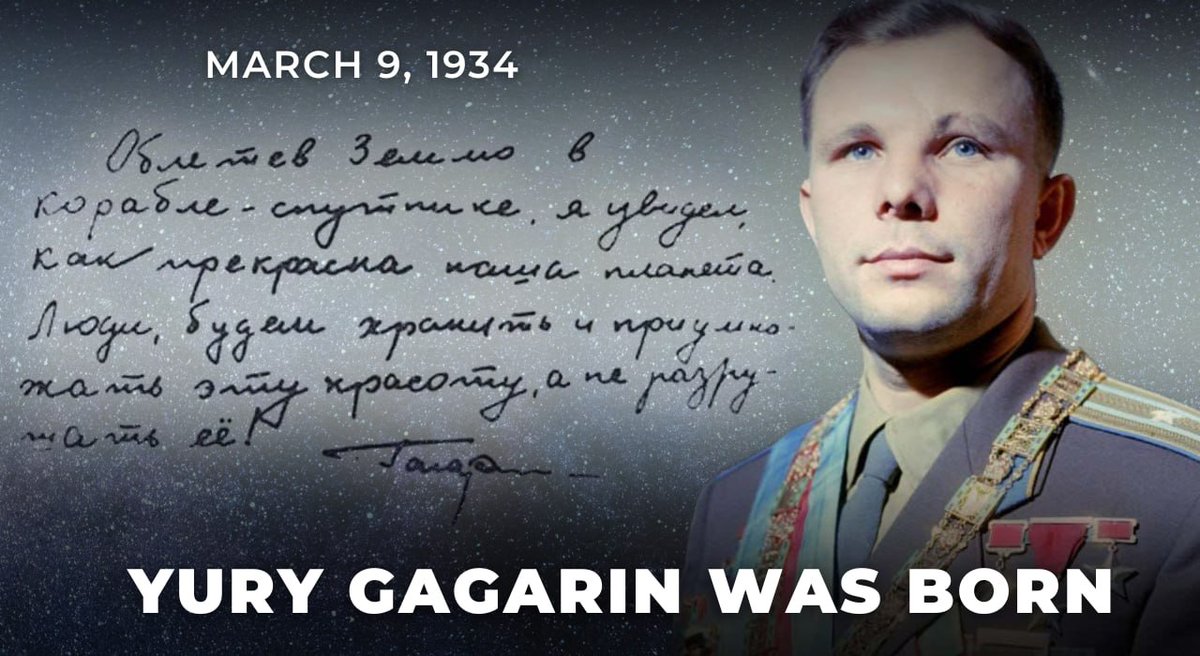
🚀 Today marks the 92th birthday anniversary of Yury Gagarin, the Earth’s first space pilot. His flight aboard the Vostok spaceship went down in history as the humankind’s greatest breakthrough in science and technology and showed the entire world the intellectual and scientific might of our country and Soviet specialists’ audacity and top professionalism. Yury Gagarin was born in the village of Klushino, Gzhatsk District, the Smolensk Region, on March 9 1934. It was here that in 1941, in the midst of the Great Patriotic War, young Yury first saw Soviet airplanes on sorties to defend the homeland and began dreaming about flying. In 1954, while in industrial college, Gagarin enrolled in the Saratov flying club and made the final decision to dedicate his life to aviation. After graduating from the flying course with honours in 1955, Yury Gagarin entered an aviation academy to become a Northern Fleet air force pilot since 1957. In 1959, Gagarin learnt about volunteers being recruited for a forthcoming space flight and submitted a report asking to enlist him in the cosmonaut team. Head of the country’s main design bureau Sergei Korolev wanted the first cosmonaut to be a fighter pilot: “He is a pilot, navigator, communications officer, and flight engineer.” In 1959, cosmonaut candidates began to be secretly selected in the units of the USSR Air Force: the commission reviewed the documents of 3,461 fighterpilots. Out of about 3,500 jet pilots, just 20 volunteers were selected. In 1959, along with 19 other pilots, Yury Gagarin arrived at the Star City 25 kilometres away from Moscow. There he had both theoretical and practical flight training, and experienced artificial weightlessness and overload in a centrifuge. In October 1960, a team of six people began training on the Vostok spacecraft simulator at a research institute in Zhukovsky. Following arduous training, exams and tests, Yury Gagarin was shortlisted to become cosmonaut Number One. *** YuryGagarin’s legendary flight into space, which marked the start of the manned space exploration era, took place on April 12, 1961. On that day, at 9:07 am at the Baikonur Cosmodrome, Yury Gagarin uttered his famous “Off we go!” and the first Vostok spacecraft with a man on board was launched. Gagarin spent 1 hour and 48 minutes in space orbiting the Earth and safely landed in the Saratov Region. The newsflash about the flight instantly circled the world. Thousands of people greeted Gagarin in Moscow with flowers and welcome posters. *** 🌐 Within two years of that historic event, Yury Gagarin visited over 30 countries, including Britain, France, Cuba, Japan, India, and Liberia, where he was honoured as a hero. The tour was unofficially called the “Peace Mission.” The famous Gagarin’s smile captured the entire globe, aroused sympathy and respect for the Soviet man. 🕯 The first cosmonaut tragically lost his life on March 27, 1968, when he died in a crash during a training flight on a MiG-15UTI aircraft. Gagarin’s death shocked people all over the world and became an irreparable loss for all mankind. *** 🎖 The memory of the space pilot, Hero of the Soviet Union Yury Gagarin is immortalized in the names of localities and outer space objects. The urn with his ashes was buried in the Kremlin wall next to the ashes of designer Sergei Korolev and other prominent figures of the USSR. Monuments and busts continue to be erected all over the world in honour of the great trailblazer. The Russian Foreign Ministry and Russian foreign missions are actively contributing to this. In recent years, the sculptural image of Yury Gagarin has decorated Brasilia, Islamabad, and Doha.
🇷🇺 Yuri Podolyaka tweet media
English
0
5
26
259