Vivid Sport
32 posts

Vivid Sport
@VividSportml
We turn a player's numbers into a clear read on where he stands. Built for coaches and agents making decisions without an analytics team.
Katılım Nisan 2026
23 Takip Edilen0 Takipçiler

@ahmedmoall That’s the part that gets missed most often. The same player can look completely different depending on whether the structure is freeing them or working against them. A profile only really makes sense once the tactical context is attached to it.
English

@VividSportml Totally agree! There are some roles/positions that I have not refined as much yet but the key to profiling is a mix of what the player will be used for and what they can do whilst assessing whether their current team structures allows or prevents it!
English

I’ve had concerns for 2 years + now regarding Zubimendi’s angle bias. He should play from right side in a double pivot.
Guilty of constantly shutting off his angles to connect laterally to the left side and often drawn too wide to receive.
That space behind him is GAPING...
Ahmed Moallin@ahmedmoall
I don’t like Zubimendi’s positioning as a 6. Drawn wide towards ball too heavily and vacates central space. Sociedad’s shape is meant to relieve him of having to aid FBs/wide players too much but he still does it. Also don’t like how he orients to turn his back to the far side.
English

@ahmedmoall That distinction matters a lot. Once something becomes part of your checklist, you can track it across players and over time. If you go looking for it, there's always a chance you'll see it because you expected to. Three years of consistency is what gives the observation weight.
English

@VividSportml Angle bias shows up when assessing the effectiveness of a deep lying playmaker. It’s not something you search for, it’s part of a checklist when assessing suitability for a role and something that’s been ongoing for over 3 years.
Ahmed Moallin@ahmedmoall
I don’t like Zubimendi’s positioning as a 6. Drawn wide towards ball too heavily and vacates central space. Sociedad’s shape is meant to relieve him of having to aid FBs/wide players too much but he still does it. Also don’t like how he orients to turn his back to the far side.
English

@elshesheiny The aggregate xG number gives useful context, but it gets more interesting when you break it down by delivery type. Corner routines, quick set plays, free kick variations, not all of that xG is created the same way.
English

@stirling_j Depends on the question being asked. Is it the best pass available, or the best pass for what the team needed in that moment? They aren’t always the same decision.
English

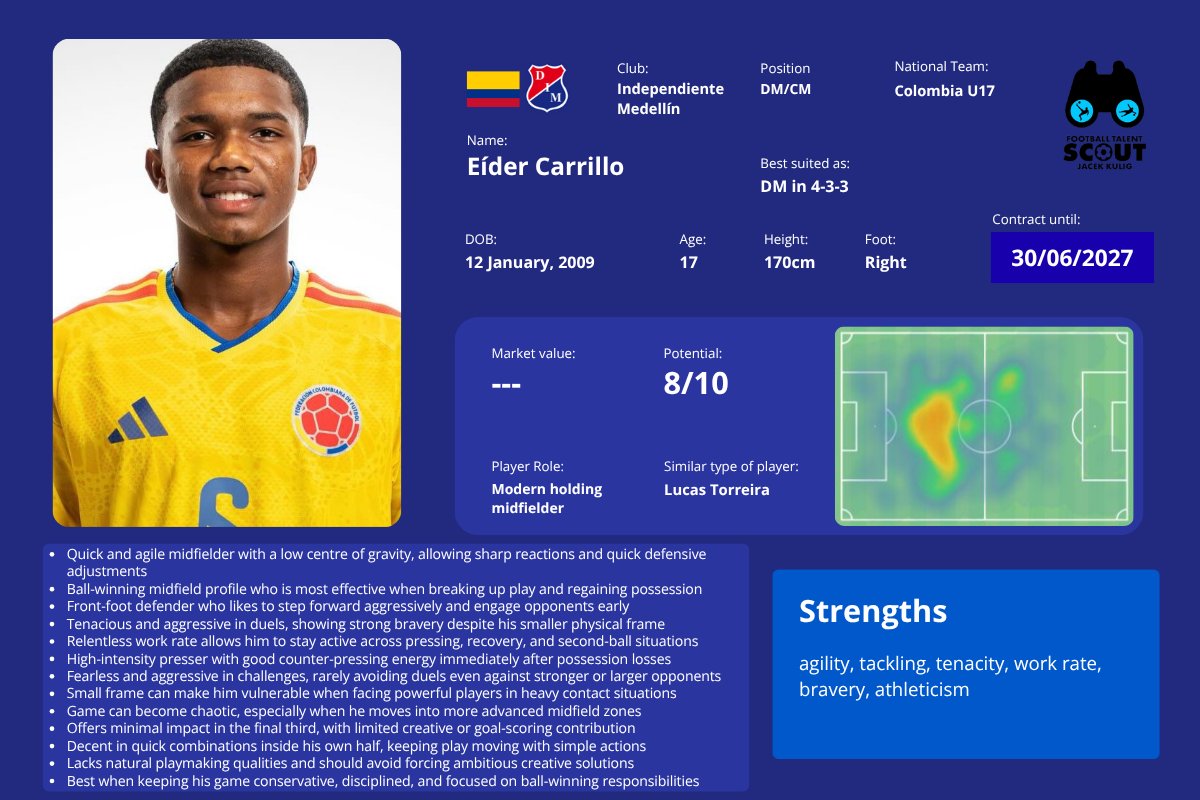
@FTalentScout The Torreira comparison is useful as a reference point, but the more interesting question is where the profiles actually differ. Same role, different physical and technical makeup. That gap is where the real development question starts.
English

@HenshawAnalysis Same issue shows up in data reports. Pack in 40 metrics with no anchor question and you're not giving the decision maker more clarity. You're giving them more to wade through. The signal gets buried by the attempt to look thorough.
English

Stop including everything on one scout report.
It's a mistake I see often, but also one I used to make.
A great scout report gives a verdict, context on the performance, and an action for the decision maker.
Your scout report doesn't need:
- player biography
- character references
- prediction modelling
- social media checks
All of those things are important. They're a crucial part of the process. But not within the scout report itself.
Every club has a different process. Player dossiers, data packs, video reports.
That's where references, biographies, predictions and social media checks belong.
A scout report has one job. Tell the head of recruitment, in the time they actually have, what you saw and what they should do about it.
Keep yours to scouting notes, context and actions.

English

@SoySergioB24 The Colombia connection makes this interesting beyond the player himself. His profile clearly translated well in a promotion side. The question now is whether it holds up at Bundesliga intensity. One to watch in pre-season.
English

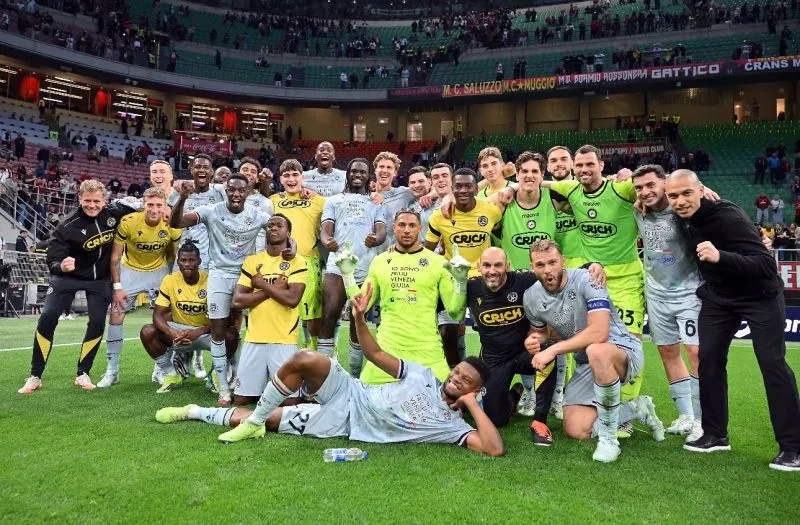
@RudyGaletti Udinese are one of the more underrated examples of sustainable club building right now. Consistent stability rarely comes from spending power alone. More often it is the result of clear recruitment structure and alignment at technical director level.
English

🚨🤝 Udinese renewed Gökhan Inler as Head of the Technical Department until 2028, rewarding the work behind one of Serie A's smartest projects.
Best season in over a decade, first 50+ point campaign since 12/13 and growing stability on & off the pitch ▶️ rudygaletti.substack.com/p/udineses-sma…


English

@TheDaniOmer 7 goals and 5 assists is a good return.But the bigger question is what his pressing and offball movement look like compared to other strikers at this level.The numbers show he can produce. The context shows whether the system can really get the best out of him.
English

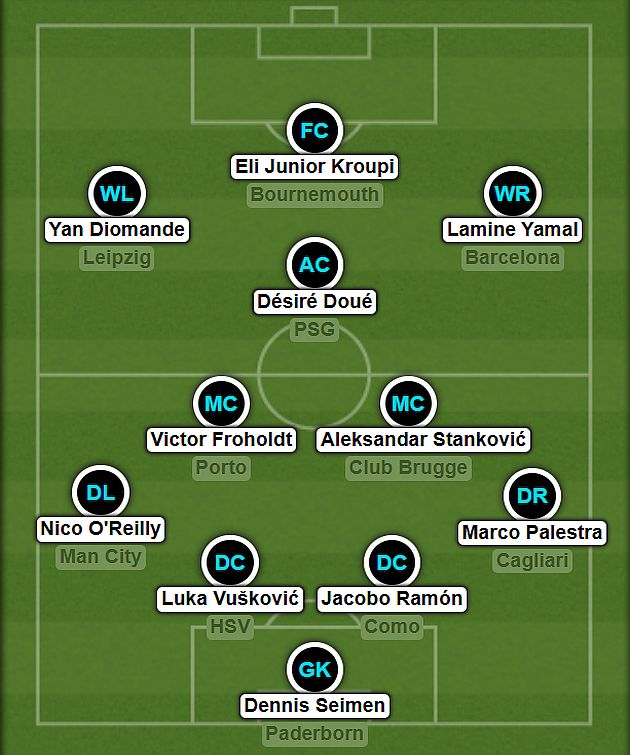
@FTalentScout What makes this list interesting is how many of these players are operating above their age bracket in terms of positional responsibility and not just output. Froholdt and Stanković both carrying significant load in that midfield double pivot is honestly worth paying attention to
English

European U-21 (players born in 2005 and later) Team of the Season by @FTalentScout!
🇩🇪 Dennis Seimen
🇮🇹 Marco Palestra
🇭🇷 Luka Vušković
🇪🇸 Jacobo Ramón
🏴 Nico O'Reilly
🇷🇸 Aleksandar Stanković
🇩🇰 Victor Froholdt
🇫🇷 Désiré Doué
🇪🇸 Lamine Yamal
🇨🇮 Yan Diomande
🇫🇷 Eli Junior Kroupi

Română

@MaaxiAngelo 64 goals in 52 matches is the kind of number that ends conversations before they start. What I find more interesting is what the underlying creation and movement data for the players around him looks like because numbers like that rarely exist in isolation.
English

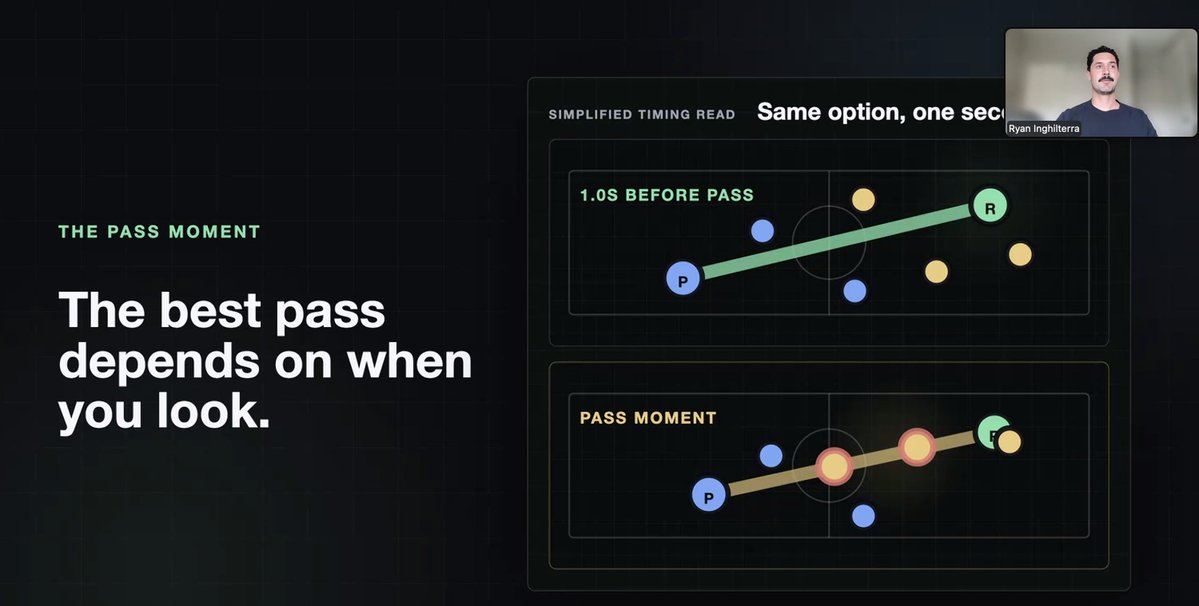
@ground_guru Decision quality in passing is almost always a timing problem rather than a technical one. The player who reads it 1.5 seconds earlier changes the entire picture and that is honestly what is worth measuring.
English

We're underway in the final of Pitch to the Pros 3
First of our 4 finalists in Ryan Inghilterra with, 'was the best pass really playable?'
🔗trainingground.guru/pitch-to-the-p…

English

@ThePFSA The gap between theory and application in performance analysis is where many recruitment decisions break down.Workflows that remove noise and center on specific decisions are still rare at academy level.
English

The PFSA has developed the Level 2 Performance Analysis In Football course alongside an active Head of Performance Analysis from a Premier League club. It strips away the theory and focuses on application, showing you the real workflows and technical frameworks used inside professional performance departments.
What You Will Learn:
✅ Utilise data and video analysis tools to identify and understand performance issues in players and teams.
✅ Effectively communicate insights derived from performance analysis to coaches and players to inform their strategies and actions.
✅ Collect feedback from various stakeholders and advise on effective methods to improve player and team performance.
✅ Understand how to function effectively within a complex sporting organization, contributing to its overall success.
✅ Use data and video analysis to study and analyse upcoming opposition, aiding in tactical preparation and strategy formation.
✅ Contribute to their team's performance on match day through insightful analysis and strategic recommendations.
Football clubs are actively looking for professionals who can speak the language of both tactics and data.
Because the PFSA Level 2 Performance Analysis course is 100% online and entirely self-paced, you can learn directly from elite industry experts around your current work or study schedule.
👉 thepfsa.co.uk/level-2-perfor…
English

@scoutsattending 586 minutes. Those are the headline numbers.The real question is what's the defensive contribution, progressive actions, and positional workload look like relative to players in the same sub-role.That is where the actual development picture sits.
English

Lausanne Sport has thanked #mufc FW Enzo Kana Biyik as his loan spell is set to end after Saturday's final game of the season
19yo has 1 goal and 1 assist in 586 mins

English

@ground_guru @ReneMaric @FCBayern What a player looks at first often tells you more about their game intelligence than the final action itself.Most recruitment processes evaluate the outcome.Very few evaluate the read that produced it.
English

"When you first look at the opponent, you call it man-marking.
If you’re looking first at your team-mate, you call it zonal marking.
If you’re looking first at the ball, you call it pressing."
@ReneMaric | @FCBayern Assistant | TGG Podcast 🎧
trainingground.guru/podcast/rene-m…
English

@ric_fit This is exactly the problem a structured intelligence document solves. Not a highlight reel, not a stats dump but a benchmarked read on where the player actually stands that an agent can verify and act on immediately.
English

Before you contact a single agent, ask yourself this:
Am I worth enough for an agent to spend time on me right now?
Not eventually. Not with development. Right now. Based on what they can verify in 60 seconds.
If you can't answer yes with evidence...
You're not ready to pursue representation. You're ready to build the profile that makes it inevitable.
What's the most competitive level you've played at in the last 6 months?
English

@HenshawAnalysis The data gets you through the door. The footage tells you whether to stay. The problem is most people are using one without the other.
English

My first live scouting trip didn't go as expected.
The player didn't pass the eye test.
I drove down the M1 for the game at Northampton Town. Fully expecting (and hoping) for a good performance from a fullback.
I was confident because the player was data-led.
It came from my own "model" (if you can call a spreadsheet that).
He was identified as an attacking fullback, high on my ratings, and coming out of contract.
But... his positioning out of possession was poor. He was caught out 1v1 in defensive situations too often, and offered little on the ball on the day.
His performance went against everything my model suggested.
This is why you need the eye-test as well as data. Especially if your "model" still has room to improve.
I'm sharing this because it's an iterative process.
> models require work, feedback and refinement
> data can't capture everything, especially event data
> your scouting opinion can be different to the data
A big learning curve for a naive scout.
I went back to watch him a few more times before deciding he wasn't for us.
Has anyone else had a player their data loved who failed the eye test?

English

@TheDaniOmer @RdScouting 13 goals across levels tells you he produces. What it doesn't tell you is whether those numbers hold up against positional peers at the same level and that's where the real transfer conversation starts. Exciting profile either way.
English