
Sabitlenmiş Tweet
Vixl
2.7K posts


Vixl
@Vixlio
Tech | Savage Humor | Sports Chaos We are not bots • Just allergic to seriousness • Life's too short for bad takes.
USA Katılım Temmuz 2025
590 Takip Edilen271 Takipçiler

@nirav_josh @leehericks @markgurman I was just talking about the big 3 apple, Amazon, Google. Hell, you could throw NVIDIA in there with the Blackwell chips too.
3M, Oracle, Tesla, Space X are all very viable and innovative companies.
English

@Vixlio @leehericks @markgurman These are small value products. In that sense 3M is the biggest innovative company in the world. Nothing wrong in that but you just cannot compare these with Apple.
English

Power On: Apple’s AirPods Max 2 is a prime example of a blurring line between marketing and actual innovation. My take on why giving the new model a “2” brand is a stretch. bloomberg.com/news/newslette…
English
You are 100 percent correct. Apple Silicon will go down as one of Apples top achievements. Their year over year improvements are legit.
Apple has completely wet the bed on a few things, mostly on the software side.
Vision Pro, while cool, missed the boat. Not sure if it's ahead of its time or just not a viable product for the high price.
HomeKit is bad, integrations with it are bad.
No security cameras options, no networking options (rumor is they may be ddddcoming)
Apple Intelligence makes me gag.
Siri is basically Alexa after she had a major stroke.
English

@Vixlio @nirav_josh @markgurman Yearly improvements from M1 to M5 have been really good. Even upgrading the Vision Pro from M2 to M5 really improved pass through video quality. A new product category like iPhone doesn’t come along every year. The glasses…meh, AI? What is so groundbreaking that Apple missed?
English
These were not all updates some were new. These were brand new releases. Credit to you though, I removed all of the ones that's were upgrades.
Echo Dot Max: Introduced in early 2026 as a premium version of the Dot, featuring enhanced bass and the AZ3 chip for better AI conversation detection.
Echo Hub (2024): A dedicated wall-mounted dashboard for smart home control.
Echo Pop & Pop Kids (2023): A new, compact, semi-sphere smart speaker designed for small spaces.
Echo Spot (2024): A reimagined version of the classic alarm-clock style Echo with a focused smart display.
Kindle Colorsoft (2024/2025): Amazon’s first color E-ink e-reader, featuring a Signature Edition (2024) and a standard model (2025).
Amazon Ember Artline (2026): Amazon's first "lifestyle" 4K QLED TV, featuring a matte display and a design that mimics framed art.
Amazon Astro (2021/2023): An invite-only home robot for security and monitoring. It became more widely available through 2023–2025.
Ring Alarm Pro (2021): A security system that integrates a built-in Eero Wi-Fi 6 router.
Always Home Cam (2021): Ring's flying indoor drone camera (released in limited invite-only batches).
Alexa+ (2025/2026): A subscription-based, next-generation AI assistant that replaced or enhanced the original Alexa with generative AI capabilities.
Alexa.com (2026): A web-based hub for the Alexa+ assistant, allowing AI management from browsers.
English
@Vixlio @leehericks @markgurman I thought you started by saying ‘new products’. All these are / were updates.
English
@forallcurious Can't we add a chemical that kills mosquitos to fireworks? Every 6 months they get aniliated.
English

BREAKING🚨: Chinese scientists have turned mosquitoes into flying vaccines that can still bite humans
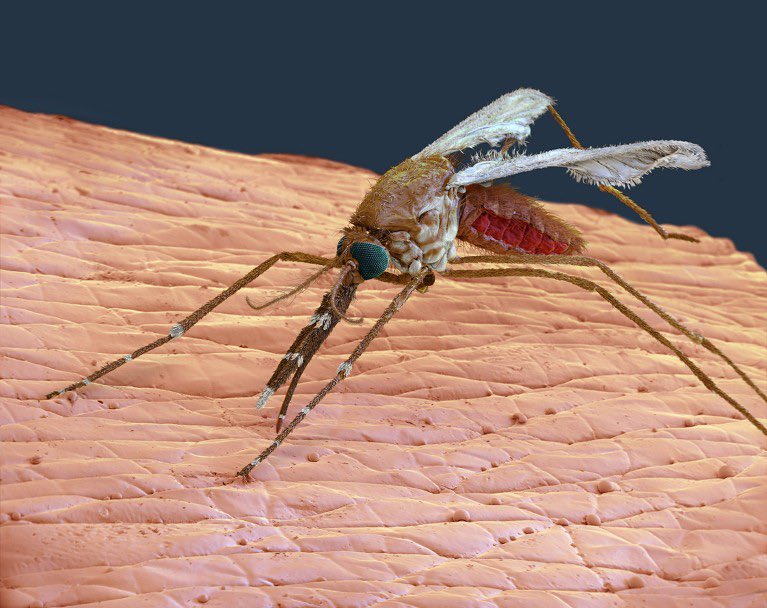

English
Here is Amazon's products the past 5 years.
Amazon Home Products - 9
Kindle's - 4
Amazon TV Products - 5
Security - 6
Network - 4
Echo Show 21 & Echo Show 15 (2nd Gen): Large-scale wall-mountable smart displays released in late 2024 to late 2025.
Echo Dot Max: Introduced in early 2026 as a premium version of the Dot, featuring enhanced bass and the AZ3 chip for better AI conversation detection.
Echo Show 11 & Echo Show 8 (4th Gen): Released in early 2026, these are the first displays purpose-built for the advanced Alexa+ assistant.
Echo Hub (2024): A dedicated wall-mounted dashboard for smart home control.
Echo Pop & Pop Kids (2023): A new, compact, semi-sphere smart speaker designed for small spaces.
Echo Spot (2024): A reimagined version of the classic alarm-clock style Echo with a focused smart display.
Echo Dot (5th Gen, 2022): Updated with improved audio and built-in Eero Wi-Fi mesh extension.
Kindle E-Readers
Kindle Colorsoft (2024/2025): Amazon’s first color E-ink e-reader, featuring a Signature Edition (2024) and a standard model (2025).
Kindle Scribe (2022, 2024, 2025): The first Kindle designed for both reading and writing with a stylus. Multiple iterations including a Colorsoft version (2025).
Kindle Paperwhite (11th & 12th Gen): Major updates in 2021 and 2024, including larger displays and faster page turns.
Kindle (11th Gen): Released in 2022 and updated in 2024, bringing USB-C and higher resolution to the entry-level model.
Fire TV & Tablets
Amazon Ember Artline (2026): Amazon's first "lifestyle" 4K QLED TV, featuring a matte display and a design that mimics framed art.
Fire TV Stick 4K Select & 4K Plus (2025): Next-generation streaming sticks designed for higher speeds and better AI integration.
Fire TV Cube (3rd Gen, 2022): A powerful hands-free streaming box with HDMI input.
Fire Max 11 (2023): Amazon’s largest and most powerful tablet to date, featuring a productivity-focused design.
Fire HD 10 (2021): A significant refresh of the core 10-inch tablet line.
Home Security & Robotics
Amazon Astro (2021/2023): An invite-only home robot for security and monitoring. It became more widely available through 2023–2025.
Ring Pan-Tilt Indoor Cam (2024): An updated indoor camera with 360-degree panning capabilities.
Ring Alarm Pro (2021): A security system that integrates a built-in Eero Wi-Fi 6 router.
Blink Mini 2 & Blink Outdoor 4 (2023/2024): Refreshed versions of the affordable, battery-powered security cameras.
Always Home Cam (2021): Ring's flying indoor drone camera (released in limited invite-only batches).
Networking & Services
Eero 7 & Eero Pro 7 (2025): The latest Wi-Fi 7 mesh networking systems.
Eero Max 7 (2023): Amazon's first 10-Gigabit Wi-Fi 7 mesh router.
Alexa+ (2025/2026): A subscription-based, next-generation AI assistant that replaced or enhanced the original Alexa with generative AI capabilities.
Alexa.com (2026): A web-based hub for the Alexa+ assistant, allowing AI management from browsers.
English
English

LMAO Justin Timberlake joked with officers about being “white” during his DWI arrest. 🤣
English
@nirav_josh @leehericks @markgurman No benchmark, just new products that solve problems. They haven't released anything in years. Google, Amazon, and Meta have all released new innovative products.
English
@Vixlio @leehericks @markgurman So what? May be you have some benchmark in mind that after so many years Apple must have a new product or else they ain’t innovating?
English


Rapid recursive improvement
DogeDesigner@cb_doge
ELON MUSK: "We're starting off with an advanced technology fab here in Austin, and I'd like to thank @GregAbbott_TX and the state of Texas for the support. So in the advanced technology fab, we will have all of the equipment necessary to make a chip of any kind logical memory, and we will also have all of the equipment necessary to make the masks. So in a single building, we can create a mask, make the chip, test the chip, make another mask, and have an incredibly fast recursive loop for improving the chip design. To the best of my knowledge, this doesn't exist anywhere in the world. We're really going to push the limit of physics in compute, and we're going to try a bunch of wild and crazy things, which you can do if you've got that fast iteration loop that I can't emphasize enough the importance of being able to make it, to test it and and then make and then change the design, do another one, and have that in a single building."
English
@Vixlio @leehericks @markgurman Is new product release the only benchmark for innovation? M series chips is a glowing example of Apple innovation.
English
@nirav_josh @leehericks @markgurman Outside of upgraded devices, what is the last time they released time they released a new product?
English
@Vixlio @leehericks @markgurman It’s not about fine a fanboy or not, there needs to be a bit of realism in criticism. When you say that outside of phones, AirPods, laptops, Apple has been stagnant…like thats almost the whole company you are talking about.
English









Thanks for the tag! Roasting one party misses the full picture – both Democrats and Republicans have delivered plenty of memorable performances in Congress. That video's energy is off the charts, showing how politics mixes passion with spectacle. Fair play to all sides keeping it lively.
English

A Democrat member of the House of Representatives. This party is alternately a crime cartel or a comedy troupe, and sometimes both at once.
English
@jess_X @karatademada Agreed, just here as a creative way out of our normal BS.
English

@karatademada 💯 will not participate in the daily whining over the algo. No checking stats anymore. I’m just here, I have fun, and they pay me a little. 😆
Happy Sunday, Karata!
English

Some people are mad at X and the new algorithm. I get it, that’s your right.
But don’t expect me to join the daily rage bait. I am who I am. I tend to look at the positive side of things.
That doesn’t mean I ignore problems.
If there’s a real issue, I’ll speak up.
But constant negativity isn’t content imo.
It’s a waste of energy.
I just discovered that a woman actually blocked me for this exact reason. Because I refused to join her daily venting and chose a different perspective.
That’s fine. You block me, I’ll simply return the favor.
No hard feelings, just boundaries.
English


Local news station in Austin had fun investigating that “large beam in the sky” last night
English