Solana ecosystem is becoming more connected.
different apps connecting and working together like one system.
$USX from @solsticefi is now live on Loopscale, which shows how this works in real life.
Earlier, USX was mainly used inside Solstice, but now it can move into another protocol like @Loopscale and be used for lending and borrowing.
means your assets are no longer stuck in one place and can be used across multiple platforms.
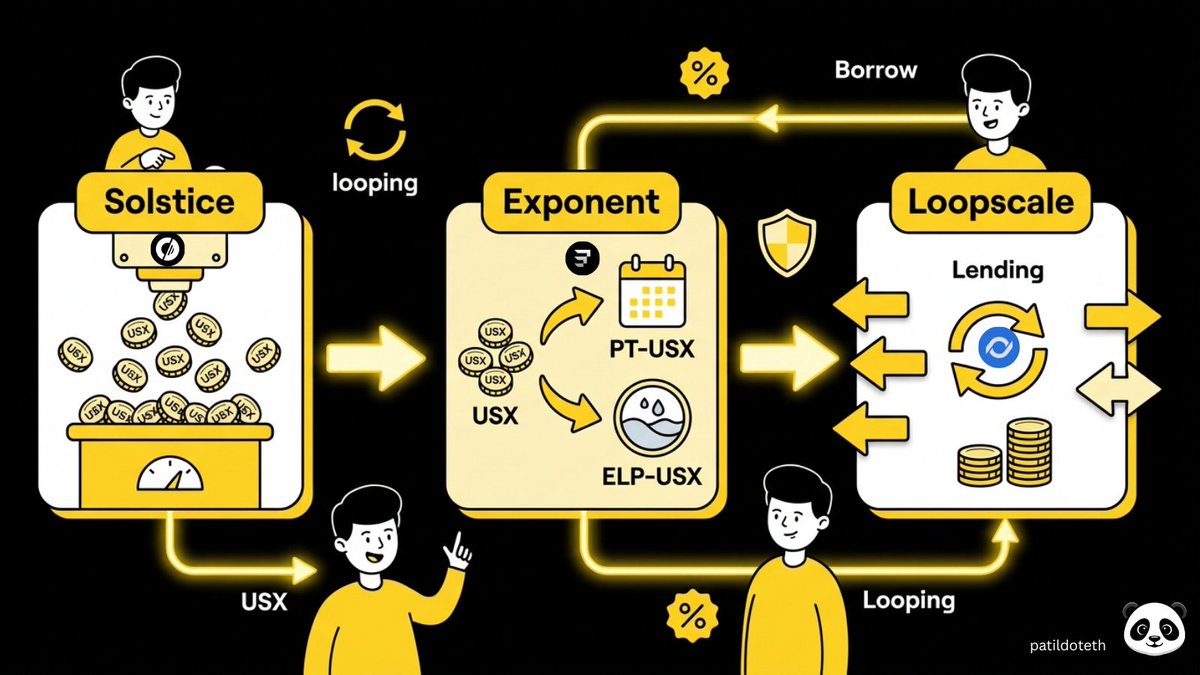
there are three main parts here.
Solstice creates USX, which is a stable and yield based asset.
@ExponentFinance creates tokens like PT-USX and ELP-USX, which represent different types of value such as fixed term positions or liquidity positions.
Loopscale brings everything together by allowing these assets to be used as collateral in a lending system.
When these protocols connect, they create a more powerful ecosystem instead of working separately.
PT-USX is a token that represents value locked until a future date, so it is like holding USX that will be unlocked later.
ELP-USX comes from providing liquidity and represents your share in a pool.
Now both of these can be used inside Loopscale, which means users can unlock liquidity or use them in lending systems without needing to sell them.
Loopscale also introduces something called looping, which means using the same capital multiple times by depositing, borrowing, and reusing funds again.
this increases flexibility but also adds risk, especially when leverage is involved. Borrow rates, liquidity, and market conditions can change, so it is important to understand that higher complexity also brings higher risk.
Instead of separate platforms, we now have a system where assets like $USX can move between Solstice, Exponent, and Loopscale.
this is what composability looks like in practice a connected DeFi ecosystem where different protocols work together to expand how assets can be used.
You can get started with Solstice by visiting platform and exploring how it works.
Join here : solstice.finance
Use referral code: ZJ7eV4VkAu
Disclaimer: I’m sharing this as a Solstice ambassador, not financial advice.
most people do not know this 👇
out of 200M+ crypto users, only around 20–30M people actually earn passive income through staking, lending, or earn programs.
in them DeFi (advanced users) Only 500,000 to 700,000 people globally
that means only 1 out of 10 people are making APY in crypto.
majority just buy and hold or trade, while very few understand how to earn consistent yield.
even in DeFi, only a small number of users actively use advanced strategies.
this is where platforms like @solsticefi come in.
it helps you earn staking rewards while keeping your assets liquid, so you can use your funds across other protocols at the same time.
it also focuses on safety with validator diversification and offers a fully backed stablecoin $USX for real usage.
if you want to move from just holding crypto to actually earning from it, this is worth checking out 👇
join here: solstice.finance
use referral code: ZJ7eV4VkAu
disclaimer: I’m sharing this as a Solstice ambassador, not financial advice.
Crypto Is Evolving from Trading Coins to Building a New Global Financial System and @solsticefi is positioning itself to lead this shift.
Stablecoins are basically digital dollars that live on the internet using blockchain.
With @solsticefi and $USX, this idea becomes even more powerful enabling faster, more efficient, and scalable digital money for global use.
People use stablecoins to send money, trade, or store value, and they are growing fast because they make payments quicker and cheaper than banks.
$USX is part of this next wave, pushing stablecoins toward real world adoption.
At the same time, blockchains like @ethereum and @Solana are competing in different ways. Ethereum is slower but very secure and trusted, so big institutions prefer it, while Solana is much faster and cheaper, making it better for everyday use like apps and payments the kind of environment where @solsticefi can thrive.
Another big trend is RWA (Real World Assets), which means putting real things like bonds, real estate, or funds onto the blockchain so they can be traded more easily and globally. This is where projects like @solsticefi and $USX can play a key role in bridging real world finance with crypto.
When you combine all this, stablecoins act like money, RWAs act like assets, and blockchains act like the system that runs everything and @solsticefi is building right at this intersection.
Overall, crypto is moving away from just trading coins and is becoming a new kind of financial system on the internet and $USX is aiming to be part of that core infrastructure.
Benefits of holding $USX
Holding $USX gives you price stability, since it is designed to stay close to the value of a dollar, helping you avoid the volatility of typical crypto assets.
You get liquidity and flexibility, meaning you can easily move funds, trade, or deploy capital across different platforms without delays.
$USX can offer yield opportunities, allowing holders to potentially earn returns when used in RWA or DeFi strategies instead of just sitting idle.
It provides fast and low cost transactions, making it ideal for payments, transfers, and global movement of money without relying on banks.
Holding $USX also gives access to on-chain RWAs, letting you participate in tokenized real-world assets like bonds or funds in a simple and seamless way.
Finally, $USX positions you early in a system where stablecoins are becoming the core money layer of the internet, giving long-term strategic advantage as adoption grows.
You can get started with Solstice by visiting their platform and exploring how it works.
Join here : solstice.finance
Use referral code: ZJ7eV4VkAu
Disclaimer: I’m sharing this as a Solstice ambassador, not financial advice.
I’m going to explain the delta neutral strategy used by @solsticefi
First, this idea did not come from one single person. It comes from the work of Myron Scholes, Fischer Black, and Robert Merton. They created the Black Scholes model.
Before 1970, trading was mostly guessing. After this model, trading became more mathematical and controlled. It showed that you can reduce price risk by balancing trades. This idea is called a delta-neutral strategy.
Now, what is delta Delta simply means how much the price of an asset changes when the market moves.
If delta is 1, the asset moves exactly with the price. If delta is 0, the price movement does not affect it.
The main goal is to make total delta equal to 0. That means your portfolio does not care if the market goes up or down (at least for small movements).
SolsticeFi uses this idea and makes it easy for normal users. First, you deposit your funds, and they convert it into a stablecoin like USX.
Then, behind the scenes, they open two positions at the same time. They buy an asset like SOL or ETH (this is called a long position), and at the same time they short it using futures. This balance makes the position delta-neutral.
So if the price goes up, one side makes profit and the other side loses, and if the price goes down, the opposite happens. In both cases, the price effect mostly cancels out.
Then how do they make money? They earn from other sources like funding rates (this is the main income), staking rewards, arbitrage opportunities, and yield farming. These are small profits from the system itself, not from price changes.
Another important part is rebalancing. The market is always moving, so the balance can break. @solsticefi keeps adjusting the positions automatically to maintain delta = 0.
This is very hard to do manually, which is why most normal people cannot do this strategy on their own.
This strategy is powerful because it is different from normal investing. In normal investing, you only make money when the price goes up.
But in delta neutral strategy, you try to make money from market inefficiencies, not from guessing price direction.
in simple solsticefi is using a smart system where price movement does not matter much, and profits come from how the market works internally.
accessible to everyone.
You can get started with Solstice by visiting their platform and exploring how it works.
Join here : solstice.finance
Use referral code: ZJ7eV4VkAu
Disclaimer: I’m sharing this as a Solstice ambassador, not financial advice.
stablecoin market is already very large (over $310B), but most of that money is just sitting in coins like USDT without earning anything.
normally, if people want yield, they have to move their funds somewhere else.
but @solsticefi is trying to change that idea. Instead of holding a stablecoin and then finding ways to earn yield, Solstice builds the yield directly into its stablecoin, $USX, through something called YieldVault.
This means your stablecoin is not idle it is always working and generating returns inside DeFi.
One big problem in the Solana ecosystem has been that stablecoin liquidity often leaves the network to find better returns elsewhere.
Solstice helps solve this by keeping the capital on-chain and using strategies that don’t depend on market direction.
These are called delta-neutral strategies, which aim to earn steady returns without taking big risks from price changes.
What makes Solstice stand out is its consistent performance.
Its YieldVault has reportedly generated around 13–21% yearly returns, and it hasn’t had negative months so far. ( might up or down market perforrmance )
It does this using methods like funding rate arbitrage and hedged staking, which are designed to reduce risk and create stable income.
In a space like DeFi, where prices can move a lot, this kind of steady return is very attractive especially for bigger investors.
That’s why institutional money is starting to take interest.
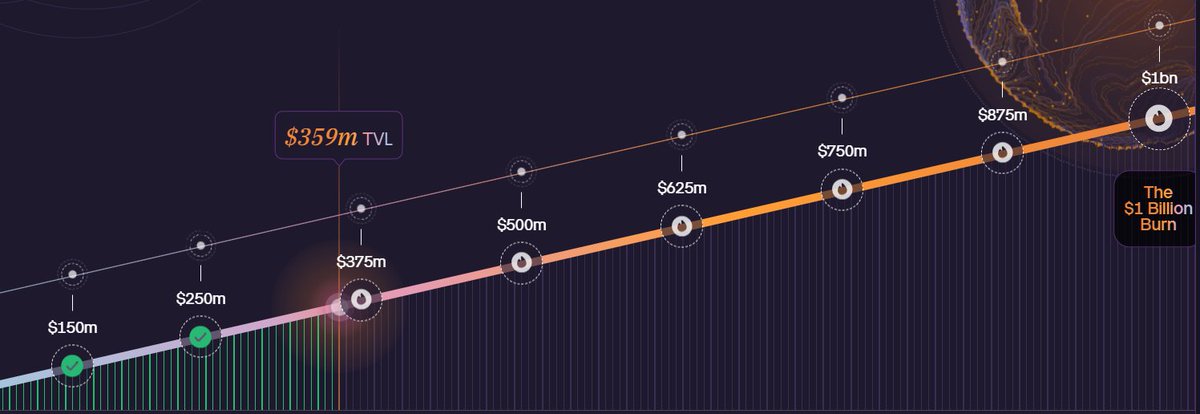
Solstice has also grown quickly. It started with about $160M in total value locked (TVL) and has now passed $370M, along with integrations across major Solana protocols.
This shows that more people are starting to see it as an important part of the ecosystem.
Overall, DeFi is slowly changing. Earlier, it was mostly about high risk and high rewards.
Now, projects like Solstice are building more structured systems that focus on stable returns and better use of capital.
accessible to everyone.
You can get started with Solstice by visiting their platform and exploring how it works.
Join here: solstice.finance
Use referral code: ZJ7eV4VkAu
Disclaimer: I’m sharing this as a Solstice ambassador, not financial advice.
the @solsticefi team mostly from big banks, fintech, and crypto firms trying to build institutional grade DeFi yield infrastructure on Solana.
so the Solstice team has experience with:
hedge funds
derivatives trading
institutional investment
financial infrastructure
this matters because most DeFi projects are built by crypto developers, but solstice is built by finance professionals.
their main goal is:
Give normal crypto users access to hedge-fund-style yield strategies.
Before DeFi:
banks and hedge funds used these strategies
retail investors could not access them
Solstice tries to make them open and permissionless.
Imagine you have $1000 in stablecoins.
Normally:
You just hold it → earn 0%
With Solstice:
Convert to USX
Deposit into YieldVault
The protocol runs trading strategies
You earn yield automatically
join today at: solstice.finance
Use my referral code: ZJ7eV4VkAu
Disclaimer: I’m sharing information as a Solstice ambassador, not financial advice.
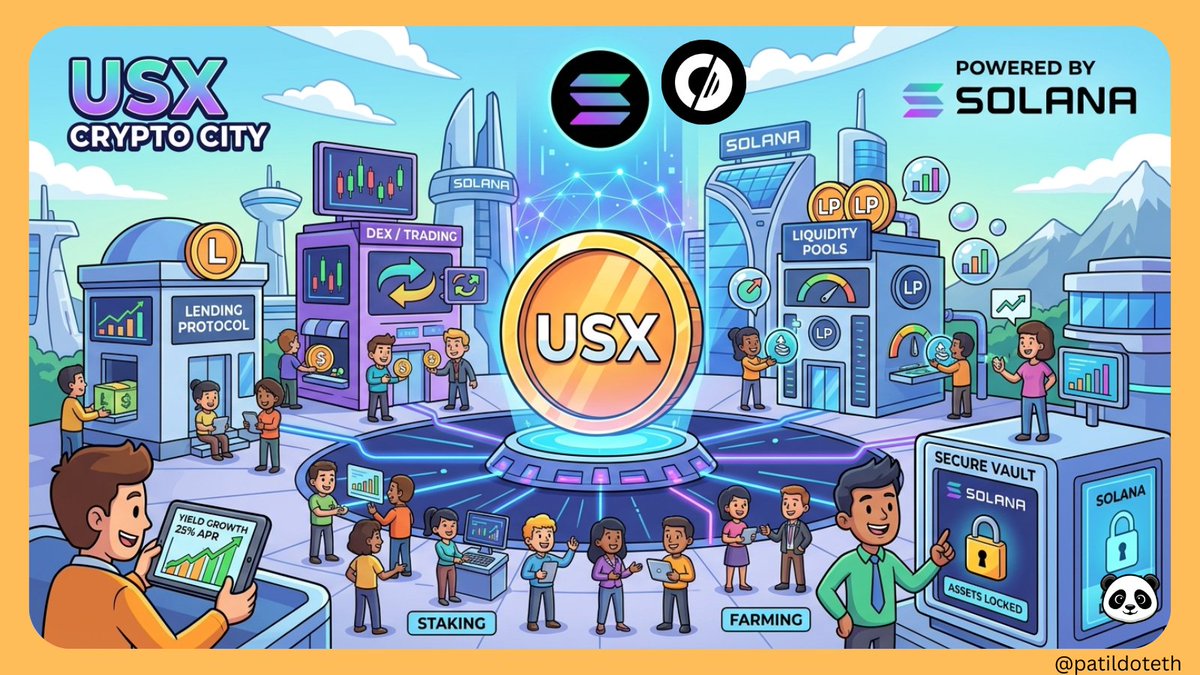
i personally think @solsticefi $USX could become the base stablecoin on solana because
it is built natively for the Solana ecosystem.
It is already getting integrated across many DeFi protocols, which helps increase its use and liquidity.
Another reason is that USX can generate yield, so users can earn while holding a stable asset.
It is also fully collateralized and supported with proof of reserves, which builds trust.
on top of that, the project has backing from institutional capital, giving it strong financial support for growth.
People use $USX to send money, trade in DeFi apps, and keep their money stable without big price changes. Unlike coins like Bitcoin or Solana, the price of $USX does not go up and down a lot.
$USX is backed by real assets and has proof of reserves.
This means the project shows that there is enough money to support the coins in circulation.
It is also used in many DeFi platforms where people can earn yield and flares point for future airdrop while holding it.
And if you still yet not joined, check out Solstice and learn more here: solstice.finance
Use my referral code: ZJ7eV4VkAu
Disclaimer: I’m sharing information as a Solstice ambassador, not financial advice.
If you are an existing user of @solsticefi or a new user, this is for you
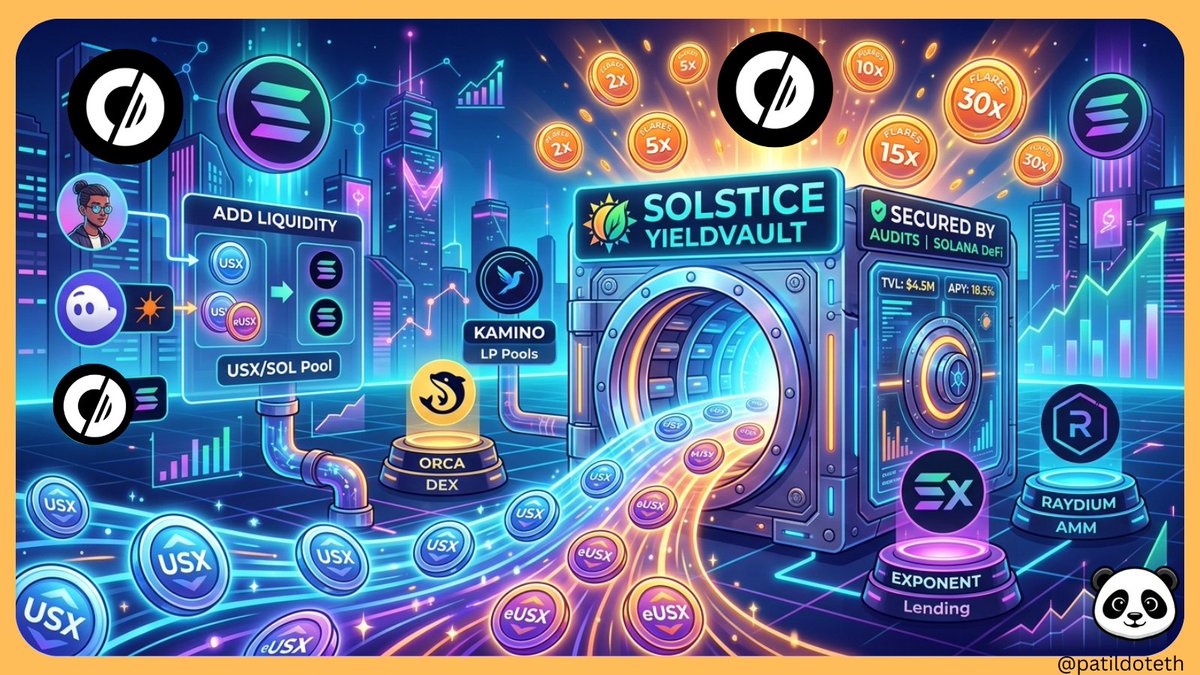
You can earn 2x, 5x, 10x, 15x, 20x, and even 30x Flares by participating in Solstice activities. here i explained
The Solstice YieldVault strategy spreads funds across several Solana DeFi protocols like @kamino, @ExponentFinance, @orca_so, and @Raydium.
These are the main partner vaults, and you can earn yield from $USX / $eUSX by depositing them into these Solana DeFi strategies.
You can also add liquidity to our partner protocols to start earning more.
1️⃣ Supply assets like $USX / eUSX to vaults or lending markets.
2️⃣ Provide liquidity in pools on partners like Kamino or Orca.
3️⃣ Borrow against your supplied assets to increase your capital efficiency.
By doing this, you earn from:
Trading fees
Lending interest
Liquidity incentives
Protocol reward emissions
The more liquidity you provide, and the longer you stay in the pool, the more rewards you can accumulate.
But remember, $USX / $eUSX vaults can give steady yields, but no deposit is completely risk-free. The safest way to participate is by diversifying across vaults and not over leveraging.
If you haven’t joined yet, it’s simple! Just connect your wallet, swap Solana or $USDC for $USX / $eUSX, and start earning Flares.
By holding $USX / $eUSX, you earn Flares, and by adding liquidity to our partner protocols, you can earn even more. This also helps you understand risk and learn more about the ecosystem.
You can also enter a partner code from any Solstice partner (e.g., Kamino, Orca, Exponent) in the vault or app. Each code gives a multiplier for rewards on certain quests or activities, increasing your Flares.
Join now at: solstice.finance
Use my referral code: ZJ7eV4VkAu
Disclaimer: I’m sharing information as a Solstice ambassador, not financial advice. Always do your own research before depositing or participating.
I want to explain in a simple way how a normal person can use @solsticefi to earn yield and Flares points for a possible future airdrop.
If you already have money on-chain, you can use the Solstice Bridge to move your funds from other chains to Solana USDC.
Once you have USDC in your wallet on Solana, you can swap some of it into $USX or $eUSX.
USX is a stablecoin on Solana used in the Solstice ecosystem.
eUSX is the earning version of USX. When you hold eUSX, your funds are deployed in yield strategies, so your balance grows while you hold it.
By holding USX or eUSX, you can earn yield and also collect Flares points, which may be converted into a token in the future.
It is actually a very simple way to earn yield on your funds.
One thing I always say is this: why keep idle money that is doing nothing for you? Many people make this mistake. Money should be working for you, not just sitting in your wallet.
If you explore further, there are even more opportunities like providing liquidity, partner quests, and other ecosystem rewards.
Once you join, you can learn how the ecosystem works. The interface is smooth, APY is clearly displayed, and the experience is very simple even for beginners.
Also, don’t forget to share your experience on X (Twitter). Protocols love to see real users sharing feedback and helping the ecosystem grow.
If you want to join Solstice, you can use my Flares referral code:
ZJ7eV4VkAu
Dapp: solstice.finance
After joining, you can also earn free Flares by connecting your X account and leaving a review on Ethos.
Just hold and earn. It’s that simple.
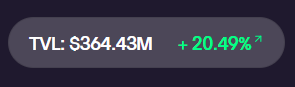
Right now, the TVL is about $365.71M, and it keeps increasing every day. That shows more people are joining the Solstice ecosystem and putting their funds to work.
Disclaimer: As a Solstice ambassador, it is my pleasure to introduce this ecosystem. But always remember: DYOR (Do Your Own Research) before investing in anything.
If you decide to join and face any problems, feel free to comment or ask me any questions related to the Solstice ecosystem. I’ll be happy to help.
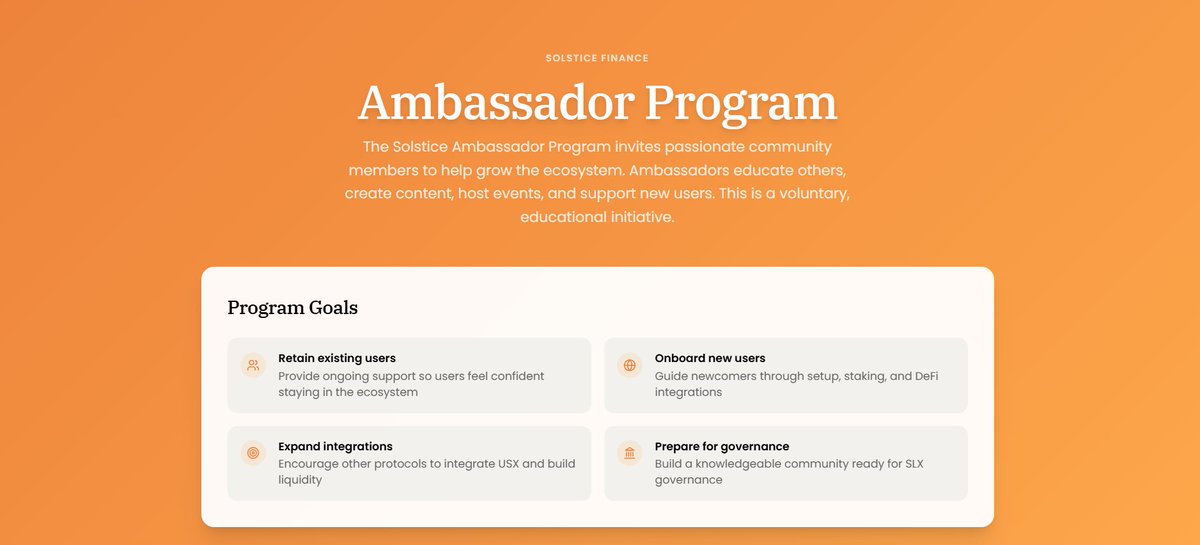
Your chance to become a @solsticefi ambassador and update for existing ambassador🚀and my experience with solstice
In the Solstice Ambassador Program, every two weeks there is a review period called Rotations.
During this time, the team looks at each ambassador’s activity, content, and overall impact on the community.
The goal is to keep the program active, fair, and focused on real value. ambassadors who consistently contribute helpful content, bring new users through referral codes, support community growth, and create positive engagement are more likely to keep their spot and may even move to a higher tier.
Performance is measured through things like new wallets onboarded, TVL growth from referrals, content quality and engagement, retention of referred users, community feedback, and global reach.
These indicators help the team understand how much impact each ambassador is creating.
If someone becomes inactive or contributes very little, they may be rotated out, and their spot can be given to another applicant.
Rotations are not meant to discourage anyone. Instead, they help keep the program dynamic and encourage ambassadors to focus on quality, originality, and meaningful contributions.
The main idea is simple: those who continue to create value for the ecosystem keep their place and grow with the program.
Applications are open do not miss your chance!
Apply here: solsticeambassador.finance
I’m proud to be part of the Solstice Ambassador Program. It has been a great experience working with the community, creating meaningful content, and helping new users learn about the ecosystem.
Through this journey, I’ve gained valuable experience in community building, content creation, and contributing to real growth in Web3.
Being an ambassador has allowed me to connect with passionate people, share knowledge, and support the expansion of the Solstice ecosystem.
I’m excited to keep learning, improving, and creating even more impact as part of this program.
TVL update .@solsticefi📊
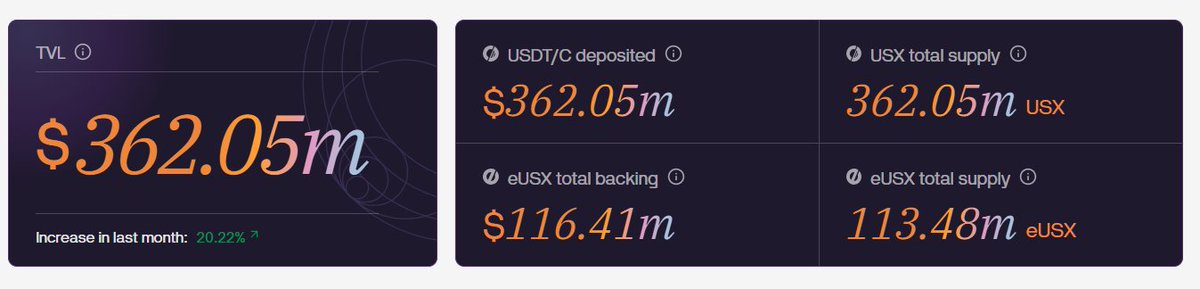
USX is growing fast. The total value locked has reached $362.05M, with a 20.22% increase in the past month.
What makes USX different is its backing. every USX is backed by more than $1, which means it has more reserves than the tokens issued, not just a simple 1:1 backing.
This helps add an extra layer of security and stability.
Are you still early? 👀
Join the ride: solstice.finance
Use my referral code: ZJ7eV4VkAu
Stake Solana with @solsticefi
Solstice Native Staking – and liquid staking simple i explained
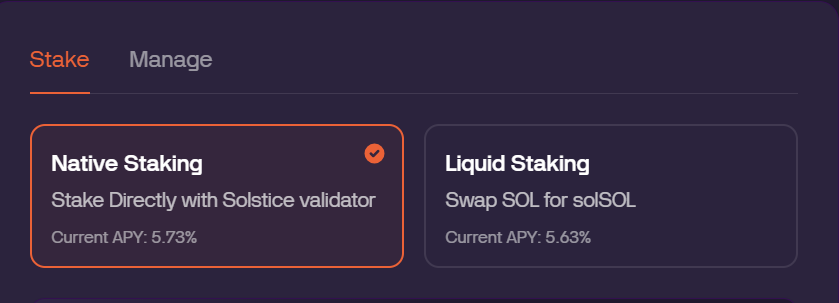
Solstice makes staking $SOL simple and secure. When you use Native Staking, you stake your SOL directly with the Solstice validator and earn rewards with an APY of about 5.73%.
Your SOL stays in your wallet while helping secure the Solana network, and you can unstake it anytime with an unlock period of 2–3 days.
Solstice also offers Liquid Staking, where you swap SOL for solSOL and earn around 5.63% APY while still being able to use your tokens in DeFi.
The platform charges 0% commission, with only a small network rent fee required by Solana.
Just connect your wallet, choose how much SOL to stake, and start earning rewards easily with Solstice.
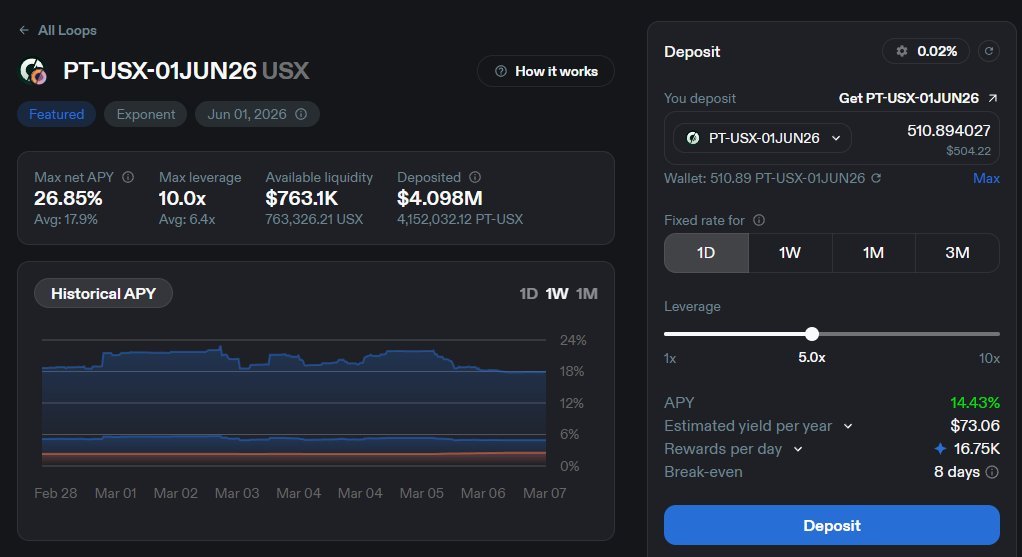
DeFi looping strategy on @solsticefi using $USX and PT-USX across three protocols.
I will break down exactly how it works, why it gives 14% APY, and the risks so you fully understand it.
DeFi strategy uses three protocols on Solana @solsticefi@ExponentFinance , and @Loopscale to earn yield and farming points.
First, you swap your USDC into USX on Solstice Finance. After getting USX, you convert it into PT-USX on Exponent Finance.
PT-USX is a token that represents USX locked until a future date and usually gives some extra yield. Then you deposit PT-USX as collateral on Loopscale.
After depositing, you borrow USDC against that collateral. Instead of withdrawing the borrowed USDC, you repeat the same process again: swap the borrowed USDC to USX, convert it to PT-USX, deposit it again, and borrow again.
This process is repeated multiple times (for example 5×), which increases your total position and helps you earn a higher APY.
By doing this, the strategy gives around 14% APY and also earns daily points on Loopscale, while interacting with Solstice and Exponent at the same time.
This means you get exposure to all three protocols and may also qualify for possible future airdrops.
However, this method has some risk because it uses looping (leverage).
If the value of the collateral drops or the loan becomes unsafe, the position could be liquidated. That’s why people use this strategy carefully and always do their own research before trying it.
Example:
Capital: $1000
Looped: $5000 exposure
Yield: 14.37%
Annual:
$143 profit
+ potential airdrops
Airdrops sometimes exceed yield
strategy summary
USDC
↓
USX (Solstice)
↓
PT-USX (Exponent)
↓
Supply (Loopscale)
↓
Borrow USDC
↓
Repeat 5x
screenshot credit image @Crypto_Zh0u always DYOR
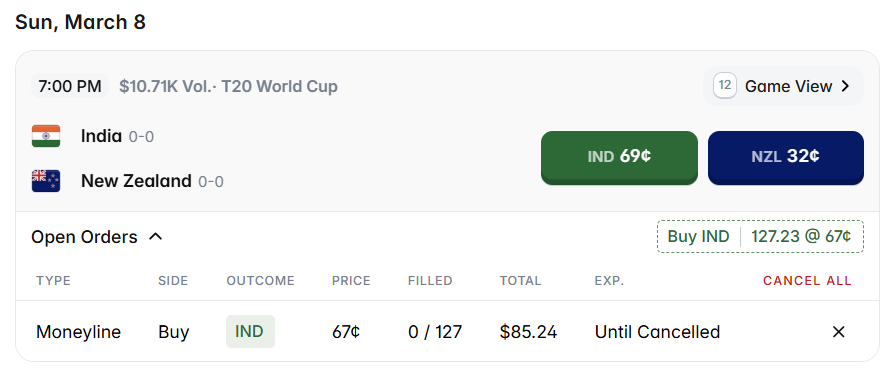
Gonna ape this 🇮🇳
Placed my order on India in the India vs New Zealand match. Odds looking decent and I’m taking the shot.
If the momentum swings our way, this could print nicely.
SolsticeFi is growing fast ! 🚀
Right now the TVL is about $364M+ and it keeps increasing every day. This shows that more people are joining and using the ecosystem.
When TVL grows, it means users trust the platform and are actively using its services.
The @solsticefi ecosystem is becoming stronger day by day with more activity and support from the community. Tokens like $USX and $eUSX are also part of this growing system and help power the platform.
You can explore and try it yourself
at solstice.finance. If you want, you can also use my referral code: ZJ7eV4VkAu.
All of this growth is real proof that the ecosystem is being used and expanding. More users, more activity, and more growth ahead! 🌱
Added more in @solsticefi
All time favorite stablecoin for me right now is $USX.
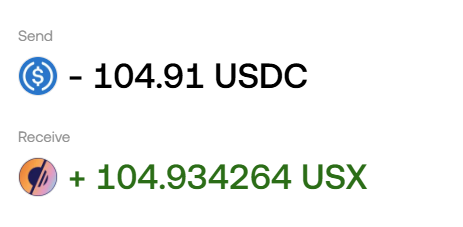
I like it because it keeps things simple and efficient. You can swap stablecoins like USDC into USX smoothly and still keep almost the same value, which makes it great for moving liquidity without losing much to fees or slippage.
Another big benefit is that USX can be used inside DeFi strategies to earn yield instead of letting your stablecoins sit idle.
That means your funds stay stable but still work in the background generating returns.
For users, it’s useful for parking capital, farming rewards, and moving between protocols quickly while staying in a stable asset.
Simple, stable, and productive that’s why USX has become one of my go-to stablecoins in DeFi. 💰