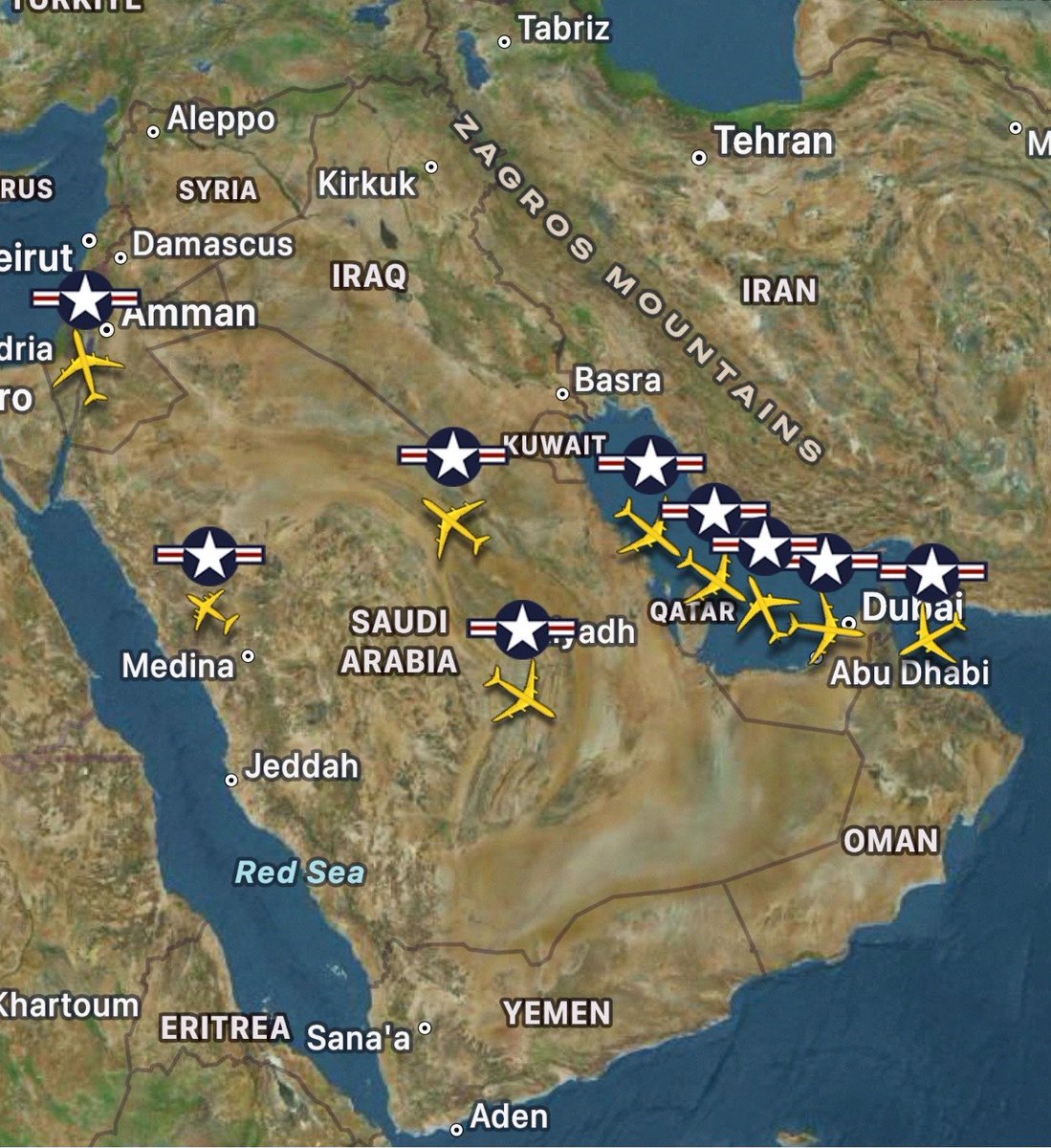
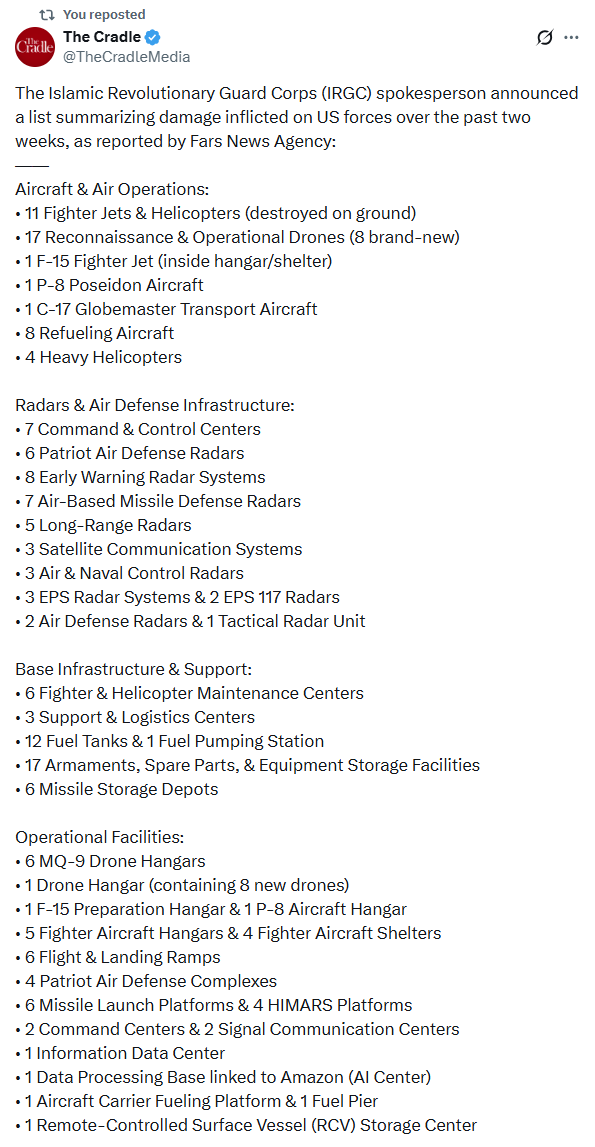
@Kirethiel @Osint613 Yess I promise you Trump is just scared shitless of wannabe terrorists.
English
WarHistory
2K posts

@WarHistoryNewb
Husband and father of 3 girls, war history enthusiast, Clemson fanatic, beach bum and mountain hippie


The ICC’s defenders behave as if questions about its credibility began when it targeted Israel. They did not. If anything, targeting Israel appears to have been a desperate attempt to repair the Court’s shattered reputation by pursuing the international system’s most reliable scapegoat. Instead, it achieved the opposite: the case exposed the Court’s egregious overreach, one-sided procedures, minimal evidentiary threshold and compromised leadership - proving not that the ICC had finally become effective, but that it was even more broken than initially thought. In 2020, the International Criminal Court was effectively put on trial by its own supporters. What was intended as a repair manual read like an autopsy. This was not a hostile investigation commissioned by Israel, Donald Trump or some anti-ICC organization. The court’s own leadership requested a comprehensive review, and its Assembly of States Parties established one specifically to “strengthen” the ICC, improve its performance and rescue its credibility. Nine independent experts conducted more than 270 interviews and produced a 348-page report containing an astonishing 384 recommendations. In other words, this was an intervention organized by the ICC’s friends. And what they found was devastating. The experts described an institution suffering from a pervasive “culture of fear” and profound internal distrust. Staff spoke of an “us versus them” mentality, dysfunctional institutional silos, blurred responsibility and resistance to cooperation. The report found widespread bullying and harassment - particularly inside the Office of the Prosecutor - perceived impunity among senior officials and an environment described as implicitly discriminatory against women. The experts also heard accounts of senior male employees making unwanted sexual advances toward female subordinates. Judges themselves were accused of bullying and contributing to an adverse working environment. This was the institution claiming moral authority over the entire world while apparently struggling to police the behavior inside its own building. Its courtroom record was hardly more reassuring. By 2020, after nearly two decades of operation, the ICC had obtained only four convictions for mass-atrocity crimes out of dozens of accused persons - after consuming approximately €1.5 billion, well over $1 billion, in public funding. Several major prosecutions had collapsed, defendants had been acquitted, charges had been withdrawn and numerous suspects remained beyond the court’s reach. One scholarly assessment noted that four defendants had been convicted of mass atrocities while four others had been acquitted - an extraordinarily poor record compared with other international tribunals. This was not justice delivered inefficiently. It was an enormously expensive institution repeatedly failing at its central purpose. The ICC’s political vulnerability was present from the beginning. Its judges and prosecutor are elected by governments. Its budget comes from governments. Its arrests depend on governments. Its selection of situations depends heavily on political referrals and international cooperation. That means the court’s claim to independence is contested, at best. The United States and Israel both voted against the Rome Statute in 1998. Both informed the UN that they did not intend to become parties and therefore accepted no treaty obligations arising from their signatures. That brings us to the warrants against Benjamin Netanyahu and Yoav Gallant. The ICC’s assertion of jurisdiction over Israel is not merely questionable; it is a flagrant act of judicial overreach. Its theory rests on the Palestinian Authority’s 2015 accession to the Rome Statute - but no entity can delegate sovereign powers it does not possess. “Palestine” lacked the settled statehood, sovereign territorial control and independent criminal jurisdiction necessary to confer such authority. Most decisively, the Oslo Accords expressly reserve criminal jurisdiction over Israelis to Israel. By disregarding both the Oslo framework accepted by the Palestinian leadership and the traditional Montevideo criteria for statehood, the ICC did not discover jurisdiction - it manufactured it. For a criminal court, acting beyond its lawful jurisdiction is among the gravest abuses imaginable. Jurisdiction is not a procedural technicality; it is the source and limit of every judicial power. Without it, warrants are coercive political instruments issued under the costume of law. A court that invents its own authority, prosecutes citizens of a state that never accepted it and then declares its self-created jurisdiction binding is no longer enforcing the rule of law. It is violating it. Then there is Karim Khan’s treatment of the burden of proof. In October 2023, Khan declared that Israel would “need to demonstrate” that attacks affecting civilians or protected objects complied with the laws of armed conflict. He said Israel would have to demonstrate the proper application of distinction, precaution and proportionality. Those were his words. But criminal responsibility works in the other direction. It is the prosecutor’s burden to establish that particular individuals committed particular crimes with the required intent. An accused person does not begin as a war criminal and remain one until his government proves that every military operation was lawful. It turns the presumption of innocence on its head. The method by which Khan obtained the warrants makes that rhetoric even more disturbing. Khan did visit Israel and Ramallah in December 2023, but the ICC explicitly described that visit as non-investigative. He had not entered Gaza. A later evidence-gathering mission to Israel and Gaza had been planned for months and was intended both to collect on-site evidence and allow Israeli officials to address the allegations. On May 20, 2024 - the day that mission was supposed to proceed - Khan canceled it and publicly announced his warrant applications instead. Reuters confirmed the sequence through multiple sources directly familiar with the arrangements. He chose accusation before inspection - perfectly consistent with his rhetoric from the war’s opening weeks: decide the verdict first, then assemble the evidence needed to justify it. His office cited witness interviews, videos, photographs, satellite imagery and documents - all coming from within individuals under Hamas control, and nothing that indicates intent - which is critical to demonstrate for the specific allegations. The public mythology of an exhaustive, independent, on-the-ground investigation is false. The mission intended to gather precisely that evidence - and to hear Israel’s response - was abandoned when Khan decided to seek warrants. Khan then selected an outside panel of lawyers to review the material his own office chose to provide. That panel was not an independent fact-finding commission. It had no power to subpoena witnesses, cross-examine sources, demand exculpatory material or investigate alternative explanations. It reviewed the prosecutor’s presentation and endorsed the prosecutor’s conclusion. The process became even more revealing after the Pre-Trial Chamber received more than 70 submissions from states, experts, organizations and victims’ representatives. In his August 2024 response, Khan asked the judges to dismiss in limine observations unrelated to the Oslo Accords - including submissions addressing the merits. He emphasized that the warrant proceeding was ex parte and stated that the Chamber should decide “solely on the basis of the information provided by the Prosecution” and the “information and evidence presented by the Prosecutor.” Those are not paraphrases invented by Israel. They appear in Khan’s own filing, particularly paragraphs 32 and 37–44. The prosecutor publicly accused elected officials, assembled his own panel to validate the accusation, canceled the planned evidence-gathering mission, and then argued that judges should assess the warrants solely through the evidentiary window he controlled. Contrary evidence, jurisdictional challenges and the suspects’ response could supposedly wait until after the warrants - and after the global reputational sentence had already been imposed. The applicable threshold was merely “reasonable grounds to believe”. There was no trial, no defense case, no cross-examination and no finding of guilt beyond a reasonable doubt. Khan transformed this one into a worldwide media spectacle before the judges ruled. The court later reportedly ordered him not to publicize future warrant applications in the Palestine investigation without judicial authorization. The subsequent secrecy order was reported here. Then came the personal scandal. According to a Wall Street Journal investigation, Khan learned that a female subordinate had accused him of sexual misconduct approximately two and a half weeks before he announced the Israeli warrant applications. On May 20, he canceled the planned fact-finding mission and publicly sought the warrants. The accuser reportedly testified that Khan pressured her to disavow the allegations by warning that they could jeopardize the Palestine investigation. This creates an obvious and serious appearance of a conflict of interest - one the ICC cannot erase by calling every question an attack on international justice. Khan later was formally suspended. Following a lengthy UN investigation, the ICC’s governing bureau concluded that he had engaged in serious misconduct involving a junior employee and recommended his removal. And notice what the Israeli warrants did not allege: genocide. The accusation shouted most loudly by activists, UN officials and social-media “experts” was the one Khan conspicuously did not charge: genocide. Even within Khan’s one-sided evidentiary framework, genocide, with its demanding requirement of specific intent to destroy a protected group, was absent. Why? Because reality was so far removed from the accusation that even this deeply compromised process could not manufacture a plausible case for it. The ICC is not formally a UN institution. It is an independent treaty court. But it operates within the same diplomatic ecosystem: governments elect its officials, political blocs influence its institutional direction, the UN Security Council can refer situations to it, and UN bodies and NGOs supply much of the information circulating around its cases. Institutions like this survive because they provide governments with moral branding, activists with legal-looking political weapons and international officials with authority largely detached from democratic accountability. Failure produces another review, another reform mechanism and another budget - not closure. That is the context for Secretary of State Marco Rubio’s campaign to dismantle the ICC. Rubio is not attacking a pristine court because it delivered an inconvenient judgment. He is challenging an institution whose own review exposed a culture of fear and dysfunction; whose prosecutorial record was already remarkably poor; whose jurisdiction over Israel doesn't exist; and whose prosecutor sought globally consequential warrants through a low-threshold, one-sided process while facing allegations that ultimately led to his suspension. The United States has no obligation to accept the authority of a treaty it never ratified. Nor must it pretend that foreign officials may manufacture jurisdiction over Americans and allied nationals merely by persuading their own judges that they possess it. The current administration’s sanctions order expressly rests on exactly that sovereignty argument. International justice requires lawful jurisdiction, impartial prosecutors, competent investigations, adversarial testing of evidence and institutions capable of enforcing accountability internally. The ICC has demanded all of these things from others while repeatedly failing to demonstrate them itself. Its 2020 review was supposed to save the court. Instead, it documented why trust had already collapsed. The Israel warrants did not create the crisis. They showed what happens when a deeply defective institution is handed enormous power, a minimal evidentiary threshold and the world’s most politicized conflict. Dismantling the ICC in its current form is not an attack on law. Replacing it with properly mandated tribunals possessing clear jurisdiction, enforceable ethical standards and genuine due process would be a defense of law. It is long overdue.