
Wayne

95 posts

Wayne banner
Wayne

Wayne

@WayneCompChem

INTERESTS AI4Science/Theo&Comp Chem/Biophysics/Drug Design. Ph.D. student @PittTweet

Glasgow, Scotland Katılım Haziran 2022
184 Takip Edilen33 Takipçiler
Wayne retweetledi
Jianyang Gao
Jianyang Gao@gaoj0017·
The TurboQuant paper (ICLR 2026) contains serious issues in how it describes RaBitQ, including incorrect technical claims and misleading theory/experiment comparisons. We flagged these issues to the authors before submission. They acknowledged them, but chose not to fix them. The paper was later accepted and widely promoted by Google, reaching tens of millions of views. We’re speaking up now because once a misleading narrative spreads, it becomes much harder to correct. We’ve written a public comment on openreview (openreview.net/forum?id=tO3AS…). We would greatly appreciate your attention and help in sharing it.
Google Research@GoogleResearch

Introducing TurboQuant: Our new compression algorithm that reduces LLM key-value cache memory by at least 6x and delivers up to 8x speedup, all with zero accuracy loss, redefining AI efficiency. Read the blog to learn how it achieves these results: goo.gle/4bsq2qI

English
97
973
6.4K
948.5K
Wayne
Wayne@WayneCompChem·
QM is accurate but slow. MM is fast but can’t handle reactions. MLIPs change this: near-QM accuracy at MM speed, 1000× faster than QM/MM. Our new perspective covers reactive MLIP training, ML/MM for enzymatic catalysis. 🔗 cell.com/chem-catalysis… #CompChem #MachineLearning
English
0
0
2
47
Wayne retweetledi
Biology+AI Daily
Biology+AI Daily@BiologyAIDaily·
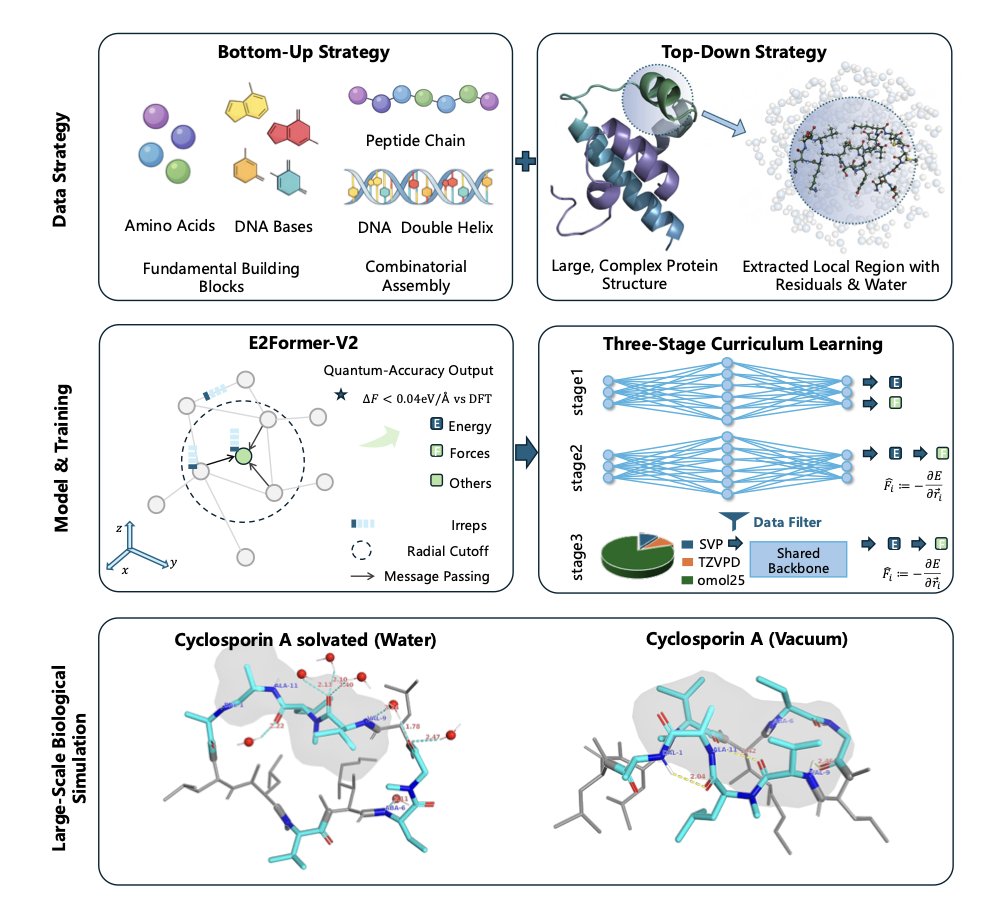
UBio-MolFM: A Universal Molecular Foundation Model for Bio-Systems 1. The UBio-MolFM framework bridges the fundamental gap between quantum-mechanical accuracy and biological scale in molecular simulation, achieving ab initio-level fidelity on biomolecular systems up to ~1,500 atoms. 2. The model introduces three synergistic innovations: UBio-Mol26 dataset, E2Former-V2 architecture, and a Three-Stage Curriculum Learning protocol, each addressing critical limitations in existing approaches. 3. UBio-Mol26 is a large bio-specific dataset with 17 million configurations up to 1,200 atoms, constructed via a "Two-Pronged Strategy" combining bottom-up enumeration of biochemical building blocks with top-down sampling of native protein environments. 4. E2Former-V2 achieves linear-scaling equivariant transformation through Equivariant Axis-Aligned Sparsification (EAAS) and Long-Short Range (LSR) modeling, delivering up to ~4× higher inference throughput compared to strong equivariant baselines. 5. The Three-Stage Curriculum Learning protocol progressively transitions from energy initialization to energy-force consistency with force-focused supervision, effectively mitigating energy offsets across heterogeneous data sources. 6. Rigorous benchmarking demonstrates superior performance on out-of-distribution systems: substantial reductions in force and relative-energy errors compared to MACE-OMol and UMA-S-1p1, particularly for protein optimization and dynamics. 7. The model accurately reproduces key macroscopic observables in downstream MD simulations, including liquid water structure, ionic solvation with correct coordination numbers, solvent-dependent peptide conformations, and precise metal-ion coordination in RNA. 8. UBio-MolFM maintains the environmentally sensitive open and closed conformations of Cyclosporine A in water and vacuum respectively, capturing the competition between intramolecular hydrogen bonds and solvent stabilization. 9. For RNA dynamics, the model provides the most accurate structural description of Mg2+ coordination compared to Amber99 and UMA-S-1p1, correctly reproducing Mg-O distances and flexible angle distributions. 10. The framework represents a significant step toward "executable biology" where quantum-accurate simulations become routine tools for dissecting molecular mechanisms of life, with planned open-science release of pretrained weights and inference engine. 💻Code: github.com/IQuestLab/E2Fo… 📜Paper: arxiv.org/abs/2602.17709 #MolecularSimulation #MachineLearning #ComputationalBiology #ForceFields #QuantumChemistry #Bioinformatics #DeepLearning #MolecularDynamics #FoundationModel #EquivariantNetworks
Biology+AI Daily tweet media
English
0
4
32
2.2K
Wayne
Wayne@WayneCompChem·
Had an amazing time at the AMBER Developer Meeting 2026! 🎉 Gave a talk on my ML/MM implementation and got to meet so many brilliant minds. Learned so much from everyone! Huge thanks to @awgoetz for organizing such a wonderful meeting! #CompChem #MolecularDynamics
Wayne tweet media
English
0
0
1
36
Wayne retweetledi
MolSSI
MolSSI@MolSSI_NSF·
Applications are now being accepted for fellowships within MolSSI’s “Accelerating Curricular Transformation in the Computational Molecular Sciences" Program! Apply for an ACT-CMS Faculty Fellowship by February 28! Full details can be found here: act-cms.molssi.org #compchem
MolSSI tweet media
English
0
3
4
634
Wayne retweetledi
EMBL
EMBL@embl·
🛎️🛎️Looking for a postdoctoral fellowship? Interested in tackling real-world challenges? Then check out EMBL's EIPOD-LinC fellowships. Gain transferable skills and work on self-designed projects to make a lasting impact on global issues. 🗓️Closing date: 2 February
EMBL tweet media
English
1
9
19
2.6K
Wayne
Wayne@WayneCompChem·
🚀 MAPLE, a MLFF-native molecular modeling platform. GPU-parallelized workflows for geometry optimization, NEB, TS search, frequencies & IRC. Supports ANI, AIMNet2, MACE, UMA + D4 & GB. Near-QM accuracy at FF cost, reactions to full enzymes. @ChemRxiv - go.shr.lc/494s0wi
English
0
2
1
1K
Wayne retweetledi
Wayne retweetledi
MolSSI
MolSSI@MolSSI_NSF·
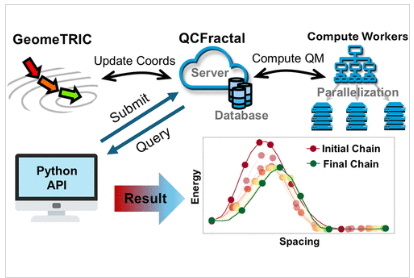
MolSSI’s latest pub, co-authored by Ben Pritchard & Software Fellow Heejune Park, unveils a high-throughput, parallelized approach to Minimum Energy Pathway searches using an optimized NEB workflow — faster, smarter, and built for modern computing. 👀! 😄 pubs.acs.org/doi/full/10.10…
MolSSI tweet media
English
0
1
7
541
Wayne retweetledi
Biology+AI Daily
Biology+AI Daily@BiologyAIDaily·
Apo2Mol: 3D Molecule Generation via Dynamic Pocket-Aware Diffusion Model 1. A new study titled "Apo2Mol" introduces a groundbreaking approach to structure-based drug design, leveraging a dynamic pocket-aware diffusion model to generate 3D molecules that account for protein flexibility. This innovation addresses a critical limitation in current methods that assume rigid protein binding pockets. 2. The core innovation of Apo2Mol lies in its ability to jointly generate ligands and their corresponding holo pocket conformations from apo states. This is achieved through a full-atom hierarchical graph-based diffusion model, which captures realistic protein-ligand interactions and conformational changes. 3. The researchers curated a high-quality dataset of over 24,000 experimentally resolved apo-holo structure pairs from the Protein Data Bank. This dataset provides a robust foundation for training the model, ensuring that it learns from real-world protein dynamics rather than relying on simulated data. 4. Empirical results demonstrate that Apo2Mol achieves state-of-the-art performance in generating high-affinity ligands. The model not only produces molecules with favorable binding affinities but also generates realistic pocket conformations, advancing the capabilities of dynamic structure-based drug design. 5. The study highlights the potential of Apo2Mol to generate novel ligands for emerging drug targets, even when only apo structures are available. This capability is crucial for practical drug discovery scenarios where holo structures are often unknown. 📜Paper: arxiv.org/abs/2511.14559… #DrugDesign #DiffusionModels #ProteinFlexibility #StructureBasedDesign #AIinBiology
Biology+AI Daily tweet media
English
1
15
52
3.3K
Wayne retweetledi
Biology+AI Daily
Biology+AI Daily@BiologyAIDaily·
ForceFM: Enhancing Protein-Ligand Predictions through Force-Guided Flow Matching 1. ForceFM introduces a novel force-guided flow matching model that integrates physical principles into deep learning for molecular docking. This hybrid approach significantly improves the accuracy and physical plausibility of predicted protein-ligand binding poses. 2. The model incorporates a force-guided network that steers ligand conformations towards low-energy states, ensuring physically realistic docking results. This not only enhances docking accuracy but also reduces computational costs compared to traditional unguided methods. 3. ForceFM demonstrates robust generalization across multiple energy functions, including Vina, Glide, Gnina, and Confscore. This flexibility allows it to adapt to various docking scenarios and outperform existing methods in both blind docking and cross-domain evaluations. 4. Extensive experiments on the PDBBind dataset show that ForceFM achieves superior performance in terms of RMSD and physical validity. The model also shows strong generalization to unseen proteins, making it a versatile tool for drug discovery applications. 5. The incorporation of force guidance significantly accelerates sampling efficiency, reducing the number of required steps to achieve optimal docking results. This advancement addresses a key limitation of current deep learning-based docking methods. 6. Despite its promising results, ForceFM currently focuses on rigid docking and does not fully account for protein flexibility or dynamic conformational changes during binding. Future work aims to address these limitations by incorporating molecular dynamics simulations and expanding training on more diverse datasets. 📜Paper: openreview.net/pdf/ae92f0c9f0… #ForceFM #MolecularDocking #DeepLearning #DrugDiscovery #ProteinLigand #AIinBiology
Biology+AI Daily tweet media
English
1
12
68
4.6K
Wayne retweetledi
Brandon Wood
Brandon Wood@bwood_m·
If you are a PhD student interested in AI for chemistry/biology/materials science, come join us! We work on a range of problems from generative modeling for inverse design and sampling to interatomic potentials and electronic structure prediction. Application link below.
GIF
English
8
52
297
22.6K
Wayne retweetledi
Microsoft Research
Microsoft Research@MSFTResearch·
Announcing the 2026 Microsoft Research Fellowship, a program that creates opportunities for faculty, PhD students, and postdocs to collaborate with Microsoft Research on open research challenges that advance science and benefit society. Submit proposals by Dec 2: msft.it/6018tJHf4
English
2
21
134
14.7K
Wayne retweetledi
Jorge Bravo Abad
Jorge Bravo Abad@bravo_abad·
Machine-learning interatomic potentials for long-range systems Machine-learning interatomic potentials have transformed molecular simulation, offering near–quantum accuracy at a fraction of the cost. But there is a persistent gap: most models only “see” short-range environments. This makes them struggle with long-range forces—electrostatics, dispersion, charge redistribution—that shape everything from water structure to protein binding to surface catalysis. Yajie Ji, Jiuyang Liang, and Zhenli Xu propose a promising alternative. Their model, SOG-Net, separates interactions into short-range and long-range components, and learns the long-range part directly in Fourier space. A lightweight latent network assigns “interaction weights” to each atom, and a sum-of-Gaussians filter captures how those forces decay with distance. The result is a learned long-range potential—no hand-tuned exponents, no fixed Coulomb form. Crucially, the long-range computation is accelerated using nonuniform fast Fourier transforms (NUFFT), keeping simulation cost close to linear. The model effectively captures long-range behavior in electrolytes, biomolecular dimers, and even liquid water, matching DFT structure and correlations that short-range models miss. The result is striking: a model that brings first-principles-level long-range physics into large-scale molecular simulations, without the cost explosion of classical Ewald-based approaches. This points toward a future where machine-learned force fields can describe both local chemistry and global interactions—an essential step for accurate simulation of materials, interfaces, and biological environments. Paper: journals.aps.org/prl/abstract/1…
Jorge Bravo Abad tweet media
English
2
6
37
2K
Wayne
Wayne@WayneCompChem·
@ML_Chem 🚀 New in AMBER: ML/MM with link atom scheme 🔗 Integrated AIMNet, EANN & more MLIPs for rxns. Simulated enzyme-catalyzed Diels–Alder rxns, capturing activity, stereoselectivity & TS ⚡ Paving the way for ML-driven enzymology! @ambermdprog 👉 go.shr.lc/4nVnEfq
English
0
0
0
32
Wayne
Wayne@WayneCompChem·
🚀 New in AMBER: ML/MM with link atom scheme 🔗 Integrated AIMNet, EANN & more MLIPs for rxns. Simulated enzyme-catalyzed Diels–Alder rxns, capturing activity, stereoselectivity & TS ⚡ Paving the way for ML-driven enzymology! @ambermdprog 👉 go.shr.lc/4nVnEfq #compchem
English
0
0
1
55
Wayne retweetledi
Biology+AI Daily
Biology+AI Daily@BiologyAIDaily·
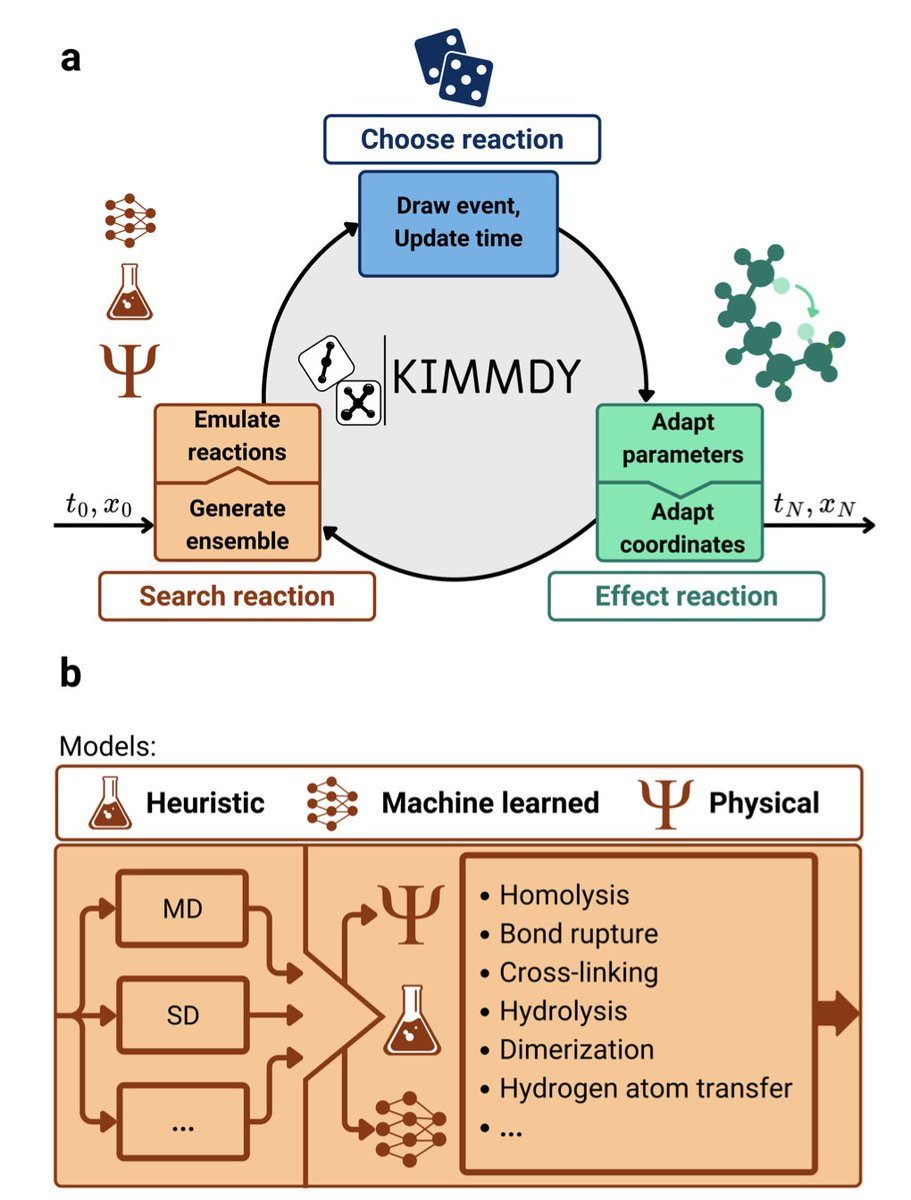
KIMMDY: a biomolecular reaction emulator 1.The authors present KIMMDY, a biomolecular reaction emulator that enables large-scale simulations of biochemical reactions in complex, dynamic molecular systems, addressing a major bottleneck in computational biology. 2.Unlike traditional molecular simulations limited to structural dynamics, KIMMDY explicitly models chemical reactivity by combining kinetic Monte Carlo (kMC) with machine learning and graph neural networks (GNNs) to predict reaction rates across conformational ensembles. 3.A key innovation is that KIMMDY leverages ensemble-based reaction rate predictions, capturing how molecular conformations influence reactivity, a feature missing from conventional kMC-MD approaches. 4.The modular framework of KIMMDY allows integration of both machine-learned, physics-based, or heuristic reaction models, making it highly extensible to new reaction types and biomolecular systems. 5.In validation studies, KIMMDY accurately reproduced hydrogen atom transfer (HAT) dynamics in alkyl radicals, correctly predicting reaction probabilities and trends based on experimental data, even though absolute rates were slightly underestimated due to ignored tunneling effects. 6.Applied to collagen fibrils, KIMMDY uncovered new radical transfer pathways under mechanical stress, identifying DOPA and an overlooked PYD moiety as efficient radical scavengers, providing a novel interpretation of experimental EPR spectra. 7.The method further demonstrated its ability to simulate competing reactions, showing that in dense collagen networks, homolytic bond cleavage can outcompete hydrolysis under mechanical load, an insight unattainable by QM/MM or MD alone. 8.KIMMDY was also applied to DNA origami, predicting unexpectedly low quantum yields for photodimerization in common structural motifs, challenging assumptions in DNA nanotechnology and highlighting the need for experimental reassessment. 9.Overall, KIMMDY enables realistic simulations of reactive biomolecular systems on timescales and system sizes previously inaccessible, providing mechanistic insights into processes like radical migration, competing reaction pathways, and photochemical stability. 10.The work highlights how coupling ensemble-aware machine learning models with adaptive kMC expands the scope of molecular simulations beyond structural dynamics, opening avenues for studying complex biochemical reactivity in health, aging, and biomaterials design. 💻Code: github.com/graeter-group/… 📜Paper: biorxiv.org/content/10.110… #MolecularDynamics #ReactionEmulation #GraphNeuralNetworks #ProteinBiochemistry #ComputationalBiology #DNAOrigami #Mechanochemistry #RadicalChemistry
Biology+AI Daily tweet media
English
0
1
6
715