
@Web3Orbit retweetledi
@Web3Orbit
765 posts


@Web3Orbit
@Web3Orbit22
Technical Writing | Community Builder | Ambassador | Deals -Dm📩
Web3 Katılım Nisan 2022
1.1K Takip Edilen648 Takipçiler


@Web3Orbit retweetledi

Everyone's watching oil hold in the seventies. The number that can't be massaged is sulfur, up roughly 300 PERCENT in a year
Chris Martenson calls that the honest price in a dishonest market.
His reasoning: crude trades through dozens of financial players stacking paper contracts on a handful of physical barrels, so the headline number can be leaned on, a reading he owns as his own.
Sulfur has almost no paper market.
When it triples, something real is happening.
What's real is this.
Sulfur is a byproduct of refining sour crude, the heavy grade the Gulf pumps and America imports, and it feeds the sulfuric acid beneath copper mining, chip fabrication, and above all phosphate fertilizer.
Shut in Gulf fields and refineries and the loss doesn't stop at jet fuel.
Chris's forecast, and he's careful to call it one: an escalation that hits Gulf refining the way Ukraine has gutted Russia's would take out something like HALF the world's sulfur supply, and detonate through food prices, metals, and the entire AI buildout at once.
The asymmetry is what stayed with me after we stopped recording.
The upside of this whole pressure campaign, in his accounting, is that Iran might concede somewhat sooner at a negotiating table.
The downside is a global demand shock he compares to hitting a wall at fifty miles an hour.
Weighing those two against each other is the entire war in one sentence.
@chrismartenson
English
@TheaHogholm fam when the future builders look back at 2024 defi they gonna shake their heads
English

the great news is that pretty much all of this is totally preventable
ethereum and ETH are rapidly growing to global ubiquity. this doesn't change that one bit
future defi solutions won't make these amateur errors (they'll eventually seem like amateur errors... already do to many experts)
attacker supremacy from AI won't last, it's working through a backlog of exploits. the limit result will be much permanently more secure protocols and eth's neutrality and capital gravity well will be more valuable than ever
if you have ETH lent in aave, imo you should get out right now by using onchain limit orders to sell to whale loopers who are actively buying aETH unwind leverage. you can take as little as a 1.1% haircut based on ongoing txns in mid 6-figs, which is much lower than some estimates of final socialized losses.
why can ETH lenders take only a 1.1% haircut now? because loopers want to avoid liquidation from high rates caused by 100% utilization. on the bad debt side, loopers actually win from socialized losses because their debt token (aETH) is the one taking the haircut, so they'd owe less in ETH terms.
the most remarkable thing in this crisis is clearly that billions of dollars in backbone eth lending on aave were in fact exposed to signer risk in a 3rd party bridge... effectively some random downstream fellow was actually an aave admin.
aave additionally has negligently low borrow rates during 100% utilization, leading to extremely dangerous illiquidity. what if ethusd crashed for any reason... eg. if stocks were open and a politician said the wrong thing, btc goes down 5%, eth goes down 8%... this can lead to broader contagion and bad debt.
protocols and their teams like fluid (who've had low level dynamic withdrawal rate limits in protocol from day 1 so can't be insta drained) and spark (who seem to have excellent scientific gov and no exposure for eth lenders to 3rd party bridge admins) deserve respect and attention for doing what they knew was right and possible even before the ecosystem had a forcing function to care about it. same goes with other kinds of security practices that are still fringe, maybe including formal verification and ipfs hashes for frontends
nearly 24h since the attack, the lack of material updates from affected protocols, including kelp, layerzero, and aave, suggests to me the ongoing severity of the situation. many factors are in play, there's probably no great solution, somebody is going to lose big
is just the bridged rsETH (that argubly took bridge risk intentionally) fully on the hook for the bridge failure, and L1 rsETH should be unaffected? however L1 rsETH *was* affected due to gov choices in aave. does aave's junior debt program, umbrella, take the full wipeout? however umbrella's terms & conditions say they have no bridge risk, which aave gov effectively violated without umbrella holders realizing it. does layerzero bear responsibility for allowing their users to be subject to terrible admin config in one of their ecosystem bridges? i'm probably missing aspects here, it's very messy.
Just Use Aave is dead... nobody is going to Just Use Anything anymore
the future of this industry is to do the smart obvious stuff even when it's unpopular, like withdrawal rate limits, better interest rate gov, avoiding toxic market share steroids like degen bridge looping affordances.
and for 10x better user recognition and higher standards around protocol hygiene and security differentiation. degen stuff is fun and amazing but only when you understand the true risks
in sum, if you are lending ETH in aave, get out now at a ~1.1-1.5% haircut by selling to loopers actively unwinding because when the dust settles, a material haircut for Aave v3 ETH lenders is a possibility
ethereum and ETH are growing well to global ubiquity and will be massive net beneficiaries of our industry successfully navigating this crisis season of backlogs of exploits discovered by AI and preventably poor practices in defi architecture/gov. trillions await
English
@Web3Orbit retweetledi

👑実力・実績・人気No1FX自動売買EA👑
ユーロドル専用&バランス型EA
シャーリーテンプル
is.gd/hObZVO
↑詳細はこちら☺️↑
米・生産者物価指数は
前回6.0% 予想6.2% 結果5.5%
コア前回4.6% 予想5.1% 結果4.7%
前日のCPIに続き、より先行指標のPPIでもインフレ鈍化が見られ2日連続でドル安へ。
日本語
@Web3Orbit retweetledi


@Web3Orbit retweetledi


@Web3Orbit retweetledi

CasinoPrestij’de Çifte Fırsat! 🔥
💎 %10 Casino Yatırım Bonusu ile oyuna avantajlı başla!
💰 Olası kayıplarına %30 Discount ile telafi şansı yakala!
⚡️ Kazanmaya hazır mısın? En iyi slotlar ve canlı casino deneyimi seni bekliyor!
🔗 Hemen yatırım yap, avantajları kaçırma!⏳

Türkçe
@Web3Orbit retweetledi


@Web3Orbit retweetledi

@Web3Orbit retweetledi

💰 %200 İLK YATIRIM FIRSATI!
🚀 İlk Yatırımını yap, ayrıcalıklarla dolu Vip seviyelerin kapısını arala!
🤬 Sana özel avantajlar, yüksek oranlar ve daha fazlası seni bekliyor.
👑 Dodobet ile kazanmanın keyfine var, fırsatı kaçırma!
tinyurl.com/WqsQgWNo

Türkçe
@BeaconLayerCast @kenzimori @karansirdesai @miranetwork idk man every week this podcast hits different
English

“What if AI gives us a once-in-a-generation chance to rebuild the internet from the ground up?”
@kenzimori sits down with Karan Sirdesai @karansirdesai, Founder of @miranetwork, to unpack the founder journey behind Mira and the early conviction that AI would become far more than another tech cycle.
They trace Karan’s path from teaching himself to build, sending cold DMs, experimenting with crypto arbitrage, and working alongside figures like Balaji Srinivasan and Sandeep Nailwal, to spotting the AI shift before it became obvious to the broader market.
The conversation also explores why Karan has consistently chosen the unconventional route, how his time at Accel exposed him to frontier AI companies early, and why the pace of AI progress made one thing clear: this wouldn’t just change startups or software, it would reshape how humans work, think, create, and interact with the internet itself.
English
English
“What if the most important AI infrastructure isn’t the biggest model — but the one you can actually trust?”
@sachimiyasaki sits down with Karan Sirdesai @karansirdesai, Founder of @miranetwork, to explore how Mira is approaching decentralized AI from a more focused angle: making machine intelligence reliable enough for real-world use.
They discuss why Mira is not trying to become a full-stack AI protocol, how its approach differs from networks like Bittensor, Ritual, and Sahara, and why focusing on trust and verification could make Mira a stronger fit inside the wider AI infrastructure stack.
The episode also breaks down Mira’s reliability architecture, from its core verification layer to node-level consensus, and why the next evolution of AI APIs may not be about simply accessing more models, but about knowing whether the answers you receive can actually be trusted.
English
@BeaconLayerCast @karansirdesai @miranetwork bro went from uni experiments to building real infrastructure that's the way
English
This week on the podcast, we’re joined by Karan Sirdesai @karansirdesai, Co-Founder and CEO of Mira Network @miranetwork.
We cover Karan’s path from his university days and early crypto experiments to building Mira, an infrastructure layer focused on making AI more reliable, verifiable, and safe to use at scale.
The episode goes deep into one of AI’s biggest unsolved problems: hallucinations. Karan breaks down why unreliable outputs are such a major blocker for real-world adoption, especially in high-stakes areas like finance, healthcare, and other trust-sensitive industries.
We also discuss the early “aha” moment behind Mira, shaped by experiments with GPU rentals, AI workflows, and the insight that multiple models could work together to verify outputs through consensus.
Karan also shares how working with Balaji Srinivasan, his unconventional founder journey, and Mira’s AI + crypto-native team influenced the company’s mission: building decentralized infrastructure that helps make artificial intelligence more trustworthy, dependable, and useful in the real world.

English
@Web3Orbit retweetledi

@Web3Orbit retweetledi

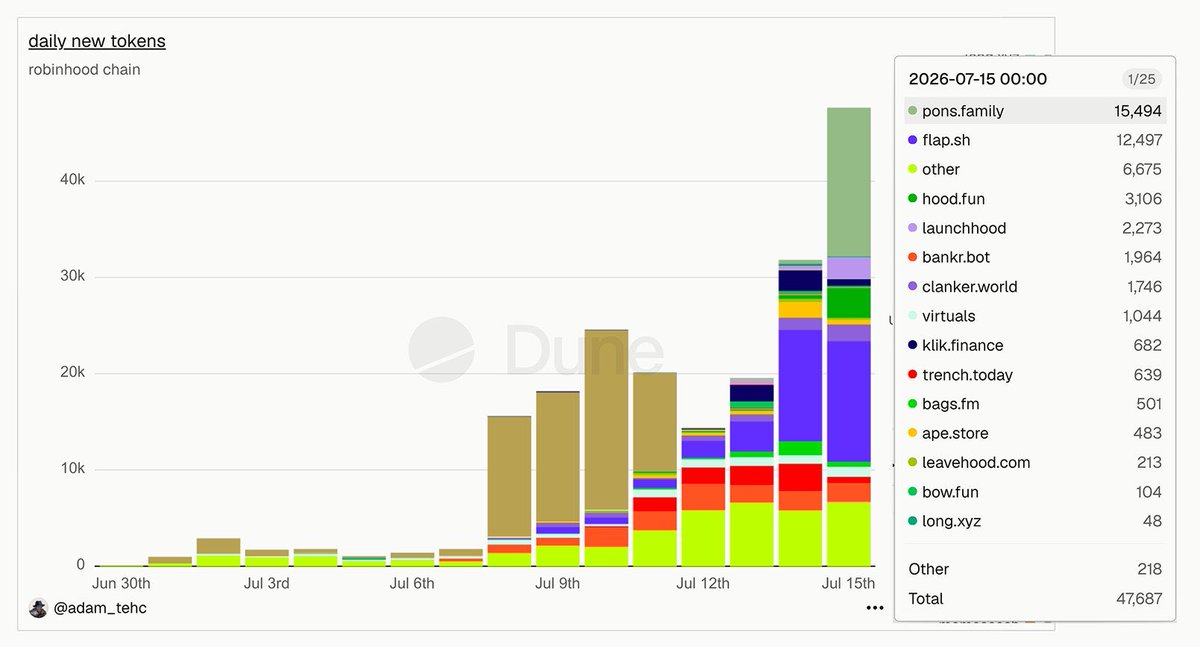
47,000 robinhood tokens deployed yesterday
with @ponsdotfamily taking the lead among the launchpads
will any rivals emerge to challenge them? I predict that some excellent launchpads will be launching this week.
English
@BeaconLayerCast yo the fact that they didnt rush it out just to farm TVL says everything about what kind of team this is
English
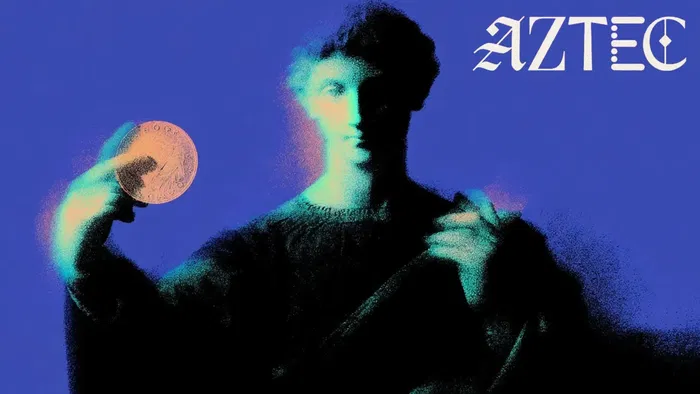
After 7 years, Aztec’s Ignition mainnet is live.
Yet zero transactions or apps work yet. The chain is deliberately empty – because true protocol-level privacy can’t be rushed.
Here’s how this phased, decentralization-first launch positions Aztec as the leading private L2 on ETH👇
~~ Analysis by @punk1831 ~~
What's Actually Running
Think of Ignition like Ethereum's beacon chain from 2020. The governance and consensus infrastructure is operational, but the execution layer remains offline. The team is running what amounts to a live stress test with real money on the line.
Each sequencer staked at least 200K $AZTEC tokens to participate. They're producing blocks, provers are generating validity proofs, and the whole system is settling on Ethereum, just without any transactions.
The goal of running Ignition with real economics for 2-3 months will (hopefully) surface any remaining issues before transactions go live in early 2026, while setting the network up to be decentralized from day one.
The Decentralization Push
In Aztec's eyes, launching an L2 with a centralized sequencer from the get go rarely translates to decentralization down the road.
Centralized sequencers generate $40-150M annually in fees. Once you're locked into those cash flows, decentralization means making transactions slower and more expensive. The tension never resolves.
Instead, @aztecnetwork will launch fully decentralized from day one across three dimensions:
➢ Ownership is decentralized through $AZTEC token holders who control network parameters, fee schedules, and protocol upgrades.
➢ Block Production runs through 617 decentralized sequencer nodes using proof-of-stake. These nodes order transactions and produce blocks. To prevent any single party from gaining control, a small committee of sequencers is randomly selected to validate blocks before they are submitted to Ethereum.
➢ Proving is permissionless from the get-go. Provers generate the zero-knowledge proofs that cryptographically confirm all transactions in a batch are valid. They aggregate blocks and submit a single, final proof to Ethereum for verification, guaranteeing the integrity of the entire rollup.
When transactions go live, Aztec will qualify as a Stage 2 rollup, the highest decentralization tier for L2s. Most chains have pushed boundaries in one direction. Hitting all three pillars simultaneously is rare.
In Aztec's eyes, decentralization isn't optional for privacy. Centralized sequencers would face pressure from governments to install backdoors. Privacy requires cryptography plus decentralization, not one or the other.
What Happens Next
There are two major upcoming events, one technical and one token-related.
On the technical side, Ignition will remain live for 2-3 more months with sequencers producing empty blocks while the team monitors for issues. Early 2026 is when transactions flip on. Users will be able to send payments, deploy smart contracts, and interact with applications. By the end of 2026, block times should drop from the current 36-72 seconds down to 4 seconds, faster than Ethereum's 12-second blocks.
On the token side, the pre-allocation for the $AZTEC token sale is currently live, with the sale beginning December 2nd and running for 4 days. The sale uses @Uniswap's continuous clearing auction mechanism, meaning if you bid early, part of your bid clears at early prices and part clears later. This levels the playing field between early and late participants while letting price discovery happen naturally. When the auction ends, it automatically creates a Uniswap V4 liquidity pool at the final clearing price.
To participate in the sale, you must register prior to December 2nd.
For compliance, Aztec is using @ZKPassport, enabling people to prove cryptographically that they're from allowed jurisdictions and not on sanctions lists without traditional KYC. The sale is open to US retail and nearly every country worldwide, with the exception of sanctioned countries on the standard OFAC list.
The current 500 sequencers already staked $AZTEC tokens they purchased in a whitelisted genesis sale. They're earning rewards in $AZTEC right now. However, all tokens, whether from the genesis sale, the current public auction, or insider allocations, are non-transferable until Token Generation Event (TGE).
There is no set date for when TGE occurs, rather the community votes on it. However, the earliest date it can go live is February 11th, 2026. Once TGE happens, tokens purchased in the public auction unlock 100%.
7 Years in the Making
Overall, Ignition and the $AZTEC token sale demonstrate both the complexity of successfully executing privacy, as well as the extent to which Aztec is going to get this right.
First you have the need for decentralization from the get-go to ensure privacy endures, a feat unaccomplished by countless L2s launched so far. Then you have the tension between privacy and compliance, which the token sale's integration with ZK Passport helps solve.
Regardless of how mainnet goes, and I'm hopeful all goes well, this launch process shines as a testament to diligent design, demonstrating that forces like decentralization, privacy, and compliance can all coexist
English
@BeaconLayerCast if insiders can trade on nonpublic info then the whole point is gone bruv
English
Amid Venezuela's suspicious Polymarket win, Rep. Ritchie Torres is fast-tracking his bill to bar officials from trading on nonpublic info.
Here's why getting prediction market rules right could shape their future as trusted tools — or exploits for our political elites.👇
~~ Analysis by @kenzimori ~~
The Political Case
The argument for restricting public officials is straightforward: if politicians can legally profit from bets on outcomes they directly influence or have advance knowledge of, it twists incentives and erodes the already near-record low public trust in the U.S. government.
This dynamic already plays out in traditional securities markets, where the STOCK Act of 2012 was supposed to address congressional insider trading. The results have been underwhelming. Despite the law's existence, examples of suspicious trading by members of Congress have continued to surface with regularity:
- Senator Richard Burr sold $1.7M in stock immediately following a classified COVID-19 briefing; the DOJ later dropped the investigation without charges.
- Senator Kelly Loeffler offloaded millions in assets after the same confidential pandemic warning, yet faced no legal consequences when federal probes concluded.
- Senator Tommy Tuberville traded millions in defense contractor stocks and violated the STOCK Act's reporting deadline 132 times, yet faced no significant consequences.
Since the STOCK Act passed in 2012, not a single member of Congress has been prosecuted under its provisions, while the penalty for concealing trades is a trivial $200 fee, which ethics committees routinely waive.
Prediction markets present an even more direct temptation. Unlike stock trading, where connections between policy decisions and price movements can be complex and deniable, prediction markets offer explicit bets on government actions. Will a military intervention occur? Will a bill pass? The path from insider knowledge to profit proves incredibly clear.
While the specifics are still unclear,
@RitchieTorres
bill reportedly extends STOCK Act principles to prediction markets, hopefully with greater, more meaningful enforcement. Legal frameworks matter and must be established. Without clear rules explicitly covering prediction markets, prosecuting suspicious trades becomes even harder.
Why It Matters for Prediction Markets
The broader issue extends way beyond politicians.
Prediction markets generated over $44B in combined trading volume in 2025. They've proven their value as information aggregation tools — Polymarket's accuracy during the 2024 election cycle demonstrated what these platforms can do when they function properly.
Functionally, insider participation doesn't necessarily break these markets. The transparency of blockchain-based platforms means suspicious positions are visible. Traders can tail wallets showing unusual activity. Information still gets priced in, even if the source is questionable.
But reputation is a different matter. Prediction markets are still fighting for legitimacy with regulators, institutions, and the broader public. If the prevailing narrative becomes that these platforms are just another vehicle for connected insiders to profit from privileged information, the policy progression and mainstream adoption get harder when every major market move triggers headlines about who knew what and when.
There's also a pragmatic concern: if today's broadly crypto-friendly regulators don't work with platforms to address these issues, hostile administrations of the future could do so with a much heavier hand. The window for self-regulation and productive collaboration is now.
The Path Forward
None of this means prediction markets need heavy-handed regulation across the board. Skepticism toward regulatory overreach is warranted. But there's a meaningful difference between resisting regulatory capture and acknowledging that certain narrow restrictions serve everyone's interests.
Legally barring public officials from betting on outcomes they can influence falls squarely in the latter category. Few believe politicians should have new avenues to monetize their positions. The broader crypto community, which arose in part as a check against establishment abuse, has reason to support exactly this kind of accountability.
We don't yet know the full details of Torres's bill. The specifics will matter. But the direction is right. Prediction markets work because they aggregate dispersed information into prices, and that function can survive some insider activity. The bigger risk is reputational: repeated incidents of apparent insider trading invite the kind of regulatory scrutiny that could constrain the industry far more than targeted rules around public officials ever would.
The honest reality is that this behavior will likely continue regardless of what rules get passed. Enforcement is hard. Proving intent is harder.
But there's much to be said for establishing clear norms and for the transparency that blockchain-based markets provide. Every trade on Polymarket is visible. Wallet activity can be tracked. The same infrastructure that enables suspicious trades also enables scrutiny of them. Researchers and journalists can monitor for patterns. Communities can call out suspicious activity in real time.
These are formative years for these technologies, which, if stewarded well, will reshape how we aggregate information about uncertain futures. Getting the foundations right matters. Ensuring that government officials can't exploit these tools for personal profit seems like a reasonable place to start.
English
@EthanSaelberg nvm the data leaks part scared me more than i expected
English

@KianFujimizu people act like defi is safer now but the onchain risk is still very much real just wearing a different outfit
English

Back in peak DeFi farming days you’d think about APY as how many days it would take to recoup principal with the yield.
That’s how risky it felt and that same rigor should be applied when thinking about interacting onchain today.
Yes, not all farms/vaults are created equal. Not all strategies carry the same risk. But you have to factor in the nonzero chance of total or meaningful principal loss.
I get asked constantly what is enough yield to come onchain. I think it’s at least 18% today. Anything below that is not worth the hassle or the risk.
I won’t do formal math but here is my mental model: smart contract risk + opsec risk (yours) + opsec risk (any protocol you’re interacting with).
These are ever-evolving risks. The more protocols you interact with the more risk blows out exponentially.
There are also things you can’t control. Anthropic’s latest model just found vulnerabilities in codebases from some of the most resourced and established companies in the world. If you think DeFi protocols (written faster and audited lighter) are a harder target, think again.
I say this as a DeFi bull.
Onchain rates are low because there is no demand for assets. That is not the same as risk being priced correctly.
English

Great read ⬇️
Whether you’re a holder of solana:9cRCn9rGT8V2imeM2BaKs13yhMEais3ruM3rPvTGpump or not, you have to admire @blknoiz06 & what he’s doing for the space.
I sense major green candles soon!
Unfortunately I only own about 1k tokens after my recent drain. If I had more liquid, I’d be FULL porting under 200m 🀄️🐂
Ansem 🐂🀄️@blknoiz06
English