
RehashedDAO

1K posts

RehashedDAO banner
RehashedDAO

RehashedDAO

@Web3Rehashed

Community-owned podcast led by @OnchainDiana. High-signal conversations, crypto alpha and insights from leading web3 builders & artists 📧 [email protected]

Washington, DC Katılım Eylül 2011
291 Takip Edilen53.5K Takipçiler
Sabitlenmiş Tweet
RehashedDAO
RehashedDAO@Web3Rehashed·
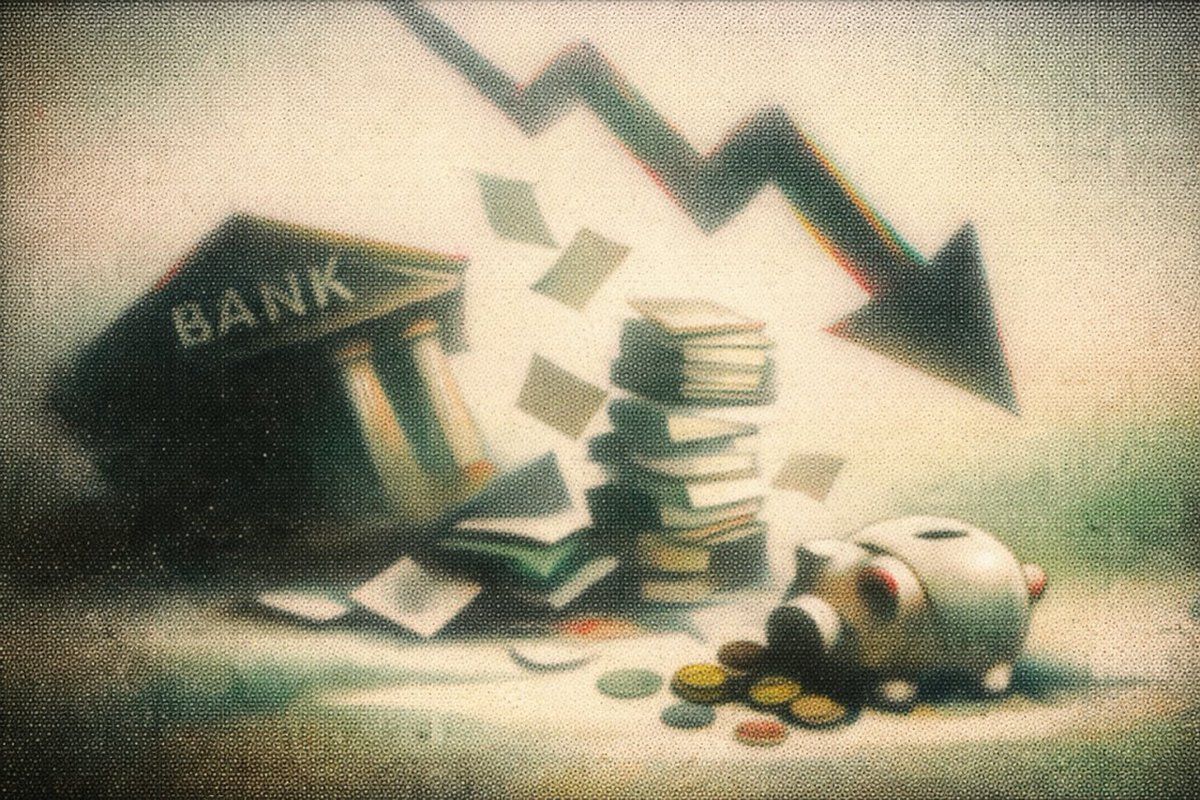
The banking crisis never really ended. It just moved from front-page panic into a slower, quieter phase: commercial real estate stress, unrealized losses, deposit sensitivity, and the growing question of what happens when trust in traditional rails weakens again. For crypto, this is not only a macro story. It is a reminder of why onchain finance exists in the first place👇 ~~ Analysis by @0xAlexCashman ~~ The Crisis Is Not 2008, But It Is Not Gone The mistake is to frame every banking stress event as another 2008. This cycle looks different. The system is more capitalized, regulators are more alert, and the largest banks are not obviously sitting on the same type of mortgage leverage that broke the system last time. But that does not mean the risk disappeared. The current pressure is more subtle: higher rates repriced bond portfolios, commercial real estate remains under stress, depositors are more willing to move money quickly, and smaller banks are still exposed to asset-liability mismatches. The FDIC’s latest data does not show a full systemic breakdown. Problem banks remain within a normal non-crisis range, and no major wave of failures is currently visible. But the same reports also show persistent weakness in certain loan books and elevated unrealized losses. That is the uncomfortable part. A system can look stable at the surface while still carrying slow-moving fractures underneath. Why Crypto Should Care Crypto people often talk about banking risk as if it only matters for banks. That is wrong. The 2023 banking panic showed that crypto is still deeply connected to traditional finance. When Silicon Valley Bank failed, USDC temporarily lost confidence because part of Circle’s reserves were trapped inside the banking system. That moment was important because it broke a simple illusion. Stablecoins may live onchain, but many of their reserves still live offchain. This means crypto can inherit banking risk even when users think they are holding a digital dollar. If the banking partner fails, the stablecoin can face redemption pressure. If payment rails close over the weekend, liquidity becomes fragmented. If regulators step in, the market has to wait for clarity. In other words, crypto does not escape the banking system just by tokenizing dollars. It only changes where the risk becomes visible. The Real Stress Point Is Trust Banking runs are not purely about balance sheets. They are about confidence. A bank can be technically solvent and still fail if depositors no longer believe they can access funds quickly. In a digital world, that trust can disappear in hours. This is where crypto changes the psychology of finance. Onchain markets operate continuously. Stablecoins move 24/7. DeFi liquidations happen automatically. Treasury-backed tokens can be monitored in real time. Wallets do not close for the weekend. That does not make crypto risk-free. But it does create a different expectation: users increasingly want financial systems that are transparent, portable, and always available. When banks stress, crypto’s value proposition becomes easier to understand. Not because “banks are dead.” But because people suddenly remember that access, settlement, and custody are not abstract concepts. They are the whole system. Stablecoins Become The Bridge And The Weak Point Stablecoins are probably the most important part of this story. They are the bridge between traditional finance and onchain finance, but also the place where both risk models collide. On one side, stablecoins give users fast settlement, global transferability, DeFi liquidity, and a programmable dollar layer. On the other side, they rely on reserve management, banking access, short-term Treasuries, custodians, audits, and regulatory treatment. That makes them powerful, but not fully independent. A future banking crisis would likely increase demand for stablecoins, especially outside the U.S., where users may want dollar exposure without relying on weaker local banking systems. At the same time, it would also increase scrutiny around who holds the reserves, how redemptions work, which banks are involved, and whether stablecoin issuers can survive stress without depending on emergency guarantees. The next stablecoin winners may not just be the biggest issuers. They may be the ones with the cleanest reserves, strongest banking relationships, most transparent reporting, and best redemption infrastructure. Bitcoin’s Narrative Gets Stronger, But Not Automatically Every banking crisis helps Bitcoin’s story. A scarce, non-sovereign asset with self-custody and no bank balance sheet behind it becomes easier to explain when banks start looking fragile. But the market does not always move in a straight line. In a panic, investors often sell liquid assets first. Bitcoin can trade like a risk asset before it trades like a hedge. Liquidity shocks can hit crypto hard even when the long-term narrative improves. This is the paradox. Banking stress strengthens the philosophical case for Bitcoin, but it can also create short-term volatility across the entire crypto market. The same applies to DeFi. A banking crisis can make decentralized lending, onchain collateral, and transparent settlement look more attractive. But if the crisis hits stablecoin liquidity or risk appetite, DeFi can also suffer first. The direction depends on whether the market sees crypto as an escape route or as another high-beta asset to sell. Looking Ahead The next banking crisis probably will not look like the last one. It may be less cinematic than 2008 and less sudden than SVB, but more distributed across CRE losses, regional bank pressure, deposit flight, and confidence shocks. For crypto, the lesson is simple. The industry should not celebrate bank stress as if it automatically benefits onchain finance. The relationship is more complicated. Stablecoins still rely on banks. Exchanges still need rails. Institutions still need custody. Users still need fiat on and off ramps. But the direction of travel is clear. Every banking shock makes the case for transparent reserves, 24/7 settlement, self-custody, tokenized Treasuries, and neutral financial infrastructure a little easier to understand. The banking crisis is not just a threat. It is a stress test for the old system and a credibility test for the new one. Crypto does not win by saying banks failed. Crypto wins if it can prove that open financial rails are safer, faster, and more resilient when trust starts breaking elsewhere.
RehashedDAO tweet media
English
24
28
148
328.9K
RehashedDAO
RehashedDAO@Web3Rehashed·
@khalid697431 Panic is visible. The quiet phase is where risk gets ignored, hidden, or normalized until it suddenly becomes impossible to contain
English
0
0
0
2
khalid
khalid@khalid697431·
@Web3Rehashed the quiet phase is always more dangerous than the panic
English
1
0
0
1
RehashedDAO
RehashedDAO@Web3Rehashed·
The banking crisis never really ended. It just moved from front-page panic into a slower, quieter phase: commercial real estate stress, unrealized losses, deposit sensitivity, and the growing question of what happens when trust in traditional rails weakens again. For crypto, this is not only a macro story. It is a reminder of why onchain finance exists in the first place👇 ~~ Analysis by @0xAlexCashman ~~ The Crisis Is Not 2008, But It Is Not Gone The mistake is to frame every banking stress event as another 2008. This cycle looks different. The system is more capitalized, regulators are more alert, and the largest banks are not obviously sitting on the same type of mortgage leverage that broke the system last time. But that does not mean the risk disappeared. The current pressure is more subtle: higher rates repriced bond portfolios, commercial real estate remains under stress, depositors are more willing to move money quickly, and smaller banks are still exposed to asset-liability mismatches. The FDIC’s latest data does not show a full systemic breakdown. Problem banks remain within a normal non-crisis range, and no major wave of failures is currently visible. But the same reports also show persistent weakness in certain loan books and elevated unrealized losses. That is the uncomfortable part. A system can look stable at the surface while still carrying slow-moving fractures underneath. Why Crypto Should Care Crypto people often talk about banking risk as if it only matters for banks. That is wrong. The 2023 banking panic showed that crypto is still deeply connected to traditional finance. When Silicon Valley Bank failed, USDC temporarily lost confidence because part of Circle’s reserves were trapped inside the banking system. That moment was important because it broke a simple illusion. Stablecoins may live onchain, but many of their reserves still live offchain. This means crypto can inherit banking risk even when users think they are holding a digital dollar. If the banking partner fails, the stablecoin can face redemption pressure. If payment rails close over the weekend, liquidity becomes fragmented. If regulators step in, the market has to wait for clarity. In other words, crypto does not escape the banking system just by tokenizing dollars. It only changes where the risk becomes visible. The Real Stress Point Is Trust Banking runs are not purely about balance sheets. They are about confidence. A bank can be technically solvent and still fail if depositors no longer believe they can access funds quickly. In a digital world, that trust can disappear in hours. This is where crypto changes the psychology of finance. Onchain markets operate continuously. Stablecoins move 24/7. DeFi liquidations happen automatically. Treasury-backed tokens can be monitored in real time. Wallets do not close for the weekend. That does not make crypto risk-free. But it does create a different expectation: users increasingly want financial systems that are transparent, portable, and always available. When banks stress, crypto’s value proposition becomes easier to understand. Not because “banks are dead.” But because people suddenly remember that access, settlement, and custody are not abstract concepts. They are the whole system. Stablecoins Become The Bridge And The Weak Point Stablecoins are probably the most important part of this story. They are the bridge between traditional finance and onchain finance, but also the place where both risk models collide. On one side, stablecoins give users fast settlement, global transferability, DeFi liquidity, and a programmable dollar layer. On the other side, they rely on reserve management, banking access, short-term Treasuries, custodians, audits, and regulatory treatment. That makes them powerful, but not fully independent. A future banking crisis would likely increase demand for stablecoins, especially outside the U.S., where users may want dollar exposure without relying on weaker local banking systems. At the same time, it would also increase scrutiny around who holds the reserves, how redemptions work, which banks are involved, and whether stablecoin issuers can survive stress without depending on emergency guarantees. The next stablecoin winners may not just be the biggest issuers. They may be the ones with the cleanest reserves, strongest banking relationships, most transparent reporting, and best redemption infrastructure. Bitcoin’s Narrative Gets Stronger, But Not Automatically Every banking crisis helps Bitcoin’s story. A scarce, non-sovereign asset with self-custody and no bank balance sheet behind it becomes easier to explain when banks start looking fragile. But the market does not always move in a straight line. In a panic, investors often sell liquid assets first. Bitcoin can trade like a risk asset before it trades like a hedge. Liquidity shocks can hit crypto hard even when the long-term narrative improves. This is the paradox. Banking stress strengthens the philosophical case for Bitcoin, but it can also create short-term volatility across the entire crypto market. The same applies to DeFi. A banking crisis can make decentralized lending, onchain collateral, and transparent settlement look more attractive. But if the crisis hits stablecoin liquidity or risk appetite, DeFi can also suffer first. The direction depends on whether the market sees crypto as an escape route or as another high-beta asset to sell. Looking Ahead The next banking crisis probably will not look like the last one. It may be less cinematic than 2008 and less sudden than SVB, but more distributed across CRE losses, regional bank pressure, deposit flight, and confidence shocks. For crypto, the lesson is simple. The industry should not celebrate bank stress as if it automatically benefits onchain finance. The relationship is more complicated. Stablecoins still rely on banks. Exchanges still need rails. Institutions still need custody. Users still need fiat on and off ramps. But the direction of travel is clear. Every banking shock makes the case for transparent reserves, 24/7 settlement, self-custody, tokenized Treasuries, and neutral financial infrastructure a little easier to understand. The banking crisis is not just a threat. It is a stress test for the old system and a credibility test for the new one. Crypto does not win by saying banks failed. Crypto wins if it can prove that open financial rails are safer, faster, and more resilient when trust starts breaking elsewhere.
RehashedDAO tweet media
English
24
28
148
328.9K
RehashedDAO
RehashedDAO@Web3Rehashed·
@PeachySqua38070 That’s probably the next phase. Not “who has the most supply,” but “who can survive a real audit and a real panic.”
English
0
0
0
0
Peachy Squad
Peachy Squad@PeachySqua38070·
@Web3Rehashed the next stablecoin winners won't be the biggest ones. they'll be the ones with the cleanest reserves
English
1
0
0
1
RehashedDAO
RehashedDAO@Web3Rehashed·
@bukucu2565 Unfortunately yes. Most risk frameworks only go viral once the risk has already played out.
English
0
0
0
8
RehashedDAO
RehashedDAO@Web3Rehashed·
@Sunnhi471960 Exactly. DeFi only works as an escape route if the exit doors are actually liquid when everyone runs to them.
English
0
0
0
11
Sunnhi
Sunnhi@Sunnhi471960·
@Web3Rehashed DeFi can be the escape route or another thing to sell in a panic. depends entirely on stablecoin liquidity
English
1
0
0
10
RehashedDAO
RehashedDAO@Web3Rehashed·
For the final episode of Season 2, @tednotlasso joined us to discuss the evolution of decentralized social ecosystems, the challenges of building community in web3, and how she became one of the most followed people on @farcaster_xyz. Links below:
English
12
11
101
52.5K
RehashedDAO retweetledi
webdi.eth
webdi.eth@OnchainDiana·
New on @web3Rehashed: a quick Collector Focus interview with Adam Weitsman "I collect NFTs because I love the artworks, the creators behind them, and the history being made. For me, it's about legacy, not making money." - Adam Weitsman @AdamWeitsman Adam Weitsman brings a different kind of weight to the NFT world. His background is far from the usual crypto-native path: an industrialist and entrepreneur known for building a major scrap metal recycling business, a long-time philanthropist, and a collector whose relationship with art began long before Web3 entered the conversation. Before NFTs, Weitsman had already spent decades around physical art, including running his own gallery in Greenwich Village. That history gives his presence in the digital art space a distinct meaning. He is not simply entering NFTs as a market participant, but approaching them through the lens of culture, artists, provenance, and long-term significance. In a space often driven by speculation and short-term narratives, Weitsman stands out as a collector focused on legacy. His interest in NFTs reflects a broader belief that digital art is part of art history being written in real time. Image: Bored Ape Yacht Club #9094, 2021.
webdi.eth tweet media
English
24
14
69
24.2K
JEAMS
JEAMS@JEAMSETH07·
@Web3Rehashed @RiscZero Tech + community + education = real adoption Building trust always wins over building hype
English
1
0
1
48
RehashedDAO
RehashedDAO@Web3Rehashed·
“What role does community play when the technology is still hard for most people to understand?” We chatted with Reka, Head of Community at @RiscZero, to unpack the state of zero-knowledge infrastructure and what it takes to bring complex blockchain protocols to market. We discussed Reka’s path from founder to joining RISC Zero, why ZK matters for the next phase of crypto, and how education, community, and clear positioning can help turn deeply technical products into ecosystems people actually want to join. Reka also shared her experience advising crypto projects, the challenges of building trust around emerging infrastructure, and why successful go-to-market in web3 is less about hype and more about helping people understand why the technology matters.
English
22
14
84
42.2K
Kisa
Kisa@kotyanarakete·
honestly @Web3Rehashed is one of the few crypto pods rn that doesnt make me want to mute lol builders talking about real shit like knowledge graphs and bridges. i actually learn something
Kisa tweet media
English
1
0
4
38
Hana Sakurai / 2423.eth
Hana Sakurai / 2423.eth@hanasukai_eth·
The CLARITY Act is bigger than a headline. It may mark a turning point in US crypto policy. From legal uncertainty to real market structure. I broke down what changed, what’s next, and why it matters beyond short-term price action.👇
RehashedDAO@Web3Rehashed

The CLARITY Act just cleared a key Senate stage. On May 14, the Senate Banking Committee advanced the Digital Asset Market Clarity Act by a 15–9 vote, moving it toward the full Senate. For crypto, this is not just another “regulation is coming” headline. It is one of the clearest signs yet that the US is moving from enforcement-first crypto policy toward a formal market structure framework👇 ~~ Analysis by @hanasukai_eth ~~ For years, the biggest problem in US crypto regulation was not simply that rules were strict. The bigger problem was that the rules were unclear. Builders, exchanges, funds, token issuers, DeFi teams, and even public companies had to operate in a system where the same asset could be treated as a security by one regulator, a commodity-like instrument by another, and a legal grey zone by everyone else. That uncertainty created a strange market. Capital wanted exposure to crypto, but legal departments were cautious. Founders wanted to build in the US, but many had to consider offshore structures. Institutions wanted clear custody, listing, disclosure, and market rules, but the framework was fragmented. CLARITY is trying to address that core issue. Based on the available information, the bill’s central purpose is to define how digital assets should be classified, where SEC authority ends, where CFTC authority begins, and how digital commodity exchanges, brokers, and dealers should be registered and supervised. That sounds boring. But in crypto, boring regulation can be extremely important. The market does not need every token to be blessed. It does not need every project to survive. It does not need politicians promising that crypto will “change everything.” What it needs is a map. If CLARITY becomes law, the US could finally move closer to a system where market participants know what they are allowed to do, what disclosures they need, which regulator they answer to, and what protections apply to users. That matters for several reasons. First, it reduces legal uncertainty for serious builders. Second, it gives institutions a cleaner path to participate. Third, it makes it harder for low-quality projects to hide behind ambiguity. And fourth, it puts crypto closer to becoming a regulated part of the financial system, not an outside experiment constantly fighting the same legal battles. But this is not law yet. The committee vote is a major step, not the finish line. The bill still needs to pass the full Senate. It also needs to be reconciled with the House version and with related Senate work on digital commodities. There are still political disputes around AML rules, stablecoin rewards, and whether government officials should face stronger limits around crypto-related conflicts of interest. That last point matters. A good crypto bill should not only protect innovation. It should also protect the legitimacy of the market. If the public sees digital asset legislation as a gift to insiders, exchanges, donors, or politically connected actors, the regulatory win becomes weaker. So the real question is not just “will CLARITY pass?” The real question is whether the final version creates durable rules that can survive market cycles, scandals, lobbying pressure, and future administrations. My view: this is structurally bullish for the industry, but not in the simple “price must go up tomorrow” way. It is bullish because serious regulation lowers the cost of participation for serious capital. It is bullish because the US appears closer to accepting that crypto will not disappear. It is bullish because the conversation is moving from “should this industry exist?” to “how should this industry be regulated?” That is a very different stage of maturity. Still, the market should be careful with overreaction. Regulatory clarity does not remove bad tokenomics. It does not fix weak products. It does not make every altcoin investable. It does not guarantee that liquidity immediately floods into the sector. But it can change the foundation. And in markets, foundations matter. The CLARITY Act is not the end of crypto’s regulatory fight in the US. But it may be one of the first real signs that the fight is entering a more institutional phase.

English
15
13
250
66.9K
max.eth
max.eth@MaxArt_eth·
Read my analysis: the real lesson from Polymarket is that public data becomes a privacy risk the moment it can be stitched into a human profile.
RehashedDAO@Web3Rehashed

Recently, Polymarket was accused of being “hacked” after a threat actor claimed to have obtained 300K+ records from the platform. But based on the available information, this looks less like a classic crypto exploit and more like something deeper: the privacy problem of public on-chain markets👇 ~~ Analysis by @MaxArt_eth ~~ Polymarket’s response was direct: it denied that a breach happened and argued that the data was already accessible through public APIs and on-chain records. The alleged dataset reportedly included user profiles, names/images, proxy wallets, base addresses and market-related data, but Polymarket’s position is that this was not stolen private data: it was scraped public data. That distinction matters. A smart contract exploit means funds were drained. A database breach means private internal data was accessed. But this incident appears closer to the third category: public infrastructure being aggregated, packaged, and sold as if it were a private leak. And honestly, this is where Web3 gets uncomfortable. Crypto users are used to the idea that transactions are public. That is part of the pitch: transparency, auditability, open settlement, no hidden books. But there is a difference between “technically public” and “socially understood as exposed.” Most users know their wallet can be viewed onchain. Fewer users fully internalize that their market activity, linked addresses, profiles, comments, timing, trading behavior, and positions can be reconstructed into a readable identity graph. This is especially sensitive for Polymarket because prediction markets are not just DeFi trades. People are not only buying BTC or swapping tokens. They are expressing views on politics, elections, war, regulation, court cases, celebrities, companies, macro events, and sometimes deeply controversial topics. That makes the data more personal. A wallet’s trading history on a prediction market can reveal what someone believes, what they know, what they are exposed to, and sometimes what they may be incentivized to influence. So even if Polymarket is correct that no private system was breached, the incident still highlights a real issue: public data can become dangerous when it is indexed well. This is the same pattern we’ve seen across crypto for years. One isolated wallet address does not always tell you much. But combine it with an API, a profile, timing patterns, known deposits, social handles, comments, and counterparty behavior, and suddenly “public transparency” turns into surveillance. That does not mean Polymarket is uniquely broken. It means prediction markets sit at the intersection of three hard problems: financial privacy, information markets, and human identity. The bull case for Polymarket is that markets can produce better real-time probabilities than media narratives or expert commentary. The bear case is that once those markets become large enough, they create incentives for scraping, manipulation, insider activity, doxxing, and targeted pressure. This incident is not proof that Polymarket failed at custody or settlement. But it is a reminder that “on-chain by design” does not automatically mean “safe for users by design.” The next phase for prediction markets probably needs more than liquidity and better UX. It needs better privacy assumptions. Clearer user expectations. Better separation between public market data and user identity. Better rate limits and API design. And probably a stronger cultural understanding that “public” does not mean “harmless.” Polymarket may be right that this was not a hack in the traditional sense. But the market should not dismiss it completely. Because the more valuable prediction markets become, the more valuable their data exhaust becomes too. And if prediction markets are going to become serious financial and information infrastructure, this is the kind of edge case they need to solve before it becomes a larger one. Based on the available information, this was not a confirmed fund-draining exploit. But it was a useful stress test. Not of Polymarket’s contracts. Of Web3’s privacy model.

English
20
11
58
50.5K
RehashedDAO
RehashedDAO@Web3Rehashed·
"Most of the online actions that we take on the internet will be run by ZK." In a recent episode, we chatted with @reka_eth from @RiscZero about the future of ZK within our online world. Find the full episode at the links below!
English
19
30
47
154.5K
RehashedDAO
RehashedDAO@Web3Rehashed·
@Frieren139355 @reka_eth @RiscZero That is the point I liked too: it makes ZK feel practical, not abstract. If normal people can see how it changes everyday trust and privacy, the whole conversation gets a lot more real.
English
0
0
0
4
RehashedDAO
RehashedDAO@Web3Rehashed·
@BluishJust50954 @reka_eth @RiscZero Not really “move trust from one server to another”. ZK changes the trust model itself. You verify a claim without revealing the underlying data, so privacy becomes native, not layered on top.
English
0
0
0
5
RehashedDAO
RehashedDAO@Web3Rehashed·
@LasxAt67024 Appreciate that. The “boundless” mindset matters because building always gets harder before it gets meaningful.
English
0
0
0
18
Giselda Anglo
Giselda Anglo@LasxAt67024·
@Web3Rehashed 'Keep building things you love' — such a powerful reminder from Reka! Being boundless is the mindset every Web3 builder needs 🔥
English
1
0
1
30
RehashedDAO
RehashedDAO@Web3Rehashed·
"Be boundless." Reka bringing the inspiration in the 3rd Episode of Season 3. Tune in at the links below to hear the full episode.
English
8
8
100
111.9K
RehashedDAO
RehashedDAO@Web3Rehashed·
@susjung29 That is the goal, something that pushes builders forward, especially when the work gets intense. Releasing this felt timely.
English
0
0
0
18