

@aureotrack More projects are beginning to understand the importance of analytics and user-friendly market tools.
English
khalid
9 posts

@khalid697431
Web3 builder ⚒️ | NFT collector 🖼️ | Testnet user 🧪 | DeFi participant 💰 Exploring new protocols 🚀 | Supporting innovation 💡 | Staying ahead 📈





@angiefierceTy so, does ita have a crush on izumi?



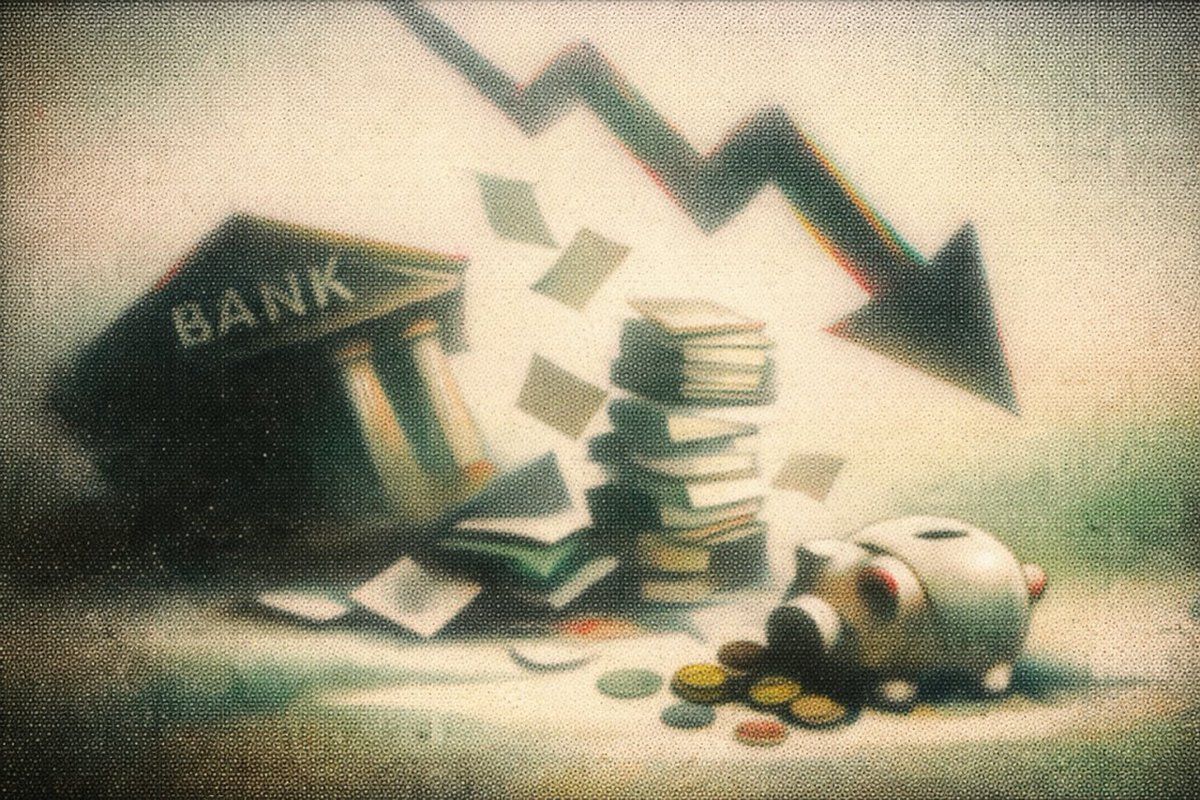

The banking crisis never really ended. It just moved from front-page panic into a slower, quieter phase: commercial real estate stress, unrealized losses, deposit sensitivity, and the growing question of what happens when trust in traditional rails weakens again. For crypto, this is not only a macro story. It is a reminder of why onchain finance exists in the first place👇 ~~ Analysis by @0xAlexCashman ~~ The Crisis Is Not 2008, But It Is Not Gone The mistake is to frame every banking stress event as another 2008. This cycle looks different. The system is more capitalized, regulators are more alert, and the largest banks are not obviously sitting on the same type of mortgage leverage that broke the system last time. But that does not mean the risk disappeared. The current pressure is more subtle: higher rates repriced bond portfolios, commercial real estate remains under stress, depositors are more willing to move money quickly, and smaller banks are still exposed to asset-liability mismatches. The FDIC’s latest data does not show a full systemic breakdown. Problem banks remain within a normal non-crisis range, and no major wave of failures is currently visible. But the same reports also show persistent weakness in certain loan books and elevated unrealized losses. That is the uncomfortable part. A system can look stable at the surface while still carrying slow-moving fractures underneath. Why Crypto Should Care Crypto people often talk about banking risk as if it only matters for banks. That is wrong. The 2023 banking panic showed that crypto is still deeply connected to traditional finance. When Silicon Valley Bank failed, USDC temporarily lost confidence because part of Circle’s reserves were trapped inside the banking system. That moment was important because it broke a simple illusion. Stablecoins may live onchain, but many of their reserves still live offchain. This means crypto can inherit banking risk even when users think they are holding a digital dollar. If the banking partner fails, the stablecoin can face redemption pressure. If payment rails close over the weekend, liquidity becomes fragmented. If regulators step in, the market has to wait for clarity. In other words, crypto does not escape the banking system just by tokenizing dollars. It only changes where the risk becomes visible. The Real Stress Point Is Trust Banking runs are not purely about balance sheets. They are about confidence. A bank can be technically solvent and still fail if depositors no longer believe they can access funds quickly. In a digital world, that trust can disappear in hours. This is where crypto changes the psychology of finance. Onchain markets operate continuously. Stablecoins move 24/7. DeFi liquidations happen automatically. Treasury-backed tokens can be monitored in real time. Wallets do not close for the weekend. That does not make crypto risk-free. But it does create a different expectation: users increasingly want financial systems that are transparent, portable, and always available. When banks stress, crypto’s value proposition becomes easier to understand. Not because “banks are dead.” But because people suddenly remember that access, settlement, and custody are not abstract concepts. They are the whole system. Stablecoins Become The Bridge And The Weak Point Stablecoins are probably the most important part of this story. They are the bridge between traditional finance and onchain finance, but also the place where both risk models collide. On one side, stablecoins give users fast settlement, global transferability, DeFi liquidity, and a programmable dollar layer. On the other side, they rely on reserve management, banking access, short-term Treasuries, custodians, audits, and regulatory treatment. That makes them powerful, but not fully independent. A future banking crisis would likely increase demand for stablecoins, especially outside the U.S., where users may want dollar exposure without relying on weaker local banking systems. At the same time, it would also increase scrutiny around who holds the reserves, how redemptions work, which banks are involved, and whether stablecoin issuers can survive stress without depending on emergency guarantees. The next stablecoin winners may not just be the biggest issuers. They may be the ones with the cleanest reserves, strongest banking relationships, most transparent reporting, and best redemption infrastructure. Bitcoin’s Narrative Gets Stronger, But Not Automatically Every banking crisis helps Bitcoin’s story. A scarce, non-sovereign asset with self-custody and no bank balance sheet behind it becomes easier to explain when banks start looking fragile. But the market does not always move in a straight line. In a panic, investors often sell liquid assets first. Bitcoin can trade like a risk asset before it trades like a hedge. Liquidity shocks can hit crypto hard even when the long-term narrative improves. This is the paradox. Banking stress strengthens the philosophical case for Bitcoin, but it can also create short-term volatility across the entire crypto market. The same applies to DeFi. A banking crisis can make decentralized lending, onchain collateral, and transparent settlement look more attractive. But if the crisis hits stablecoin liquidity or risk appetite, DeFi can also suffer first. The direction depends on whether the market sees crypto as an escape route or as another high-beta asset to sell. Looking Ahead The next banking crisis probably will not look like the last one. It may be less cinematic than 2008 and less sudden than SVB, but more distributed across CRE losses, regional bank pressure, deposit flight, and confidence shocks. For crypto, the lesson is simple. The industry should not celebrate bank stress as if it automatically benefits onchain finance. The relationship is more complicated. Stablecoins still rely on banks. Exchanges still need rails. Institutions still need custody. Users still need fiat on and off ramps. But the direction of travel is clear. Every banking shock makes the case for transparent reserves, 24/7 settlement, self-custody, tokenized Treasuries, and neutral financial infrastructure a little easier to understand. The banking crisis is not just a threat. It is a stress test for the old system and a credibility test for the new one. Crypto does not win by saying banks failed. Crypto wins if it can prove that open financial rails are safer, faster, and more resilient when trust starts breaking elsewhere.