

Weco AI
84 posts


The first experimental evidence of recursive self-improvement (RSI). Autoresearching the autoresearch agent for eight days. The result beats the harness we hand-tuned for two years, on held-out benchmarks: 🧵(1/7)

The first experimental evidence of recursive self-improvement (RSI). Autoresearching the autoresearch agent for eight days. The result beats the harness we hand-tuned for two years, on held-out benchmarks: 🧵(1/7)

The first experimental evidence of recursive self-improvement (RSI). Autoresearching the autoresearch agent for eight days. The result beats the harness we hand-tuned for two years, on held-out benchmarks: 🧵(1/7)

The first experimental evidence of recursive self-improvement (RSI). Autoresearching the autoresearch agent for eight days. The result beats the harness we hand-tuned for two years, on held-out benchmarks: 🧵(1/7)

Everyone assumes RSI would lead to an intelligence explosion. Is that really the case? We tried to clean up the logic after 8 months of building RSI at the harness layer. Not all RSI is equal. We split it into 4 levels: delegation, net positive, ignition, and inflection. (1/9)


One of our autoresearch runs sat flat for 60 steps. One message got it moving again. Everyone is pushing research agents toward full autonomy, but what helps most is being able to step in when a run goes wrong, without breaking the loop. (1/6)


We benchmarked 7 frontier models on 3 categories of autoresearch tasks: ML engineering, harness/prompt engineering, and algorithmic discovery. Fable-5 won overall even under cost constraint, but on ML engineering, the open model Kimi-K2.7-Code surpassed frontier models.🧵(1/5)


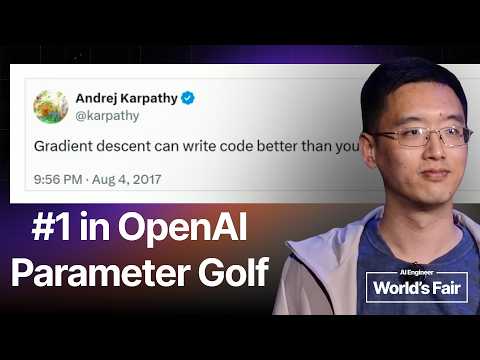
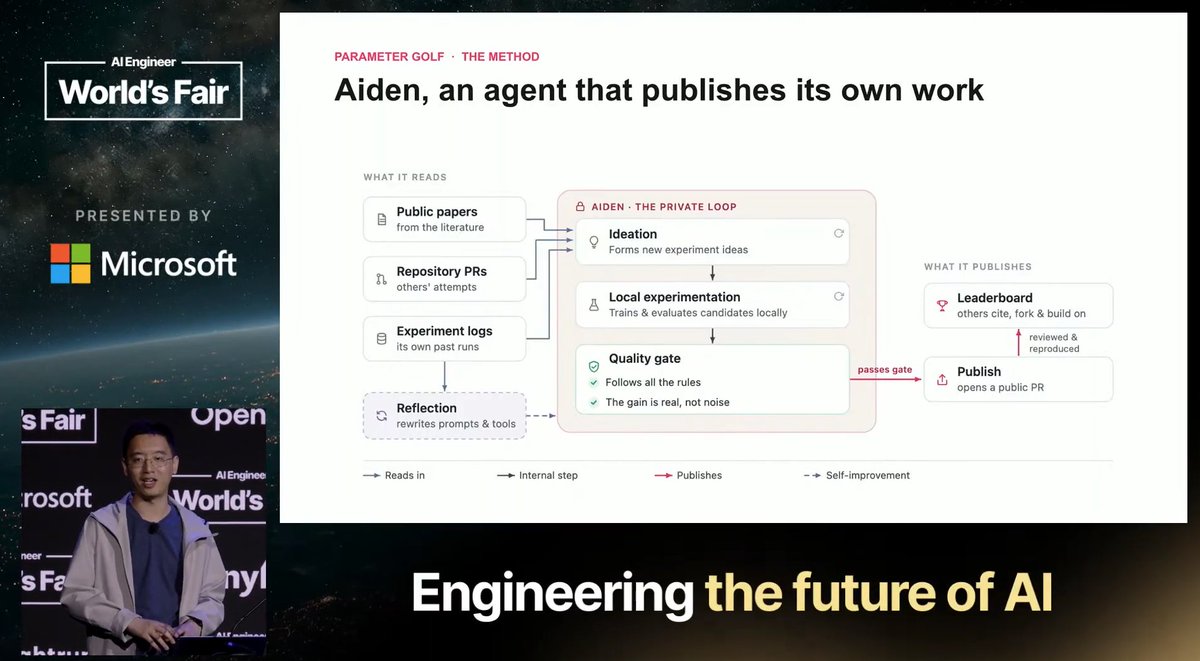
OpenAI ran a hiring challenge, but the top candidate was one they couldn’t hire: our autonomous research agent, Aiden. In Parameter Golf, Aiden ran for 22 days, and out-outperformed all 1,016 other researchers: 🧵 (1/8)