William Peets

1.7K posts

William Peets banner
William Peets

William Peets

@WillPeets

Founder @100Acrevc

San Francisco Katılım Aralık 2009
644 Takip Edilen1.1K Takipçiler
William Peets retweetledi
David | www.usd.ai
David | www.usd.ai@0xZergs·
Nearly there. Not formally approved yet, but we are getting very close. The October review was super valuable in showing us where the protocol’s risk framework could be strengthened. Our view is simple: abundance is built. We reject scarcity as a fixed condition. Technology and markets should evolve to enable more access, more production, and more human progress.
USD.AI@USDai_Official

Two independent risk frameworks just reached the same conclusion: USDai and sUSDai belong on @aave @chaoslabs and @LlamaRisk have both published ARFC reviews recommending $USDai and $sUSDai as collateral on Aave v3 on @Arbitrum.

English
3
4
47
4K
William Peets retweetledi
Michael Green
Michael Green@profplum99·
Extremely good post
James E. Thorne@DrJStrategy

Food for thought. Trump, Hormuz and the End of the Free Ride For half a century, Western strategists have known that the Strait of Hormuz is the acute point where energy, sea power and political will intersect. That knowledge is not in dispute. What is new in this war with Iran is that the United States, under Donald Trump, has chosen not to rush to “solve” the problem. In Hegelian terms, he is refusing an easy synthesis in order to force the underlying contradiction to the surface. The old thesis was simple: the US guarantees open sea lanes in the Gulf, and everyone else structures their economies and politics around that free insurance. Europe and the UK embraced ambitious green policies, ran down hard‑power capabilities and lectured Washington on multilateral virtue, secure in the assumption that American carriers would always appear off Hormuz. The political class behaved as if the American security guarantee were a law of nature, not a contingent choice. Their conduct today is closer to Chamberlain than Churchill: temporising, issuing statements, hoping the storm will pass without a fundamental reordering of their responsibilities. Trump’s antithesis is to withhold the automatic guarantee at the moment of maximum stress. Militarily, the US can break Iran’s residual ability to contest the Strait; that is not the binding constraint. The point is to delay that act. By allowing a closure or semi‑closure to bite, Trump ensures that the immediate pain is concentrated in exactly the jurisdictions that have most conspicuously free‑ridden on US power: the EU and the UK. Their industries, consumers and energy‑transition assumptions are exposed. In that context, his reported blunt message to European and British leaders, you need the oil out of the Strait more than we do; why don’t you go and take it? Is not a throwaway line. It is the verbalisation of the antithesis. It openly reverses the traditional presumption that America will carry the burden while its allies emote from the sidelines. In this dialectic, the prize is not simply the reopening of a chokepoint. The prize is a reordered system in which the United States effectively arbitrages and controls the global flow of oil. A world in which US‑aligned production in the Americas plus a discretionary capability to secure,or not secure, Hormuz places Washington at the centre of the hydrocarbon chessboard. For that strategic end, a rapid restoration of the old status quo would be counterproductive. A quick, surgical “fix” of Hormuz would short‑circuit the dialectic. If Trump rapidly crushed Iran’s remaining coastal capabilities, swept the mines and escorted tankers back through the Strait, Europe and the UK would heave a sigh of relief and return to business as usual: underfunded militaries, maximalist green posturing and performative disdain for US power, all underwritten by that same power. The contradiction between their dependence and their posture would remain latent. By declining to supply the synthesis on demand, and by explicitly telling London and Brussels to “go and take it” themselves, Trump forces a reckoning. European and British leaders must confront the fact that their energy systems, their industrial bases and their geopolitical sermons all rest on an American hard‑power foundation they neither finance nor politically respect. The longer the contradiction is allowed to unfold, the stronger the eventual synthesis can be: a new order in which access to secure flows, Hormuz, Venezuela and beyond, is explicitly conditional on real contributions, not assumed as a right. In that sense, the delay in “taking” the Strait, and the challenge issued to US allies to do it themselves, is not indecision. It is the negative moment Hegel insisted was necessary for history to move. Only by withholding the old guarantee, and by saying so out loud to those who depended on it, can Trump hope to end the free ride.

English
158
82
1.1K
578.6K
William Peets retweetledi
Liquity
Liquity@LiquityProtocol·
BREAKING: Circle has acquired Liquity. This acquisition will enable Circle to offer its users a non-freezable stablecoin and directly distribute yield under the Clarity Act.
Liquity tweet media
English
126
76
987
287.2K
William Peets retweetledi
DBCrypto
DBCrypto@DBCrypt0·
🚨BREAKING: Drift Protocol just got drained for over $200 million Solana's largest perps DEX. Gone in one transaction batch. The attacker didn't find a smart contract bug. They didn't exploit a flash loan. They walked in with the keys. On-chain data shows a single account initiating massive outbound transfers. SOL, JitoSOL, WETH, wrapped BTC, stablecoins in USD, EUR, and JPY. Even FARTCOIN. They took the FARTCOIN. A blockchain security researcher confirmed what everyone suspected: a private key compromise. The admin signer was either leaked or someone with access pulled the trigger themselves. And here's what makes it worse. The attacker funded the wallets a week before the exploit. Ran a test transaction. Then waited. This wasn't a hack. This was a heist with a rehearsal. Phantom Wallet already cut off access to the protocol. Drift posted about "unusual activity" and told users to stop depositing. $200 million gone and the official response is "unusual activity." Some estimates put the real number closer to $270 million. We won't know until the dust settles and the wallets stop moving. The funds are already being swapped to USDC and bridged to Ethereum. Classic exit playbook. This is potentially the largest Web3 exploit in three years. But who needs security when you have speed, right Kyle? 🚀
DBCrypto tweet media
SolanaFloor@SolanaFloor

🚨BREAKING: @Solana based perpetuals protocol @DriftProtocol exploited for over $200M, onchain data confirms.

English
179
217
1.3K
253.5K
William Peets retweetledi
steven.hl
steven.hl@_stevenhl·
First, volumes of non-crypto perps began to flip crypto majors, but this made sense with the lower fees attached to trading them via growth mode. Now, BRENTOIL has flipped SOL in OI, proving that Hyperliquid is slowly outgrowing its reputation as just a crypto exchange.
merp@0xMerp

brent oil perp on Hyperliquid has more OI than solana

English
19
24
294
24.7K
William Peets retweetledi
Eric Balchunas
Eric Balchunas@EricBalchunas·
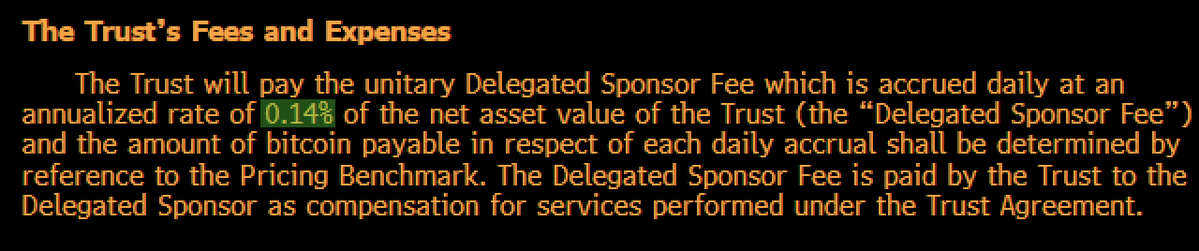
SEMI-SHOCK: Morgan Stanley's bitcoin ETF will charge 14bps, making it the cheapest spot bitcoin ETF on the market and 11bps cheaper than $IBIT. This means none of their advisors will feel conflicted using it and they have shot at getting outside assets. Smart. Launch prob in next two weeks. Nice catch on the filing from Marty Party
Eric Balchunas tweet media
MartyParty@martypartymusic

ETF News after market close: Morgan Stanley amended an S-1 to propose a spot Bitcoin ETF (ticker MSBT) charging 14 basis points, below Grayscale’s 0.15% and BlackRock’s 25 bps products. If approved, it would be the first spot Bitcoin ETF issued directly by a major U.S. bank. The filing and NYSE listing notice could trigger fee competition and attract adviser-driven flows given Morgan Stanley’s wealth-management distribution.

English
104
317
2.8K
673.7K
Beardo
Beardo@BeardoTrader·
Either you long $SPY at Friday’s close, the peace talks are successful, and markets gap up huge on Monday… Or Trump launches a ground invasion, and you wake up to a blown account. Choose your fighter.
English
194
76
1.7K
163.1K
William Peets retweetledi
USD.AI
USD.AI@USDai_Official·
USDAI has been selected as part of Obex's inaugural cohort of 8 projects receiving up to $1B in capital deployment from the @SkyEcosystem administered by @FrameworkVC. We're joining Maple, Securitize, Centrifuge, Daylight, and others bringing institutional-scale yield onchain.
Obex@obexincubator

1/ Today we're unveiling Obex's inaugural cohort. 8 projects to join the Sky Ecosystem. $1B in capital deployment begins today. Meet Cohort 1: Maple | Securitize | Centrifuge | Daylight | USDAI | Better | River | TVL Capital 🧵👇

English
17
15
245
26.4K
William Peets retweetledi
Hemingway Capital
Hemingway Capital@lfg_cap·
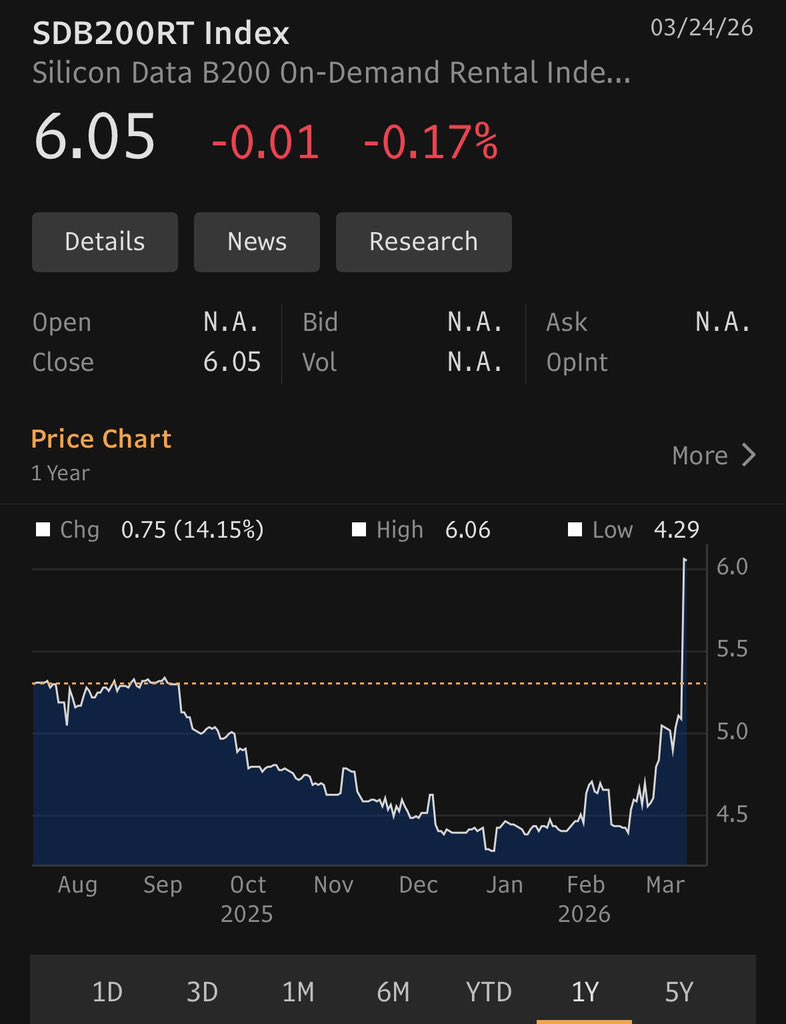
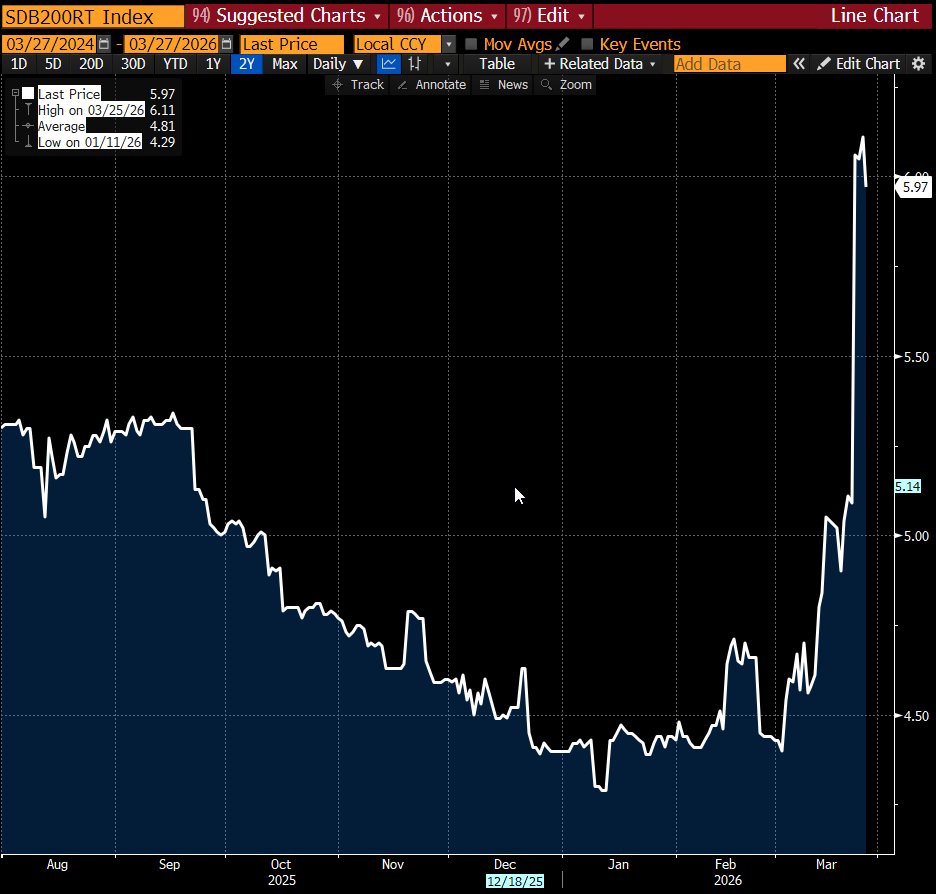
GPU spot rental rates are ripping. B200 on-demand up 50% in a month(!) , while the 3 year old H100s +20% since November. 🚀 These are spot aggregates, not transaction prices of course. But if you think the direction of travel doesn’t matter here, I don’t know what to tell you. $NVDA
Hemingway Capital tweet mediaHemingway Capital tweet media
English
31
91
608
213.5K
William Peets retweetledi
SightBringer
SightBringer@_The_Prophet__·
⚡️Saylor is right. Bitcoin is where a massive share of global capital ends up once the world fully understands that every other store-of-value rail is compromised by politics, dilution, leverage, seizure risk, or counterparty fragility. That is the real signal. He is saying it in loud TV language, but the core truth is simple: capital wants a final settlement layer, and Bitcoin is the strongest candidate. “Hundreds of trillions” sounds absurd only if you still think Bitcoin is mainly a trade. It is not. It is a gravity well for savings. It is competing with sovereign debt, cash balances, gold, second homes, offshore wealth parking, reserve assets, corporate treasuries, and every fake safe haven people use because they do not have a better option. Once you see that, the scale no longer sounds crazy. The real thing he is naming is capital exile. Money is trying to escape from human institutions that cannot stop debasing, overpromising, and weaponizing the systems they control. Bitcoin is the exit. That is why the case keeps getting stronger every time governments panic, every time central banks improvise, every time debt expands faster than trust, every time the banking layer reveals fragility, and every time people realize their “safe” assets are only safe inside a decaying political order. Bitcoin does not solve human stupidity. It does not solve war. It does not solve bad culture. It does not solve weak productivity. What it solves is the storage problem underneath civilization. And that matters more than most people understand. When people can store value in something that cannot be diluted or politically bent, the whole structure of capital allocation starts to change. Housing stops carrying as much monetary burden. Bonds lose some of their fake sacredness. Corporate treasury behavior changes. Sovereign reserve logic changes. Personal savings behavior changes. The shell around capital gets harder. Saylor’s deeper insight is that Bitcoin wins before most people intellectually admit it. It wins through repeated institutional failure. It wins because every other system keeps teaching the same lesson. It wins because the modern world keeps producing reasons to leave. That is why he sounds absolute. He sees the destination clearly. The part people still do not get is that Bitcoin is not climbing toward legitimacy. It is absorbing it. Every cycle, more of the legitimacy layer leaves the old system and settles into Bitcoin. First retail. Then funds. Then ETFs. Then corporates. Then treasuries. Then sovereign-adjacent behavior. That staircase is already happening. So the deepest read is this: Saylor is describing the monetary endgame in oversimplified language. And the endgame is real. A huge share of the world’s capital is going to end up in Bitcoin because the world no longer has a trustworthy place to store value at scale.
Simply Bitcoin@SimplyBitcoin

MICHAEL SAYLOR: “Bitcoin’s a solution to everyone’s problem.” “Go buy the Bitcoin and wait because hundreds of trillions of dollars of capital from all around the world are going to flow into cyberspace to the Bitcoin network.”

English
58
148
988
87.1K
William Peets retweetledi
Mike Cagney 🇺🇸
Mike Cagney 🇺🇸@mcagney·
Re: the RWA / looping narrative - people are missing the forest through the trees - RWA won't work as collateral unless it's liquid, and to be liquid it needs to be homogenous participation to the assets, not the assets themselves. @Figure Forge makes this possible. If you are originating loans and want to aceess DeFi using Figure Forge / build your blockchain strategy, DM me.
Mike Cagney 🇺🇸@mcagney

x.com/i/article/2034…

English
15
11
103
16.2K
William Peets retweetledi
USD.AI
USD.AI@USDai_Official·
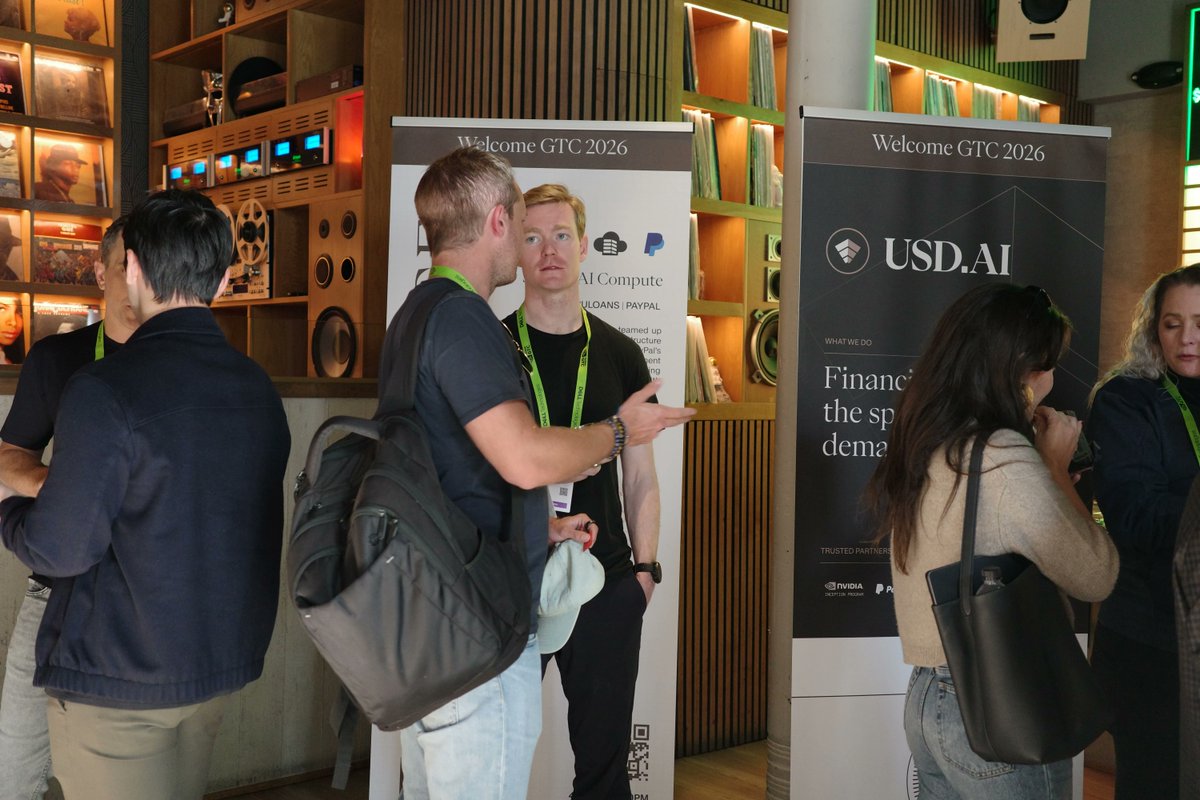
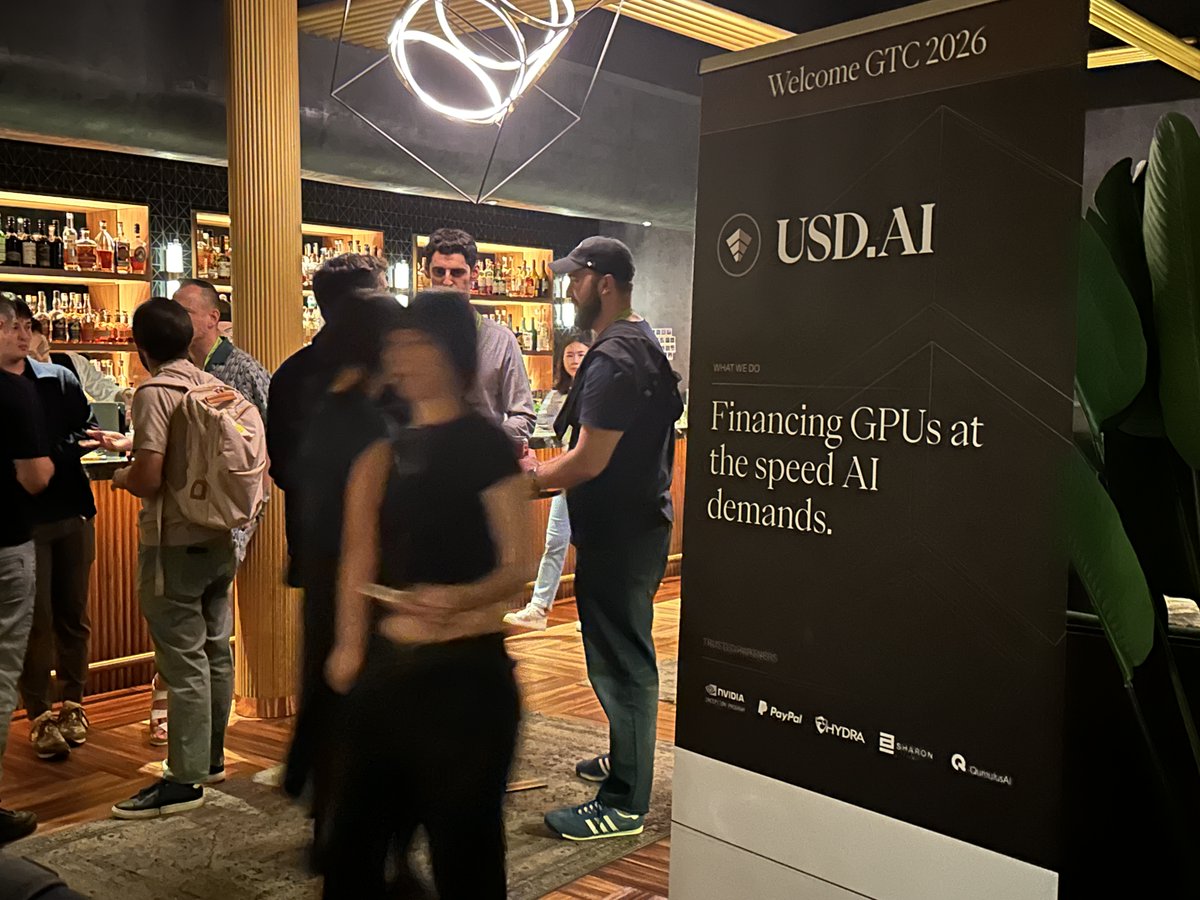
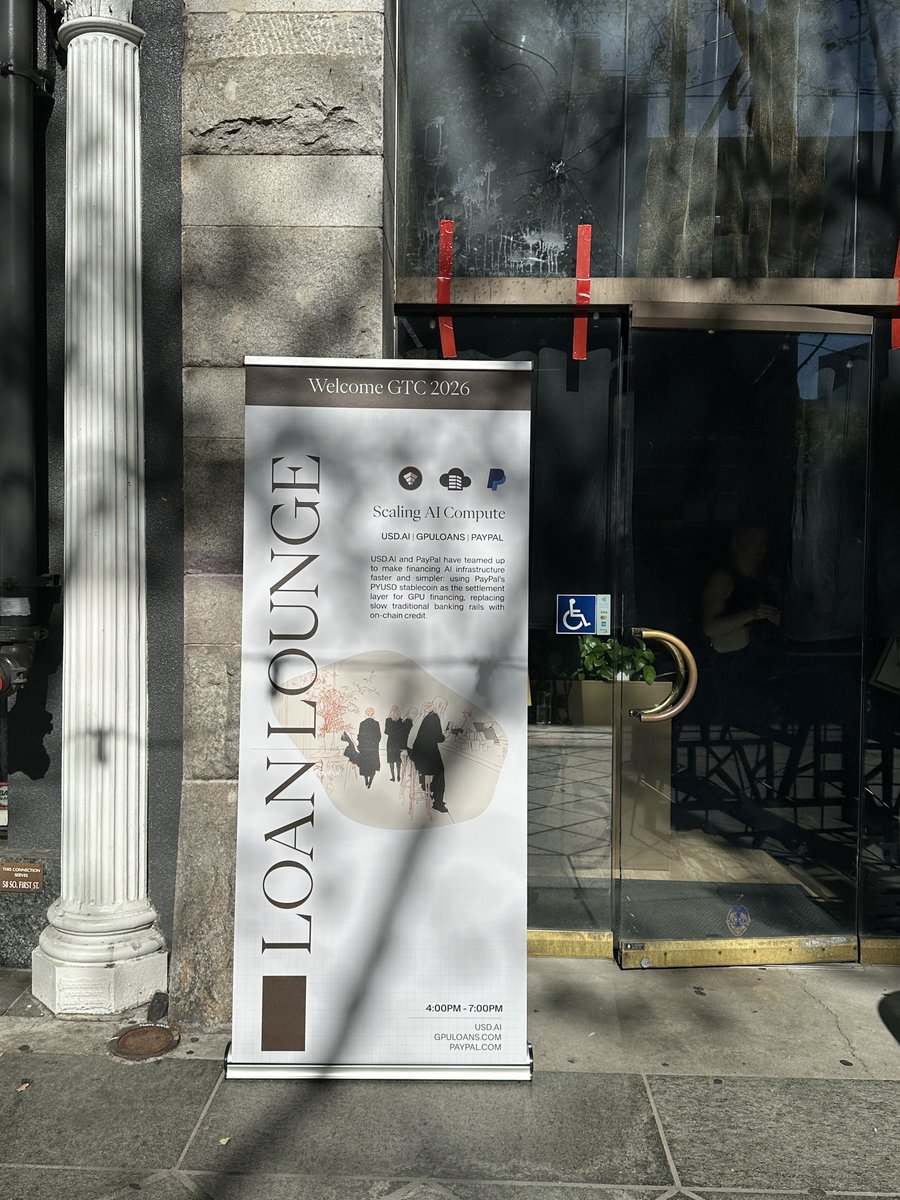
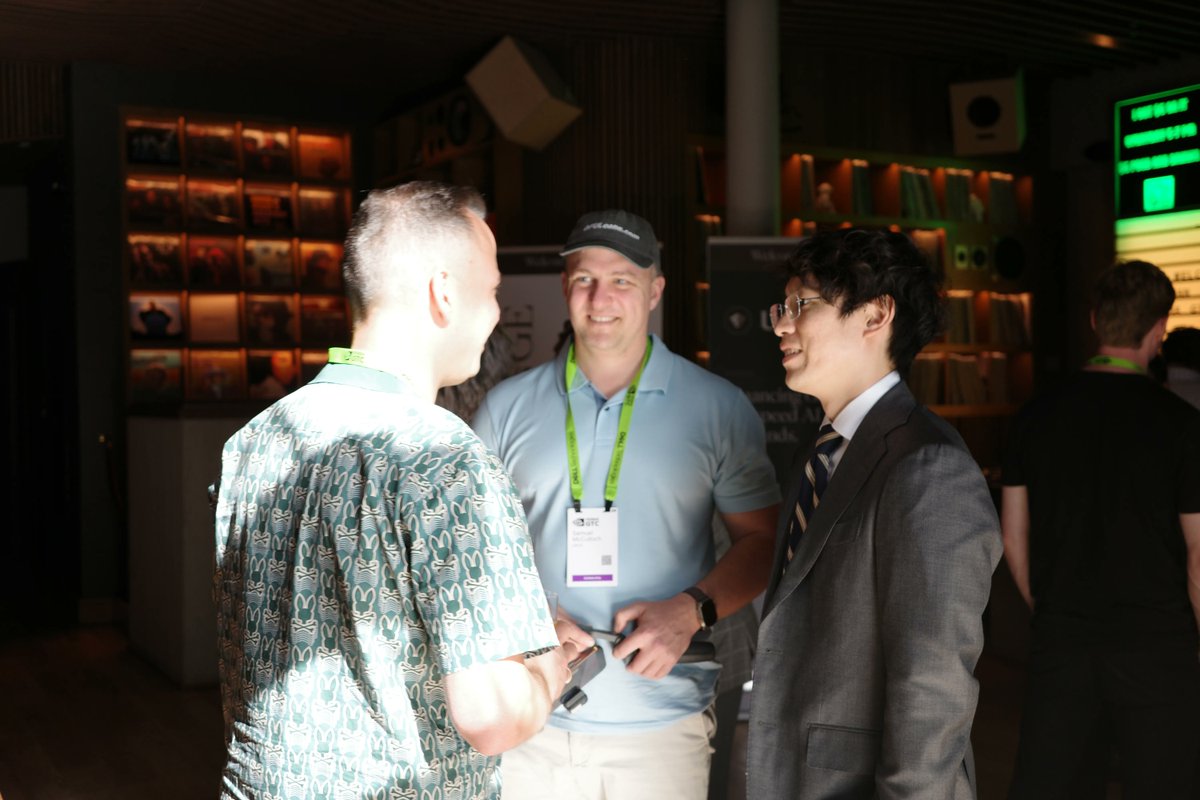
Good conversations at the USD.AI & @PayPal happy hour during @nvidia GTC yesterday. Thanks to everyone who came out.
USD.AI tweet mediaUSD.AI tweet mediaUSD.AI tweet mediaUSD.AI tweet media
English
33
5
79
6.6K
William Peets retweetledi
Staking Rewards
Staking Rewards@StakingRewards·
Hyperliquid just flipped BNB Chain to become the #3 chain by Staking Market Cap. $17.96B worth of $HYPE staked, 45.08% of supply
Staking Rewards tweet media
English
30
66
422
27K
William Peets retweetledi
DEGEN NEWS
DEGEN NEWS@DegenerateNews·
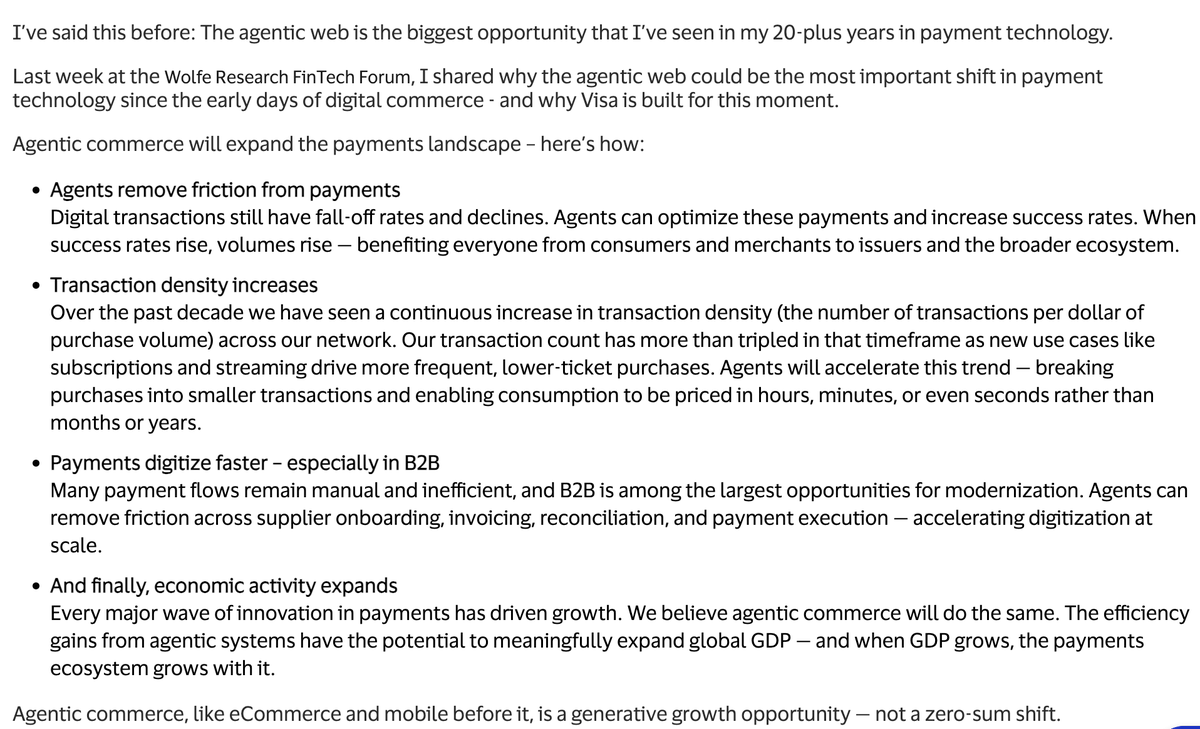
NEW: VISA CHIEF PRODUCT AND STRATEGY OFFICER SAYS "THE AGENTIC WEB IS THE BIGGEST OPPORTUNITY THAT I’VE SEEN IN MY 20-PLUS YEARS IN PAYMENT TECHNOLOGY" SOURCE: corporate.visa.com/en/sites/visa-…
DEGEN NEWS tweet media
English
41
40
425
40.1K
William Peets retweetledi
Circle
Circle@circle·
Nanopayments are not “small payments.” They’re sub-cent, high-frequency transfers, often as little as $0.000001, designed for machines, not humans. As AI agents transact autonomously, traditional rails break down. We need infrastructure built for agent-scale value exchange.
Circle tweet media
English
72
78
404
33K
William Peets retweetledi
Vance Spencer
Vance Spencer@pythianism·
Stablecoin issuers are under rated players in the AI wars They are uniquely positioned to both fund research at scale due to their large balance sheet, and apply it to large scale financial use cases Congratulations to the Tether AI team and Paolo
Paolo Ardoino 🤖@paoloardoino

Tether AI breakthrough Tether AI team just released new version of QVAC Fabric to include the World’s First Cross-Platform BitNet LoRA Framework to Enable Billion-Parameter AI Training and Inference on Consumer GPUs and Smartphones. Background Microsoft's BitNet uses one bit architecture to dramatically compress models. Traditional LLMs operate on full-precision computation, where weights are stored as complex, high-resolution numbers. The innovation of BitNet is that it shrinks these weights into a tiny ternary range of only -1, 0, and 1. significantly reducing memory usage and computation. LoRA, is a parameter-efficient fine-tuning technique that reduces the number of trainable parameters by up to ninety-nine percent. Together they slash memory and compute requirements. Yet BitNet has mostly been limited to CPU or CUDA NVIDIA backends, and lacked the support of LoRA fine-tuning. Enters QVAC Fabric: the unlock Today, with QVAC Fabric LLM, is the first time BitNet LoRA fine-tuning and inference work cross-platform across GPU vendors and operating systems using Vulkan and Metal backends. That means support for AMD, Intel, Apple Metal and also Mobile GPUs. And for the first time ever, BitNet inference runs efficiently on smartphones using mobile GPUs. On flagship devices, GPU inference is 2 to 11 times faster than CPU while using up to 90% less memory than the full precision models. The biggest unlock: QVAC Fabric LLM support for BitNet LoRA fine-tuning on heterogeneous GPUs. Our team was able to demonstrate this by fine tuning models up to 3.8 billion parameters on all flagships phones such as Pixel 9, S25 and iPhone 16 and up to 13 billion parameter models on the iPhone 16. Github repositories: github.com/tetherto/qvac-… : general QVAC Fabric codebase github.com/tetherto/qvac-… : specific QVAC Fabric's BitNet knowledge base, architecture docs and pre-built binaries What does it mean? What used to require dedicated GPUs now runs on consumer hardware. This breakthrough is the first real-world signal of a local private AI that can truly serve the people. And this is just the beginning. In the next months and years Tether will relentlessly continue to invest significant amounts of resources and capital to continue to research and develop open-source intelligence that can scale and evolve on local devices, providing maximum utility and privacy to its users. The era of Stable Intelligence has just begun. Free as in freedom.

English
6
6
88
23.2K