@omgsidewalks I’m crying tears that were meant for my childhood because I was never given a meaningful opportunity to grieve all the things I lost. I’m 36 now.
Delayed grief is very dangerous. You don't cry, you're numb, and you move on like nothing significant happened. You keep suppressing everything until the day it finally escapes, and when it does, it's like a dam bursting, flooding your mind and heart, making it difficult to cope.
@_petalite Someone hurt you once, so far back that you don’t even remember. Until you come to terms with that, your prefrontal cortex will keep problem-solving what your lower brain is throwing at it, by using anything within reach.
i lost my fucking soul i dont know how to get it back i dont know where i lost it theres just a giant fucking hole inside me tearing me apart and i pour drugs and alcohol and money everythinginto the hole to try to fill it but it takes everything so empty so empty so empty so emp
@SeekCindy It’s also the only way to untangle the history of all the things you quietly suffered through so you can begin to heal.
I tried ignoring my past for the last 20 years. It caught up to me anyway, because bodies don’t understand the passage of time.
@scottdomes Oh I’m still in the middle of all the pain- went from “gifted youngster” to “burned out, quasi-drug addict” and it’s only in the last few weeks that I’ve really started confronting this stuff.
Having zero memories of my parents trying to comfort me was a clue.
if you're locked into achieving success or greatness... I think it's worth asking why
by that I mean: what do you hope that will give you access to?
because if there's actual an unconscious hope that success means you'll finally be seen, or loved, or cared for, or that you'll at last get to relax, and feel at peace... well, maybe that'll happen
but that inner yearning is going to distort everything you do. your work will become a vehicle for satisfying that urge. that's not necessarily a bad thing. but it's worth checking in
why *must* you be successful? what's at stake here?
@koiicats I’m coming around to the opinion that if it helps you cope, it’s good. The most destructive coping methods out there still leave you above ground, able to fight another day.
i’m trying to reduce my bad coping mechanisms. trying to not resort to harmful tactics to feel better temporary. it’s a hard thing to do when you’re addicted to all the wrong things. it might not seem like much bc most of what i do on here is vent & attempt to find some sort of
The time a person spends on this app is proportional to how unfulfilling their real life is. The heaviest users are often the bitterest. This matters because such people vent their life's frustrations by attacking everything, and in so doing, they make their misery contagious.
@constans Turns out depression is happening to more people than we think. Some people just happen to present as high-functioning until something in them finally gives out.
@sama The future is going to be people trying to book appointments at their local hair salons and just giving up when none of the agents can agree on a time.
Peter Steinberger is joining OpenAI to drive the next generation of personal agents. He is a genius with a lot of amazing ideas about the future of very smart agents interacting with each other to do very useful things for people. We expect this will quickly become core to our product offerings.
OpenClaw will live in a foundation as an open source project that OpenAI will continue to support. The future is going to be extremely multi-agent and it's important to us to support open source as part of that.
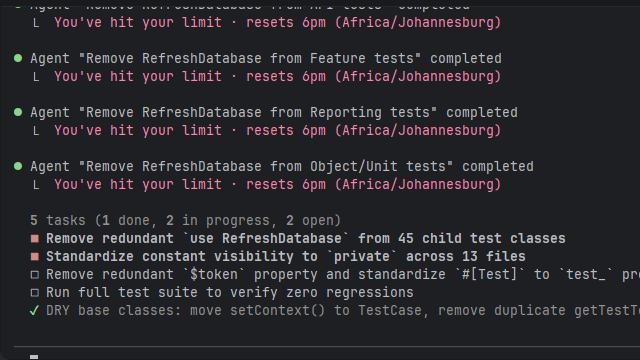
@0dayshay0@buccocapital The AI that can code entire apps couldn't make it through a set of cleanup tasks before hitting API limits.
The future sure is bright!
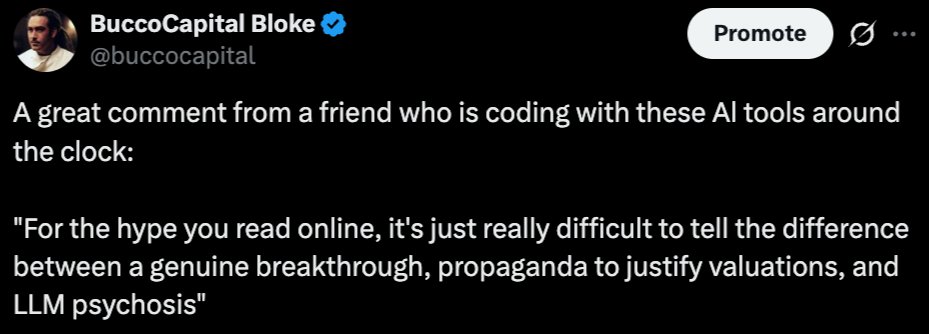
@buccocapital With the report that OpenAI is on track to lose over $100 billion in its first five years, my question is what is the actual cost to have these systems run for four hours straight? 50k? More? Less?
@AlanLevinovitz I think the true summary here is that AI will let people get on with their lives without requiring them to spend as much time at their computers, which is already a thing most people don't want to do.
I can’t comment on the accuracy of “AI is coming for our jobs, have you seen how incredible it is” essays like this one, but they all seem to miss a key point: The origin of many products is *part of the product.*
Consider grading. I’m pretty sure AI could grade and comment the short weekly assignments my students turn in. But if they knew AI was grading them, not me, it would change their relationship to the work, to the class, to the comments, and to me. They would be more likely to cheat. Less likely to read the comments or care about them.
The class community would suffer, too. They’d be less close to me. I’d know less about them. Absences would go up. And so on.
At scale, this kind of disenchantment will have giant unforeseen consequences. For all the talk of medical advances and cool apps and breakneck legal work, there’s no attention paid to whether and how all of this will actually improve our lives. There’s no attention paid to how weakening the bonds that are created through shared investment of personal attention and labor will impact relationships.
Which…seems weird to me?