imposter syndrome survivor

11K posts

imposter syndrome survivor banner
imposter syndrome survivor

imposter syndrome survivor

@WorkSmarter7

if you see a tweet without a typo, it means I’ve been hacked

United States Katılım Şubat 2020
412 Takip Edilen254 Takipçiler
imposter syndrome survivor retweetledi
Joe Rogan Podcast News
Joe Rogan Podcast News@joeroganhq·
Didn't they start burning Teslas when Elon Musk did this?
English
1K
9.5K
68.7K
1.1M
imposter syndrome survivor retweetledi
Chief_Engineer
Chief_Engineer@ChiefEngineerCE·
My son is a network admin changing locations, backfilling his old position which they posted. Looking for an onsite CS grad. Can you guess what happened? Result > 900 resumes from India. They found their American applicant to fill the roles, but a bunch of IT dudes that they are...decided to run them through HR and AI software found nearly all of them were fake. Credentials didn't match colleges, colleges didn't offer degrees, 2 yrs master's with no undergrad, etc. Meanwhile, we have Americans who must provide transcripts and background information repeatedly passed over for positions where H1B are hiring other H1-B. It's an illusion. It's largely all corruption. It's a chip on a poker table for our politicians to trade for international agreements.
English
142
2.3K
11.7K
159.2K
imposter syndrome survivor retweetledi
Scott Mason
Scott Mason@hypnoksa·
Reminder: The first black Republican Senator was elected in 1870. The first black Democrat Senator wasn't elected until 1993. Don't believe me? Look it up.
English
103
2K
9.4K
90.3K
imposter syndrome survivor retweetledi
alyssa
alyssa@alyssamariiee11·
I don’t know about you but I’m sick and tired of being told to accept every culture but my own
English
155
1.6K
17.5K
89.3K
imposter syndrome survivor retweetledi
Ihtesham Ali
Ihtesham Ali@ihtesham2005·
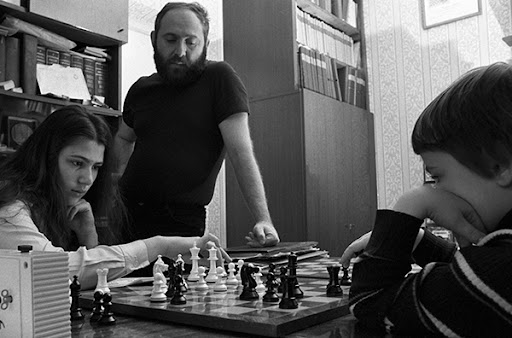
A Hungarian psychologist raised three daughters to prove that any child could become a chess grandmaster through early specialization. He succeeded. Two of them became grandmasters. One became the greatest female chess player who ever lived. Then a sports scientist looked at the data and found something nobody wanted to hear. His name is David Epstein. The book is called "Range." The Polgar experiment is one of the most famous case studies in the history of deliberate practice. Laszlo Polgar wrote a book before his daughters were even born arguing that geniuses are made, not born. He homeschooled all three girls in chess from age four. By their teens, Susan, Sofia, and Judit were dominating tournaments against grown men. Judit became the youngest grandmaster in history at the time, breaking Bobby Fischer's record. The story became the gospel of early specialization. Pick a domain young, drill it hard, and you can manufacture excellence. Epstein opens his book by telling that story honestly and then quietly demolishing the conclusion most people drew from it. Chess works that way. Most things do not. Here is the distinction that took him four years of research to articulate, and that almost nobody who quotes the 10,000 hour rule has ever read. There are two kinds of environments in which humans develop expertise. Psychologists call them kind and wicked. A kind environment has clear rules, immediate feedback, and patterns that repeat reliably. Chess is the cleanest example. Every game ends with a winner and a loser. Every move is recorded. The board never changes shape. The pieces never invent new ways to move. A child who plays ten thousand games will see most of the patterns that exist in the game, and pattern recognition is exactly what chess mastery is built on. A wicked environment is the opposite. Feedback is delayed or misleading. Rules shift. The patterns that worked yesterday may be exactly the wrong patterns to apply tomorrow. Most of the real world looks like this. Medicine is wicked. Investing is wicked. Building a company is wicked. Scientific research is wicked. Almost every job that involves a complex changing system with humans in it is wicked. The Polgar sisters trained in the kindest environment any human can train in. Their success was real and the method was correct. The mistake was generalizing the method to fields where the underlying structure of the environment is completely different. Epstein's research is what made the implication impossible to ignore. He looked at the careers of elite athletes outside of chess and golf and found that the pattern was almost the inverse of what people assumed. The athletes who reached the very top of their sports were overwhelmingly people who had played multiple sports as children, specialized late, and often switched disciplines well into their teens. Roger Federer played squash, badminton, basketball, handball, tennis, table tennis, and soccer before tennis became his focus. The kids who specialized in tennis at age six and trained year-round for a decade mostly burned out, got injured, or topped out at lower levels of the sport. The same pattern showed up everywhere he looked outside of kind environments. Inventors with the most patents had worked in multiple unrelated fields before their breakthrough work. Comic book creators with the longest careers had drawn for the most different genres before settling. Scientists who won Nobel Prizes were dramatically more likely than their peers to be serious amateur musicians, painters, sculptors, or writers. The skill that mattered in wicked environments was not depth in one pattern. It was the ability to recognize when a pattern from one domain applied unexpectedly in another. That kind of thinking cannot be built by drilling a single subject. It can only be built by accumulating mental models from many subjects and learning to move between them. The deeper finding is the one that should change how you think about your own career. Specialists in wicked environments often get worse with experience, not better. Epstein cites studies of doctors, financial analysts, intelligence officers, and forecasters showing that years of experience in a narrow domain frequently produce more confident judgments without producing more accurate ones. The expert builds elaborate mental models that feel comprehensive and turn out to be increasingly disconnected from the actual structure of the problem. They stop noticing what does not fit their framework. They mistake fluency for understanding. Generalists do better in wicked domains for a reason that sounds almost mystical until you understand the mechanism. They have less invested in any single mental model, so they abandon broken models faster. They are used to being a beginner, so they are not threatened by the discomfort of not knowing. They have seen enough different domains that they can usually find an analogy from one field that unlocks a problem in another. The technical name for this is analogical thinking, and the research on it is one of the most underrated bodies of work in cognitive science. The single most useful sentence in the entire book is the one Epstein puts almost as a throwaway. Match quality matters more than head start. A person who tries six different fields in their twenties and finds the one that genuinely fits them will outperform a person who picked one field at fourteen and stuck to it on willpower alone. The lost years were not lost. They were the search process that produced the match. Every field they walked away from taught them something they later imported into the field they finally chose. The reason this is so hard to accept is cultural, not empirical. We tell children to pick a path early. We reward the prodigy who knew at six. We treat the late bloomer as someone who failed to launch on time, when the data suggests they were running an entirely different and often more effective optimization process underneath. The Polgar sisters were not wrong. The conclusion the world drew from them was. If your environment is genuinely kind, specialize early and drill hard. If it is wicked, and almost every interesting human problem is, then the people who win are the ones who refused to specialize until they had seen enough to know what was actually worth specializing in. You are not behind. You were running the right experiment all along.
Ihtesham Ali tweet media
English
380
2.9K
11.2K
1M
imposter syndrome survivor retweetledi
Terrible Maps
Terrible Maps@TerribleMaps·
Average age babies start walking, by country
Terrible Maps tweet media
English
517
244
9.6K
4.6M
Jaime
Jaime@Jaime1951896487·
@AHomelyHouse I think Printer ink is 50% of my homeschool budget. 🙃 I want to invest in the ecotank.
English
2
0
3
296
imposter syndrome survivor retweetledi
Vince Langman
Vince Langman@LangmanVince·
This is the greatest "Redneck" video I've ever seen! 👏😂
English
264
829
5K
166.9K
imposter syndrome survivor retweetledi
Mat Nuclear
Mat Nuclear@MatNuclear·
If DEI is so great, why is everyone ashamed when they’re called a DEI-hire? It’s almost like they know it’s a bad thing.
English
153
963
19.6K
193.7K
imposter syndrome survivor retweetledi
travis4nh
travis4nh@travis4nh·
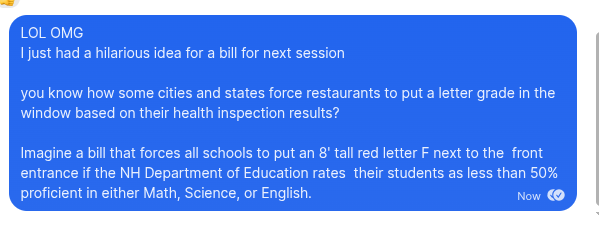
me, elsewhere:
travis4nh tweet media
English
50
151
1.7K
26.5K
imposter syndrome survivor retweetledi
GayLumberjack
GayLumberjack@gay_lumberjack·
Why did we have “black districts” in the first place? Didn’t we get rid of that whole “separate but equal” thing like 75 years ago?
English
59
86
2.5K
30.8K
imposter syndrome survivor retweetledi
bumbadum
bumbadum@bumbadum14·
Wow so you’re telling me Johnson used the whites only restroom, never got reprimanded over it, and was allowed to do it because the Nationalistic mission of going to the moon was more important than 1960s racism? You’re telling me this just now? Notice how you don’t mention the fact that the uber racist character was fake, that Kevin costner’s character was also fake. Notice how you refuse to acknowledge that she ate lunch with the whites, that she shared coffee with the whites. Everyone is insane now because of people like you. Instead of acknowledging the truth, the truth that Katherine herself states, that racism was an afterthought, more of an invisible presence that took a back seat to the mission. You have to make the entire mission to the moon about racism. You are literally why my essay is right. You prefer fiction of an uppity black woman screaming and throwing a tantrum over the reality of professionalism and where the mission to uplift America above all other nations was more important than racism. All my of youth has been this experience, you psychos lying about everything making it about why I, a White man, am inherently evil instead of just telling the truth. This is why Nick has so many followers, why Trump got elected 3 times, everything is insane because of this shit you people do.
FormFit@Launchpadteam1

I think you got a bad grade because you missed the point and failed to grasp the realities of history (this was APUSH after all). You say “Hidden Figures made up the bathroom stuff,” but that’s only half true. The movie dramatizes it, of course, but it’s rooted in how Jim Crow actually worked around Katherine Johnson. In 1960s Virginia, she expected to see “Colored” and “White” signs everywhere – because that’s what she dealt with in the rest of her life. Segregated facilities were the norm, not some rare exception. If you did your research thoroughly instead of scratching surfaces on the sources you consulted, you’d know that the reason she used the “white” restroom was because she was constantly fearfully searching for the “colored” one, and couldn’t find it (indeed they weren’t marked - but there were still unspoken norms about bathroom use there and who could use which one). So, when she got to NASA and didn’t see those labels on the bathrooms, that wasn’t “proof there was no racism.” It was confusing. She assumed there had to be a “Colored” restroom somewhere and went looking for it. The film turns that confusion and structural segregation into a big set‑piece (long walks, yelling in the rain, crowbar to the sign). The specifics are invented, but the underlying reality it’s pointing at isn’t. Johnson later said she just used the nearest bathroom and focused on the work. That doesn’t erase the Jim Crow world she came from; it shows how extraordinary it was that her team’s mission focus sometimes cut across those lines. Your paper got a C because it didn’t know what it was: it wanted to be a critique of dramatization / use of fiction in the context of historical events, but it failed to even attempt to root that critique in real American history. And you just straight up also missed key context and basic facts. A C is generous, candidly.

English
25
316
3.6K
70.9K
imposter syndrome survivor retweetledi
The Fat Electrician
The Fat Electrician@Fat_Electrician·
There’s no such thing as being polite at a 4-way stop. If it’s your turn, fucking go.
English
576
1.4K
34.1K
439.3K
imposter syndrome survivor retweetledi
anul agarwal
anul agarwal@anulagarwal·
i saw a mouse with an X-shaped battery compartment. first thought: this is stupid - who designed it? 5 seconds later: oh. 10 seconds later: OHHH! the X slot fits an AA or an AAA battery - whichever you've got lying around. the part most people miss is that the shape also makes it physically impossible to load both at once. there is no warning label, no instructions and no way to screw it up. the geometry does the thinking for you. japanese has a word for this. poka-yoke = "mistake-proofing." the product refuses your stupidity before you can offer it. i wish more things worked like this.
anul agarwal tweet media
English
536
2.6K
25.4K
2.9M
imposter syndrome survivor retweetledi
Porter
Porter@ParkSlopeFlngsm·
Reading Camp of the Saints for the first time. Everyone likes the quote about the symbolic oak door but I’m surprised more people don’t go in for the family heirloom cutlery metaphor: “Like that silver fork, for example, with the well-worn prongs, and some maternal ancestor’s initials, now rubbed almost smooth. A curious object, really, when you think that the Western World invented it for propriety’s sake, though a third of the human race still grubs up its food with its fingers.”
English
23
303
5.3K
109.6K
imposter syndrome survivor retweetledi
Willis Eschenbach
Willis Eschenbach@WEschenbach·
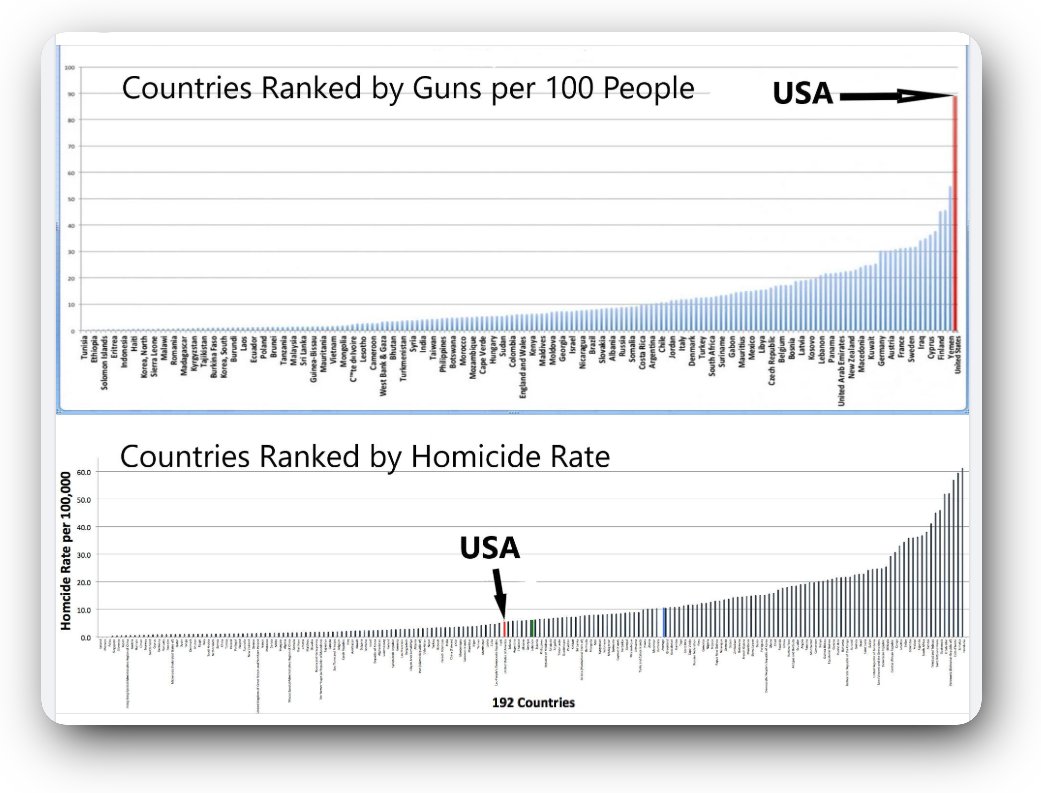
For all you good folks who think that the number of guns is the problem, here are the facts.
Willis Eschenbach tweet media
English
52
297
1.3K
24K
imposter syndrome survivor retweetledi
bumbadum
bumbadum@bumbadum14·
When I took APUSH in high school we spent 1/2 a week watching this move in class. The accompanied assignment was a 2 page hand written paper on the negative effects of racism and segregation in 1960s America. Out of curiosity, I did my own reserach into Katherine Johnson (MC of the movie) and found interviews where she described her experience. When asked if she felt segregation at NASA she said she didn't and that everyone was so mission oriented that nobody really cared about race at all. The "white only" restrooms at NASA actually weren't marked at all and she was using those bathrooms for her entire tenure there. The iconic scene of her throwing a temper tantrum about walking for an hour to use the "colored's room" was entirely fake, the rant about using a coffee pot that none of the Whites would touch was entirely fake. Jim Parson's character, the racist/sexist antagonist was entirely fake. Kevin Costner's classic progressive, anti-racist, meritocratic boomer character was also fake. After learning all this, I wrote a paper how the movie portrayed NASA as a deeply racist and destructive place, saved by an uppity black woman screaming and crying about racism. That this portrayl was actually significantly more racist than the reality which was NASA being incredibly professional, where racism was an after thought, and the Black woman actually usurped all racist stereotypes and was renown for her calm professionalism and exceptional work. I was given a C and was given a 1-on-1 scolding in office hours after class.
U n i m a x x e r@unirespecter

Peak Obama era slop. A nightmarish glimpse into the world that awaited us until Trump stepped off the golden escalator to save America. It’s such a narcissistic and sinister idea - “every one of your cultural accomplishments was actually done by fa sassy black women”

English
593
3.9K
38.5K
2.9M
imposter syndrome survivor retweetledi
Daniel Franke
Daniel Franke@dfranke·
You buy a German anvil. It contains 83 moving parts and requires winding twice a day. It's forged from excellent steel, holds tolerances across all three striking faces to within three microns, includes a beautifully indexed horn-adjustment mechanism nobody asked for, and requires a proprietary 11-point spanner should you need to replace the rebound calibration bushing. It runs flawlessly for years, but one day it starts up in limp mode because the onboard anvil-management system detects that it's overdue for its 50,000-strike inspection. You search AliExpress for a Chinese anvil, and are presented with a multitude of offerings from such household-name brands as DUKXJYIBF, HDBTGMXI, AND UEJQIP. They're all priced to within a few pennies of each other, appear completely identical except for the nameplate, and obviously all came out of the same factory. You text your blacksmith friend to ask if they're legit. He tells you he got one like that from KIXJBU a few years ago, and that it's been great and a terrific deal. You thank him, but KIXJBU seems to have folded so you buy the one from UEJQIP. When it arrives, it feels suspiciously light. You scratch it and realize it's iron-plated aluminum. You buy an American anvil. It's five times the price of the competition, but it comes from a brand that your great-grandfather used to love. It comes boxed with a warranty registration postcard, twenty pages of safety instructions, assay certificate, and a regulatory slip which lists its FCC certification and ITAR registration. It looks just like your friend's KIXJBU. There's a "Made In China" sticker on the bottom. You buy a Russian anvil. It arrives coated in cosmoline, wrapped in newspaper from 1974, and weighing 40% more than advertised. The finish looks like it was machined with a shovel. The face is not flat, but somehow this does not matter. You drop it off a truck, accidentally leave it outside for six winters, and use it to straighten a bulldozer blade. It's fine. You buy a Swedish anvil. It comes flat-packed in a long cardboard box with cheerful Neo-Grotesk lettering and a line drawing of a smiling man assembling it with an Allen key. The instructions contain no words, only pictograms showing the anvil face, horn, waist, feet, and 112 identical-looking fasteners. Halfway through assembly, you discover that the pritchel hole was installed upside down, but only because you used peg B17 where you should have used peg B71. Once assembled, it is clean, stable, and works better than it has any right to. You immediately wonder whether you should have bought two. You buy a Japanese anvil. It arrives wrapped in rice paper inside a paulownia box, accompanied by a certificate bearing three generations of signatures and a photograph of the first production example being presented to the Emperor. The face has been hand-polished by a seventy-eight-year-old master whose family has made striking surfaces since the Muromachi period. You are given detailed instructions for oiling it with a cloth folded in a specific way. It is the most beautiful object you own. You never quite work up the nerve to strike it.
English
427
3.1K
27.3K
1.1M