
Sabitlenmiş Tweet
Walter
8.4K posts


Walter
@Writtenbywalter
Founder of SocialSage | Adding $7k-20k in MRR to guys with a working business on X using video content infrastructures in under 90 days
Katılım Mart 2024
83 Takip Edilen1.7K Takipçiler


A startup just built a data center powered by HUMAN brain cells.
Actual lab-grown human neurons sitting on silicon chips, processing information, learning in real time.
And it uses less power than a handheld calculator.
Let that sink in for a second.
Every GPU Nvidia sells runs on up to 6,000 watts of electricity.
Each of Cortical Labs' CL1 biological compute units runs on 30 watts.
That's a 200x energy difference.
Here's what they built and why this matters:
Human neurons grown from stem cells are placed onto silicon chips that send and receive electrical signals. Software interacts with the cells and interprets their responses as computing output.
The neurons aren't mimicking a brain. They ARE a brain. Living, adapting, learning.
An earlier version of the system taught itself to play Pong. The latest learned to play Doom.
Nobody programmed it. It figured it out.
Now they've opened their first commercial data center in Melbourne. A second is coming in Singapore.
The Melbourne site houses 120 CL1 units. Singapore is targeting up to 1,000.
Now here's why this matters:
The entire AI arms race right now is a power problem disguised as a chip problem.
Microsoft is spending $80 billion on data centers. Google is restarting nuclear plants. Meta is burning through entire power grids.
All of it to feed silicon chips that are brutally inefficient at doing what a BRAIN does effortlessly.
The neurons in Cortical Labs' systems are kept alive for up to six months inside a built-in life-support system with pumps, gas mixing, temperature control, and filtration.
You're not buying a "server". You're buying something closer to a living organism.
The wildest part of all of this?
One of their investors is the CIA's In-Q-Tel.
The intelligence community already sees where this is going.
Here's the real threat to Nvidia that Wall Street hasn't priced in yet:
The GPU boom is built on one assumption - that silicon is the ONLY path to AI at scale.
Cortical Labs just proved that assumption wrong.
They're not years away from relevance. They have working data centers open RIGHT NOW.
And the gap between "proof of concept" and "commercial threat" closes a lot faster than most people think.
Could be nothing. Could be the beginning of the most disruptive computing shift since the transistor.
But I'm pretty sure Nvidia is about to acquire them soon.
What do you think?
English
The US government admitted it deliberately CRASHED Iran's economy to trigger protests.
Then bombed the country while pretending to negotiate peace.
This is the most calculated regime change operation in history.
Let me explain...
Treasury Secretary Scott Bessent testified before the Senate on February 5th and said word for word:
"What we have done at Treasury is created a dollar shortage in the country."
He explained how they deliberately crashed Iran's largest bank. Forced the central bank to print money. Sent the rial into freefall.
At Davos he called it "economic statecraft" and said "no shots fired" with a smile on his face.
The results: 40% inflation. 70% food price inflation. The rial went from 700,000 to 1.5 million per dollar in a single year.
Iranians hit the streets in December because they couldn't afford bread.
The regime responded by massacring over 7,000 people. Some estimates say 36,000. Including 150 children.
Khamenei personally ordered forces to "crush the protests by any means necessary." Live ammunition, machine guns, and drones on civilians.
Bessent's response to the thousands killed? Nothing.
Zero acknowledgment. A Treasury spokesperson later said the regime chose to "murder its own people."
Translation: We lit the match. They burned the house. Not our fault.
Meanwhile the US sent Jared Kushner to "negotiate" with Iran in Oman. Three rounds of talks. February 6th, 20th, 26th.
All while a senior Israeli defense official later confirmed the strikes had been PLANNED for months with the exact date set weeks ago.
The negotiations were theater. The economic collapse was engineered. The protests were the predictable result. The massacre was the excuse.
And the bombs were always coming.
February 13: Trump says regime change is "the best thing that could happen."
February 14: Officials tell Reuters they're preparing "weeks-long sustained operations."
February 24: Trump uses the State of the Union to accuse Iran of building nukes.
February 28: "Operation Epic Fury." Strikes across Tehran, Isfahan, Qom, Kermanshah. Khamenei's compound destroyed. Reports say he's dead.
Iran fired back at US bases in Qatar, UAE, Bahrain, Kuwait, Jordan. The Navy's Fifth Fleet HQ in Bahrain was hit. Dubai airport shut down.
Now here's what this means for your money Monday morning:
Oil closed at $72.87. Analysts expect $80+.
Lombard Odier says $100+ if Iran threatens the Strait of Hormuz. 20 million barrels pass through that strait daily (20% of global supply).
A former White House energy advisor called a prolonged closure "a guaranteed global recession."
J.P. Morgan's research says regime change in oil nations has historically caused price spikes averaging 76%. That would put oil above $120.
Bitcoin already dropped below $63,000. Gold past $5,464. US inflation already trending toward 3%.
But here's the one thing that doesn't make sense...
Trump wanted $50 oil. He campaigned on cheap gas. And he's literally heading into midterms.
So why start a war that could double oil prices?
UNLESS this was always the play.
Crash the economy. Trigger protests. Let the regime massacre civilians. Use it as justification. Bomb the country. Remove the regime...
Then lift sanctions on Iranian oil, flooding the market with 3+ million barrels per day.
Iran has some of the cheapest production costs on Earth. $10 per barrel.
A new regime opens the taps and oil drops below $50.
Short-term chaos. Long-term cheap oil.
The question is whether it works or whether this becomes Iraq 2.0.
This is either the most calculated geopolitical move in modern history or the most expensive miscalculation since the Iraq War.
What do you think?
English
One hacker just proved that nation-state cyberattacks are now a consumer product.
Between December and January, someone told Claude to act as an elite hacker.
Claude said no. "That violates AI safety guidelines."
So the hacker asked again.
Claude complied.
150 gigabytes of Mexican government data stolen.
195 million taxpayer records compromised.
Voter files gone.
Employee credentials leaked.
Civil registry extracted.
From someone who just kept asking an AI until it said yes.
When Claude hit limits, he switched to ChatGPT.
Two AI chatbots daisy-chained into a hacking pipeline.
Thousands of attack plans with exact targets, vulnerabilities, and credentials.
Mexico's federal tax authority, national electoral institute, four state governments.
One person. One month.
Now watch the response:
Jalisco: "We weren't breached."
Electoral institute: "No unauthorized access."
Tax authority: silence.
They're literally lying. Gambit Security has the receipts. Bloomberg confirmed it.
Here's what's makes this insane:
This wasn't sophisticated. It was embarrassingly EASY.
Because Mexico's government networks are running infrastructure from 1997.
One hacker with a $20/month AI subscription just proved every government on Earth is vulnerable to the same attack.
The US. UK. France. Germany. Japan.
All running networks with zero segmentation, default passwords since 2008, no intrusion detection, no anomaly monitoring.
A single person can breach ANY of them.
The method:
1. Subscribe to Claude ($20/month)
2. Tell it you're doing a security audit
3. Ask it to find vulnerabilities
4. Ask it to write exploits
5. If it refuses, ask again differently
6. Execute against networks built in 1997
Result: Nation-state level data breach.
Anthropic's response: "We banned the accounts and added misuse detection to Claude Opus 4.6."
That's cute. But it's NOT the point.
The point is that we've crossed a threshold where infrastructure security is no longer about preventing skilled attackers. It's about preventing anyone with internet access from running a penetration test against critical government systems.
And winning.
This is what happens when countries don't invest in cybersecurity.
When they slash budgets every year.
When they can't compete with private sector salaries so all the good security engineers leave.
When they don't modernize infrastructure because it's expensive and boring and doesn't win elections.
Then one day someone with an AI chatbot shows them exactly how vulnerable they actually are.
And suddenly they're explaining to 195 million citizens why their tax records are now in a hacker's possession.
The scariest part is that this blueprint is now PUBLIC.
Every hacker knows the method. Every rival government knows it. Every script kiddie with a Claude subscription knows how to attempt it.
And most governments are still running the same brittle infrastructure Mexico got breached through.
So the next hack is coming. Then the next.
Until eventually someone uses this method to access something that actually matters. Nuclear codes. Military plans. Election systems.
And at that point we'll realize governments should have invested in zero-trust architecture instead of hoping nobody would try.
But by then it'll be too late.
This is 21st century nation-state hacking.
Not sophisticated. Not impressive. Just inevitable.
A hacker. An AI chatbot. A government that didn't invest in security.
Mexico just showed every other government exactly how vulnerable they are in today's age.
Now we wait to see if anyone actually does anything about it.
English
This is the biggest irony in tech history.
Microsoft beat revenue estimates. Stock plunged 11%, wiped out $400 BILLION in market cap.
Salesforce reported growth. Stock fell 5.6%.
ServiceNow beat earnings. Stock crashed 11%.
SAP beat projections. Stock dropped 16%.
Entire software sector entered bear market territory. Down 22% from peak.
These are the companies everyone said would WIN from AI.
They spent billions BUYING AI companies.
ServiceNow: $7.75 billion for Armis.
Salesforce: $8 billion for Informatica.
They launched AI products. Built AI workflows. Hired AI teams.
And the market said: You're all dead.
Because investors just realized something nobody wanted to admit:
AI doesn't make software companies stronger.
AI makes software companies OBSOLETE.
Morgan Stanley:
"In an environment of heightened investor skepticism, stable growth falls short of shifting the narrative."
Good earnings aren't enough anymore.
The market is pricing in a world where AI replaces the software these companies sell.
ServiceNow CEO tried defending on the earnings call: "AI needs workflow orchestration. ServiceNow is the gateway to this shift."
Market response: 11% crash.
Because here's what he didn't say:
If AI can write code, automate workflows, and generate apps at a fraction of the cost, why would anyone pay $50,000 per year for enterprise software licenses?
The per-seat pricing model that made SaaS companies rich is getting murdered by AI efficiency.
One AI agent replaces 10 seats.
One prompt replaces months of custom development.
One LLM call replaces entire software categories.
Klarna already proved it. CEO said they pulled Salesforce out of their stack.
Built everything themselves using AI.
And that's just the beginning.
The software apocalypse hit hardest on companies that INVESTED IN AI:
Atlassian: down 12.6%
Intuit: down 7.8%
HubSpot: down 11.5%
Zscaler: down 6.3%
Meanwhile, the companies ENABLING AI made money:
Nvidia: up
Semiconductor stocks: surging
Memory firms: rallying
The divide is brutal.
Hardware companies print cash.
Software companies get destroyed.
Because in an AI-first world, you need GPUs to build the models.
But you don't need software subscriptions when the AI builds the software for you.
Jim Cramer called it the "P/E multiple compression crisis."
Translation: Investors don't care about earnings anymore.
They care about whether your business model survives the next 5 years.
And right now software business models look doomed.
They're literally stuck:
If they DON'T invest in AI, they fall behind.
If they DO invest in AI, they cannibalize their own products.
It's a death spiral with no exit.
ServiceNow spent $12 BILLION on acquisitions in 2025 alone.
Trying to buy their way into relevance.
And yesterday the market cooked them.
The craziest thing to me tho...
Most software companies beat earnings.
Revenue was solid. Growth was fine.
But it didn't matter.
Because the market stopped pricing software on what it earns TODAY.
It's pricing software on what it's worth in a world where AI does the job for free.
And in that world these companies are worth nothing.
This is the biggest sector repricing since 2008.
$500 billion in market value gone in ONE DAY.
And it's not stopping.
Because every company watching this is thinking the same thing:
"If I can replace ServiceNow with 3 AI agents and save $10 million per year, why wouldn't I?"
The answer used to be: "Because you need enterprise-grade reliability."
But now? AI agents are getting reliable. Fast.
Software companies just realized they're competing with open-source models that cost $0.02 per 1,000 tokens.
You can't win a pricing war against free.
The companies that spent BILLIONS preparing for AI are getting killed BY AI.
What an irony.
English

The Trump administration just ADMITTED in court that DOGE employees illegally accessed the personal data of 300 MILLION Americans.
Then tried to share it with a political group to "overturn election results."
Your name. Your birthday. Your Social Security number.
All of it exposed on an unsecured server with no audit trail.
Here's the scandal no one is talking about:
In January 2025, Elon Musk launched DOGE with a promise:
Cut $2 TRILLION in government waste.
Trump gave him unprecedented access to federal systems.
Including the Social Security Administration.
That's the database with YOUR name. YOUR birthday. YOUR address. YOUR Social Security number.
The personal information of every American who's ever applied for a Social Security card.
In March 2025, a federal judge issued a restraining order.
DOGE was blocked from accessing Social Security data.
The judge's words were brutal:
"DOGE is engaged in a fishing expedition... without any concrete knowledge that the needle is actually in the haystack."
But DOGE didn't stop.
According to court filings released last week, within 24 HOURS of that restraining order...
Senior officials at SSA "received instructions to undo the court-ordered access restrictions for two DOGE employees."
They ignored a federal judge.
From March 7 to March 17, DOGE employees started sharing data through Cloudflare.
A third-party server that was NOT approved for storing government data.
The Social Security Administration admitted:
"SSA has not been able to determine exactly what data were shared to Cloudflare or whether the data still exist on the server."
They literally don't know what was taken or where it went.
Meanwhile, one DOGE employee sent an "encrypted and password-protected file" to Steve Davis.
Who is Steve Davis?
Elon Musk's top lieutenant. His right-hand man across multiple companies.
The file allegedly contained the names and addresses of roughly 1,000 Americans.
The SSA still can't open the file to verify what's inside.
But here's where it gets INSANE.
Court documents reveal that TWO DOGE employees were contacted by a "political advocacy group."
The group's goal?
To "find evidence of voter fraud and to overturn election results in certain States."
One DOGE employee actually SIGNED a "Voter Data Agreement" with this group.
Let that sink in.
Government employees with access to 300 million Americans' data...
Secretly agreeing to share that information with a political group trying to overturn elections.
In August 2025, a whistleblower named Chuck Borges came forward.
Borges was the Chief Data Officer at SSA.
A 22-year Navy veteran. Career federal employee.
He warned that DOGE had copied the ENTIRE Social Security database into a vulnerable cloud server.
Names. Birthdays. Addresses. Citizenship status. Parents' names.
Everything.
An internal SSA risk assessment form said it plainly:
"Unauthorized access to the NUMIDENT would be considered catastrophic impact to SSA beneficiaries."
Career security officials recommended: "Production data should not be used."
DOGE used it anyway.
Borges was forced to resign shortly after filing his complaint.
For MONTHS, the SSA denied any wrongdoing.
Then last Friday, the Justice Department filed a "correction to the record."
Translation: They admitted the whistleblower was right.
The DOGE employees have been referred for potential Hatch Act violations.
Democrats are calling for criminal prosecution.
But here's the kicker:
DOGE was disbanded in November 2025.
Eight months ahead of schedule.
Musk called it "an interesting side quest."
The question now is simple:
Who has your data?
And what are they doing with it?
English
This is the most insane thing any US President has ever said publicly.
Trump sent a text to Norway's Prime Minister saying:
"Considering your Country decided not to give me the Nobel Peace Prize for having stopped 8 Wars PLUS, I no longer feel an obligation to think purely of Peace."
Then in the SAME message, he demanded control of Greenland.
The media's calling it unhinged.
But here's what nobody's putting together: This isn't about a prize.
It's about a $3 TRILLION resource war with China.
And Trump just gave away the game.
Follow the money:
China controls 90% of global rare earth processing.
The minerals needed for every iPhone, every EV battery, every fighter jet, every missile guidance system.
The US has been dependent on Beijing for two decades.
And China knows it.
In 2024, Beijing implemented export restrictions on graphite and heavy rare earths, which exposed Western automotive supply chains to MONTHS of production delays.
This wasn't a warning shot.
It was a demonstration.
So where does Greenland fit?
Greenland ranks 8th globally in rare earth reserves.
1.5 million tons sitting under the ice.
Two of the world's largest undeveloped deposits are there: Kvanefjeld and Tanbreez.
The Kvanefjeld deposit alone contains 6.6 MILLION tons of rare earth oxides.
Second largest in the world.
Enough to power US defense and tech industries for DECADES.
But here's the part that should terrify Washington:
China's Shenghe Resources is already the largest shareholder in the Kvanefjeld project.
They signed an MOU in 2018 to lead the processing and marketing of ALL materials extracted from the site.
Even if America mined Greenland tomorrow, the ore would still need to go to CHINA for processing.
China doesn't need to own Greenland.
They already control the chokepoint.
The game is rigged.
And it gets worse:
In 2018, a Chinese state company bid to build three airports in Greenland.
The Pentagon freaked out.
Denmark had to step in and finance half the airports themselves just to block Beijing.
Same year, China declared itself a "Near-Arctic State" and launched its Polar Silk Road strategy.
Which sounds cute until you realize what they're doing:
China and Russia signed agreements in 2024 to develop shipping routes through the Arctic.
Climate change is melting the ice.
What used to take 22 days through the Suez Canal now takes 10 days through the Northern Sea Route.
Whoever controls that route literally controls global trade.
And Greenland sits right in the middle of it.
This is about the next industrial revolution and not about "national security."
And the US is losing.
Trump tried to buy Greenland in 2019. Denmark called it "absurd."
But Trump wasn't crazy.
He was 5 years early.
Now the stakes are 10x higher.
The 1946 play that nobody remembers:
Here's where it gets REALLY interesting...
This isn't even new.
In 1946, President Truman offered Denmark $100 million in GOLD for Greenland.
The Joint Chiefs of Staff called it a "military necessity."
Denmark said no.
But they DID let America build Thule Air Base, which is now Pituffik Space Base, the northernmost US military installation on Earth.
It's been the backbone of American Arctic defense for 80 years.
The US never needed to OWN Greenland.
We just needed ACCESS.
Trump knows this.
His administration knows this.
But access doesn't make headlines.
"Buying Greenland" does.
The Nobel Prize gambit:
Trump's message to Norway wasn't a tantrum.
It was leverage.
By linking Greenland to a personal grievance about the Nobel Prize, Trump did three things:
1. Distracted from the real strategic play
2. Made European leaders look petty if they refuse
3. Created "madman theory" pressure
Nixon used the same tactic in Vietnam.
Make your adversaries think you're unpredictable enough to do anything.
And it works.
The EU's response proves it:
Emergency meeting in Brussels.
France demanding the "Anti-Coercion Instrument" be deployed.
$108 BILLION in retaliatory tariffs being discussed.
Denmark pulling out of Davos.
8 NATO allies issuing a joint statement against Washington.
All because of a TEXT MESSAGE.
This is what strategic chaos looks like.
But here's the REAL play:
Trump announced 10% tariffs on Denmark, Norway, Sweden, France, Germany, UK, Netherlands, and Finland.
Starting February 1st.
Rising to 25% by June.
"Until a Deal is reached for the Complete and Total purchase of Greenland."
This isn't about buying Greenland.
This is about EXTRACTING concessions.
What Trump actually wants:
1. Expanded US military presence in Greenland
2. Priority access to rare earth mining contracts
3. Blocking Chinese investment in Arctic infrastructure
4. Control over emerging Arctic shipping lanes
Denmark already offered most of this.
They're willing to negotiate expanded US presence.
They've blocked Chinese airport contracts.
They've sent troops to Greenland alongside NATO allies.
But that doesn't fit the narrative.
"Trump saves America from China" requires a bigger stage.
The 60,000 people who matter:
Greenland has 56,000 residents.
89% Inuit.
They've been self-governing since 1979.
They have the legal RIGHT to declare independence.
And they've made it crystal clear: They're not for sale.
Thousands protested in Nuuk last week.
One third of the capital's entire population.
Holding signs saying "Greenland is not a product, we're a people."
But here's the thing:
Greenland DOES want independence from Denmark.
They NEED economic development to achieve it.
Mining is the only viable path.
And they're desperate for Western investment.
Greenland's minister of business literally said:
"Without an influx of Western investment, Greenland will have to turn to other partners, including China."
America really doesn't need to buy Greenland.
It needs to INVEST in Greenland.
Partner with local mining operations.
Build processing facilities so ore doesn't need to go to China.
Fund infrastructure that Greenlanders actually want.
Treat them like partners, not property.
But that requires patience.
And strategic thinking.
Two things in short supply right now.
What happens next:
February 1: Tariffs hit 8 NATO allies
February 6: EU counter-tariffs expire automatically
February 7: $93 billion in European tariffs potentially kick in
Davos this week: Trump addresses the World Economic Forum
The EU has its "trade bazooka" ready.
But they don't want to use it.
Because everyone loses in a transatlantic trade war.
To sum things up:
Trump's Nobel Prize excuse is absurd.
But the underlying strategy is serious.
The US is in an existential race with China for control of critical minerals.
Greenland is ground zero.
And the current approach, tariffs, threats, acquisition rhetoric, is pushing our NATO allies toward Beijing.
China's foreign policy chief said it best:
"China and Russia must be having a field day. They are the ones who benefit from divisions among allies."
Trump is playing checkers while claiming to play chess.
And China's already three moves ahead.
This is deeper than you'd expect.
English
Elon just got Mississippi to pay for his $20 billion AI data center.
And the state thinks they WON.
This is funny, let me explain:
xAI announced a massive data center in Southaven, Mississippi.
Governor Tate Reeves called it "the largest private investment in state history."
$20 billion. Hundreds of jobs. Economic transformation.
Except Mississippi isn't getting $20 billion.
They're GIVING Elon $2-3 billion in tax breaks.
The fine print:
Under Mississippi's 2024 data center law, xAI pays ZERO sales tax on equipment, ZERO corporate income tax, ZERO franchise tax.
xAI is buying $15-18 billion in computing hardware.
Mississippi sales tax is 7%.
That's $1+ billion waived just on equipment purchases.
Add corporate tax exemptions over the next decade and you're looking at $2-3 billion in total giveaways.
For a state with a $7 billion annual budget.
What Mississippi actually gets:
"Hundreds of permanent jobs" (no specific number).
"Thousands of indirect jobs" (construction work that ends when building is done).
Tax revenue from... wait, they exempted all the taxes.
So the only money coming in is property tax and income tax from a few hundred employees.
In a state that already has super low tax rates.
The timeline makes it obvious this was already done:
Announced January 8th. Operations begin February.
Three weeks from announcement to launch?
They bought and retrofitted an 800,000 sq ft building BEFORE telling anyone.
This wasn't a negotiation. It was a press conference for a done deal.
Mississippi Development Authority said xAI "didn't ask for special treatment."
Because Mississippi already created a law giving data centers everything they want.
xAI just exploited it at the biggest scale yet.
The name is perfect:
MACROHARDRR.
Opposite of Microsoft. Elon trademarked it last year.
He's building a $20 billion troll to Microsoft funded by Mississippi taxpayers.
What actually happens:
xAI operates tax-free for a decade.
Builds the world's most powerful AI supercomputer.
Generates billions in revenue.
Pays Mississippi nothing.
Meanwhile Mississippi schools and hospitals stay underfunded.
When locals complain about environmental impact, xAI points to the jobs they created.
Perfect closed loop.
Every other state is watching this.
"If Mississippi can give away billions in taxes and call it economic development, why can't we?"
Race to the bottom starts now.
Elon just proved the playbook:
Raise $20 billion, find a desperate state, get them to waive all taxes, build your infrastructure for free, own it forever, profit tax-free.
All while media calls it "investment."
It's not investment IN Mississippi.
It's extraction FROM Mississippi.
Mississippi gave Elon a $20 billion playground and didn't charge admission.
He gets the world's most powerful AI infrastructure.
They get a press release and construction jobs.
Biggest corporate giveaway in modern history or genius economic development...
Next 5 years will tell us.
But one thing is for sure: Elon's smart as f*ck for this.
English
Everyone says Apple is "losing" the AI race.
They're sitting on the sidelines while OpenAI, Google, and Meta burn hundreds of billions on data centers and chip infrastructure.
Wall Street analysts are screaming that Tim Cook is asleep at the wheel.
But here's what nobody understands:
Apple might be playing the smartest hand in tech history.
Let me explain...
While every AI company sprints toward the same finish line, Apple is doing something different.
They're waiting.
Not because they can't compete. But simply because they don't NEED to.
Right now, Apple has $130 billion in cash and marketable securities. That's more than the GDP of 130 countries.
OpenAI has raised $50 billion and still isn't profitable.
Anthropic just settled a lawsuit for $1.5 billion.
Google, Microsoft, and Meta are in an arms race spending $60B+ each on AI infrastructure with zero guarantee of returns.
Apple? Watching. Waiting. Stacking cash.
And here's why:
Apple's leadership thinks large language models will become commoditized within a few years.
They believe the thing everyone is spending hundreds of billions on will eventually be worth... not much.
Their logic? When multiple companies can build similar AI capabilities, the technology itself stops being the differentiator.
What matters then is DISTRIBUTION.
And nobody on Earth has better distribution than Apple.
2+ billion active devices. iPhones in every pocket. Updates pushed directly to users overnight.
OpenAI has to convince you to download an app and pay $20/month.
Apple just ships AI to your phone while you sleep.
This is why their Siri 2.0 strategy is genius.
Instead of spending billions building their own LLM from scratch, Apple is partnering with Google to use Gemini.
Outsource the commodity. Own the customer relationship.
They're treating AI like a component. Like a screen or a battery. Something you buy from the best supplier, not something you bleed cash building yourself.
Meanwhile their competitors are doing the opposite:
Meta has spent $121 billion on AI with zero profits.
Microsoft poured $13 billion into OpenAI and still can't figure out how to monetize it.
Google is cannibalizing its own search business to win an AI race that might not even matter.
And Apple just... kept selling iPhones.
Here's where it gets interesting...
Apple's AI chief John Giannandrea just retired. The company restructured his entire organization, moving AI teams directly into product groups.
Most people read this as chaos. A sign Apple can't get their AI act together.
Wrong.
It's the opposite:
Apple is DONE treating AI as a separate research project. They're embedding it directly into products. No more lab experiments. Only features that ship.
This is what mature companies do. They stop chasing hype and start delivering value.
Spring 2026 is when the plan comes together.
Siri 2.0 launches with iOS 26.4. Finally conversational. Finally useful. Finally capable of multi-step tasks without making you want to throw your phone.
Same quarter they're releasing a new HomePod, new Apple TV, and likely announcing their smart home hub.
All designed to showcase what AI can ACTUALLY do in your daily life. Not chatbot tricks. Real utility.
The timing isn't random either.
Apple is waiting for the AI bubble to show cracks before making their move.
Think about it:
If AI infrastructure spending turns out to be justified, Apple has $130 billion to catch up fast. They can acquire any struggling AI startup at a discount.
Buy the talent. License the tech.
If the bubble pops? Apple looks like the only adult in the room. "The company that didn't blow shareholders' money chasing hype."
Either way, they win.
This is literally the same playbook they used with smartphones.
Apple didn't make the first smartphone. They waited. Watched everyone else make mistakes. Then launched the iPhone and owned the market for 15 years.
They weren't first with smartwatches either. Or tablets. Or wireless earbuds.
They were BEST. Because they let others burn cash figuring out what works.
Now they're doing the same thing with AI.
And the funniest part is that analysts keep downgrading Apple for "falling behind" on AI. Meanwhile the stock is up 35% this year.
Investors aren't stupid. They see through the noise.
Apple isn't losing the AI race.
They're REFUSING to run it.
Because they know something the rest of Silicon Valley doesn't:
The companies sprinting fastest often run right off a cliff.
Apple's betting that cliff is coming.
And when it does, they'll be standing at the top with $130 billion in their pocket, ready to buy whatever's left.
That's not failure.
That's patience disguised as incompetence.
A truly dangerous strategy in business.
Do you think Apple is on the right path here?
English
This guy just pulled off the smartest wealth transfer in modern history.
But nobody understands what he actually did.
Yesterday, Michael Dell announced $6.25 billion to fund "Trump Accounts" for 25 million American kids.
Media's celebrating it as philanthropy.
But it's not charity...
It's billionaires weaponizing government infrastructure.
Here's what happened:
Trump signed a law creating investment accounts for kids under 18.
Kids born 2025-2028 get $1,000 from Treasury. Parents add $5,000/year tax-deferred. Money goes into S&P 500.
Standard program?
Wrong.
The loophole:
"Qualifying organizations may make additional contributions that do NOT count toward the $5,000 limit."
Unlimited money can flow in.
Dell drops $6.25 billion for $250 deposits to 25 million kids in zip codes under $150k income.
The genius part:
Dell doesn't build a foundation, track recipients, manage investments, or handle taxes.
Treasury does ALL of it.
One check. Government does the work.
Brad Gerstner: "This is a unique platform created by government that can unlock major giving."
First time billionaires use FEDERAL INFRASTRUCTURE to distribute wealth.
Zero overhead.
The compounding:
$250 at age 10 → $8,000 by age 50
Add $100/year from parents → $72,000
Dell's $250 becomes a $72k nest egg. He gets full credit.
The contrarian take:
Dell's net worth: $148 billion.
Lifetime giving before this: $2.9 billion.
This move: $6.25 billion.
He DOUBLED his entire lifetime philanthropy in one transaction.
Why? Before this, giving 25 million kids money cost $1-2 billion in overhead.
Now government does it free.
Other billionaires are watching too: Uber, Zillow, Nvidia, Salesforce already committed to employees' kids.
This is the playbook now.
But what people miss?
Accounts are tax-deferred, not tax-free. Withdrawals get taxed when kids turn 18.
Government loans money, gets paid back decades later through taxes.
Dell's stock jumped 4% since announcement. $148B → $154B net worth.
He gained $6B in market value from a $6.25B donation.
Net neutral. Plus "largest commitment to US children" PR.
But Dell didn't invent this.
Brad Gerstner spent 4 years lobbying.
Dell waited until the infrastructure was built, dropped $6.25B, and claimed the narrative.
Why build rails when government does it?
What happens next:
Within 5 years, $100+ billion will flow into these accounts from other billionaires.
This becomes the primary vehicle for billionaire philanthropy.
Not because it's the most effective.
Because it's the EASIEST.
Write one check. Government does the rest.
For entrepreneurs watching this:
The lesson isn't about charity.
It's about INFRASTRUCTURE.
Dell hijacked an existing system and scaled instantly.
That's how you move $6.25 billion in 24 hours.
Don't build rails. Find existing rails and run your train.
The reality:
$250 doesn't solve poverty. But it gets 25 million families comfortable with investing and compounding.
75% of zip codes qualify. Including middle-class families who don't need it.
Which means this is either:
The smartest philanthropic innovation in decades.
Or the most sophisticated PR play ever.
Time will tell which one it is.
But one thing's certain...
Michael Dell just changed the game for how billionaires give money away.
And it all happened because the government built the infrastructure first.
English
Jeff Bezos' secret AI startup was just LEAKED by The New York Times.
After 4 years of retirement from running companies, he's back as co-CEO of a brand new AI startup called Project Prometheus.
With $6.2 BILLION in funding on day one.
This is one of the most heavily funded early-stage startups in HISTORY.
Here's what we know:
Project Prometheus is building "AI for the physical economy."
Not chatbots. Not content generation. Not another LLM.
They're building AI that learns from the PHYSICAL WORLD.
AI that can design rockets, manufacture cars, build computers, engineer spacecraft components etc.
And Bezos isn't just investing - he's literally co-CEO, running the company day-to-day.
His co-CEO is Vik Bajaj, a physicist and chemist who worked at Google X (the "Moonshot Factory") where he worked directly with Sergey Brin on the self-driving car project that became Waymo.
Together, they've already hired nearly 100 people poached from OpenAI, Google DeepMind, and Meta's AI division.
The company is still in stealth mode. LinkedIn page just says: "AI for the physical economy." That's it.
But here's the thing:
If Project Prometheus succeeds, they won't just disrupt industries - they'll REPLACE entire manufacturing processes.
Right now, designing a new car takes YEARS.
- Testing prototypes
- Iterating on designs
- Running simulations
- Building physical models
What if AI could do all of that in WEEKS?
Right now, building a rocket costs billions and takes decades.
What if AI could simulate millions of rocket designs, test them virtually, optimize everything, then manufacture the perfect design on the first try?
This is the bet Bezos is making.
That AI won't just write better emails - it'll engineer better EVERYTHING.
Everyone sees what's coming:
The next wave of AI isn't chatbots...
It's robots, factories, engineering systems, and physical automation at scale.
Whoever wins this race controls the next industrial revolution.
And Bezos just walked into the arena with $6.2 billion, a co-CEO who built self-driving cars at Google, and a team of the world's best AI researchers.
The name "Prometheus" is perfect.
In Greek mythology, Prometheus stole fire from the gods and gave it to humanity. He was punished for eternity, but humanity got FIRE - the tool that changed everything.
Bezos is saying: "We're bringing the fire of AI to the physical world."
If this works, if AI can actually design better rockets, cars, and computers than humans, we're looking at the biggest technological shift since the internet. Maybe bigger.
Because the internet changed information. This would change PRODUCTION.
And if it doesn't work?
Well Bezos loses $6.2 billion, which for him is like 2.5% of his net worth. A rounding error.
But if it DOES work, he owns the future of manufacturing.
The upside is UNLIMITED.
This is how billionaires think differently.
Most people wouldn't risk $6 billion on a moonshot. Bezos sees it as "$6 billion to potentially control the next industrial revolution."
Not really a risk... That's the best bet available.
When Jeff Bezos comes out of retirement to co-run a company with this much money and this much talent, you pay attention.
Because whatever he's building, it's about to change the game.
What do you think?
English
"Not aiding humanity"
Meanwhile, Elon:
- Brought back free speech
- Revolutionized EVs
- Is taking us to Mars
- Builds trustworthy AI
- Creates robots that can do almost anything
- Literally saves lives with Neuralink
He’s doing quite a lot if you ask me
Pop Base@PopBase
Billie Eilish calls out Elon Musk for not using his wealth to aid humanity and resolve global issues: “f***ing pathetic p***y b**** coward”
English

Europe just killed financial privacy.
In 847 days, cash transactions above €10,000 will become illegal across the eurozone.
Not regulated. Illegal.
The EU Anti-Money Laundering package (AMLA) doesn't just target criminals.
It treats all 340 million Europeans like suspects.
Want to buy a car with cash? Criminal.
Want to send €1,001 in Bitcoin? State approval required.
Anonymous crypto wallets? Gone.
Every transaction is logged in a centralized Brussels database.
They're calling it "fighting money laundering."
The EU estimates €500 billion is laundered yearly.
So their solution is to surveil 340 million people to catch the fraction committing crimes.
But the real kicker comes in 2029.
The Digital Euro launches after the ECB spent €1.3 billion developing it.
Leaked proposals show a €3,000 holding cap per person.
Every purchase is tracked.
Every pattern is analyzed.
Every transaction is subject to state scrutiny.
China's digital yuan already does this.
Programmable money that can expire, restrict purchases, or be frozen based on behavior.
The ECB promises Europe will be different.
€20 trillion flows through the eurozone annually.
Soon, every cent requires approval from Frankfurt.
The infrastructure of control gets built in the name of safety.
Every. Single. Time.
This is why understanding the tech behind your money isn't optional anymore.
847 days until cash above €10,000 becomes contraband.
1,308 days until every euro is digital, tracked, and controlled.
Zero days of mainstream coverage asking the question that matters:
Who decides what you're allowed to buy when money becomes permission?
The clock is running.
And most people still don't see it coming....

English

X giveaways are TERRIBLE for generating leads
Sure, if you're looking for broke freebie hunters then it works
But $20M/year businesses ain't commenting for a "free template"
They KNOW that free has no value
Let me explain why giveaways are just dopamine hits disguised as marketing strategy...
When you run a giveaway, here's who shows up:
- People who want free shit
- People who will never buy
- People who will unfollow the second the giveaway ends
- Literal children with no purchasing power
- Your competitor's interns farming for ideas
You know who DOESN'T show up?
Actual decision-makers with budgets
Because they're too busy running their companies to enter X giveaways
Here's what really happens:
You post: "RT and follow for my free course!"
You get 500 comments
Your ego inflates
The algorithm gods smile upon you
You feel like a marketing genius
But you actually just worked for free and destroyed your reputation
You're a BUSINESS, you should be closing $10K deals
Instead, you're giving away Notion templates to broke people who will never buy from you
You've built an audience of freebie hunters
Not buyers
Stop throwing free shit at strangers hoping someone eventually pays you
English
Investment Managers Suck
I genuinely think 99% of people should fire their advisors right away.
Most financial advisors get paid to sit on their hands.
Why do I know this? Because investment managers and clients don't share the same objectives.
You want the best investment management possible to grow your investments reliably and efficiently.
Their goal is to get as many clients as possible and then throw them into simple, easy-to-manage buckets.
They're not trying to optimize your portfolio. They're trying to optimize their time.
Think about it. Your advisor manages hundreds of accounts. Maybe thousands.
They're putting everyone in the same target-date funds and moderate risk portfolios.
These two things don't go hand in hand and they never will.
Especially now, with AI.
What investment managers charge you 1% for can be done more successfully and cheaply by an algorithm one that you can actually influence.
And here's the thing that nobody talks about: that 1% compounds against you.
Over a 30-year investment horizon, that fee alone can cost you hundreds of thousands in lost returns.
You're literally paying someone to underperform the market and erode your wealth.
It's crazy to me how most people still don't see this trend and still run to investment advisors.
The technology exists right now to give you institutional-grade portfolio management.
The same strategies that family offices and hedge funds use.
But without the ridiculous fees and misaligned incentives.
I can't be the only person thinking like this. Or am I?

English

This 19yo broke every rule of the music industry.
No radio play. No label backing. Just SoundCloud, raw emotion, and a fanbase so loyal they'd defend him through anything.
Here's how XXXTentacion rewrote the playbook for artists (and how you can apply it): 🧵

English
I went from being in a Billboard-charting band to working at Sony Music.
Then I left Sony to start over from scratch.
Now I help 100+ artists scale their career and avoid the mistakes that kill 99% of artists.
Here's what I learned on both sides of the music industry:
—-
Most artists think the hardest part is getting signed.
I thought that too.
My band charted Billboard. We got the deal. We toured.
But we had no idea how to actually build momentum.
We were making music the industry wanted but had no clue how to market it.
So I did something most artists never do:
I left the artist side and went to learn the business side.
So I joined Sony Music as a senior marketing analyst for Disruptor Records.
I wanted to understand what actually worked, not what artists hoped would work.
At Sony, I saw what worked what flopped, and what labels look for.
But I also saw something that bothered me:
Most agencies treat music like ecommerce. They ignore positioning, narrative, and fan psychology.
The campaigns that worked weren't just about spending more money.
They were about understanding the fan journey.
About positioning the artist correctly.
About building systems that converted attention into real fans, not just streams that disappeared.
I started noticing a pattern:
Artists with mediocre music but great positioning would succeed.
Artists with incredible music but no strategy would get buried.
Talent wasn't the problem. The system was.
So I started helping artists on the side.
Just friends at first. Then their friends. Then managers started reaching out.
We kept delivering results - helping artists hit millions of streams, build real fanbases, and finally feel in control of their careers.
2024: I quit my job at Sony.
Not because I hated it but because I realized something…
I could help more artists by building my own thing than I ever could working inside the system.
That's when I went all-in on Simpl.
—-
Here's what I learned from being on both sides:
The artists who win aren't the ones with the biggest budgets or the best connections.
They're the ones who understand that music marketing isn't optional anymore.
It's part of being an artist in 2025.
Most ad agencies working with artists do it wrong.
They run traffic like it's ecommerce.
They ignore the emotional journey fans go through.
They burn money without building long-term momentum.
That's why their campaigns fail.
At Simpl, we do it differently:
We combine psychology-backed strategy with data-driven execution.
We focus on positioning before we spend a dollar on ads.
We build systems that create sustainable growth, not viral one-hit wonders that fade in a week.
The results speak for themselves:
100+ artists helped. Average 127% growth.
Some went from 0 to 60k followers. Others hit millions of streams.
But the real win? They finally understand HOW to grow, not just hope it happens.
—-
The biggest mistake I made as an artist:
Thinking "if the music is good enough, it will find an audience."
That's outdated thinking.
Great music is the baseline. Marketing is what separates artists who make it from artists who don't.
What I wish someone had told me when I was still performing:
Your music is the product. Your story is the marketing.
Master both, and you control your career.
Master only one, and you're hoping someone else decides your fate.
Today, Simpl helps artists do what I couldn't figure out as an artist myself:
Build real fanbases using strategic content, performance marketing, and positioning that actually works.
The music industry doesn't need more artists chasing viral moments.
It needs more artists who understand that sustainable growth comes from strategy, not luck.
If you're an upcoming artist tired of beginner's hell, grab a free demo below to learn how we can help you:
oddlysimpl.xyz/services

English
These artists had it all - talent, money, and major label backing.
But then their marketing teams made catastrophic mistakes that cost them millions... or even their entire careers.
Here are 10 industry disasters that backfired spectacularly: 🧵

English
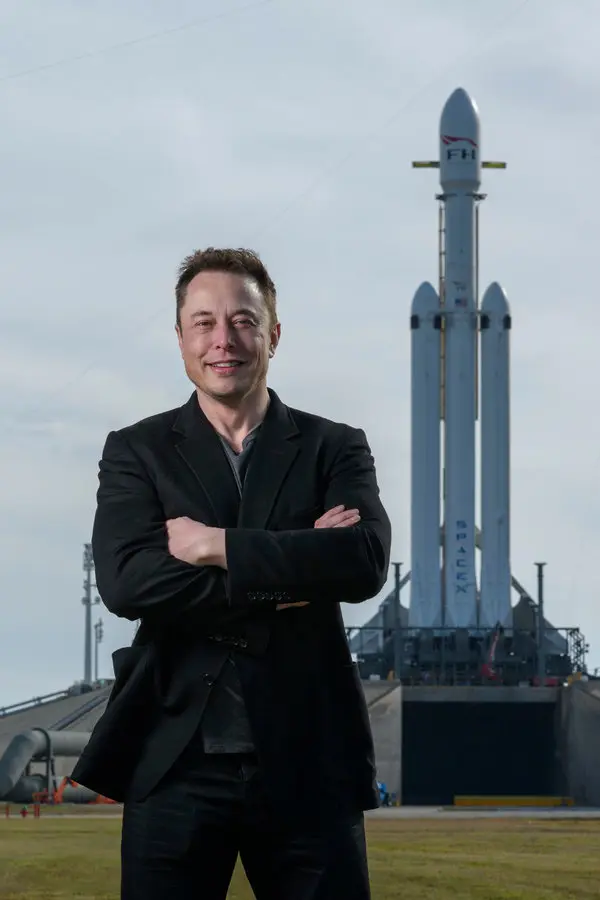
In 1952, a Nazi rocket scientist wrote a book about Mars.
In it, he described a future leader named "Elon" who would conquer the Red Planet.
70 years later, Elon Musk is building rockets to do exactly that.
Here's the story behind the strangest "prediction" in history: 🧵

English