MikeWu
234 posts








除了低市盈率的辉瑞 $PFE ,美股还有一家生产销售天然气的公司 $LNG
实际市盈率11.6,股息有点低0.93%,
但是跟缺电概念有点契合,抛开他自己的传统业务,拿天然气燃烧发电最直接最快捷能帮到ai解决电力问题.

川沐|Trumoo🐮@xiaomustock
在整体炒作节奏上,感觉美股比大a慢一拍. 美股应该也要进入炒高股息低市盈率的养老股的阶段了. 辉瑞这种6%的高股息10左右市盈率的股票开始涨起来了.
中文

$BABA
Should be exciting to see how the (extended) Singles' Day numbers come out

Charts R Us@ChartsRUs0
$BABA Cramered
English

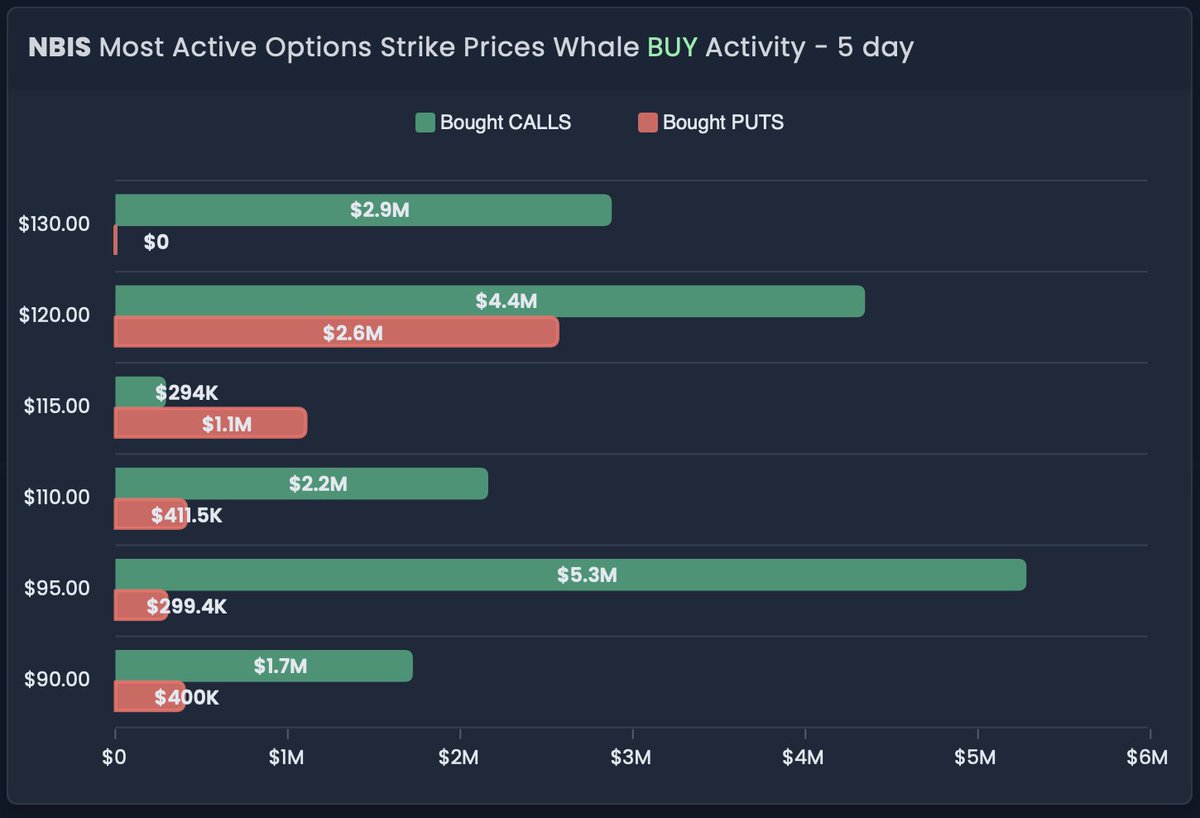
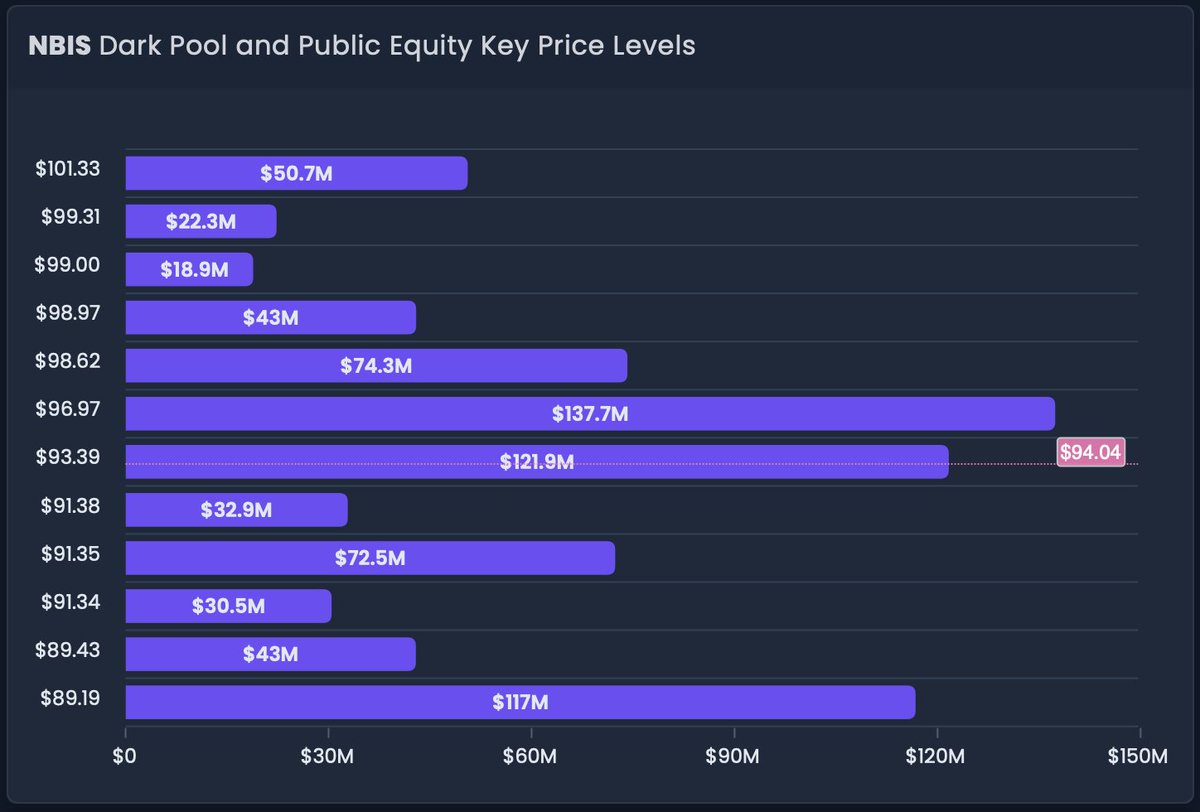
Investors are freaking out over $NBIS volatility… but the data tells a different story.
Dark pool buys are stacking between $93–$98, with whales quietly adding while retail panics.
Options flow shows calls outweighing puts (575K vs. 352K), conviction is building, not fading.
At-the-money $95 calls saw $5.3M+ in buying pressure this week alone.
Everyone’s watching price action. Smart money’s watching accumulation.
English



吼吼吼吼 酸爽!我已经完全不想打开券商了😂😂 咔咔亏。
但是我仍然觉得,部署政府会重新开门是更合理的。
你给我讲道理让我做空赌堂堂美国政府就不会开门了,我实在是下不去手,宁可被套俩礼拜了。
加油!逆境的多头!
中文
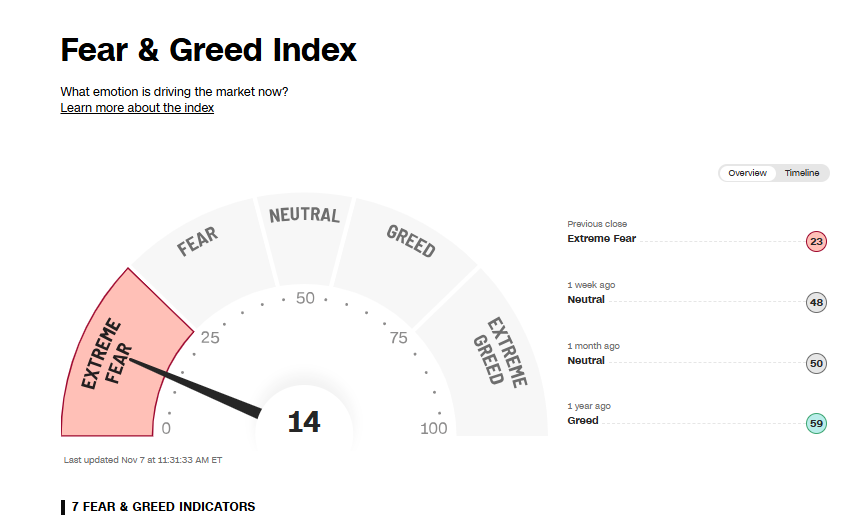

提问:“我记得之前你说会在参与度到80的时候选择降beta 为什么现在参与度只有30多就开始降了呢 为什么我们不能在这个时候buy the dip”
1. 大方向是这样的,个股来说AMD出了和OPENAI的合作消息后大涨,所以卖了
2. SE出了莫名奇妙的下跌且完全没有收复,就减了一部分,且看到了其他标的的机会
3. 参与度是对于整体市场的衡量,个股有机会肯定个股优先
4. 如果参与度跌到了20以下,是不是可以加仓,大方向,是的,比如QQQ。标的方面,技术面搏反弹?那什么标的都可以,基本面加仓?昨天的X说过了,不要对SELL THE NEWS的公司非常执着BUY THE DIP,做好基本面的研究确认后再买。
5. 我还期待情绪面再去到高位吗?是的。所以我还持有着AEXA,持有的这段时间很多热门股都腰斩,空壳公司几乎类似现金仓位。但是情绪面(参与度)反弹是近期的目标,如果中长期的目标是降BETA,当两者如果出现矛盾,应该尊重中长期的目标,个股有机会,也尊重个股,因为判断逻辑层面里面更高。
中文
@GordonJohnson19 截止2025年11月,中国拥有约3,500-4,000个数据中心(包括超大规模和边缘类型),全球排名第二……你的数据过时了
中文
Question for the AI bulls. The US currently has ~5,426 data centers, and is investing billions to build more. China has ~449 data centers, AND IS NOT ADDING. If AI is real, why isn't China building 000s of data centers every month (which they could CLEARLY do)? Thoughts? $NVDA
English


Damn,在X上吹牛逼的时候,大盘已经被干下来了,第一支撑位6666😂

李德胜DavidTheRealtor@david88lee
明天运行区间6700-6800,守不住,测试6666,六六大顺的支撑。再守不住,6500见,终极支撑。大胆买进,赢了不用分我,输了含泪自己吞了😂
中文


昨晚OpenAI的一场公关危机,起因是昨天华尔街日报发布了对OpenAI公司CFO的专访,在访谈中CFO表示OpenAI短期不希望IPO,但是又说希望未来能得到“国家的融资支持”。虽然之后她澄清了说法。
但外部人听到炸了,想的是,OpenAI正在要求国家的担保 / guarantee。
然后主管人工智能政策的David Sacks这时候补了一刀“不会有联邦救助人工智能。美国至少有五家主要的前沿模型公司。如果其中一家失败,其他公司将取而代之。”
这才有了今天Sam这一篇推文,大意是:
1)政府不应该人为地决定哪些公司会赢,哪些公司会输,纳税人的钱也不应该用来救助那些商业决策失误或在市场中失败的公司。我们没有要政府为我们兜底的意思,
2)政府决定购买大量的计算能力,并决定如何使用这些能力,而为此提供更低的资金成本或许是合理的。建立国家战略计算能力储备意义重大。但这应该是为了政府的利益,而不是为了私营公司的利益。
3)延伸的三个问题:
首先 我们预计今年的年化收入将超过200亿美元,到2030年将增长到数千亿美元,对我们持续收入增长有信心;
其次 OpenAI完全没有大而不能倒,我们犯了错且无法弥补,我们就应该失败。我们计划成为一家非常成功的公司,但如果我们做错了,责任在我们自己。
我们说的政府来兜底不是为某一家公司兜底,而是说为网络安全,为大规模攻击基础设施来兜底;
最后,为什么为我们需要这么多钱来搞建设?我们在研究项目中看到的未来前景,现在正是投资以真正扩大技术规模的最佳时机。大型基础设施项目需要相当长的时间才能建成,所以我们必须立即行动。OpenAI面临的计算能力不足的风险比计算能力过剩的风险更大
OpenAI现在毫无疑问是AI浪潮之眼,一言一行干系太大,幸亏还没有上市,不然就像Sam说昨晚市场就会解决它。
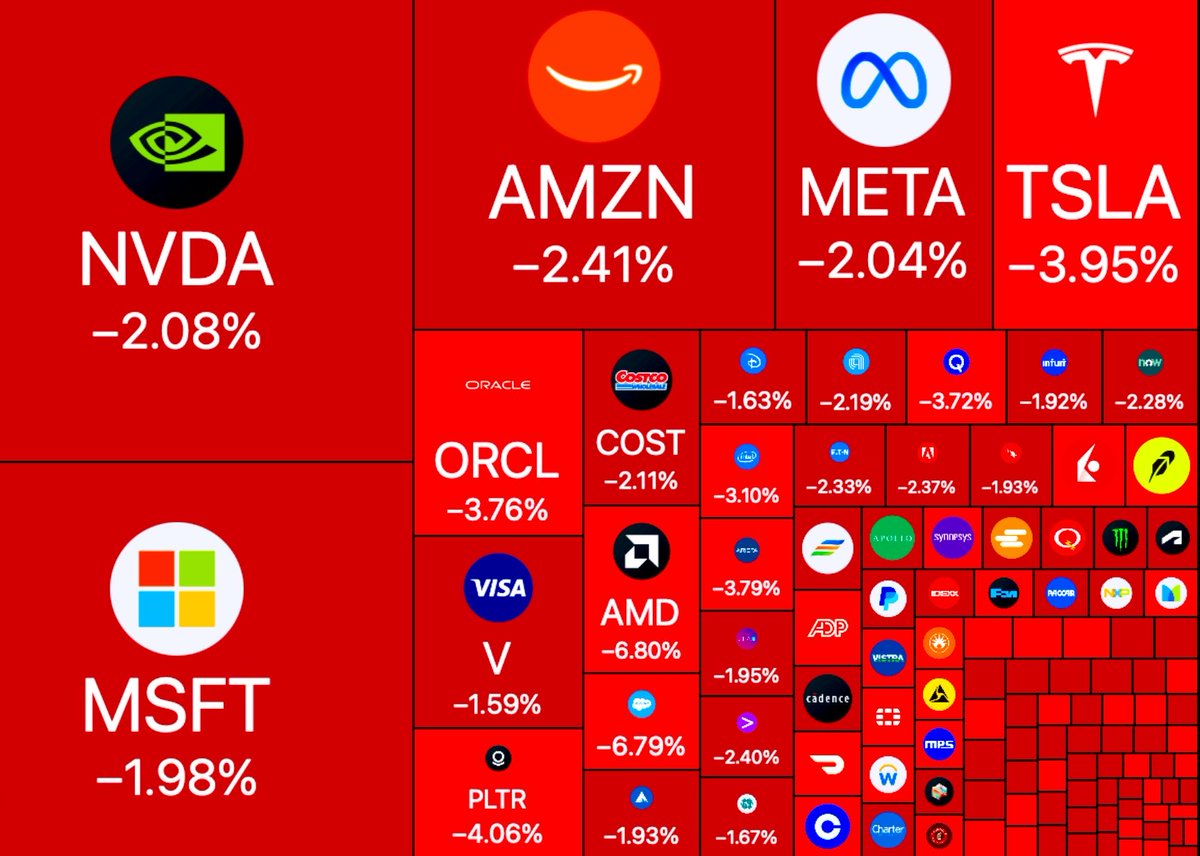
这也是昨晚大科技普跌,谷歌还是收涨,苹果微跌。谷歌自称一体,跟openai关联度很小,市场也需要openai的plan B 。苹果还是大科技里在资本开支上最克制的。

Sam Altman@sama
I would like to clarify a few things. First, the obvious one: we do not have or want government guarantees for OpenAI datacenters. We believe that governments should not pick winners or losers, and that taxpayers should not bail out companies that make bad business decisions or otherwise lose in the market. If one company fails, other companies will do good work. What we do think might make sense is governments building (and owning) their own AI infrastructure, but then the upside of that should flow to the government as well. We can imagine a world where governments decide to offtake a lot of computing power and get to decide how to use it, and it may make sense to provide lower cost of capital to do so. Building a strategic national reserve of computing power makes a lot of sense. But this should be for the government’s benefit, not the benefit of private companies. The one area where we have discussed loan guarantees is as part of supporting the buildout of semiconductor fabs in the US, where we and other companies have responded to the government’s call and where we would be happy to help (though we did not formally apply). The basic idea there has been ensuring that the sourcing of the chip supply chain is as American as possible in order to bring jobs and industrialization back to the US, and to enhance the strategic position of the US with an independent supply chain, for the benefit of all American companies. This is of course different from governments guaranteeing private-benefit datacenter buildouts. There are at least 3 “questions behind the question” here that are understandably causing concern. First, “How is OpenAI going to pay for all this infrastructure it is signing up for?” We expect to end this year above $20 billion in annualized revenue run rate and grow to hundreds of billion by 2030. We are looking at commitments of about $1.4 trillion over the next 8 years. Obviously this requires continued revenue growth, and each doubling is a lot of work! But we are feeling good about our prospects there; we are quite excited about our upcoming enterprise offering for example, and there are categories like new consumer devices and robotics that we also expect to be very significant. But there are also new categories we have a hard time putting specifics on like AI that can do scientific discovery, which we will touch on later. We are also looking at ways to more directly sell compute capacity to other companies (and people); we are pretty sure the world is going to need a lot of “AI cloud”, and we are excited to offer this. We may also raise more equity or debt capital in the future. But everything we currently see suggests that the world is going to need a great deal more computing power than what we are already planning for. Second, “Is OpenAI trying to become too big to fail, and should the government pick winners and losers?” Our answer on this is an unequivocal no. If we screw up and can’t fix it, we should fail, and other companies will continue on doing good work and servicing customers. That’s how capitalism works and the ecosystem and economy would be fine. We plan to be a wildly successful company, but if we get it wrong, that’s on us. Our CFO talked about government financing yesterday, and then later clarified her point underscoring that she could have phrased things more clearly. As mentioned above, we think that the US government should have a national strategy for its own AI infrastructure. Tyler Cowen asked me a few weeks ago about the federal government becoming the insurer of last resort for AI, in the sense of risks (like nuclear power) not about overbuild. I said “I do think the government ends up as the insurer of last resort, but I think I mean that in a different way than you mean that, and I don’t expect them to actually be writing the policies in the way that maybe they do for nuclear”. Again, this was in a totally different context than datacenter buildout, and not about bailing out a company. What we were talking about is something going catastrophically wrong—say, a rogue actor using an AI to coordinate a large-scale cyberattack that disrupts critical infrastructure—and how intentional misuse of AI could cause harm at a scale that only the government could deal with. I do not think the government should be writing insurance policies for AI companies. Third, “Why do you need to spend so much now, instead of growing more slowly?”. We are trying to build the infrastructure for a future economy powered by AI, and given everything we see on the horizon in our research program, this is the time to invest to be really scaling up our technology. Massive infrastructure projects take quite awhile to build, so we have to start now. Based on the trends we are seeing of how people are using AI and how much of it they would like to use, we believe the risk to OpenAI of not having enough computing power is more significant and more likely than the risk of having too much. Even today, we and others have to rate limit our products and not offer new features and models because we face such a severe compute constraint. In a world where AI can make important scientific breakthroughs but at the cost of tremendous amounts of computing power, we want to be ready to meet that moment. And we no longer think it’s in the distant future. Our mission requires us to do what we can to not wait many more years to apply AI to hard problems, like contributing to curing deadly diseases, and to bring the benefits of AGI to people as soon as possible. Also, we want a world of abundant and cheap AI. We expect massive demand for this technology, and for it to improve people’s lives in many ways. It is a great privilege to get to be in the arena, and to have the conviction to take a run at building infrastructure at such scale for something so important. This is the bet we are making, and given our vantage point, we feel good about it. But we of course could be wrong, and the market—not the government—will deal with it if we are.
中文
OpenAI CEO 奥特曼今天出来澄清:
1. 昨天CFO误导大家了,我们没要政府为我们兜底(其实我觉得昨天CFO说得挺明确的,希望政府能帮他们降低借贷成本)
2. 我们年化营收年底200亿(厉害的,我原本以为是150亿)
3. 我们并不是大到不能倒,如果我们有问题让我们倒(看来这么想得不是我一个)
4. 我们正在寻找方法卖算力(这点我是着实没看懂,不是算力不够吗?谁能解释下)
为什么他要解释?因为现在只要OpenAI一句造太多了,市场都得崩。现在的核心问题是投资者能看多远?OpenAI还好没上市,要上市了今天怎么不得📉个20%
投资TALK君@TJ_Research
昨天我直播完继续努力思考“AI有没有泡沫”:OpenAI已经绑架了微软,英伟达,AMD,包括无数的neocloud,这些大科技能看着他出问题吗?市场再看不惯Sam的为人,OpenAI似乎已经到了大到不能倒(没需求)的阶段了,当然最后还是产品说话,市场接不接受,不过宣传的口舌肯定不缺了。
中文

@Franktradinglog 不过就一点现在Open AI在风口浪尖😂大家都在质疑他的盈利包括他的投资…Sam今天发了篇长篇大论感觉像此地无银三百两…..短期甲骨文可能也会受到一点牵连影响吧
中文

ORCL at 243 is an exceptionally attractive stock. If you insist that I pick one name to go all-in on, it would definitely be ORCL. The upside potential is massive, and the stop-loss level is clear — there’s no better entry point than this. In essence, ORCL, when factoring in its operating leverage, is like a 5× long position on OpenAI. If you buy a LEAPS call on ORCL, that’s effectively 25× long OpenAI. If you still believe in that story, then go long.
English