
Xing Li
19 posts


Something I told 14 yo: People are going to stop reading books. I wish this wasn't so, but I fear it is. The silver lining in this cloud is that if you're one of the few people who still read, you'll have a huge advantage over everyone else.
English

First of all, congratulations to the Chinese aerospace team.
Successfully recovering the Long March 10B first stage using a cable-net capture system is an extraordinary engineering achievement. Regardless of nationality, breakthroughs like this move human spaceflight forward.
While watching the recovery video, one detail caught my attention.
After the booster was captured, the lower end appeared to oscillate more noticeably than the upper section.
As a quality engineer, my first reaction wasn’t to criticize the design.
It was simply:
Why?
My engineering mind immediately started thinking in terms of FMEA.
Was this oscillation identified during the design phase?
If so, was it evaluated and accepted because the associated risk was low?
Or is it simply an engineering trade-off that isn’t obvious from the outside?
Another question came to mind.
Would adding a secondary lower guidance or restraint point reduce the oscillation?
Or would it introduce new failure modes, additional loads, or operational complexity that outweigh the benefits?
I don’t know.
And I don’t think anyone should pretend to know based on a short video.
I’m also confident that the engineers behind this project have already considered many of these questions. Complex systems are rarely designed without extensive analysis, simulation, and testing.
That doesn’t mean there is no room for improvement.
Every successful engineering system can usually be improved further.
That’s how engineering progresses.
For me, this is what engineering is really about.
Not rushing to conclusions.
Not assuming we know the answer.
But observing carefully, asking better questions, and remaining curious enough to keep learning.
Sometimes the most valuable engineering discussion doesn’t start with an answer.
It starts with one simple question:
Why?
Ace of Razgriz@raz_liu
Full length video of the CZ-10B maiden flight from lanuching to landing. via 空天逐梦
English

JUST IN🚨: Once every 500 billion years — The universe could be looping around a hidden “something”.


English
If you could name the first city on Mars, what would it be called?

English


If solar power in space is harnessed for useful work at scale, the value of that will far exceed the Earth economy, because all of Earth civilization uses much less than a trillionth of our Sun’s power
Brivael Le Pogam@brivael
Si A, la richesse suit l'énergie captée, et si B, SpaceX ouvre seule un réservoir un milliard de fois supérieur, alors la conclusion tombe d'elle-même : comparer SpaceX à la richesse terrestre est une erreur de catégorie. La Terre cesse d'être le dénominateur. « Plus que le reste de la Terre » n'est pas une hyperbole. C'est un arrondi à l'inférieur.
English
@XingLi_Thinking 下午让codex给我接入了deepseek的api,我全程看它自己操作电脑,用了之后发现deepseek的命中率是真的差
中文
@laozhouhengmei 说的很好
中国能紧随美国的创新步伐已经很不容易了
美国也该感谢中国能推动自己的技术进步
在这方面,欧盟已经落后的太多了
中文

中国实现火箭回收后,反共圈子里很多人都在冷嘲热讽:就会抄袭、落后美国十年、甚至还有说是AI做的视频等等。
我觉得大可不必。
中国没有0到1的创新能力,是事实;但只要你给出一个0到1的idea,他必然能非常快速弄出1~99,而且经常还搞得非常便宜,这也是事实。
像火箭回收这件事,确实不是中国的创新主意,但欧洲、日本、韩国,所有发达国家,也没有人抄得出来, 那么这事情的含金量就不低。(我觉得日本JAXA那个暂时不算)
当然你可以说这是举国之力。举国制的缺点很明显,优势也很明显。我们既然要批评一个制度的劣势,就必须整体、客观、全面地去看。
你可以说:举国制是国强民弱、是牺牲个体利益来满足宏大叙事。这都没问题,但你不能不承认客观事实。
半年前Seedance 2.0出来的时候我就说过了,我觉得有一部分海外反共人士最大的问题是:不愿意面对现实。
我当然希望中国能够脱离中共的统治,最起码,应该有其它竞争政治党派的存在,这是毋庸置疑的。但如果说你反共,却不愿意正视中共强大的地方,一看到中国哪里取得了成果,就找各种理由来给自己找心理安慰,什么AI做的啦、什么别人早就有啦,那你只是一只鸵鸟,跟那些说美国要崩溃说了几十年的小粉红,并无本质区别。
承认现实,并不意味着放弃价值判断; 恰恰相反 —— 不自欺欺人、不掩耳盗铃,才有资格讨论制度的优劣。
中文
@SpoxCHN_MaoNing 应该算是人类历史上的一个壮举,祝贺你们!
但是这个技术离马斯克的技术仍有代差。
但是我仍然很高兴看到中美两国能通过竞争提高人类的航空航天技术水平。
中文

A historic day in China’s space program!
China’s Long March-10B has successfully completed its maiden flight—and recovered its first stage via a sea-based net. This marks the country’s first-ever controlled rocket recovery. A major leap toward reusable launch capabilities. 🚀🌊🇨🇳
English
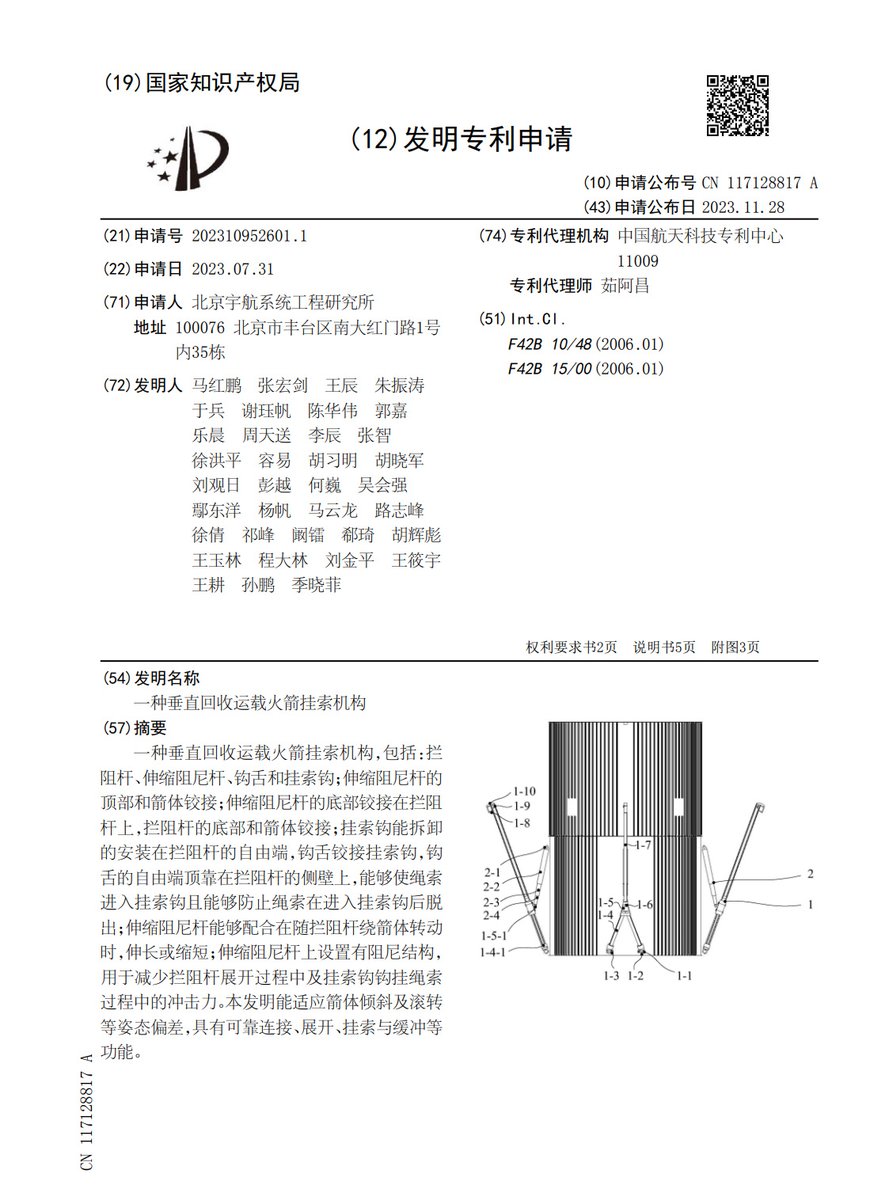
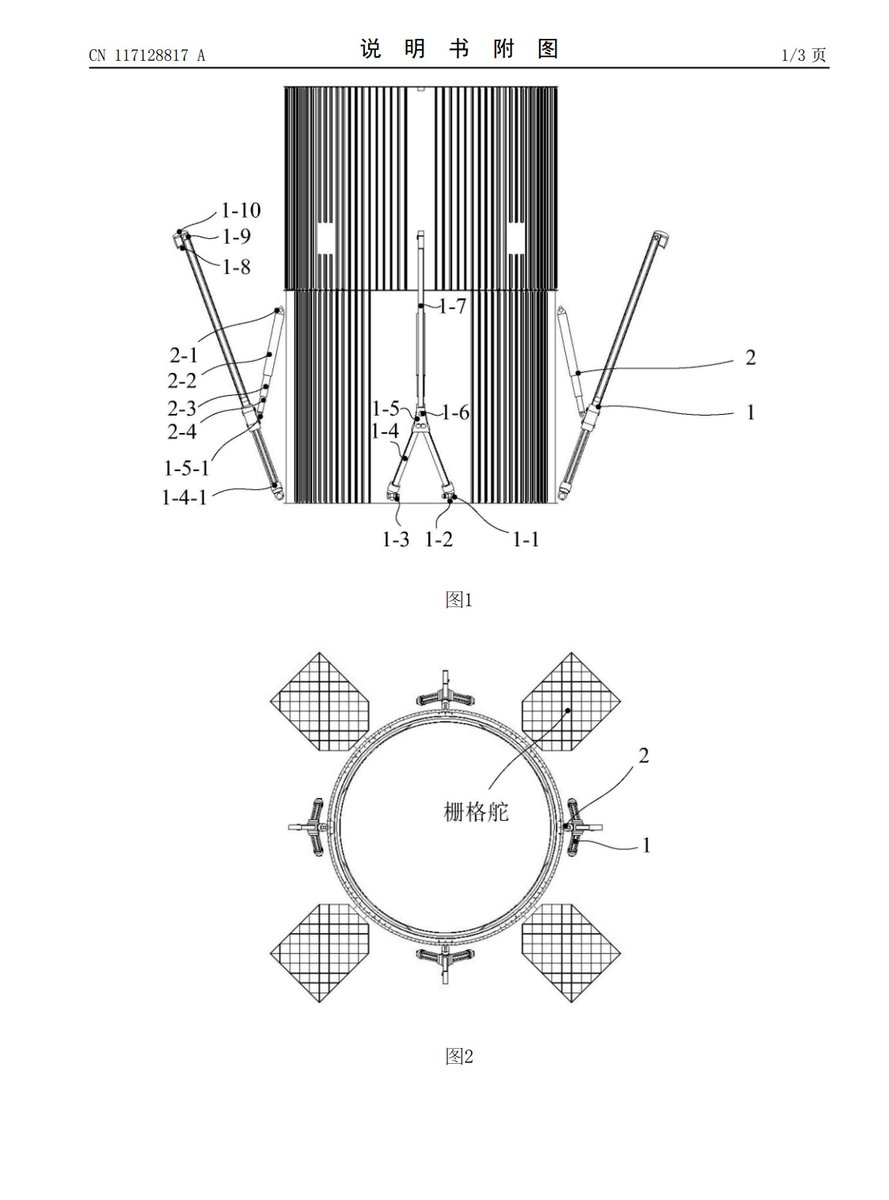
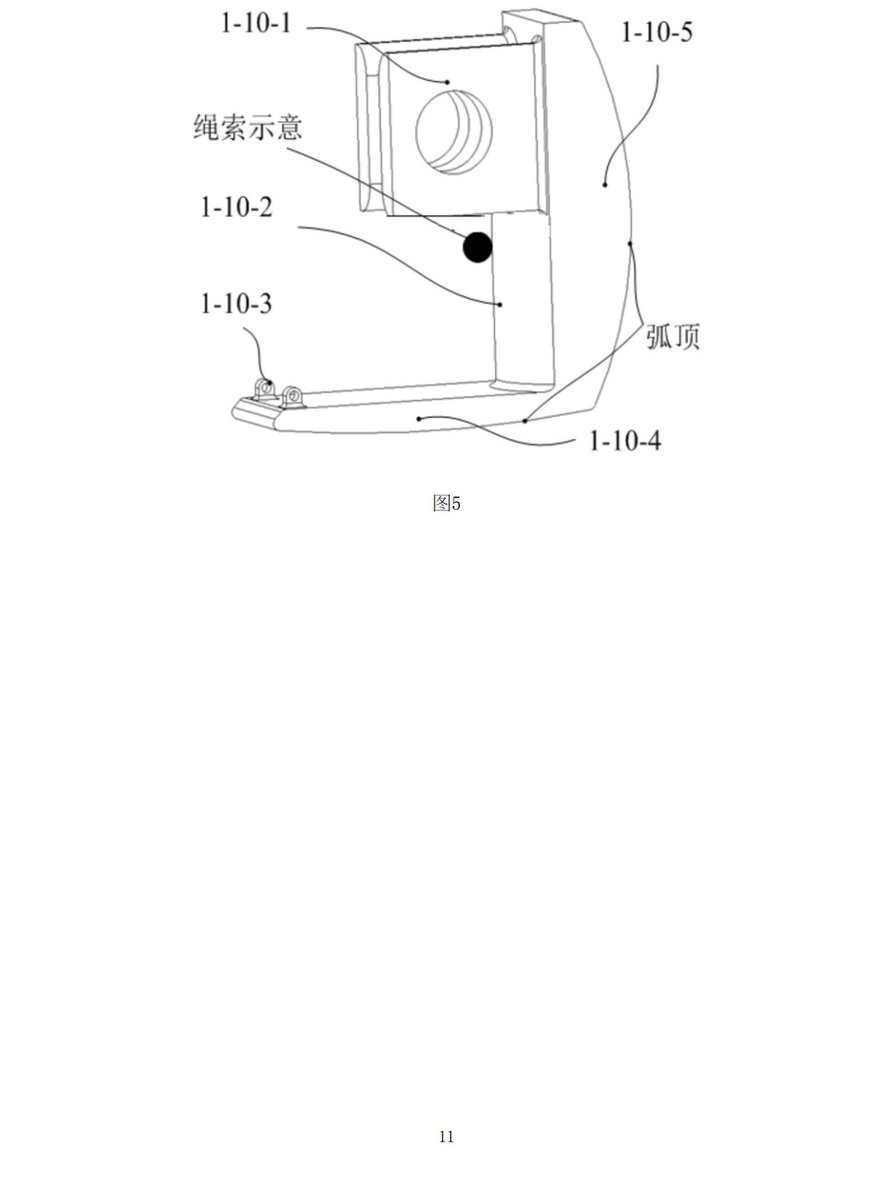
Chinese patent on the hook and cable rocket recovery system

English
The technology in China is insane.
I saw hotel uses robot to deliver tower and foods to customer.
Chinese would be very happy to use new technology for their life, even sometimes will have some problem. I think it is very helpful for development.
I hope that Europe can lern something from China.
English
@XingLi_Thinking Yeah, it was. And also a mobile robot to further secure the stage bottom to the deck.

English

This will be the best-selling car in history.
Fully autonomous.
No steering wheel.
Tesla Robotaxi@robotaxi
Cool news from Giga Texas
English
@TheHumanoidHub AI makes decisions base on Probability.
England played better as thought 😊👍
English

People often tell me I’m too picky.
They’re probably right.
Whenever I read a report, review a requirement, or hear a conclusion, my first reaction is almost always the same:
Why?
How did you arrive at that conclusion?
I’m not asking because I enjoy challenging people.
I’m asking because I’ve learned that unclear reasoning leads to weak decisions.
Over the years, two principles have shaped how I work—and eventually, how I think.
First, everything should be traceable.
If we define a requirement, a process, or a parameter, there should be a reason behind it.
A standard.
A regulation.
Test data.
Risk analysis.
Or at least a logical justification.
Engineering decisions shouldn’t appear out of thin air.
Second, every conclusion deserves a complete chain of reasoning.
Evidence.
Reasoning.
Conclusion.
If one link is missing, the conclusion becomes an opinion.
If you disagree with me, that’s perfectly fine.
In fact, I welcome it.
Just don’t tell me I’m wrong.
Show me why.
Bring better evidence.
Bring stronger logic.
If your reasoning is better than mine, I’ll gladly change my mind.
This mindset doesn’t stop at engineering.
It’s how I look at AI, investing, autonomous driving, science, and many other topics.
I’m fascinated by scientific thinking.
A few years ago, at the age of 44, I even considered going back to university to study astrophysics—not because I wanted a new career, but because I wanted to understand the universe a little better.
For me, learning has never been limited to my job title.
AI is making knowledge more accessible than ever.
It can lower the barrier to learning.
It can even help me express my ideas in a language that isn’t my native one.
But AI cannot replace curiosity.
It cannot replace reasoning.
And it cannot replace the responsibility to ask one simple question:
Why?
That’s why I’m starting to write.
Not because I have all the answers.
But because I believe better questions lead to better thinking.
And better thinking leads to better decisions.
English