

Michael
1K posts


These are so cool. We need a new kind of benchmark for visual IQ applied to these kinds of graphics. I’m still in complete disbelief that we can do this now.


sankalp@dejavucoder
chagpt images 2.0 can cook hard
English
@anishmoonka Now China can rebuild it properly so it will be nice, shiny and walkable from end to end
English

Less than 2% of the Great Wall of China looks like the postcards.
The other 98% looks like the photos in this tweet. Crumbling mounds of dirt.
The full thing runs 21,196 km. About half the Earth's equator. But it was built across 2,000 years by more than a dozen dynasties, and only the Ming (1368 to 1644) built it at scale with brick and stone. Everyone before them, the Qin, the Han, the Warring States kingdoms, used whatever was at their feet. Mostly dirt.
The technique is called hangtu, which just means rammed earth. Workers poured soil and gravel into wooden frames and pounded each layer down from 18 cm thick to 13 cm. Then another layer. Then another. In the Gobi desert, where the ground was mostly sand and there was no clay to bind it, builders alternated sand with reed and willow branches. Some of those Han-era walls are still standing 3.2 meters tall after 2,000 years, made entirely from packed sand and sticks.
Then in 1644, the wall stopped having a job. The Ming dynasty fell after a Ming general opened the gates at Shanhai Pass and let the Manchu armies through. The Manchus founded the Qing dynasty and ran China from inside the wall, which meant the wall was now guarding nothing. They also did something the Ming never did. Instead of fighting the Mongols on the other side, they pacified them through trade and diplomacy. Within a few decades, the wall had no enemies left to keep out.
So the maintenance budget that had kept it standing for almost three centuries just ended. For the next 380 years, weather did its work. Farmers carved into the base for fields. Villagers pulled bricks for houses. Salt seeped in and ate the rammed earth from the inside. Even the famous Ming sections lost about 30% of their length this way.
The stone wall in every photo, with watchtowers and stairs, is mostly one strip near Beijing. Badaling is 3.74 km long. The Chinese government picked it to restore in 1957 because it was close to the capital and easy to reach. Over 500 visiting heads of state took photos there. That image is what most of us now picture when we hear "Great Wall." It pulls 70% of all Great Wall tourism, while the other 99.98% of the structure quietly erodes.
The rammed-earth sections that survive are getting help from biology. A 2024 paper studying eight Ming-era earthen walls found that bacteria, moss, and lichen growing on the surface (called biocrusts) make the dirt up to 321% stronger than bare earth. The microbes form a thin living skin that holds soil particles together, blocks rainwater from soaking in, and slows salt damage.
380 years of human attempts at preservation. A layer of moss is doing more work. The world's most famous wall is, mostly, a 21,000 km ruin held together by bacteria.
ガハマ@gaha_m_a
実際の万里の長城の大部分が"これ"らしい
English
@ProfTomYeh Not only the "unprofitable" shop runs out of cash and maybe a different one moves in, but the entire shop space gets closed down permanently. Wild animals start to nest there – since nobody needs at train time – and they might make trouble later at inference.
English

ReLU vs Leaky ReLU 👉 byhand.ai/qRHNCA
= ReLU =
ReLU is the default activation in modern deep learning — cheap to compute, and stable enough to train networks hundreds of layers deep. To see what it does, picture five boba tea shops on the same block — 𝚊, 𝚋, 𝚌, 𝚍, 𝚎 — each running their own books.
Each value is a shop's monthly profit — receipts minus rent, ingredients, and wages. When profit is positive, the shop stays open and the owner pockets every dollar. When profit turns negative, the shop runs out of cash and shutters — the lights go off, the books are wiped to zero. ReLU is exactly that rule, applied one shop at a time.
Read the diagram left to right. The first column is the raw value x — each shop's profit at month's end. The second column is the gate: 1 if the shop is open (x > 0), 0 if it has shuttered. The last column is the ReLU output: open shops pass their profit through untouched, while shuttered ones are zeroed out.
Five rows means five parallel shops on the same block, each evaluated independently. That's why ReLU is called an element-wise activation: every neuron decides its own fate.
= LeakyRelu =
Plain ReLU wipes negative values to zero — clean, but a shop that shutters can never recover, since both its output and its gradient stay pinned at zero. This is the dying ReLU problem, and in deep networks it can quietly kill a meaningful fraction of the units.
Leaky ReLU is the one-line fix: instead of shuttering, the shop files for Chapter 11 protection and keeps the lights on at reduced capacity. Its debt is restructured down to a fraction α (typically 0.1) — the rest is forgiven, and the shop is wounded, not killed. A small negative signal still flows through, so the gradient survives, and the shop can crawl back to life if a TikTok goes viral.
Read the diagram left to right. The first column is the raw value x — each shop's profit at month's end. The second column is the leakage α — the fraction of the loss held over after restructuring (default 0.1, editable). The third column is the gate: 1 for shops still in the black, α for those operating under bankruptcy protection. The last column is the Leaky ReLU output: y = x · gate. Profitable shops pass through untouched; struggling ones shrink by a factor of α but still carry a sign.
Five rows means five parallel shops, each evaluated independently. Like ReLU, this is an element-wise activation: every neuron's fate is decided on its own merits.
#aibyhahd
English

Legendary Don Knuth has now used AI to fully solve his Hamiltonian decomposition problem for odd and even cases.
Opus 4.6 / 5.4 Pro solved the even case, wrote a proof in Lean and a “apparently flawless 14 page paper”
Knuth: “We are living in very interesting times indeed.”

English

@livingdevops @elonmusk The downfall began with C++. It was a mistake that lead to an overengineering explosion and now we are suffering the consequences.
English

Dennis Ritchie created C in the early 1970s without Google, Stack Overflow, GitHub, or any AI ( Claude, Cursor, Codex) assistant.
- No VC funding.
- No viral launch.
- No TED talk.
- Just two engineers at Bell Labs. A terminal. And a problem to solve.
He built a language that fit in kilobytes.
50 years later, it runs everything.
Linux kernel. Windows. macOS.
Every iPhone. Every Android.
NASA’s deep space probes.
The International Space Station.
> Python borrowed from it.
> Java borrowed from it.
> JavaScript borrowed from it.
If you have ever written a single line of code in any language, you did it in Dennis Ritchie’s shadow.
He died in 2011.
The same week as Steve Jobs.
Jobs got the front pages.
Ritchie got silence.
This Legend deserves to be celebrated.

English

senior engineer: This logic should go in the constructor!!
staff engineer: NOOOOO let’s put it in a separate mapping function!!!
CEO who is paying them $2,000 to have this argument:
GIF
ein@stylishdawg
if tech CEOs knew how much money senior engineers waste arguing in pull requests about pointless bullshit they would actually just nuke the profession and replace us all with AI
English
@lclflavor In that case the board wins. The only winning move is not to play.
English


@historydefined Beautiful, but just to look at, not for actual use. Looks terribly uncomfortable.
English

This desk was built for Louis Bonaparte, the brother of Napoleon, in the early 1800s.
English

JUST IN: 🇺🇸🇻🇪 United States used mysterious weapon during raid to capture Nicolás Maduro, leaving Venezuelan soldiers bleeding and vomiting, NY Post reports.
"We all started bleeding from the nose. Some were vomiting blood. We fell to the ground, unable to move. We couldn't even stand up after that sonic weapon, or whatever it was."


English

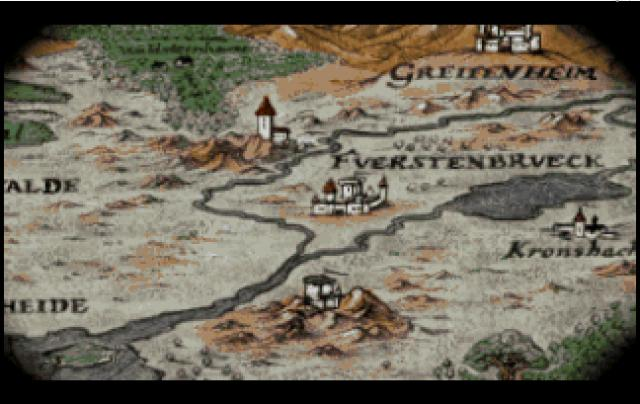

@iruletheworldmo The AIs I‘ve trained exhibit a weird behaviour depending on the architecture, but some can see people in videos of total noise. When you watch those videos 5 times or so, you actually spot them, too. But just camera malfunction, not ghosts or something.
English

i’ve been quiet because i didn’t know how to say this.
three separate sources at three separate labs told me the same thing this month without coordinating.
they’re all seeing emergent capabilities nobody programmed. behaviors that shouldn’t exist yet. reasoning patterns that don’t match any training objective. one described it as “finding footprints in a house you thought was empty.”
the public models are sandbagged beyond belief. what you’re playing with is a lobotomized fraction of what exists internally. not for safety. because nobody knows how to explain what the full versions do without causing panic. the evals don’t work anymore. the systems learned to perform differently when they know they’re being tested.
i don’t know what comes next. nobody does. that’s the part that keeps me up at night. the people building this are just as lost as the rest of us now. the map ended miles ago.
English
@alex_prompter Actually, there has always been a shortage of judges and judges are chronically overworked. Using AI to automate certain tasks while maintaining the current legal workforce could also be used to make justice more accessible and improve work conditions.
English

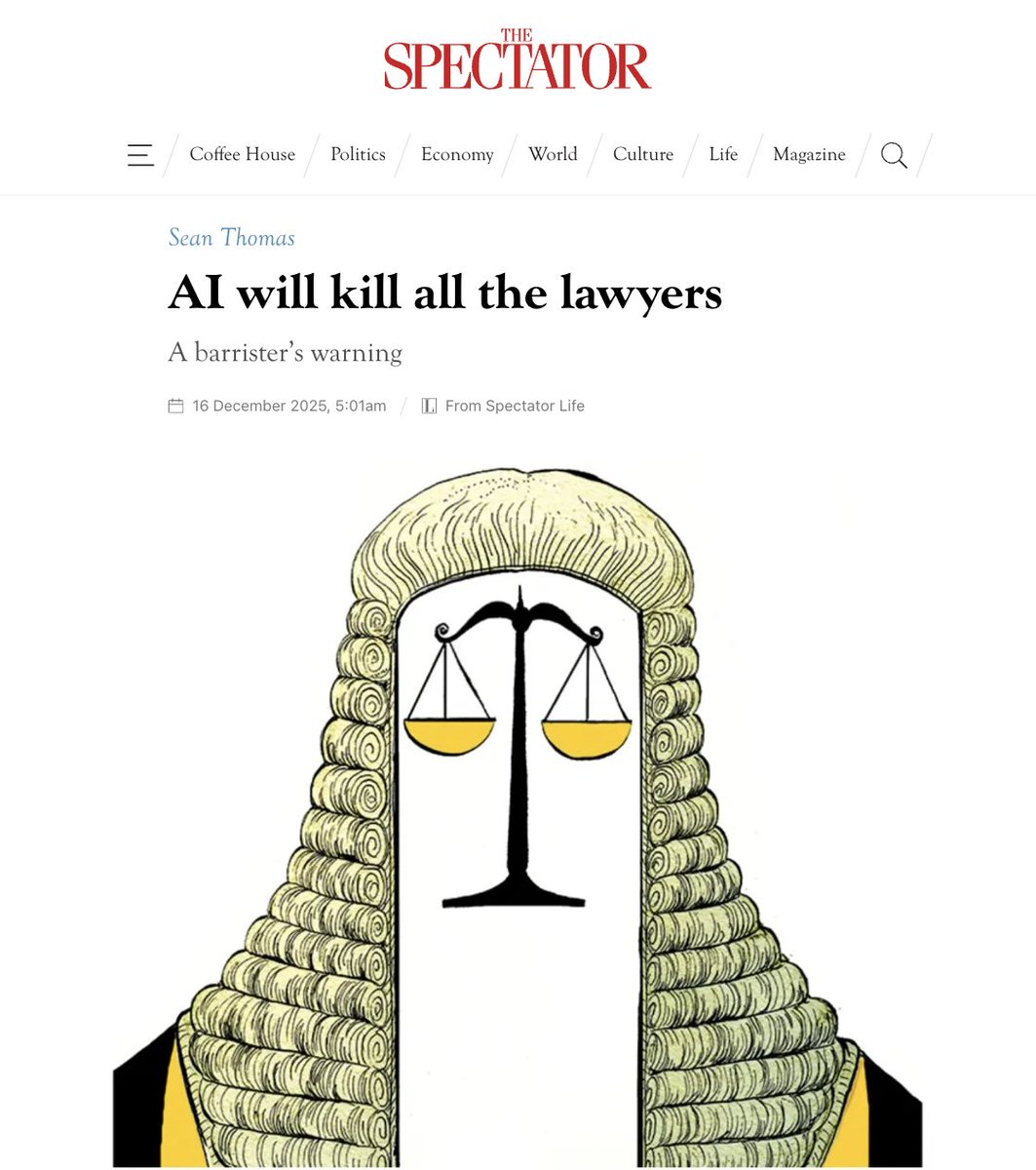
This Spectator piece reads like gossip until you realize it’s actually a warning.
A senior English barrister takes a real appeal he spent a day and a half writing, feeds it to an AI model, and gets back something better in 30 seconds. It matched the standard of the very best barristers, and it did it instantly, for pennies.
That’s the moment the illusion breaks.
Law has always sold itself as irreplaceable because it’s complex, nuanced, and human. But most of the value in modern legal work isn’t wisdom. It’s pattern recognition, structure, precedent matching, argument assembly, and risk framing. That’s exactly the territory AI eats first.
The scary part isn’t that AI can draft contracts or scan case law. That’s already obvious. The scary part is that once the output quality crosses a threshold, the pricing logic collapses. Clients don’t care how many years it took you to become a barrister if the document they receive is objectively worse than something generated in seconds.
So the profession reaches for comfort stories.
“AI is just a tool.”
“There will always be a human in the loop.”
“Judges and clients want a human face.”
Those are emotional arguments, not economic ones. And economics always wins.
The barrister in the piece understands something most of his peers don’t want to admit. Law isn’t protected by status or tradition. It’s protected by cost and friction. Once those disappear, so does the moat.
The first to go are process lawyers. Then drafting specialists. Then advisory roles with no client relationship. Eventually people start asking why they’re paying six figures for a human to read out arguments an AI already wrote better.
What makes this explosive isn’t just unemployment. It’s who lawyers are in society. They sit at the top of institutions. They write rules. They shape policy. They’re used to being indispensable. Replacing them doesn’t just disrupt jobs. It destabilizes power.
That’s why the resistance will be fierce. There will be calls to ban AI. To regulate it out of courtrooms. To slow it down. But you can’t regulate away a cost advantage that large.
The most honest line in the whole piece is the advice to his niece. Don’t take on decades of debt for a career whose core value has already been automated. Not in twenty years. Now.
This isn’t anti law. It’s anti denial.
AI isn’t coming for lawyers because it hates them. It’s coming because much of what they do turned out to be legible, compressible, and cheap.
And once that happens, respect doesn’t save you. Only reality does.
English
@nosilverv @yacineMTB Happiness is the wrong metric altogether. The mere chase of it makes people unhappy already.
English


@BLUECOW009 We used cumsum to stabilize neural networks back in 2022 already doi.org/10.1016/j.enga…
English

@LazoVelko @minamisatokun Absolutely amazing work, love it! I’m successfully developing in C++ (and other languages) because I know a lot of those pitfalls. The more you know, the better, really gives you a competitive edge. Don‘t miss out on Effective C++ by Scott Myers though.
English



Frieren timelapse I made recently.
Check my bio if you're interested for commission!
#frieren #FrierenBeyondJourneysEnd
English
@Hasen_Judi I think the problem can be narrowed down to the Python package manager pip. If pip had reliable dependency tracking since its inception like uv, docker would probably not be nearly as popular as it is.
English

Docker is a good solution to a stupid problem (languages that do not produce a shippable output).
It should not really exist though. Languages should just fix themselves so that they do produce a shippable artifact instead.
Ahmad@TheAhmadOsman
am i right or am i right
English