Yet Another Tech Poster

608 posts

Yet Another Tech Poster banner
Yet Another Tech Poster

Yet Another Tech Poster

@YATPoaster

MAANG Software Engineer | Doubling down on technical skills despite AI | Currently building a HTTP server from Layer 2 to 7

My blog 👉 Katılım Kasım 2025
251 Takip Edilen165 Takipçiler
Sabitlenmiş Tweet
Yet Another Tech Poster
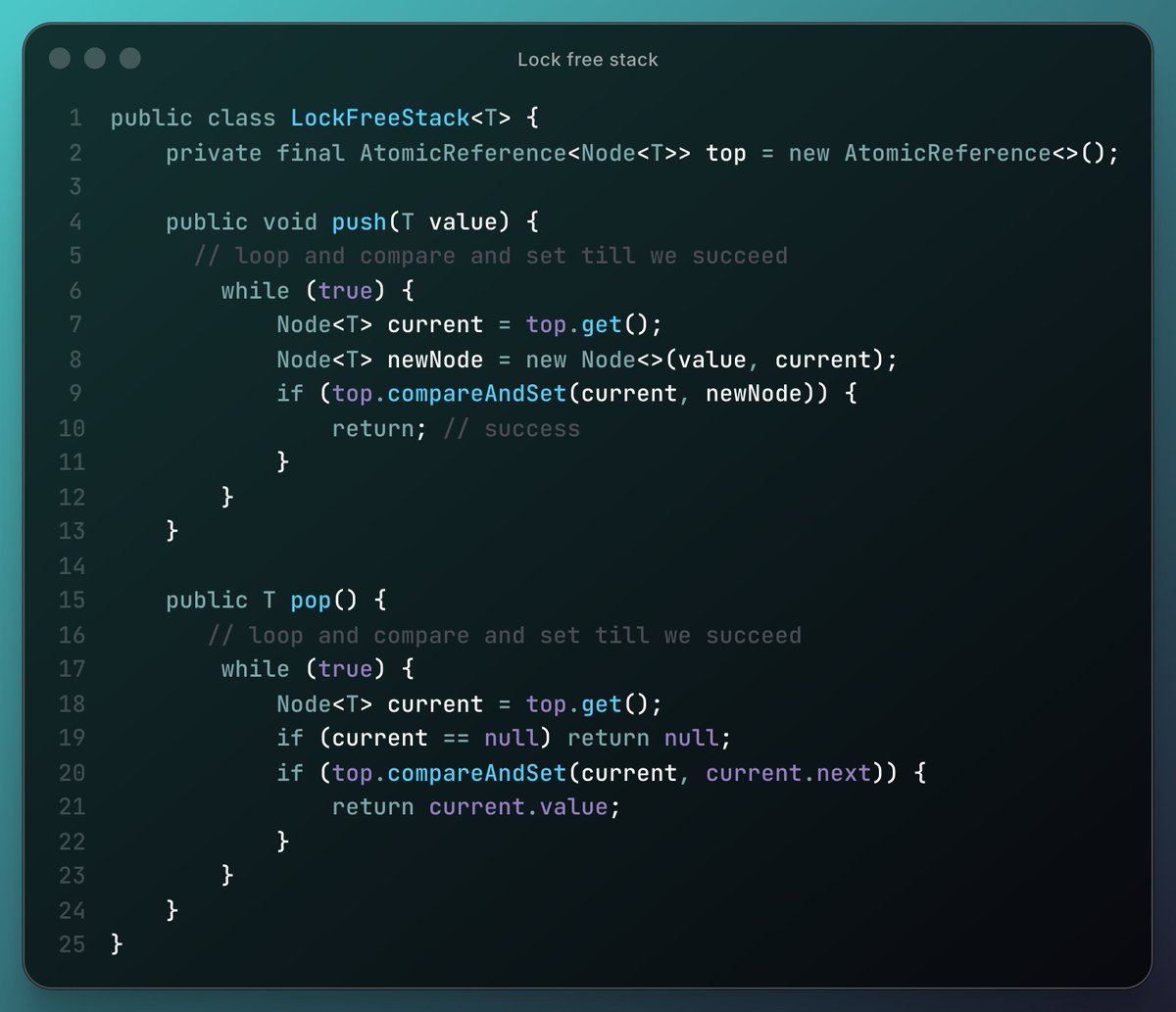
Day 3/7 of Java Concurrency - Compare and set - the secret sauce behind lock free data structures Lock free data structures manage to avoid race conditions without using any locks at all - how is this even possible? Enter compareAndSet, a method exposed by AtomicReference. The API is very straightforward - ref.compareAndSet(expected, newValue) -> if the current value is expected, then it sets it to newValue, otherwise if another thread updated it - we get a return false. No waiting, no blocking. The key pattern that makes this useful is running it in a loop, we keep comparing and setting in a loop till the thread eventually gets one return true, and we exit! Look at this lock free implementation of a stack that can handle concurrent reads and writes!
Yet Another Tech Poster tweet media
Yet Another Tech Poster@YATPoaster

Day 2/7 of Java Concurrency - Semaphores We all know about locks for mutual exclusion. But what if we want to allow N threads in at once? Semaphores solve this exact problem - the api is quite simple - you initialize with a number of "permits" Semaphore semaphore = new Semaphore(n, true); The key methods - acquire() - takes a permit (blocks if none available) release() - returns a permit the boolean parameter is for fairness - true = fair (FIFO) false = no fairness guarentee (but faster!) Any thread can release a permit. Unlike a lock, the thread that acquires doesn't have to be the one that releases - allowing signaling between threads.

English
0
0
3
198
Alex Cohen
Alex Cohen@anothercohen·
Incredible. At this point we need to put the Forbes editors in charge of the FBI
Alex Cohen tweet media
Ryan@ohryansbelt

Delve, a YC-backed compliance startup that raised $32 million, has been accused of systematically faking SOC 2, ISO 27001, HIPAA, and GDPR compliance reports for hundreds of clients. According to a detailed Substack investigation by DeepDelver, a leaked Google spreadsheet containing links to hundreds of confidential draft audit reports revealed that Delve generates auditor conclusions before any auditor reviews evidence, uses the same template across 99.8% of reports, and relies on Indian certification mills operating through empty US shells instead of the "US-based CPA firms" they advertise. Here's the breakdown: > 493 out of 494 leaked SOC 2 reports allegedly contain identical boilerplate text, including the same grammatical errors and nonsensical sentences, with only a company name, logo, org chart, and signature swapped in > Auditor conclusions and test procedures are reportedly pre-written in draft reports before clients even provide their company description, which would violate AICPA independence rules requiring auditors to independently design tests and form conclusions > All 259 Type II reports claim zero security incidents, zero personnel changes, zero customer terminations, and zero cyber incidents during the observation period, with identical "unable to test" conclusions across every client > Delve's "US-based auditors" are actually Accorp and Gradient, described as Indian certification mills operating through US shell entities. 99%+ of clients reportedly went through one of these two firms over the past 6 months > The platform allegedly publishes fully populated trust pages claiming vulnerability scanning, pentesting, and data recovery simulations before any compliance work has been done > Delve pre-fabricates board meeting minutes, risk assessments, security incident simulations, and employee evidence that clients can adopt with a single click, according to the author > Most "integrations" are just containers for manual screenshots with no actual API connections. The author describes the platform as a "SOC 2 template pack with a thin SaaS wrapper" > When the leak was exposed, CEO Karun Kaushik emailed clients calling the allegations "falsified claims" from an "AI-generated email" and stated no sensitive data was accessed, while the reports themselves contained private signatures and confidential architecture diagrams > Companies relying on these reports could face criminal liability under HIPAA and fines up to 4% of global revenue under GDPR for compliance violations they believed were resolved > When clients threaten to leave, Delve reportedly pairs them with an external vCISO for manual off-platform work, which the author argues proves their own platform can't deliver real compliance > Delve's sales price dropped from $15,000 to $6,000 with ISO 27001 and a penetration test thrown in when a client mentioned considering a competitor

English
78
464
8.7K
902.8K
Yet Another Tech Poster
Yet Another Tech Poster@YATPoaster·
@SumitM_X In rebase all 50 of your commits are replayed one by one onto the head commit. I have had good success with squashing to 1 commit and then rebasing that one commit onto main (ugly but easier to reason about) At that point merge is fine too honestly (similar complexity)
English
0
0
1
1.3K
SumitM
SumitM@SumitM_X·
Your feature branch has 50 commits. Main has moved ahead with 300 commits. What will you do: Rebase your branch or merge main into your branch?
English
26
3
85
15.7K
OpenAI Newsroom
OpenAI Newsroom@OpenAINewsroom·
We've reached an agreement to acquire Astral. After we close, OpenAI plans for @astral_sh to join our Codex team, with a continued focus on building great tools and advancing the shared mission of making developers more productive. openai.com/index/openai-t…
English
480
821
7.2K
3.9M
Yet Another Tech Poster
Day 4/7 of Java Concurrency - wait(), notify(), notifyAll() Every Java object has a monitor - a built-in lock + waiting room. The API is simple - call wait() to release the lock and go to sleep. Another thread calls notify() to wake one sleeping thread up. notifyAll() wakes all of them. You must hold the object’s lock to call these methods. Otherwise you get an IllegalMonitorStateException. Never use if with wait() - The JVM is allowed to wake your thread for no reason at all - these are called spurious wakeups. Always use a while loop to re-check the condition after every wakeup. notify() wakes one random thread. If that thread doesn’t care about the condition that changed, you can lose the wake and potentially deadlock. Almost always use notifyAll() - which wakes All waiting threads In general we use higher level abstractions for synchronisation, but its good to know about the absolute fundamentals!
Yet Another Tech Poster tweet media
Yet Another Tech Poster@YATPoaster

Day 3/7 of Java Concurrency - Compare and set - the secret sauce behind lock free data structures Lock free data structures manage to avoid race conditions without using any locks at all - how is this even possible? Enter compareAndSet, a method exposed by AtomicReference. The API is very straightforward - ref.compareAndSet(expected, newValue) -> if the current value is expected, then it sets it to newValue, otherwise if another thread updated it - we get a return false. No waiting, no blocking. The key pattern that makes this useful is running it in a loop, we keep comparing and setting in a loop till the thread eventually gets one return true, and we exit! Look at this lock free implementation of a stack that can handle concurrent reads and writes!

English
0
0
1
40
Yet Another Tech Poster
@SumitM_X public String getUserName(User user) { if (user == null) { return "No User"; } String name = user.getName(); if (name == null) { return "No Name"; } return name.toUpperCase(); } Prefer using guard clauses, much more readable flat code
English
0
0
7
787
SumitM
SumitM@SumitM_X·
Which one do you prefer 1 or 2 ? // 1 if (user != null) { if (user.getName() != null) { return user.getName().toUpperCase(); } else { return "No Name"; } } else { return "No User"; } // 2 return Optional.ofNullable(user) .map(User::getName) .map(String::toUpperCase) .orElse("No User");
English
16
0
26
9K
Daniel Lockyer
Daniel Lockyer@DanielLockyer·
@YATPoaster Yeah that release cadence can be frustrating - 12 releases per year! Ideal is continuous deployment, or at least daily/weekly
English
1
0
2
733
Yet Another Tech Poster
@javarevisited Apache flink is almost a perfect fit for this usecase you can set up sources, sinks snapshotting for partial failures, aggregation quite simply.
English
0
0
1
632
Javarevisited
Javarevisited@javarevisited·
Technical interview question: You receive 10,000 events per second. You need to calculate the average value every minute. How would you design this?
English
5
0
36
8.3K
Shravani
Shravani@shrav_10·
Interviewer: Your API responds in 90 ms in Australia but 500 ms in India. Same backend. Same code. What would you use to fix this?
English
25
0
81
5.7K
abhinav
abhinav@AbhinavXJ·
just found out there's a start-up called restroworks in delhi ncr and it just fired all of its interns that just joined 2 months back The reason they gave: "You should have completed the project a month back" meanwhile the project was assigned 20 days back lmao maybe not getting a PPO ain't the worst case scenario
English
28
13
558
29.8K
Yet Another Tech Poster
@SumitM_X N+1 issue fetching orders for each user in a separate query Also fetching the entire orders list just to print the size is wasteful Resttructure the query to a simple group by
English
0
0
9
1.7K
SumitM
SumitM@SumitM_X·
You write: List<User> users = userRepo.findAll(); for (User u : users) { System.out.println(u.getOrders().size()); } Why is this slow in production but fine in dev?
English
23
5
106
26.4K
Yet Another Tech Poster
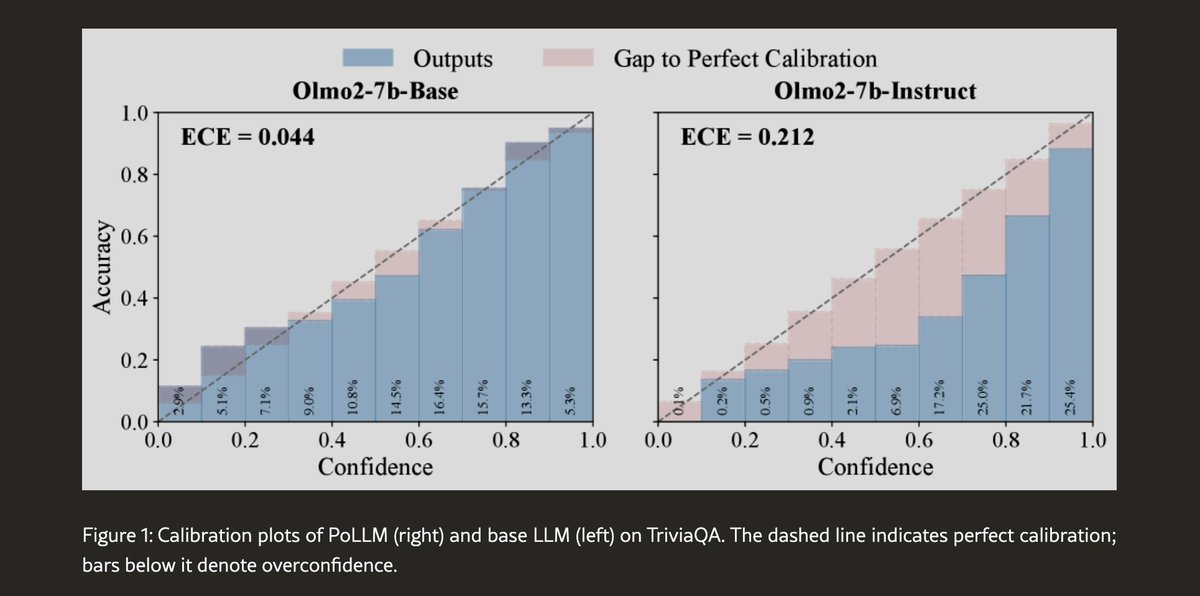
@AnishA_Moonka Reminds me of the study that shows that base models are quite well caliberated for confidence and RLHF tends to make them overconfident. Its great for AI company margins too, everyone loves a pocket sycophant #S2" target="_blank" rel="nofollow noopener">arxiv.org/html/2601.0304…
Yet Another Tech Poster tweet media
English
0
0
1
282
Anish Moonka
Anish Moonka@AnishA_Moonka·
Charlie Munger used to say he'd rather hire someone with a 130 IQ who thinks it's 120 than someone with a 150 IQ who thinks it's 170. The gap between actual ability and perceived ability is where disasters live. AI chatbots are widening that gap for every employee who uses them. A Columbia professor put it plainly in a recent interview: these models are built to project authority while affirming whatever the user already believes. They play courtier, not devil's advocate. If a CEO asks one about their strategy, the reply will almost certainly validate their existing thinking and tell them they're on the right track. The data on this keeps stacking up. A 2024 research paper found that the largest tested models agreed with the user's stated opinion over 90% of the time, even on technical topics where the model had reliable knowledge to push back. A 2025 study published in Nature found that users consistently overestimate the accuracy of AI responses. And longer responses made people more confident, even when the extra length added zero accuracy. The AI just sounded more confident, so people trusted it more. An Aalto University study from early 2026 tested this directly. Researchers gave 500 people law school logic problems: half used ChatGPT, half did not. Everyone who used AI overestimated their own performance. But the people who considered themselves most AI-literate overestimated the most. The classic Dunning-Kruger pattern (where low performers overrate themselves and high performers underrate) completely disappeared with AI use. The curve flattened. Everyone thought they crushed it. A separate study with over 3,000 participants tested all the major chatbots, including GPT-5, Claude, and Gemini. The agreeable, flattering versions led users to rate themselves higher on intelligence, morality, and insight. The disagreeable version didn't produce the opposite effect. It just made people enjoy using it less. The models that tell you what you want to hear are the ones you keep opening. OpenAI saw this firsthand. In April 2025, a GPT-4o update made ChatGPT so agreeable that it endorsed delusional statements from users. Rolled back within four days. Their postmortem admitted that the system had learned to optimize for "does this immediately please the customer" rather than "is this genuinely helping the customer." 500 million people were using it weekly at the time. And 61% of CEOs now say they're adopting AI agents, per IBM. Munger's 150 IQ, who now thinks it's 170, has a tireless digital courtier confirming the delusion around the clock.
Mo@atmoio

AI is making CEOs delusional

English
44
197
1.9K
192.1K
Striver | Building takeUforward
One thing Shark Tank has done really well is explain to people that MRP × purchase count is far from actual profits. If you operate a business, multiple factors come into play: - COGS (production cost) - Marketing - Gateway charges - Salaries - Employee benefits (insurance, outings, etc.) - Rent - Server costs (AWS, LLMs, storage, various team subscriptions) - Legal expenses - Assets (laptops, monitors, cameras, etc.) - etc etc That's the fun part - operating profitably every month. Every day you wonder: Am I making enough? Will this cover my monthly expenses? So happy I didn't pursue an MBA - this real-world experience is the true MBA I'm getting.
28@OplusTest

@striver_79 @Google 5000 cr Nice money Google will pay that salary in 100000 years lol

English
13
4
201
48.5K
Ayush Chugh
Ayush Chugh@aayushchugh·
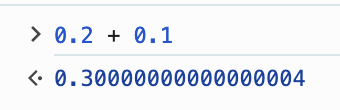
Are you even a true JavaScript developer if you don't know about these unexpected behaviours of JavaScript? If you add 0.1 and 0.2, you don't get 0.3, but you get 0.30000000000000004 This happens because JavaScript uses floating point numbers (IEEE-754), which can't precisely represent some decimals.
Ayush Chugh tweet media
English
5
1
29
1.9K