Yoel Benharrous

764 posts

Yoel Benharrous banner
Yoel Benharrous

Yoel Benharrous

@YOEL_B

Senior Software engineer | Pragmatic Agilist | Opinions are my own

Israel Katılım Ağustos 2010
990 Takip Edilen132 Takipçiler
Yoel Benharrous retweetledi
Ihtesham Ali
Ihtesham Ali@ihtesham2005·
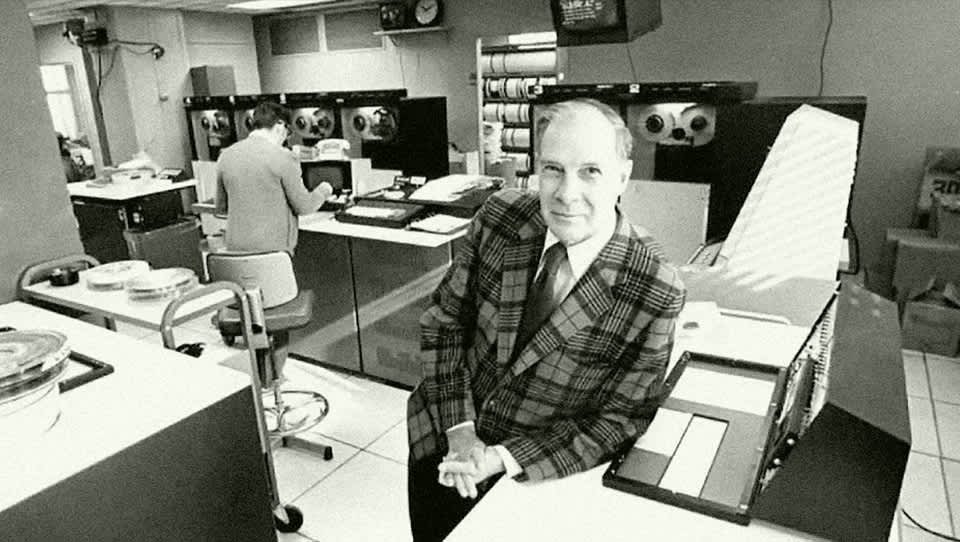
A mathematician who shared an office with Claude Shannon at Bell Labs gave one lecture in 1986 that explains why some people win Nobel Prizes and other equally smart people spend their whole lives doing forgettable work. His name was Richard Hamming. He won the Turing Award. He invented error-correcting codes that made modern computing possible. And he spent 30 years at Bell Labs sitting in a cafeteria at lunch watching which scientists became legendary and which ones faded into nothing. In March 1986, he walked into a Bellcore auditorium in front of 200 researchers and told them exactly what he had seen. Here's the framework that has been quoted by every serious scientist for the last 40 years. His opening line landed like a punch. He said most scientists he worked with at Bell Labs were just as smart as the Nobel Prize winners. Just as hardworking. Just as credentialed. And yet at the end of a 40-year career, one group had changed entire fields and the other group was forgotten by the time they retired. He wanted to know what the difference actually was. And he said it wasn't luck. It wasn't IQ. It was a specific set of habits that almost nobody is willing to follow. The first habit was the one that hurts the most to hear. He said most scientists deliberately avoid the most important problem in their field because the odds of failure are too high. They pick a safe adjacent problem, solve it cleanly, publish it, and move on. And because they never swing at the hard problem, they never hit it. He said if you do not work on an important problem, it is unlikely you will do important work. That is not a motivational line. That is a logical one. The second habit was about doors. Literal doors. He noticed that the scientists at Bell Labs who kept their office doors closed got more done in the short term because they had no interruptions. But the scientists who kept their doors open got more done over a career. The open-door scientists were interrupted constantly. They also absorbed every new idea passing through the hallway. Ten years in, they were working on problems the closed-door scientists did not even know existed. The third habit was inversion. When Bell Labs refused to give him the team of programmers he wanted, Hamming sat with the rejection for weeks. Then he flipped the question. Instead of asking for programmers to write the programs, he asked why machines could not write the programs themselves. That single inversion pushed him into the frontier of computer science. He said the pattern repeats everywhere. What looks like a defect, if you flip it correctly, becomes the exact thing that pushes you ahead of everyone else. The fourth habit was the one that hit me the hardest. He said knowledge and productivity compound like interest. Someone who works 10 percent harder than you does not produce 10 percent more over a career. They produce twice as much. The gap doesn't add. It multiplies. And it compounds silently for years before anyone notices. He finished the lecture with a line I have never been able to shake. He said Pasteur's famous quote is right. Luck favors the prepared mind. But he meant it literally. You don't hope for luck. You engineer the conditions where luck can land on you. Open doors. Important problems. Inverted questions. Compounded hours. Those are not traits. Those are choices you make every single day. The transcript has been sitting on the University of Virginia's computer science website for almost 30 years. The video is free on YouTube. Stripe Press reprinted the full lectures as a book in 2020 and Bret Victor wrote the foreword. Hamming died in 1998. He gave his final lecture a few weeks before. He was 82. The lecture that explains why some careers become legendary and others disappear is still free. Most people who could benefit from it will never open it.
Ihtesham Ali tweet media
English
145
1.9K
8.2K
1.2M
Yoel Benharrous retweetledi
נועה מגיד | Noa magid
Ben Sharfi's family is looking for him in Amsterdam! He is out of touch at the moment. Please share!
נועה מגיד | Noa magid tweet media
English
562
5.4K
12K
440.7K
Adi Polak
Adi Polak@AdiPolak·
🗞 BIG NEWS 🗞 We acquired WarpStream! Curious about what got us intrigued and closing the deal? Continue reading. “Cloud data services solve many problems—you get serverless elastic expansion, fully managed operations, and seamless upgrades and enhancements—but they also require more trust in the vendor (both for security and operations) and require you to sacrifice some control and flexibility. A self managed offering gives you that flexibility, but requires a lot of work to fully operationalize. We felt that these two choices were enough for a long time. And indeed, that the best positions on this spectrum were the far left (full SaaS cloud offerings) or the far right (plain vanilla software offerings). Customers would sometimes ask for something in the middle, such as a cloud offering, but in their cloud. This sounded good, but when we looked at products that worked this way, they were often the worst of both worlds: self-managed data systems that had been forklifted into the cloud with semi-managed models that left responsibility for security and uptime pretty vague. This was often the worst of both worlds. They were meant to be secure because the data didn’t leave the customer's account, but to install them, you had to grant the vendor full privileges in your account, which meant they had access to not just your data but your infrastructure. In doing this, they blurred the responsibility for operations between the vendor and customer, with neither having sufficient control to diagnose and fix a problem. In addition, these BYOC solutions were built using highly stateful systems that could not take advantage of the primary benefit of running software in the cloud: elasticity. As a result, they always had to be highly over-provisioned for peak load. In practice, this didn’t seem that compelling. What WarpStream has shown, though, is how this can be done right and how a system can be built for BYOC that represents a compelling point on this spectrum, giving a very nice tradeoff between ease of use and control. They did this by designing specifically for this architecture from the ground up. Their BYOC-native approach offers several benefits of a cloud offering while maintaining strong security and operations boundaries. This isn’t a panacea—you give up the serverless model of full SaaS—but there are definitely a set of use cases and customers where this is the perfect fit. “ Read More in Jay Kreps's post ⏩ lnkd.in/gTjaFdKS
Adi Polak tweet media
English
2
1
14
1.4K
Yoel Benharrous retweetledi
RustRover, a JetBrains IDE
RustRover, a JetBrains IDE@rustrover·
🚀 Let's hear it for RustRover – our new dedicated Rust IDE! We’re announcing a free public preview and encourage you to check it out. Enjoy this IntelliJ-based IDE with on-the-fly analysis, code completion and debugger. Head over to the 👉 jb.gg/rustrover
English
39
372
1.2K
244.7K
Yoel Benharrous retweetledi
DHH
DHH@dhh·
If you're unable to create a majestic monolith with basic programming tools like encapsulation and namespaces, you don't have what it takes to improve upon the situation with a distributed swarm of microservices. Your spaghetti code will just be on five different plates.
English
56
370
2.2K
219.7K
Yoel Benharrous retweetledi
Thiago Massa 🌌
Thiago Massa 🌌@th1agofm·
I've been learning data streams lately using Apache Flink (+ Scala), and I'm mindblown 🤯 by the technologies Data people have built to process stuff in parallel. Having written data importers before using Ruby from scratch, I can't look back. My mind is bent.
English
1
2
11
1.6K
Uncle Bob Martin
Uncle Bob Martin@unclebobmartin·
Ladies and gentlemen. If you are worried about the cost of switch vs polymorphic dispatch, you are probably worried about the wrong things.
English
12
18
201
44.5K
Gunnar Morling 🌍
Gunnar Morling 🌍@gunnarmorling·
Such a tempting red button in my hotel room. Should I press it 😇?
Gunnar Morling 🌍 tweet media
English
14
0
29
13.7K
Piotr Nowojski
Piotr Nowojski@PiotrNowojski·
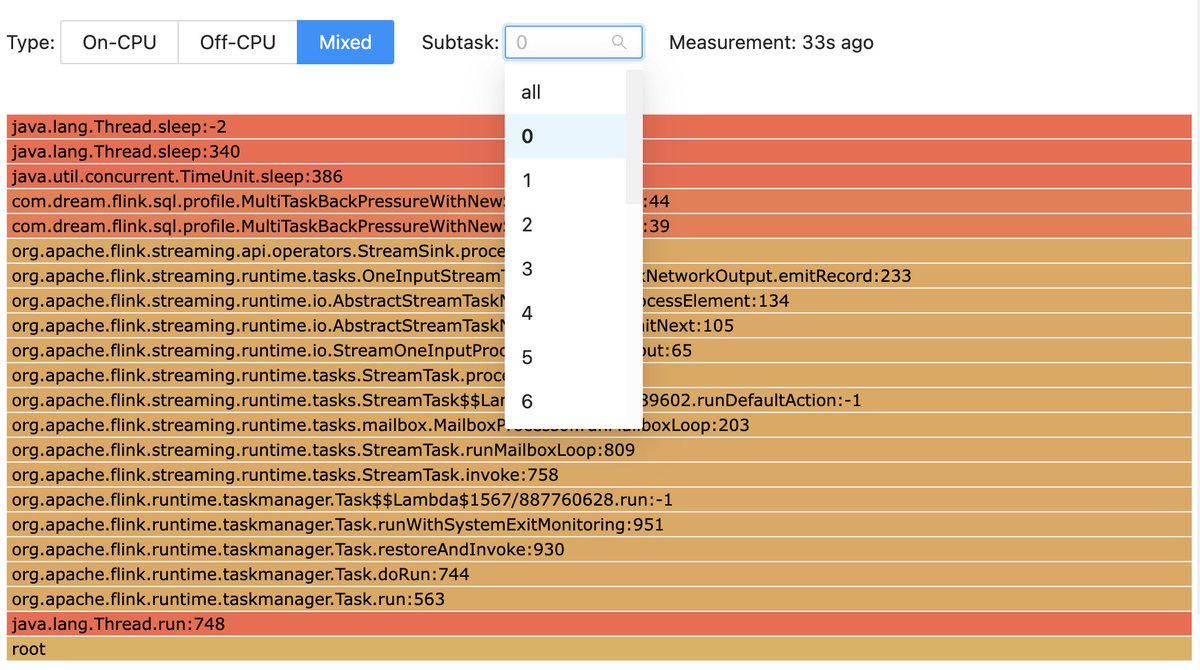
Per subtask Flame Graphs coming soon into @ApacheFlink 1.17 🤓 Thanks @1996fanrui ! #sampling-process" target="_blank" rel="nofollow noopener">nightlies.apache.org/flink/flink-do…
Piotr Nowojski tweet media
English
1
6
21
3K
Yoel Benharrous
Yoel Benharrous@YOEL_B·
@gwenshap I tried but I was stuck on alphabet (during Hebrew oulpan 😅) what is your secret?
English
1
0
0
17
Gwen (Chen) Shapira
Gwen (Chen) Shapira@gwenshap·
2 years of learning Russian and I can finally ask the real questions.
English
2
0
12
1.8K
Gwen (Chen) Shapira
Gwen (Chen) Shapira@gwenshap·
Почему курица переходит дорогу? 🐓
Русский
6
0
12
5.5K
Adi Polak
Adi Polak@AdiPolak·
What's the most frustrating data issue you've ever had to debug?
English
26
1
20
10K
Yoel Benharrous
Yoel Benharrous@YOEL_B·
@gunnarmorling @MartijnVisser82 @lyfteng Preaggregation, kind of hadoop combiner could be implemented but it's not provided by the flink streaming api, need to write a custom operator. Of course it depends of the use case.
English
0
0
0
0
Gunnar Morling 🌍
Gunnar Morling 🌍@gunnarmorling·
@MartijnVisser82 @lyfteng Thanks, I'll check out this FLIP. Speaking of which: are there any other "hot" FLIPs you're excited about, or which are being discussed right now in the community? Would love your advice on which FLIPs to look at 🙏.
English
1
0
1
0
Gunnar Morling 🌍
Gunnar Morling 🌍@gunnarmorling·
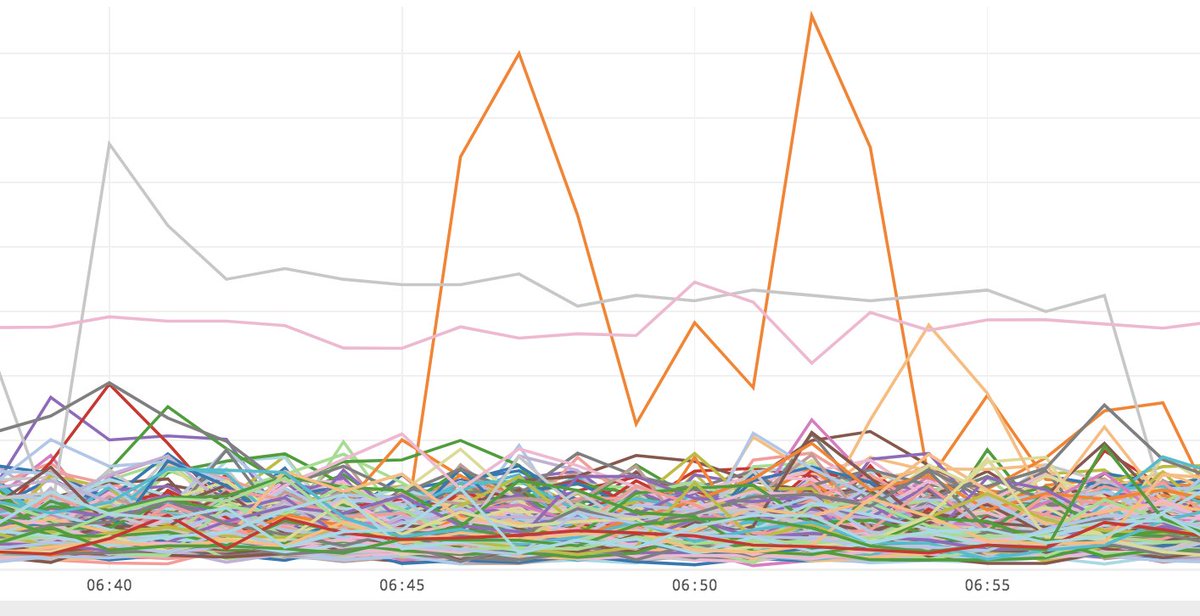
🗣️ Solutions [to data skewness] include trimming events, salting the key, and shuffling the data" Enjoyed this post by Raskesh Kumar of @lyfteng about approaches for dealing with data skewness in their Flink pipelines. Unsurprisingly, no silver bullets. eng.lyft.com/gotchas-of-str…
Gunnar Morling 🌍 tweet media
English
1
4
17
0