Sabitlenmiş Tweet
YOUNG_E ✺
5.8K posts

YOUNG_E ✺
@YOUNG_e2e2
25/02~ @Mantle_official Yapper (Maven) 26/01~ @Mantle_official Content Intern & @mETHProtocol Ambassador
Katılım Nisan 2022
1.1K Takip Edilen2.1K Takipçiler
YOUNG_E ✺ retweetledi

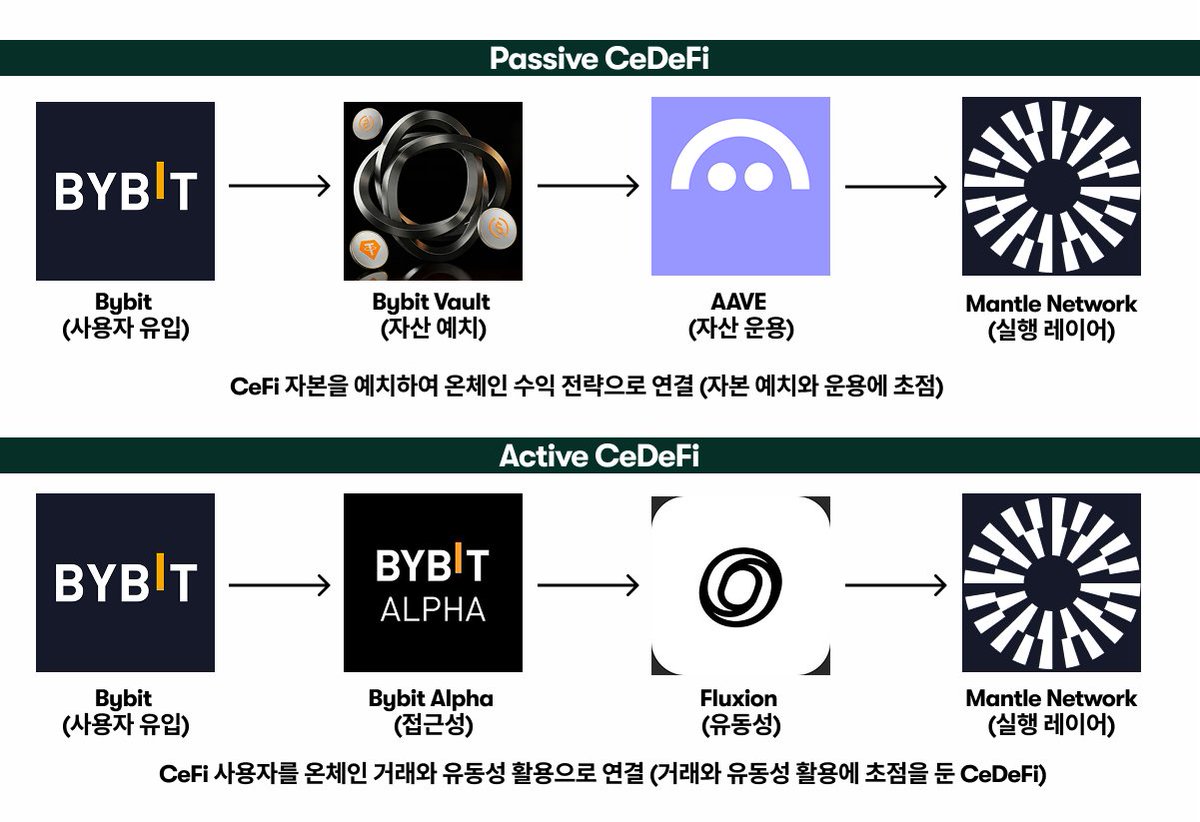
Mantle CeDeFi 프레임워크 주제로 아티클을 작성해보았습니다.
2월에 Aave가 들어오면서 엄청나게 TVL이 상승했던 맨틀입니다. 그렇기에 3월에 가장 초점을 맞출 주제는 CeDeFi였던 것 같습니다.
Bybit를 통해 자본을 예치만 해도 수익을 낼 수 있는 Mantle vault와 직접 운용할 수 있는 Bybit alpha 두 축을 놓고
Passive Yield, Active Trading으로 나눠서 글을 작성해보았습니다.
많은 관심과 질문 부탁드립니다. 😁
다가오는 4월에는 AI에 초점을 맞춘 아티클을 써보려고 합니다. 기대해주세요!

0xMantleKR@0xMantleKR
한국어

mETH Is Expanding Beyond a Simple Holding Asset into an Asset with Credit Accessibility
mETH has primarily been understood as an asset that allows users to earn yield while holding ETH, and as an asset whose redeemability and liquidity can be checked when needed. In fact, the message mETH has been repeatedly showing in recent weeks has been close to this. The Buffer Pool showed redeemability and liquidity capacity, while the Bybit transparency report showed holding flows and retention. In other words, the key questions until now were whether it can be held, and whether it can be exited.
This 3Jane whitelist leads to the next stage, which is focusing on where mETH can be used. 3Jane presents itself as “The Credit-Based Money Market” and is a protocol that allows users to access liquidity by drawing USDC through “0% Collateral Credit Lines” without separately depositing collateral on-chain.
According to its official description, 3Jane is an Ethereum-based unsecured lines of credit protocol, and creditworthiness is evaluated based on verifiable information such as on-chain and off-chain assets, future cash flows, and credit scores. In this structure, the inclusion of mETH, cmETH, and MNT on the whitelist carries meaning beyond a simple partnership.
This is because it allows mETH to be read not just as a staking asset, but as an asset that can improve credit access and capital utility. 3Jane also emphasizes that asset-rich farmers and traders can achieve higher capital efficiency based on their overall financial profile.
From an institutional perspective, this change is even more important. The value of an asset is not determined simply by yield alone. More important is whether the asset can increase borrowing capacity, secure additional liquidity without unwinding an existing position, and provide balance-sheet utility within an actual operating strategy. 3Jane’s official explanation also places its core value on “capital efficiency.”
In this respect, this update expands the character of mETH by one step. mETH could previously be understood as an asset that is held after staking ETH, but through this whitelist, there is now room to interpret it as an asset through which additional credit accessibility can be designed while still being held. Ultimately, the key point is not yield itself, but what kinds of financial actions can be built on top of this asset.
What matters in the end is what role that asset can play within an actual financial structure, what liquidity options it can provide, and what kind of strategic flexibility it can offer. The core value that 3Jane puts forward is also closer to capital access based on creditworthiness than to collateral efficiency itself.
This update is meaningful in that it shows a direction in which mETH does not remain merely an ETH yield asset, but can expand into an asset with credit accessibility. In that sense, this 3Jane whitelist can be seen as an update that raises expectations for its future range of use.


English
YOUNG_E ✺ retweetledi

오늘 맨틀 라이브 스트림이 예정되어 있습니다!
아래 두 가지 주제로 진행되는 라이브 스트림입니다.
- 2025년 맨틀 해커톤
- 최근 캠페인 수상 크리에이터
맨틀에서 빌더와 커뮤니티를 위한 일들을 다양하게 진행하고 있는데, 잘 참여하기 위한 팁들을 상세하게 풀어주는 자리가 될 것 같네요.
지금 스쿼드 바운티도 진행 중이니, 이번 라이브 스트리밍 듣고 어떻게 수상할 수 있을지 팁 얻어보시면 좋을 것 같습니다!

0xMantleKR@0xMantleKR
3월 맨틀 한국 라이브스트림에 여러분을 초대합니다. 🗓 3월 19일 (목) 오후 8시 (KST) 📍 0xMantleKR 𝕏 (라이브 스트리밍) 🎁총 300 MNT 상당 에어드랍| 사전 댓글 이벤트 + 라이브 MVP 선정 Agenda → 2025 맨틀 글로벌 해커톤에 참여한 한국 빌더 프로덕트 소개 & 인터뷰 → 맨틀 3월 생태계 최신 현황 및 소식 업데이트 → 올해의 커뮤니티 크리에이터 수상자 토크 → 다가오는 2분기 맨틀의 행보와 QnA세션 맨틀 한국에 궁금한 질문을 남기고, 총 100 MNT 받아가세요! 👇🏻
한국어

Why Does mETH Emphasize Retention Over Growth?
- The Meaning of the Bybit Transparency Report
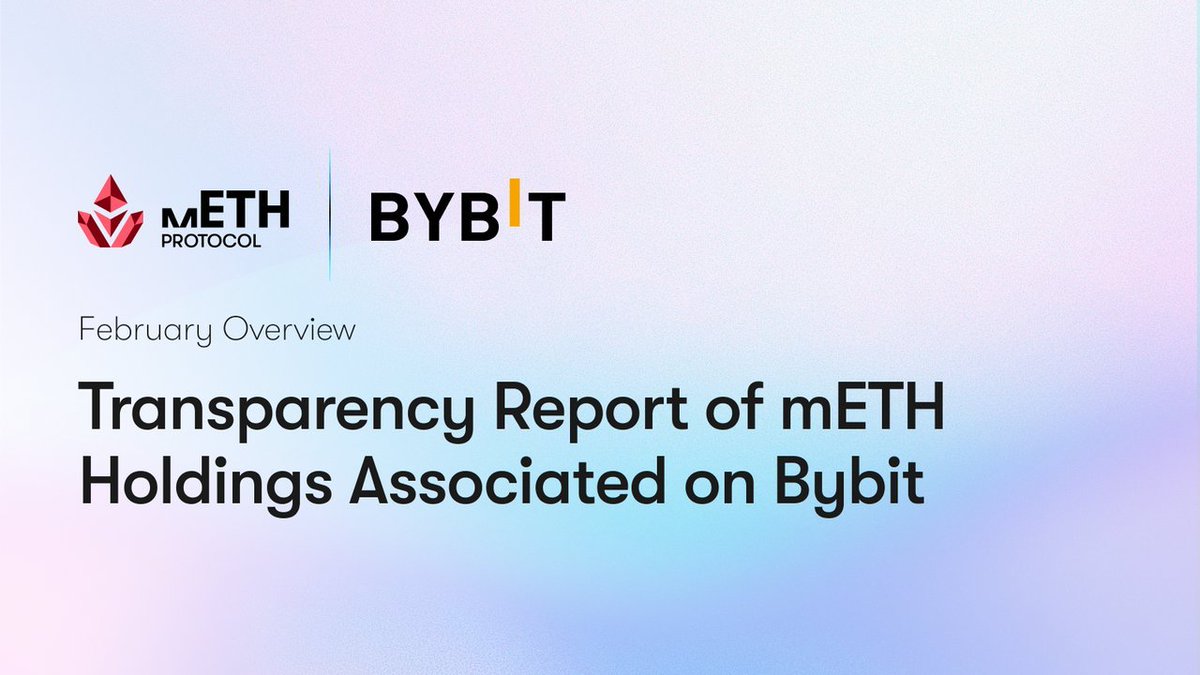
When looking at mETH Protocol’s joint February transparency report with Bybit, the first thing that stands out is the growth metrics.
February Bybit Users mETH Holdings
• mETH held on user-associated wallets, as of Feb. 28: 149,615 mETH
• Month-over-month change (Jan. 31 → Feb. 28): +2.01%
• Peak user-associated balance during February: 149,935 mETH
• Gross inflows (total) during February: 13,164 mETH
• Gross outflows (total) during February: 1,525 mETH
• Net flow during February: +11,639 mETH
From a retail perspective, these figures may look like growth indicators, but from an institutional perspective, the focus shifts first to the retention flow of capital.
Inflows can be created through events, so capital remaining afterward requires a separate layer of trust and design.
This is where the meaning of the Bybit transparency report lies.
By disclosing gross inflows, gross outflows, net flow, and month-end holdings together, the report does more than show that the scale has grown. It comes closer to showing how capital that entered mETH is being maintained.
This report is especially meaningful because it reflects the flow after the On-Chain Earn campaign. A large inflow immediately after a campaign is not enough on its own. What matters more is whether holdings were maintained afterward and whether net inflows continued. In that sense, the fact that 149,615 mETH remained in Bybit-linked wallets as of the end of February can be read as a signal that mETH is difficult to explain through short-term incentive-driven inflows alone.
This kind of data matters because institutions do not make decisions based only on aggregate metrics such as TVL. Institutions focus less on how much capital came in and more on how stably that capital is being retained.
Sustained holdings imply at least two things.
First, the asset is being accepted not just as a tool for event participation, but as something worth holding. Second, the access route and holding structure are aligned with actual operational use.
If last week’s Buffer Pool report showed redemption visibility, this Bybit report shows stability in holdings. One explains the structure that allows capital to exit, while the other explains why capital remains. Redemption capacity needs to exist before capital enters, and holdings need to remain for that capital to be recognized as more than one-off inflow.
This is also why mETH publishes the Buffer Pool report every week and the Bybit transparency report every month: to show liquidity and holdings separately, and on a recurring basis.

English

Why Does mETH Publish Its Buffer Pool Every Week?
If mETH is viewed simply as an ETH yield token, its weekly Buffer Pool report may look like just another operational update. But that is not what it is. Rather than being a routine performance recap, it functions as an operating disclosure that continuously shows how predictably mETH can support redemptions and what the current state of its liquidity structure looks like.
What matters to institutions is not just yield. It is how quickly capital can be redeemed when needed, what kind of bottlenecks may emerge when large amounts of capital move, and how transparently those risks are disclosed.
From that perspective, mETH’s weekly Buffer Pool disclosure is not just a helpful report. It is closer to a mechanism for building institutional redemption visibility.
1. What Is the Buffer Pool?
The Buffer Pool is one of the most important operating layers in mETH’s redemption structure. On the surface, it may look like a liquidity pool designed to help users convert mETH into ETH more quickly. From a retail perspective, liquidity is often understood simply as whether something trades smoothly.
For institutions, however, the key question is redeemability: how quickly and reliably can they return to ETH when needed? From this perspective, the Buffer Pool is not just a supporting feature. It is a redemption layer that mETH needs in order to handle institutional-scale capital. It shows how much redemption demand can be absorbed, whether the current pool has enough capacity, and how additional liquidity backstops are connected.
This is why mETH publishes it every week. Institutions care less about whether liquidity exists in theory, and more about what condition that liquidity is actually in right now.
2. Why Does This Information Matter?
The reason is simple: it makes redemption capacity and liquidity conditions trackable through operating data and measurable indicators.
Institutions want to know:
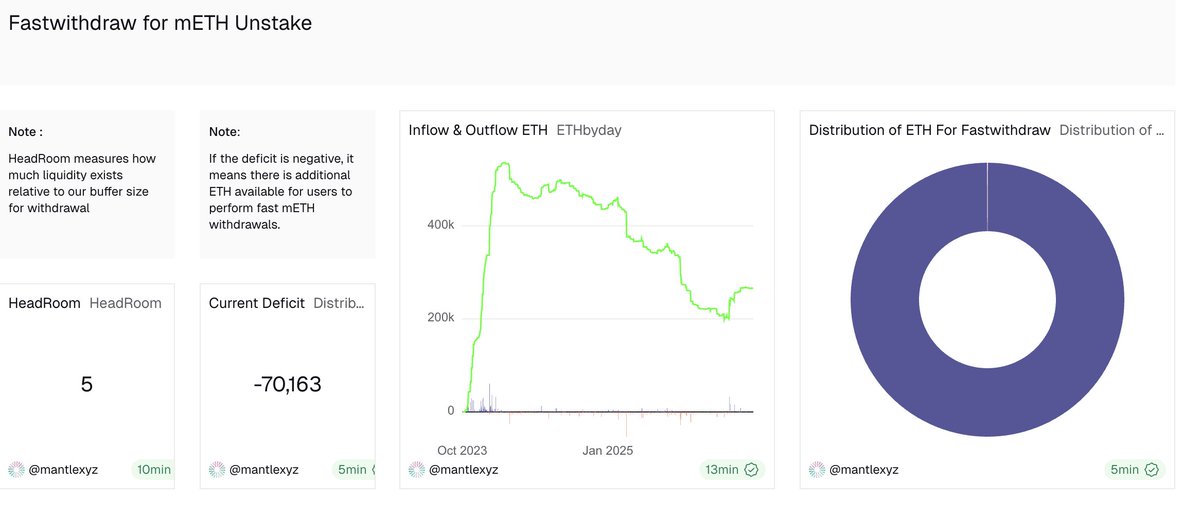
• How much ETH is currently available for fast withdrawals
• What recent inflow and outflow trends look like
• Whether the structure can absorb higher redemption demand
• How large the validator queue is
• What impact that may have on yield or broader operations
Institutions tend to trust recurring operating disclosures more than they trust one-off feature announcements. That is why this information matters.
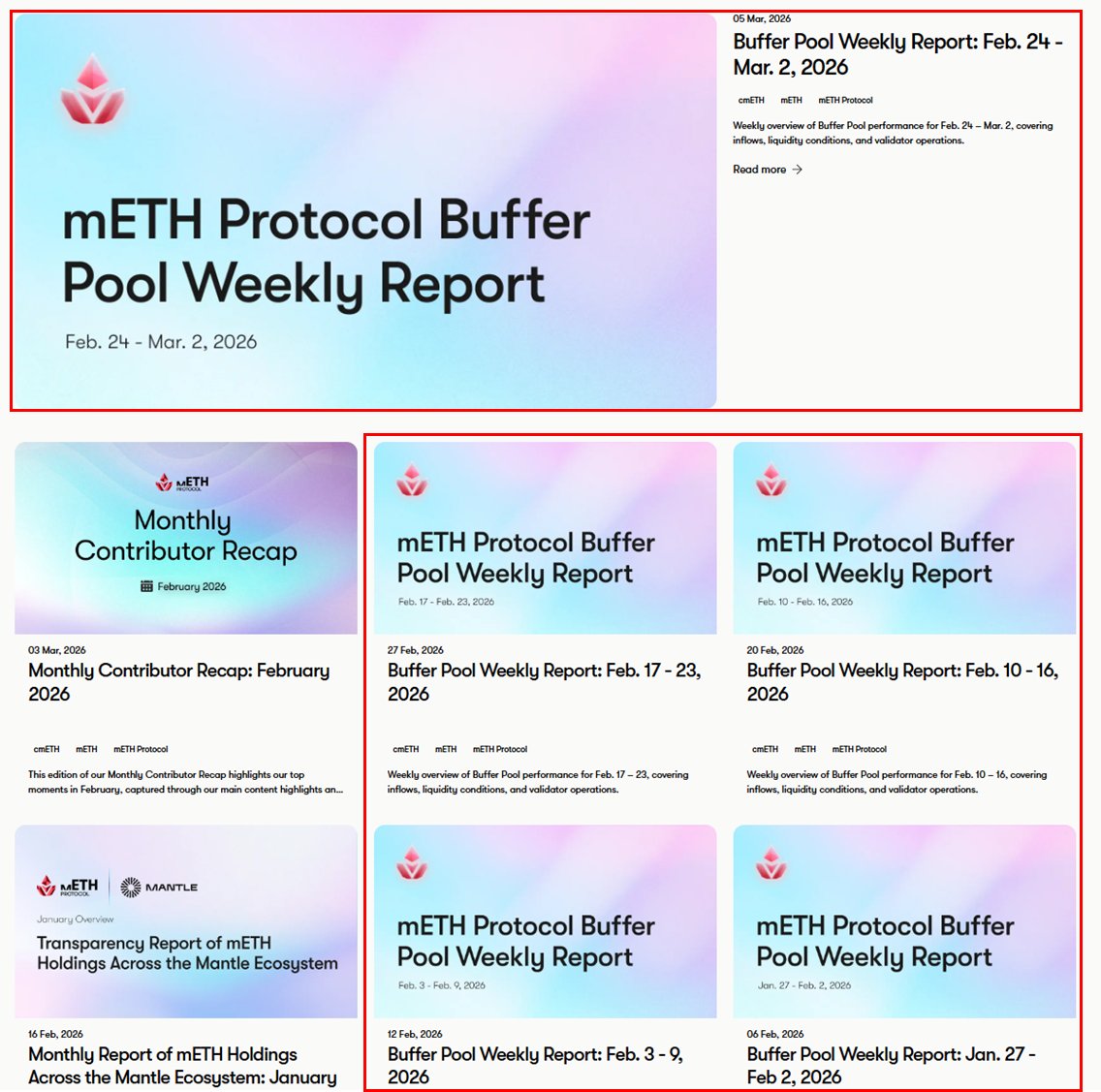
3. What Did This Week’s Buffer Pool Report Reveal?
This week’s report covered the Buffer Pool’s operating status from Feb. 24 to Mar. 2.
The key points were as follows:
• Net outflow of 479 ETH
• No new validators were created this week
• 689 validators are currently waiting in the creation queue
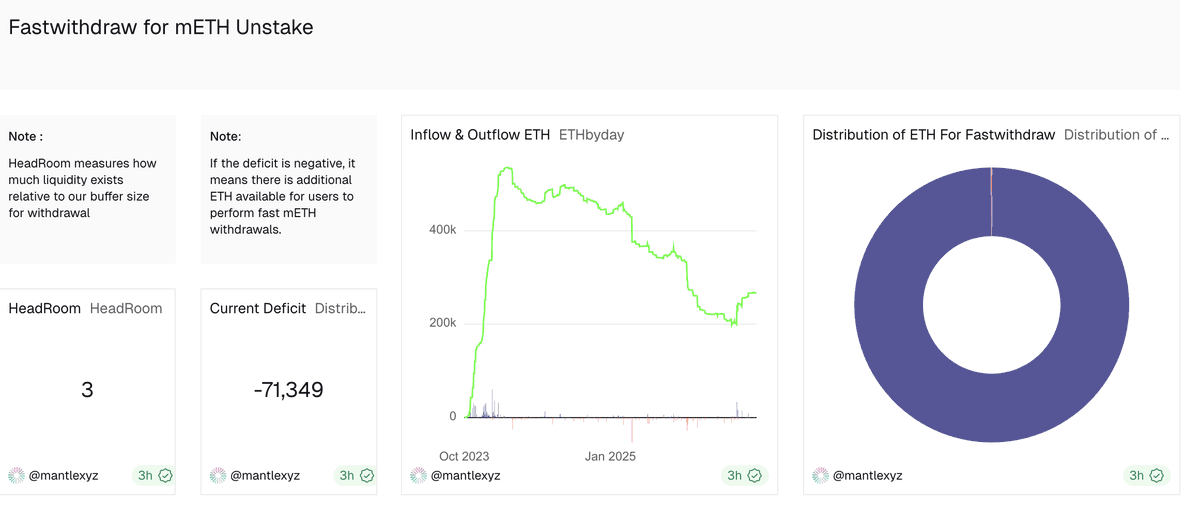
• 71,349 ETH is currently available for fast mETH withdrawals
• HeadRoom is currently at 3x
• Under the Buffer Pool upgrade structure, around 20% of protocol TVL is allocated to Aave as ETH supply, where it earns additional interest while also serving as a liquidity backstop
• Under normal conditions, mETH-to-ETH redemptions are designed to be processed in roughly 24 hours
These numbers matter because each of them is an operating signal that explains the current state of mETH’s redemption structure.
For example, a net outflow of 479 ETH means more than capital simply leaving the system. It shows how much actual redemption demand the Buffer Pool is absorbing. Likewise, the fact that no validators were created this week, while 689 remain in queue, reveals where the current operational bottleneck sits on the staking side.
More importantly, the protocol does not stop at disclosing the queue itself. It also explains that the size of this queue may temporarily affect APY. That is what makes the report meaningful. It does not only disclose favorable metrics. It also discloses operating pressure and its possible consequences.
4. Conclusion
So why does mETH publish its Buffer Pool every week?
From an institutional perspective, the answer is clear. mETH is effectively asking to be read not as a simple ETH yield token, but as an infrastructure layer that makes ETH redemptions and liquidity operations more manageable.
The weekly Buffer Pool report is one of the clearest materials that supports that message.


English

Institutional Takeaways from mETH Protocol Q1 2026 Update
Subtitle: Why mETH Should Be Read as an On-Demand ETH Redemption Infrastructure, Not a Yield Token
1. Introduction
The mETH Protocol State of Q1 2026 Space held on February 24, 2026 did not frame mETH as just another LST. The core message was not about offering a higher APY, but about building the exit and operating infrastructure that allows institutions to hold ETH while keeping it operationally usable. From an institutional lens, mETH sits closer to a carry strategy that turns ETH into a productive asset, while also functioning as an executable form of assetization that bundles redemption certainty and institutional-grade rails. This article reframes the recurring messages from the Space into institutional decision language: why hold ETH, how to exit, and which rails make adoption feasible.
1) Start from Why Institutions Hold ETH
Before evaluating mETH, institutional allocators typically check three things first.
• Can we earn yield while maintaining ETH exposure
• Do we have liquidity and redemption certainty
• Are custody, settlement, and risk control frameworks in place
The key point is that mETH does not answer these questions with yield alone. Institutional adoption is determined less by headline returns and more by the completeness of exit certainty and operational rails. In other words, when explaining mETH, the first question is not how many extra percentage points it pays, but when, through which pathway, and with what level of certainty an institution can redeem.
mETH is an on-demand redemption–centered ETH operating infrastructure that enables institutions to design both operations and exits while continuing to hold ETH.
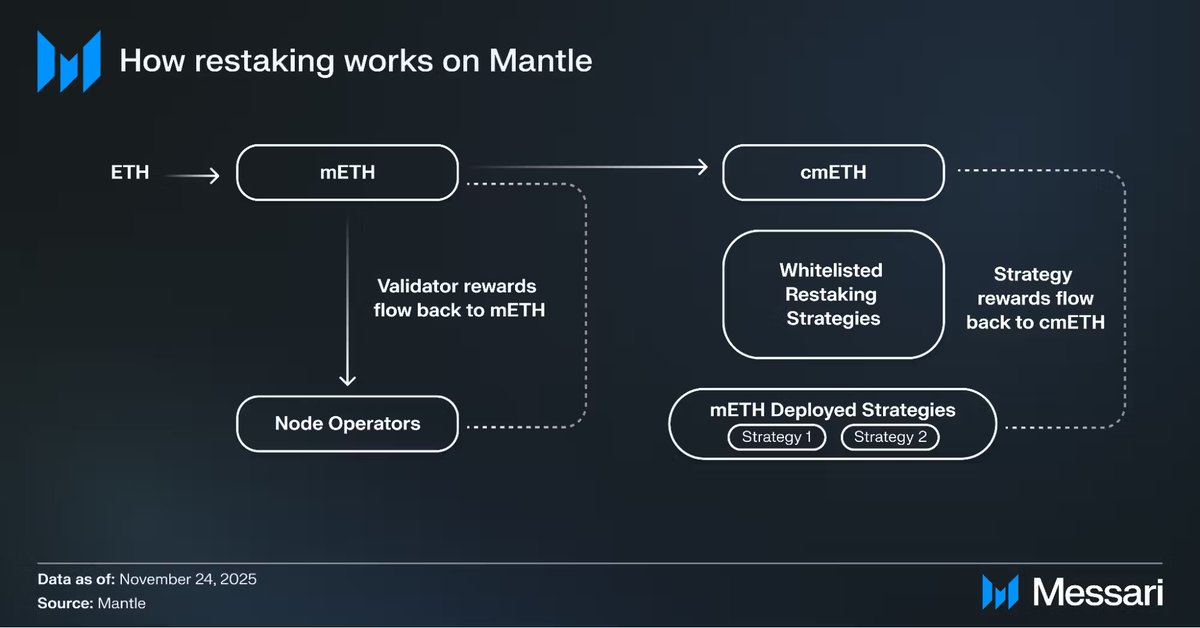
mETH Restaking Flow on Mantle (Source: Messari, Understanding Mantle: A Comprehensive Overview)
2) Not Liquid Staking, but On-Demand Redemption Infrastructure
For institutions, the primary reason to hesitate on LSTs is not price volatility, but redemption. In retail conversations, liquidity often ends at tradability. For institutions, liquidity translates into redemption certainty. This is where mETH’s message converges on the Buffer Pool.
In the Space, the Buffer Pool was repeatedly described not as a simple liquidity pool, but as a structural mechanism designed to reduce friction in redemptions and capital movement, which is where institutions are most sensitive.
In institutional terms, the Buffer Pool can be summarized as follows.
• Role: an institutional liquidity gateway
• Problems addressed: unstaking queue, redemption delays, operational uncertainty
• Institutional question it answers: how quickly and reliably can we convert back to ETH or redeem when needed
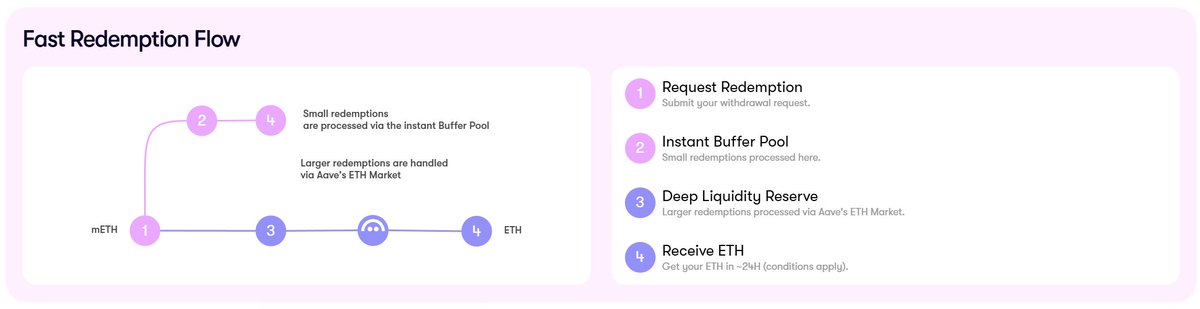
What strengthens the argument is that the Buffer Pool is not a standalone feature. It is framed as a tiered redemption architecture.
Fast Redemption Flow (Source: mETH Protocol)
• Small and routine redemptions are absorbed by the Buffer Pool
• Larger redemptions are distributed through separate deep-liquidity pathways
• As a result, institutions are not left with a single-path dependency, but an execution plan that routes by size
The core design point of mETH is not simply that liquidity exists, but that redemption routes are separated into executable pathways depending on scale.
This is also why messages like conditional 24 hours matter to institutions. While the materials note that conditional 24 hours can vary with buffer capacity, from an institutional perspective, the existence of a reference time is itself valuable for risk management. Time is not an expectation variable for institutions; it is a risk control variable. If there is a reference time, even conditionally, institutions can design position management, hedging, cash management, and collateral management. In that sense, this is not a marketing line but a signal that can be translated into operating policy.
3) Rails and Partners Are the Basis of Trust
Institutions do not start by trusting the protocol. They start by evaluating access rails. Custody, exchange access, settlement, and compliance form the rails. That is why, when writing from an institutional viewpoint, it is often more effective to show the existence of rails first, before going deep into features.
The institutional checklist typically looks like this.
• Can we access it within our custody environment
• Is the settlement and rebalancing workflow operationally natural
• Is risk control feasible
Institutional custody support such as Copper, Fireblocks, Anchorage Digital, and OSL is not just a partner logo list. It is evidence of implementability. If native minting is possible within custody and can extend to off-exchange settlement or collateral usage, then this is not merely an investment idea. It becomes an executable operating strategy.
For institutions, the key message is not that mETH is good, but that it can be run within our rails and under our rules.
Copper Custody Support Announcement for mETH – Live integration enabling institutional clients to hold and manage mETH within a regulated, self-custody environment. (Source: Copper)
4) Conclusion
Reframed through an institutional lens, the Space converges on one sentence. The Q1 2026 message of mETH is not about higher yield, but about completing redemption certainty and access rails that allow ETH to be operated as an institutional asset. The supporting logic is straightforward.
• Why hold ETH
• How to exit
• Which rails enable adoption
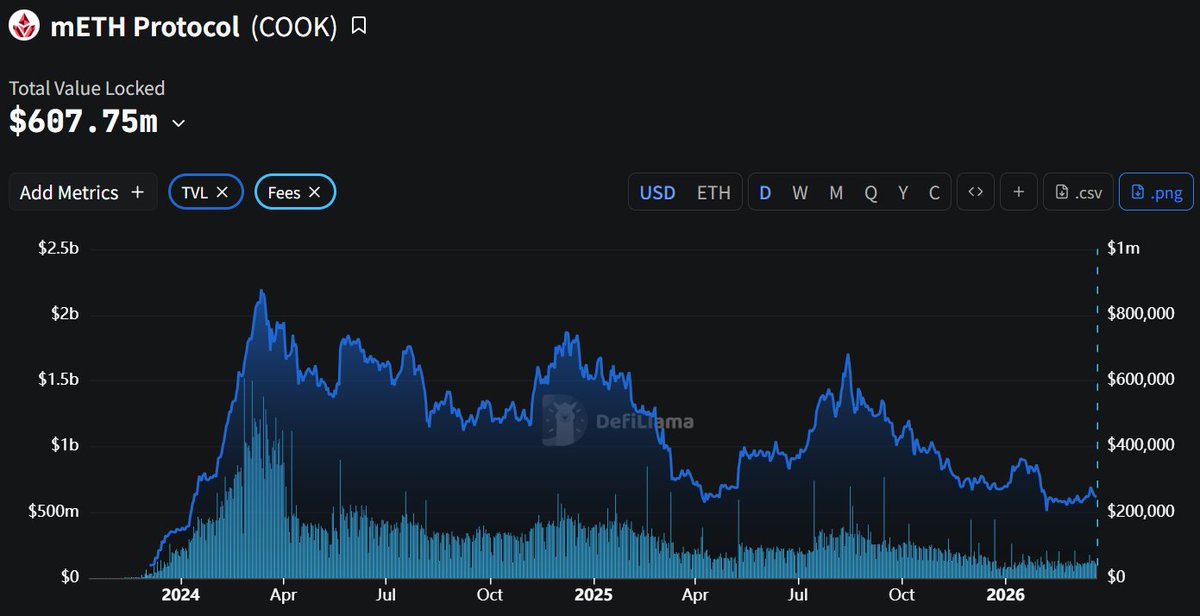
As a reference point, TVL has been cited within a range from roughly 818 million dollars to 2.19 billion dollars, which can vary with market conditions. Rather than anchoring the argument to a fixed number, it is more consistent with an institutional lens to evaluate the protocol through structural factors such as redemption certainty and the expansion of operational rails.


English

인턴으로 참여했던 디퍼런스 후기!
HK 컨센서스에 이어 맨틀 인턴으로 참여하며, 또 새로운 공부 기회를 얻어 De-ference에 다녀왔습니다.
밋업 같은 크립토 행사는 종종 다녀봤지만, 종사자로서 참여하는 경험은 또 다른 느낌이었습니다. 맨틀 인턴 활동을 통해 좋은 경험과 깨달음을 얻고 있는 것 같아 정말 즐거운 시간을 보내고 있어요. 😄
라이브 스트리밍 모더레이터 경험과 느낀 것들
이번에는 라이브 스트리밍 세션에서 모더레이터로, 디사이퍼 출신 세 분과 함께 인터뷰를 진행했습니다. 모더레이터 경험이 처음이라 처음엔 조금 당황했지만, 금세 적응됐어요. 역시 더 많은 공부를 하고 지식을 쌓아야 좋은 인터뷰를 이끌 수 있겠다는 생각이 들었습니다.
필요할 때마다 공부하는 스타일이라 크립토에서 활동할 때마다 조금씩 배우며 잘 굴러가게 해 왔는데, 이번 직접 참여를 통해 제대로 공부해야겠다는 마음이 생겼습니다.
이번 기회를 계기로 블록체인 산업 전체에 대해 스스로 공부하는 시간을 가져보려 해요. 맨틀에 대해서는 필요에 따라 꽤 공부했지만, 산업 전반은 아직 부족하거든요. 인턴 기간 동안 지식을 쌓아가는 데 집중할 계획입니다.
RWA 관련
RWA는 기본적으로 실물 자산을 온체인으로 가져오는 개념 정도로 이해하고 있었고, 어떤 자산이 올라오면 그에 따른 장단점과 규제 해결 방안 정도만 생각해 봤습니다.
이번 The Future of RWA 세션을 들으며 마켓메이킹 문제 등 새로운 점을 알게 됐고, 지금까지 스스로 공부하거나 컨센서스에 참여하며 배운 것 이상으로 유익한 시간이었습니다. 아직 모자란 부분들을 이렇게 채워나갈 수 있을 것 같아 남은 인턴 기간이 기대됩니다.


한국어

안녕하세요! 아직 빌딩하고 있는 아이디어 단의 논리 구조를 이번에 정리하였고, 다음주까지는 펀드를 넣고 테스트해볼 예정입니다. 일단 초기에는 100불정도 넣고 돌려볼 것 같습니다.
빌딩 중에 아래 공지가 금일 나왔는데, 이걸 이용해서 빌딩하면 편하게 할 수 있을 것 같습니다. 실패하건 잘되건 후속 포스팅을 해보겠습니다 🫡
x.com/Mantle_Officia…
한국어