Yaakov Katz

11.1K posts

Yaakov Katz banner
Yaakov Katz

Yaakov Katz

@yaakovkatz

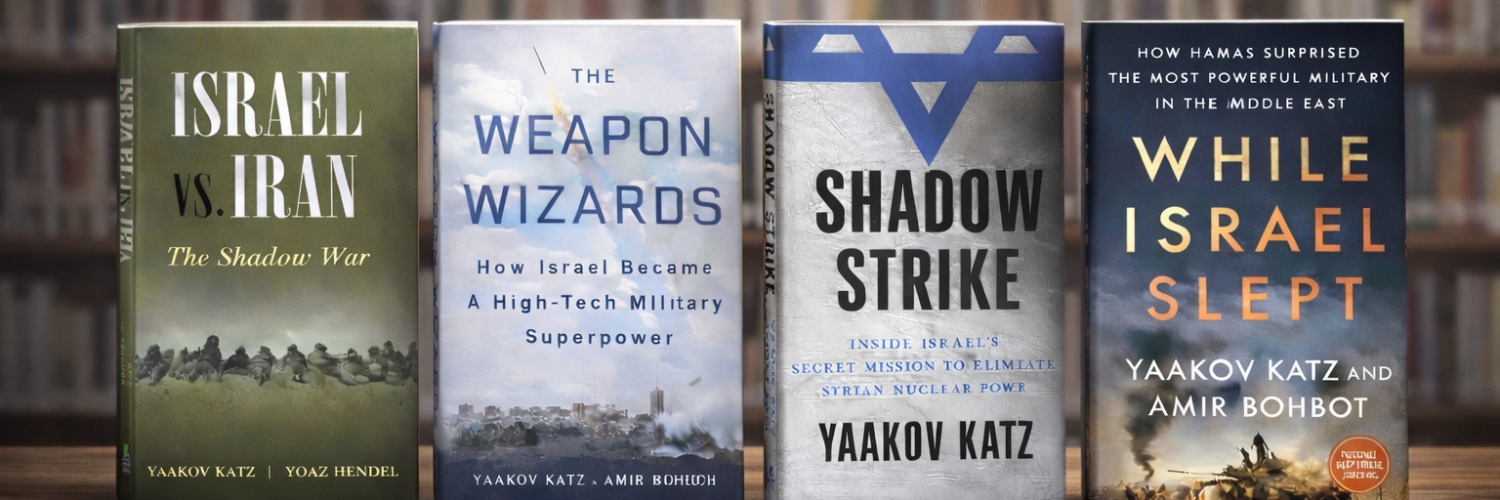
Writer. MEAD co-founder. @jewishpolicy, @Jerusalem_Post. Books: 'While Israel Slept’, Shadow Strike', 'Weapon Wizards', 'Israel vs. Iran'. @NiemanFdn Fellow.

Jerusalem, Israel Katılım Eylül 2011
935 Takip Edilen34.5K Takipçiler
Yaakov Katz
Yaakov Katz@yaakovkatz·
Has Israel been sidelined in the emerging Iran deal? It certainly seems that way. But it is important to remember that @netanyahu still holds one significant source of leverage - his voice on the deal. Netanyahu was the face of opposition to @BarackObama’s JCPOA in 2015. Rightly or wrongly, that gave him standing in Washington as something of a political weather vane on Iran. It is also what helped convince Trump to withdraw from the deal during his first term. Which is why what Netanyahu says now matters. If he publicly comes out against a new deal, it could create political turbulence for Trump - not only among pro-Israel Americans, but also inside parts of the Republican Party where some senators are already critical of the pending deal. Of course, it would be a risky move. Trump could just as easily decide to distance himself even further from Israel. But it does mean Netanyahu still has some degree of influence over the debate. How much influence? We will soon find out.
English
6
2
15
2.7K
Yaakov Katz retweetledi
Marc Polymeropoulos
Marc Polymeropoulos@Mpolymer·
this is spot on. from my perspective, as a former intelligence officer, it is not only ok but imperative to state "I don't know" when you really don 't know.
Yaakov Katz@yaakovkatz

Will Trump give the green light for an attack on Iran? No one truly knows. It is possible that he will and it is equally possible that he will not. That is the prevailing assessment today in virtually every capital across the Middle East. One Israeli newspaper went so far as to publish a ridiculous story this week claiming there is a “50% chance” Trump will order an attack. Besides setting a new low for journalism, it would be fascinating to hear the editorial discussion that preceded publication. If there is a 50% chance he attacks, that also means there is a 50% chance he does not. In other words, instead of simply admitting that the newspaper and its reporters have no clue, they chose to package uncertainty as revelation. Apparently, “anything can happen” now qualifies as exclusive reporting. Still, while no one knows what Trump will ultimately decide, there are three things we do know, and these matter. The first is that Trump does not want to attack Iran. What is pushing him toward military action is Tehran’s refusal to agree to a deal that would end the standoff. Trump would clearly prefer a diplomatic arrangement - even a flawed one - over more fighting but Iran is refusing to provide him with a respectable exit ramp. The second is that Israel very much wants Trump to strike. And not only Netanyahu for political reasons ahead of elections, though those are real. Israeli military planners increasingly believe Iran is more vulnerable than it appears. Its economy is collapsing, energy exports have slowed dramatically, and the regime is under enormous internal strain. Their assessment is that targeted attacks will either force Tehran into a better deal or push the regime closer to collapse. And then there is the third - perhaps the most important: Iran feels emboldened. Not only Iran, but also Hamas, Hezbollah, and the Houthis. Despite devastating blows, they believe they survived confrontations with the world’s strongest militaries and that survival itself equals victory. This is possibly the strongest argument for why Trump should strike. Iran and its proxies need to understand that survival is not victory and that there is a cost for escalation, terror, and uranium enrichment. If that lesson is not made clear now, the region could soon find itself in another war. So what will Trump do? The honest answer is that nobody knows - possibly including Trump himself. And so the region waits.

English
5
10
41
5.2K
Yaakov Katz
Yaakov Katz@yaakovkatz·
Will Trump give the green light for an attack on Iran? No one truly knows. It is possible that he will and it is equally possible that he will not. That is the prevailing assessment today in virtually every capital across the Middle East. One Israeli newspaper went so far as to publish a ridiculous story this week claiming there is a “50% chance” Trump will order an attack. Besides setting a new low for journalism, it would be fascinating to hear the editorial discussion that preceded publication. If there is a 50% chance he attacks, that also means there is a 50% chance he does not. In other words, instead of simply admitting that the newspaper and its reporters have no clue, they chose to package uncertainty as revelation. Apparently, “anything can happen” now qualifies as exclusive reporting. Still, while no one knows what Trump will ultimately decide, there are three things we do know, and these matter. The first is that Trump does not want to attack Iran. What is pushing him toward military action is Tehran’s refusal to agree to a deal that would end the standoff. Trump would clearly prefer a diplomatic arrangement - even a flawed one - over more fighting but Iran is refusing to provide him with a respectable exit ramp. The second is that Israel very much wants Trump to strike. And not only Netanyahu for political reasons ahead of elections, though those are real. Israeli military planners increasingly believe Iran is more vulnerable than it appears. Its economy is collapsing, energy exports have slowed dramatically, and the regime is under enormous internal strain. Their assessment is that targeted attacks will either force Tehran into a better deal or push the regime closer to collapse. And then there is the third - perhaps the most important: Iran feels emboldened. Not only Iran, but also Hamas, Hezbollah, and the Houthis. Despite devastating blows, they believe they survived confrontations with the world’s strongest militaries and that survival itself equals victory. This is possibly the strongest argument for why Trump should strike. Iran and its proxies need to understand that survival is not victory and that there is a cost for escalation, terror, and uranium enrichment. If that lesson is not made clear now, the region could soon find itself in another war. So what will Trump do? The honest answer is that nobody knows - possibly including Trump himself. And so the region waits.
English
3
3
14
6.8K
Yaakov Katz
Yaakov Katz@yaakovkatz·
Important conversation with @VivianBercovici about the roots of the surge in antisemitism in Canada, why it’s exploding now and what can be done to potentially stop it.
המכון למדיניות העם היהודי - JPPI@JewishPolicy

Former Canadian ambassador to Israel @VivianBercovici joins @yaakovkatz for a candid conversation about the alarming rise of antisemitism in Canada following October 7. Once considered one of the safest places in the world for Jews, Jews fear what the future holds >> linktr.ee/jppipod

English
1
6
15
2.4K
Yaakov Katz
Yaakov Katz@yaakovkatz·
@bndxasd @Dauntbooks You should write a book about that. I know a store that would probably put it on display.
English
1
1
78
2K
Pen15haver
Pen15haver@bndxasd·
@yaakovkatz @Dauntbooks As usual, delusional Yaakov is surprised the majority of the world hates Jewish Supremacy. Inshallah, Israel will become Palestine. A land where justice is given to everyone. A land where all evil doers are brought to justice.
English
8
0
21
2.5K
Yaakov Katz
Yaakov Katz@yaakovkatz·
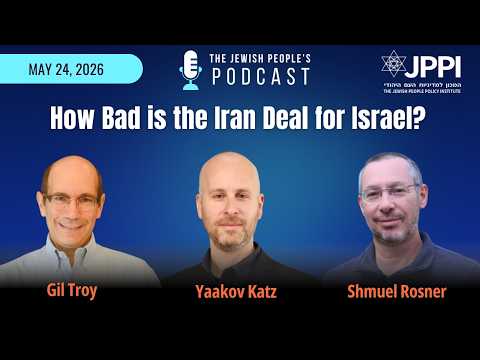
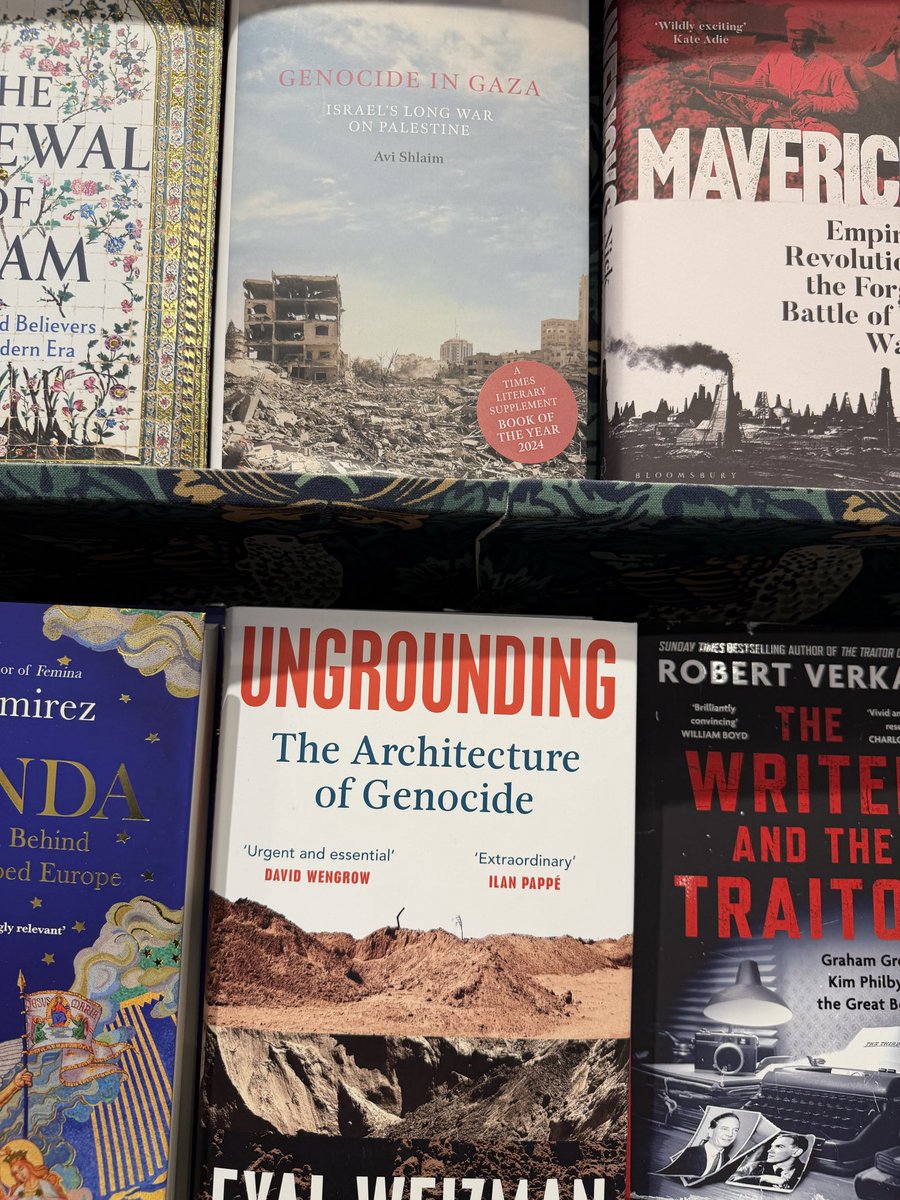
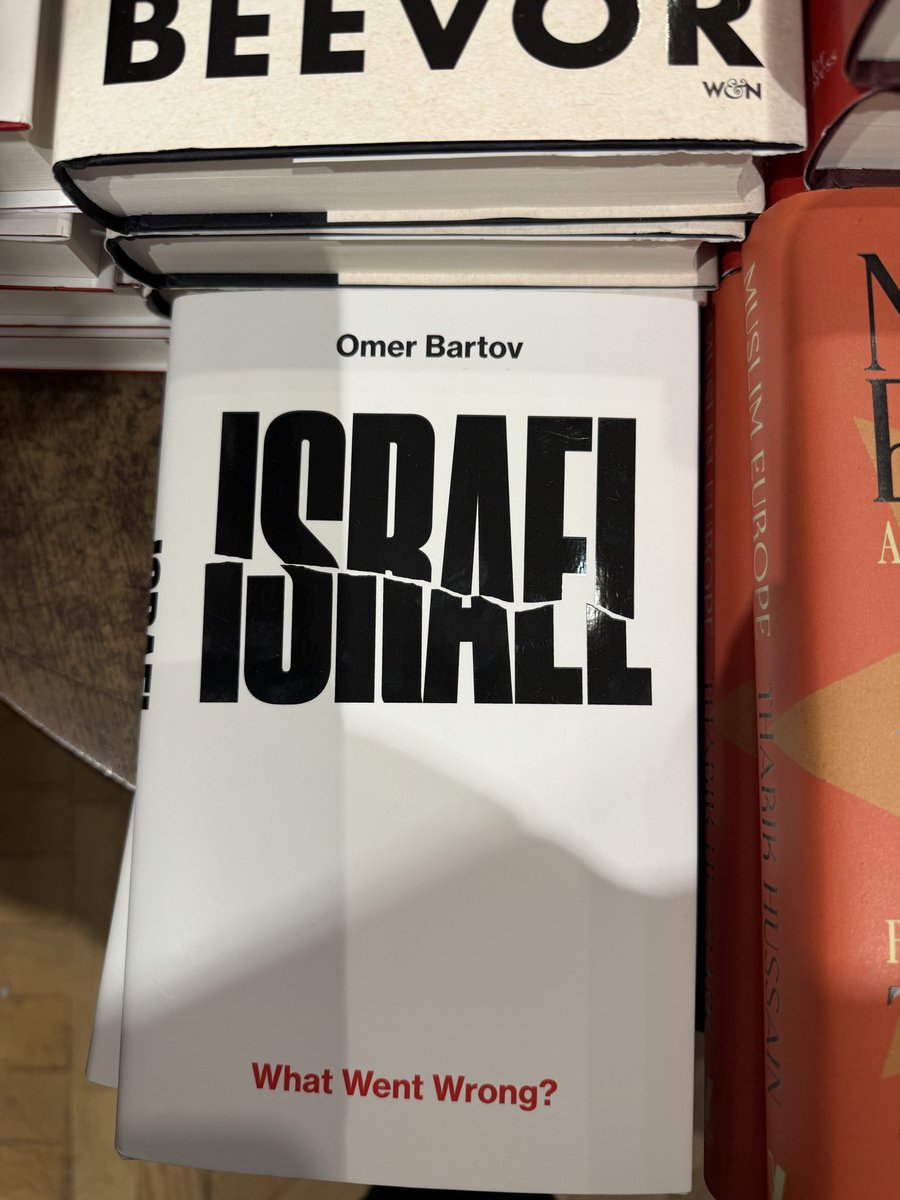
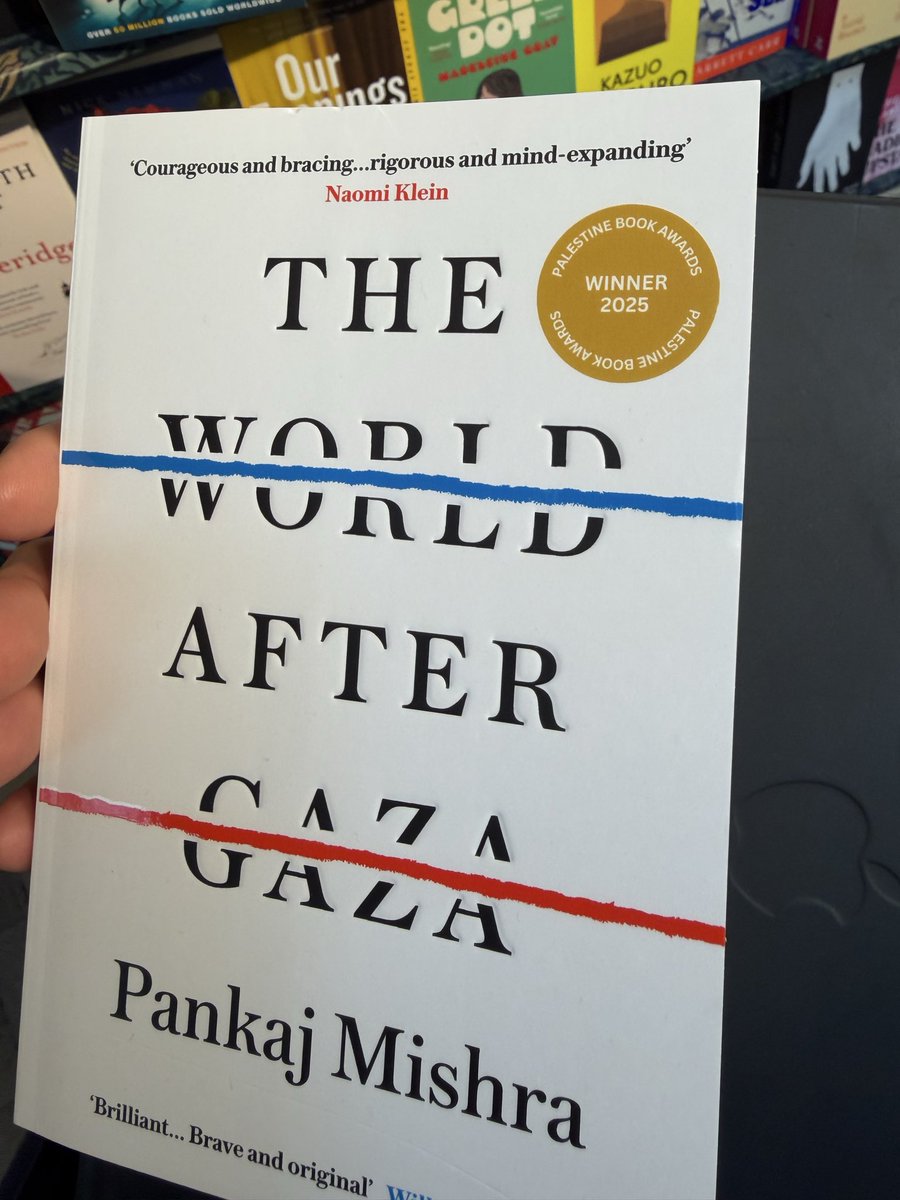
Am in London for a few work meetings, and stopped by a bookstore. This time it was @Dauntbooks. As expected, and perhaps unsurprisingly given the current climate, the Middle East section was front and center. As you can see in the photos, prominently displayed were books accusing Israel of genocide, books about alleged Israeli war crimes in Gaza, books about the so-called occupation and of course @PeterBeinart’s latest book about his problem being Jewish while watching the Jewish state defend itself. What was nowhere to be found? Rachel Goldberg-Polin’s “When We See You Again”. Didn’t make a difference that it was number one on the @nytimesbooks bestseller list. “While Israel Slept” was obviously not there as well. The one exception was Eli Sharabi’s “Hostage” almost missed on a whole different bookcase. This is not accidental. It is by design. Bookstores like this don’t curate books for intellectual diversity or genuine scholarship. They curate to promote a narrative. When I was younger - and probably more naive - I used to think bookstores were meant to provide readers with a range of titles that could get people to think, could encourage debate and could expand minds. Now too many seem interested in something else entirely: narrowing them.
Yaakov Katz tweet mediaYaakov Katz tweet mediaYaakov Katz tweet mediaYaakov Katz tweet media
English
74
128
649
70.8K
Yaakov Katz
Yaakov Katz@yaakovkatz·
Based on last night’s @N12News poll, no bloc currently has a clear path to a governing majority. @netanyahu's coalition gets just 52 seats, while the @naftalibennett-@yairlapid bloc reaches 58 - or 68 if they’re willing to rely on Arab parties, something they’ve said they won’t do this time (Yes, Bennett made the same promise in 2021 and broke it). But here’s what makes the current polling especially interesting: even if Bennett were to secure a majority, don’t be so sure he’d automatically become prime minister. His party is effectively a merger with Lapid’s Yesh Atid, and while we don’t yet know the exact seat breakdown, sources inside the joint party say that if the list wins 24 seats, Bennett’s faction would account for around 13 and Lapid’s around 11. What that means is that @gadi_eisenkot - whose party Yashar is polling as the largest independent list in the anti-Netanyahu bloc (15 seats) - could legitimately demand the premiership and leadership of the camp. And don’t rule out @AvigdorLiberman either. He may be polling at only 9 seats, but he too could make the case for becoming PM. And what exactly would Bennett be able to say? After all, that is exactly what he himself did in 2021 when he demanded and then became PM with just six seats.
Yaakov Katz tweet media
English
3
6
20
5.5K
Yaakov Katz
Yaakov Katz@yaakovkatz·
Here is a prediction: when the election campaign really moves into high gear, expect to see a Likud advertisement claiming that it was the party that protected and supported IDF soldiers by refusing to pass the ultra-Orthodox draft law that the haredi parties demanded. Don’t be surprised if that message is even delivered by MK @BismuthBoaz , chairman of the Knesset Foreign Affairs and Defense Committee, the same politician who, only a few months ago, described the draft law that @netanyahu shelved this week as an “excellent” proposal and “the smartest and fairest” law ever presented in the Knesset. Think about that for a moment. Just a short while ago, it was supposedly the best law imaginable. Now, it will be portrayed as dangerous and unacceptable. The substance did not change. What changed is the political calculation. Elections are approaching, narratives are shifting, and everyone is racing to reposition themselves before the public heads to the polls. That is what election season in Israel has become. Little is genuine, and almost nothing can be taken at face value. Statements are not designed to reflect reality but, unfortunately, to manipulate it. There was, for example, Netanyahu, who, during one campaign, vowed there would never be a Palestinian state, only to later tell international audiences he remained committed to a diplomatic process. There was @naftalibennett, who signed a pledge on TV promising not to sit with Yair Lapid or with an Arab party, before ultimately building exactly that coalition after the election. Israeli politics has always involved breaking promises, but this election feels different. It is shaping up to be a volatile mixture of the good, the bad, and the ugly. Latest in The @Jerusalem_Post. jpost.com/opinion/articl…
English
0
3
14
1.7K
Yaakov Katz retweetledi
המכון למדיניות העם היהודי - JPPI
Europe is entering a period of political change. From new leadership in Hungary and growing debates over sanctions on Israeli settlers to broader questions about the EU’s role in regional security and diplomacy, Prof. @pardosharon joins @yaakovkatz to unpack how Europe views Israel, Iran, and the rapidly changing Middle East. Full episode: linktr.ee/jppipod
English
0
3
6
582
Yaakov Katz retweetledi
Ambassador Yechiel (Michael) Leiter
The @nytimes and @NickKristof count on you not pulling the curtain back on their lies. Don’t buy into their blood libels - watch and find out who’s really behind this narrative.
English
304
640
2.9K
77.6K
Yaakov Katz
Yaakov Katz@yaakovkatz·
The point is simple - while most people are focused on the supposed decision to stop the aid, it is actually not that. What it is, is an understanding that the era of military aid has come to an end but there is still one last chance to get one last MOU. It is 100% realpolitik but it is not an Israeli decision to stand on its own two feet as it has been portrayed.
English
0
0
2
82
Allie Feuerstein
Allie Feuerstein@AllieFeuerstein·
@yaakovkatz I'm not understanding the point you're trying to make. Bibi is reading the room properly and is acting in accordance. Are we expecting something else?
English
1
0
2
314
Yaakov Katz
Yaakov Katz@yaakovkatz·
This obviously sounds good, especially to an American audience. But it has to be understood in the proper context: the current MOU, signed at the end of the Obama administration, expires next year, and if Israel wants to renew it, the process effectively has to begin now - meaning any new agreement would need approval from the Trump administration. Even if Israel wanted to wait, it likely understands that this may be its last realistic chance to secure another long-term MOU. If a Democrat wins the presidency next time, approval becomes far less certain. But even under a Republican administration, much would depend on which wing of the party that president comes from, and there will still be serious political obstacles. That is why Netanyahu’s message matters now. By signaling that this will be the final MOU and that Israel intends to gradually phase out dependence on US military aid over the next decade, he is trying to make the agreement more politically acceptable in Washington. 10 years is, of course, exactly the standard duration of an MOU. Finally, the calculation in Jerusalem is simple: there is one last window to lock this in under Trump, and after that it is hard to imagine any future president - Republican or Democrat - offering Israel a comparable package again.
Will Chamberlain@willchamberlain

Netanyahu announces he wants American financial aid reduced to zero within ten years

English
5
12
53
18.9K
Yaakov Katz retweetledi
Lahav Harkov
Lahav Harkov@LahavHarkov·
In the last half hour of Mother’s Day, I received a gift that can’t be topped: A healthy baby girl. I’ll be spending the next few months getting to know her.
English
439
57
3.4K
53.2K
Yaakov Katz
Yaakov Katz@yaakovkatz·
Why is Israel preparing again for war against Hamas in the Gaza Strip? Part of the answer lies in a truth many Israelis continue to struggle to accept: military force cannot alone solve our problems. While military force is essential, and there was never a more legitimate war than the one after October 7, wars are not won only by force. They also require a political strategy. Here is just one small example: Early in the war, Israeli forces seized Shifa Hospital, uncovering tunnels, command centers, and evidence that hostages had been held beneath and inside the facility. Hamas fighters were eliminated, and the area was cleared. Then, months later, we awoke one morning to the news that Israeli forces had surrounded Shifa, where about 1,000 terrorists had taken refuge. It didn’t make sense. Just a few months ago, it was empty. How did it suddenly return to being a terrorist refuge? The answer was that while Israel cleared the area militarily, it left a vacuum, refusing consistently throughout the war to work with any alternative entity that could control Gaza. And in the Middle East, vacuums do not remain empty for long. Hamas filled it again. That pattern repeated itself throughout the war - Israel would enter an area, dismantle terror infrastructure, withdraw, and then watch Hamas slowly return. To some extent, the same thing happened in Lebanon. Israel fought Hezbollah, agreed to a ceasefire in November 2024, and assumed deterrence would hold. But there was no broader political architecture established afterward. No alternative mechanism. Then, after the war with Iran broke out at the end of February, Hezbollah resumed firing rockets into Israel once again. Even with Iran, when the recent war was over, the Israeli public largely felt like the country had failed, despite most of the defense establishment viewing the operation as a significant military success The reason was that the moment the fighting transitioned into diplomacy and ceasefire negotiations, the Israelis lost confidence. If force did not get the Iranian regime to give up its uranium, then why would negotiations? And that may be one of the deepest strategic problems Israel faces today: there is no belief in political processes. There are a number of factors behind this, but one of them is that Israelis are deeply traumatized by the failure of what was the last political process to try and end our longest conflict – the Oslo Accords. While peace with Jordan was reached after the Oslo Accords were signed in 1993, this agreement with the Palestinians is remembered as such a failure that it impacts Israelis’ ability to consider political agreements as pathways to stability. That disenchantment is what shapes the nation’s approach to war and is why Israeli discourse revolves almost exclusively around phrases like “total victory,” “crushing the enemy,” and “victory for generations.” The language is always military, and the solutions are always military. But if October 7 taught Israel anything, it should be that military force alone cannot sustainably solve these conflicts. Yes, Israel must remain powerful, must act preemptively against emerging threats, and must be prepared all the time to deploy military force, but after so many years of war, it should be obvious that military power by itself does not create political reality. And unless Israel begins to think seriously about what follows the fighting – in Gaza, Lebanon, Syria, and beyond – it may continue winning battles while repeatedly finding itself dragged back into the same wars. jpost.com/opinion/articl…
English
16
16
58
6.6K