YANYuqing 严宇清

86 posts

YANYuqing 严宇清

YANYuqing 严宇清

@YanEVgene

PhC in MatSci interested in 🧠&🧬 @JohnsHopkins. 2022 Manchester @OfficialUoM

Baltimore, MD Katılım Nisan 2023
564 Takip Edilen77 Takipçiler
YANYuqing 严宇清 retweetledi
Xin Jin, PhD
Xin Jin, PhD@xinjin·
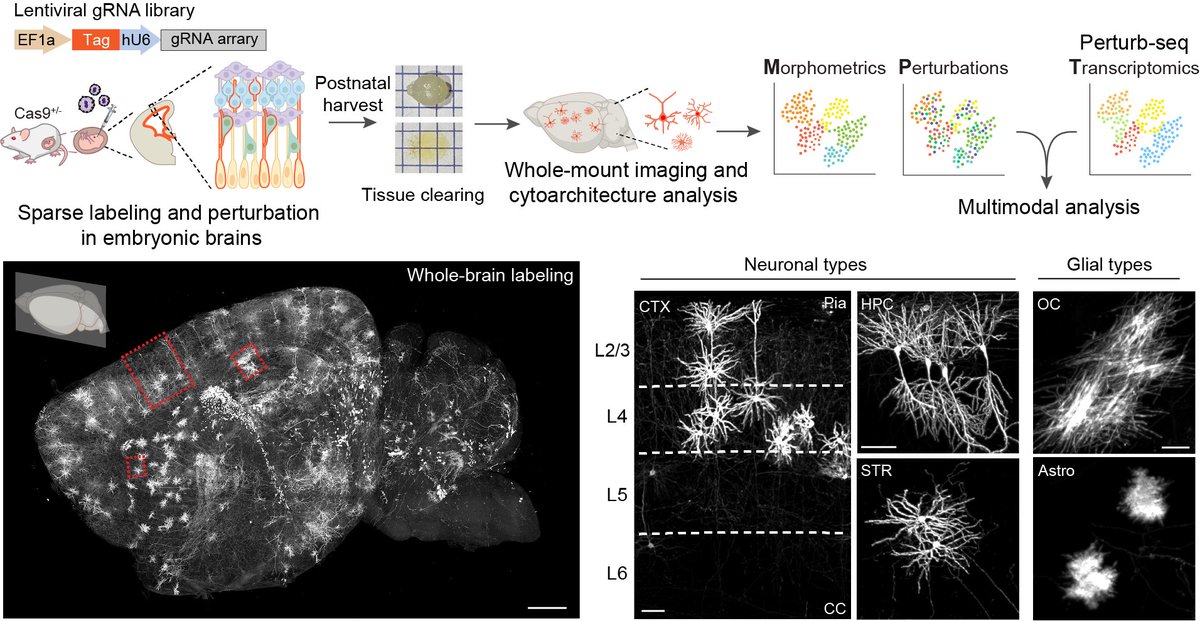
Form follows function, or function dictates form? 📢Preprint: we build Perturb-CLEAR, in vivo screen of neuroanatomy! Disease perturbations produce selective morphology-RNA changes that RNA impact alone cannot predict. Was led by the invincible @BoliWu! biorxiv.org/content/10.648…
Xin Jin, PhD tweet media
English
1
14
71
3.4K
Julia Bauman
Julia Bauman@JuliaBauman2·
The most beautiful molecular recorder 😍 GEMINI is a self-assembling protein system that records cellular events as physical layers, readable via imaging. Achieves down to 15 min resolution and works nicely in vivo! From @DingchangLin's lab in @Nature
English
8
41
236
16.7K
YANYuqing 严宇清 retweetledi
Nature Protocols
Nature Protocols@NatureProtocols·
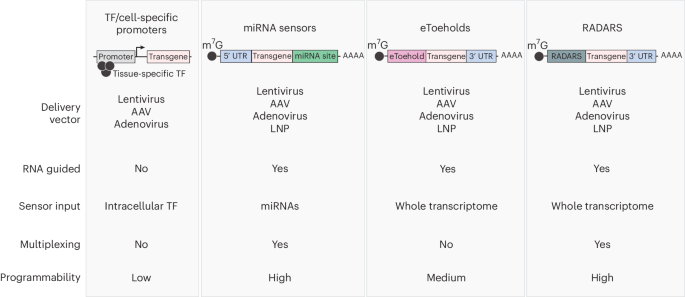
New Article! Sensing and perturbing mammalian cell states with reprogrammable ADAR sensors (RADARS) dlvr.it/TRqzDJ
Nature Protocols tweet media
English
0
7
44
3.3K
YANYuqing 严宇清
YANYuqing 严宇清@YanEVgene·
The GEMINI recorder is online with open access! #Abs1" target="_blank" rel="nofollow noopener">nature.com/articles/s4158… Take a minute to enjoy this brief explainer video generated by NotebookLM!
English
0
0
3
84
YANYuqing 严宇清 retweetledi
Cell
Cell@CellCellPress·
New issue alert 👉 cell.com/cell/current On the cover: Xu et al. depict a mouse brain-wide atlas of oligodendrocyte and myelin topography via a puzzle displaying regional heatmaps of oligodendrocyte density interleaved with corresponding regions from a reference brain atlas
Cell tweet media
English
1
14
55
17.6K
YANYuqing 严宇清 retweetledi
The Colonna Lab
The Colonna Lab@TheColonnaLab·
Our study is out in @ScienceMagazine! It shows that CAR-expressing astrocytes (CAR-A) can recognize and clear amyloid aggregates, reducing pathology and restoring microglial homeostasis in AD models. Led by Yun Chen, Alex Liu and @khainotkaiorky! doi.org/10.1126/scienc…
English
7
52
237
40.5K
YANYuqing 严宇清 retweetledi
Garyk Brixi
Garyk Brixi@garykbrixi·
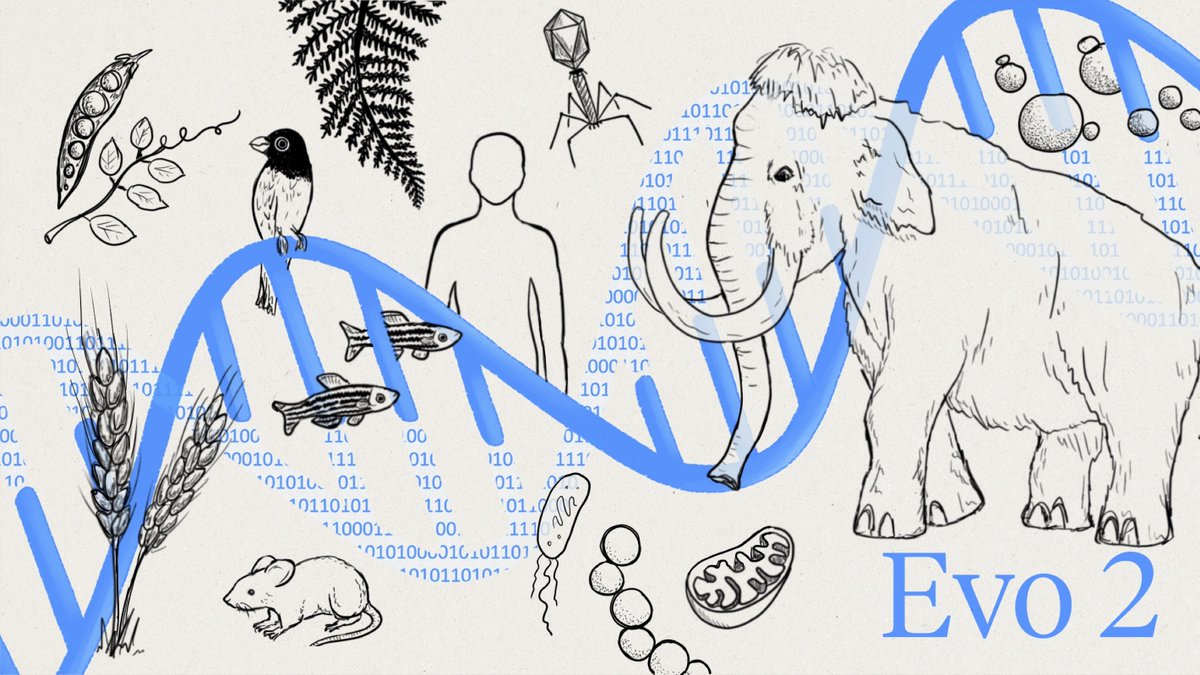
Evo 2 is out in Nature today, showing that genome language models can predict and design across the full complexity of life, from phages to eukaryotes. A few surprises from the project, including how ignoring trillions of nucleotides was key to getting a good model. 🧵
Garyk Brixi tweet media
English
13
208
1K
99.3K
YANYuqing 严宇清 retweetledi
Bo Wang
Bo Wang@BoWang87·
A new Nature paper from Johns Hopkins (by Prof. Lin @DingchangLin ) just solved one of the hardest problems in biology: how do you record what every cell in a tissue experienced over time, not just what it looks like right now? The answer: GEMINI — Granularly Expanding Memory for Intracellular Narrative Integration. It works exactly like tree rings. Cells are genetically engineered to express a computationally designed protein assembly. As the assembly grows inside the cell, it captures cellular activity as fluorescent ring patterns — each ring a timestamp, each ring's properties encoding signal intensity. Look at a cross-section under a microscope and you can read the cell's history backward, with ~15-minute resolution. The key: cells build the recorder themselves. GEMINI doesn't interfere with normal function — it just quietly writes. What they demonstrated: In a full tumor xenograft, GEMINI captured every cancer cell's activity history across the entire tumor while it continued to grow normally. For the first time, researchers can look back and see how different regions of the same tumor responded differently to therapy over time — not snapshots, but film. In a mouse brain, GEMINI recorded neural activity dynamics without disrupting behavior, coordination, or memory. It could temporally resolve the history of a brain seizure. Why this matters: Every tool we have in biology gives you state — what the cell looks like now. Sequencing, imaging, proteomics — all snapshots. GEMINI gives you trajectory. It's the difference between a photograph and a video, applied to every cell in an organ simultaneously. The team is explicit that AI-based decoding tools will be central to reading GEMINI's output at whole-brain scale. This is the data layer that makes temporal single-cell atlases possible. Paper: nature.com/articles/s4158… Congratulations @DingchangLin
English
17
125
660
84.6K
Patrick Hsu
Patrick Hsu@pdhsu·
Computationally designed “tree rings” for recording cellular history 🤯 I love synthetic biology inspired by mother nature’s tricks. Congrats to the authors
Dingchang Lin@DingchangLin

🚨 Today in @Nature, we report GEMINI—a genetically encoded intracellular memory device that writes cellular dynamics into tree-ring-like fluorescent patterns within cytoplasmic protein assemblies.[1/n] nature.com/articles/s4158…

English
3
10
191
24.2K
YANYuqing 严宇清 retweetledi
Bo Wang
Bo Wang@BoWang87·
New @CellCellPress paper from Bergles lab at Johns Hopkins just built the most comprehensive map of brain myelin ever made — every oligodendrocyte, across the entire mouse brain, across the lifespan. The scale: >10 million cells per brain, terabyte-scale 3D lightsheet volumes, registered to the Allen Brain Atlas across 417 regions from 2 months to 2+ years of age. The technical stack: Custom tissue clearing (CUBIC-L + SHIELD + uRIMS with 40% urea) to preserve endogenous fluorescence. 3D Mask R-CNN for instance segmentation — not just semantic, instance — so it can distinguish individual cells within dense clusters at scale via overlapping sliding windows. Vision Transformer to classify newly-formed vs. mature oligodendrocytes using soma morphology. All cross-referenced against Allen ISH transcriptomics and MICrONS serial EM. What they found: Oligodendrocyte density varies 10,000-fold across brain regions. Left-right hemispheres: r=0.99. Sex: no significant difference. Strain: matters. The brain never stops myelinating. New oligodendrocytes are still being generated in 2-year-old mice. Prefrontal cortex L6 shows the fastest rates of new myelination into old age — the circuits for executive function keep rewiring throughout life. After demyelination, L4 sensory cortex is the most resilient — oligodendrocytes survive at higher rates. The hippocampus loses nearly everything and barely recovers. Degree of injury doesn't predict rate of recovery. These are independent axes. The Alzheimer's result is the most surprising: Dense-core plaques dominate in cortex and hippocampus. Diffuse/small-core plaques dominate in white matter fiber tracts. Old assumption: diffuse plaques are "less toxic." The data says the opposite — small plaques in fiber tracts cause more myelin loss per plaque than dense-core plaques in gray matter. Plaque load and oligodendrocyte loss are essentially uncorrelated (ρ=0.22). The damage is plaque-type and location specific, not load-dependent. For MS and AD research: you can't read off white matter injury from gray matter plaque burden. The pathology in fiber tracts is running on different rules. Data: bossdb.org/project/xu2024 Paper: cell.com/cell/fulltext/…
English
3
74
261
24.3K
YANYuqing 严宇清 retweetledi
Michael R. Kessler
Michael R. Kessler@MikeKesslerPhD·
Just published in Nature. Shout out to Johns Hopkins MSE Professor @DingchangLin and his team for developing a new intracellular recording platform that forms “molecular tree rings” inside cells, capturing cellular histories at scale. Learn more: inbt.jhu.edu/researchers-in…
English
2
8
46
5.7K
YANYuqing 严宇清 retweetledi
Charles Wu 吴英成AI🦞
Charles Wu 吴英成AI🦞@Charles_Y_Wu·
The future of the lab is here! 🚀 So proud to be part of this mission with my mentor @lecong. Thank you for leading the way! LabOS is redefining the wet lab, and together with MedOS, we are ready to bring this AI revolution to the clinic. This is just the beginning!
CL • Le Cong@lecong

Wet lab hasn't changed in 50 years - we are changing that. As written by legendary @denibechard on @sciam LabOS is powering agentic lab via smart glasses, multimodal AI, and collaborating robotics, real-time guiding human scientists and training junior scientists to expert-level in 1 week for complex gene-editing experiments. #ai4science in action!🔬 With LabOS and the sister project MedOS, we hope to turn every lab and clinic into AI-perceivable, AI-operable environment. Not to replace humans — to make us better! scientificamerican.com/article/how-la…

English
3
2
8
1.2K
YANYuqing 严宇清 retweetledi
Hiroki R. Ueda
Hiroki R. Ueda@hiroking1975·
#PR Our Ms on the mammalian whole-body/organ single-cell atlas is out in Cell! ~614 and 531 million cells are deteceted in male and female newborn mice. We envisioned this at CUBIC papers in 2014, and it took a decade. Congrats, Shota&Katsuhiko! Ms→sciencedirect.com/science/articl…
English
1
11
41
5.9K
YANYuqing 严宇清 retweetledi
Tatz Murakami
Tatz Murakami@TatzMurakami·
Our whole-brain multiplexed FISH paper is out! So grateful to everyone who made this project possible. cell.com/neuron/fulltex…
English
2
15
32
2.7K
Nature Methods
Nature Methods@naturemethods·
Time to get excited! We will be announcing our 2025 Method of the Year next week!! 🥳🌟🧪🖥️🔍 Will you guess it correctly?
English
1
0
27
6.3K