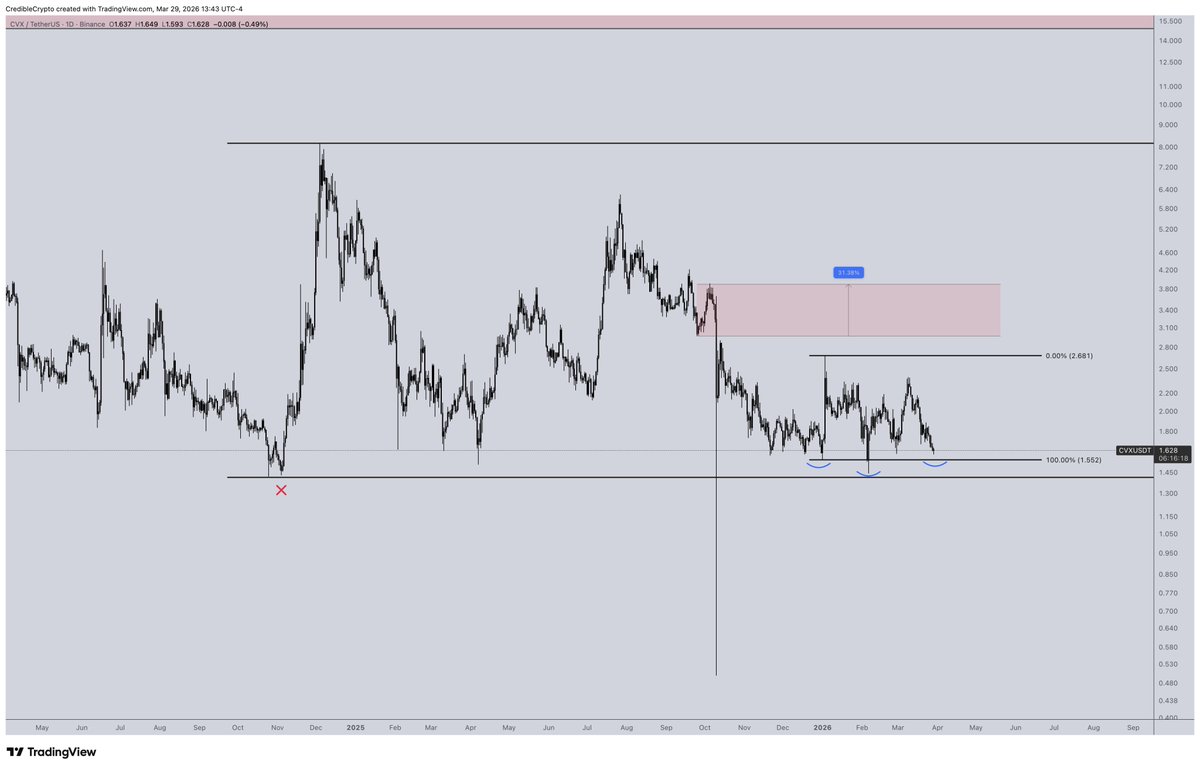
@CredibleCrypto I’m loaded up but thinking about adding more here. 🤔
English
Yang Rising
2.3K posts
@Yangrising83
I can grow fruits & veggies. Learning TA with focus on MAMA/FAMA & EW. Do your own research. My views & tweets are NOT financial, tax, or legal advice


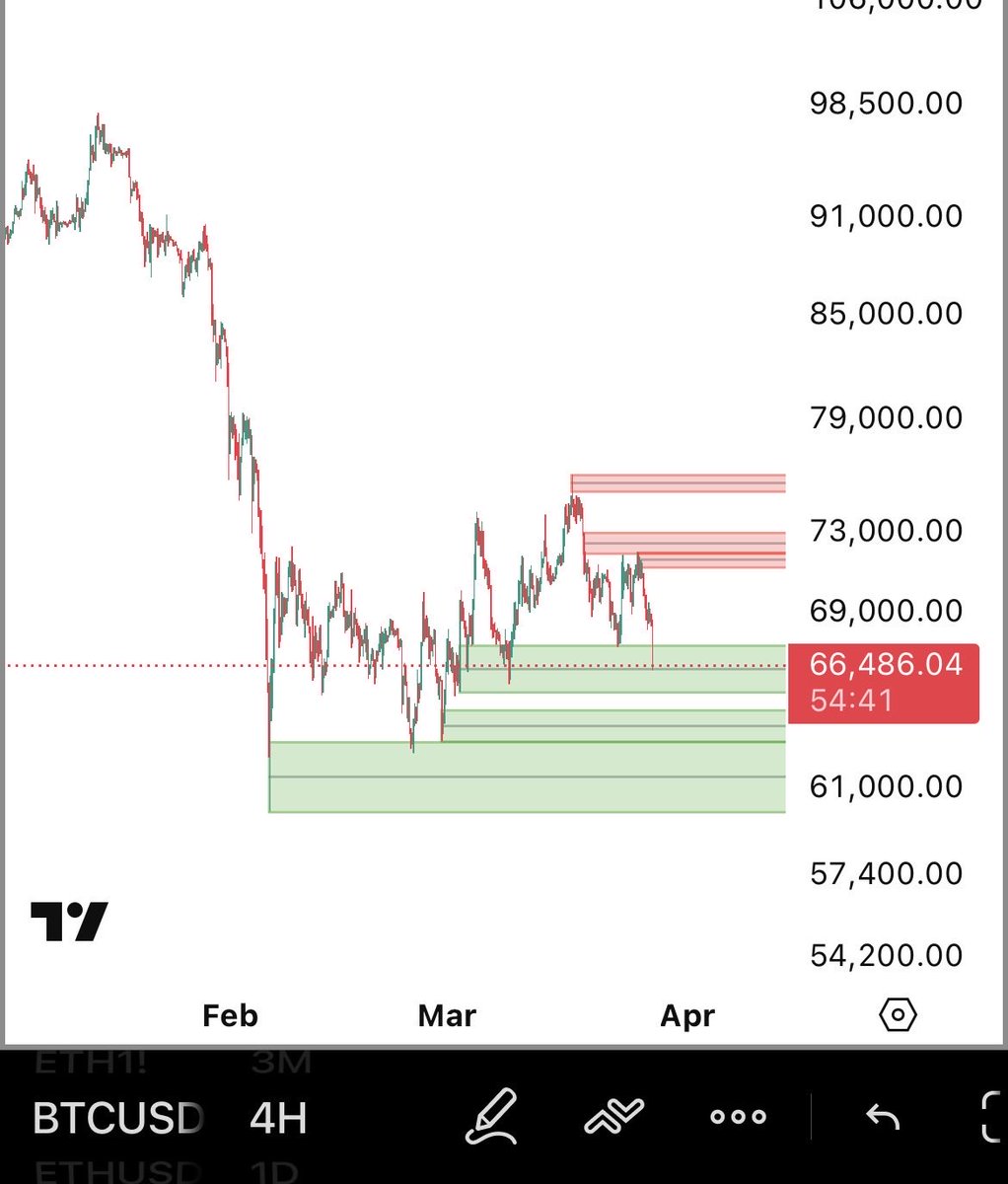


$BTC.D Took longer than expected, but #Bitcoin dominance has started falling impulsively again. This move could still be a zigzag before more upside, but with $ETHBTC looking bullish and most alts at HTF demand/support, the odds favor BTC.D resuming its downtrend. If $BTC dominance trends lower again, expect $ETH and alts to outperform on the way up to new ATHs.
For those learning: You've probably heard experienced traders/investors repeat the mantra: "Focus on the charts, not the narratives". But do you truly understand why this advice exists? More importantly, do you grasp the mechanics behind charts versus narratives—and why, despite this widely repeated wisdom, 90% still believe narratives are what actually drive price? Charts (price action, market structure, volume, order flow, etc.) represent the only objective, real-time truth available to us. They are the unfiltered aggregate of every single buy and sell decision made across the entire market. Price is the naked reality. Narratives—whether news headlines, earnings reports, tweets, geopolitical events, analyst opinions, or crowd beliefs—are merely human interpretations layered on top of that reality. They are stories we tell ourselves to explain what the price is already doing. Very often, you'll spot a clean technical setup on the chart that strongly suggests the next high-probability move—yet nothing "happens" until a narrative appears to catalyze it. When price then explodes, the crowd immediately shouts: "It was the rumor!", "It was the news!", "It was Elon’s tweet!". This is a classic mistake: confusing the catalyst with the cause. In reality, the chart was already showing the underlying supply/demand imbalance and directional bias. The narrative simply served as the trigger that synchronized the broader market, decreased uncertainty, and brought in the remaining participants. Without that pre-existing technical foundation, the exact same narrative usually falls completely flat (we see this constantly: "bullish" news gets ignored or even sold into, and "bearish" news gets bought aggressively). The narrative is only useful as secondary context to understand the timing of the trigger and provide clues about potential exits or reversals in sentiment. But when forced to choose one primary guide for direction and timing, always choose the chart. Narratives can deceive, mislead, and whipsaw you—price never lies (though we frequently misread it). The people who insist "it was the narrative that moved the price" are typically the same ones buying near the top and selling near the bottom. Those who read the chart first and treat the narrative only as confirmation or context are the ones who consistently survive over the long term. Keep it simple: Price is cause and narrative is story. Master the cause.

Since I don't trade in and out of assets short term, I don't focus on ones that don't grow over time. Many people ask why I never buy stocks like $USO, and my answer is simple: I like stocks that go up and to the right over time—not down and to the right. That means I'm going to miss those quick 50% weekly candles, but they aren't sustainable, as the charts will eventually resume their downtrends. BTW, high time frame resistance for $USO is 126.86...
IRAN'S PARLIAMENT SPEAKER SAYS 'FAKE NEWS' USED TO MANIPULATE OIL MARKETS - RTRS
If you like gap fills ;) Then $MSOS for you. I'm actively building a position on MSOS, TLRY and CRON.Believe it or not, an asset that is down 90+ % shouldn't be overlooked if fundamentals are good. I personally don't smoke or use weed but I believe strongly in it.

BREAKING: Trump announces halt to any plans for strikes on Iranian power plants