Yan Leyfman, MD

24.4K posts

Yan Leyfman, MD banner
Yan Leyfman, MD

Yan Leyfman, MD

@YLeyfman

AI-Driven Oncology | Cellular Therapy | Translational Science | Dir @MedNewsWeek | @OncLive Correspondent | Host, Translational Edge | https://t.co/PZG3UGoJrh

New York, NY Katılım Nisan 2020
2.7K Takip Edilen3.3K Takipçiler
Sabitlenmiş Tweet
Yan Leyfman, MD
Yan Leyfman, MD@YLeyfman·
Honored and grateful to be invited to speak at this outstanding forum hosted by Memorial Sloan Kettering Cancer Center 🌍✨ I’m excited to share two oral presentations exploring how global oncology, AI, and evidence-based innovation can be translated into real-world action to reduce inequities in cancer care worldwide 📊🧬🤝 Immense gratitude to my mentors, Dr. Bonilla & Dr. Park, and collaborators whose guidance, support, and trust continue to shape this work — none of this is possible without you 🙏💙 Looking forward to engaging conversations, learning alongside leaders across disciplines, and advancing our shared mission to improve cancer care for patients everywhere 🌎🔬 @DrArturoAI @CParkMD
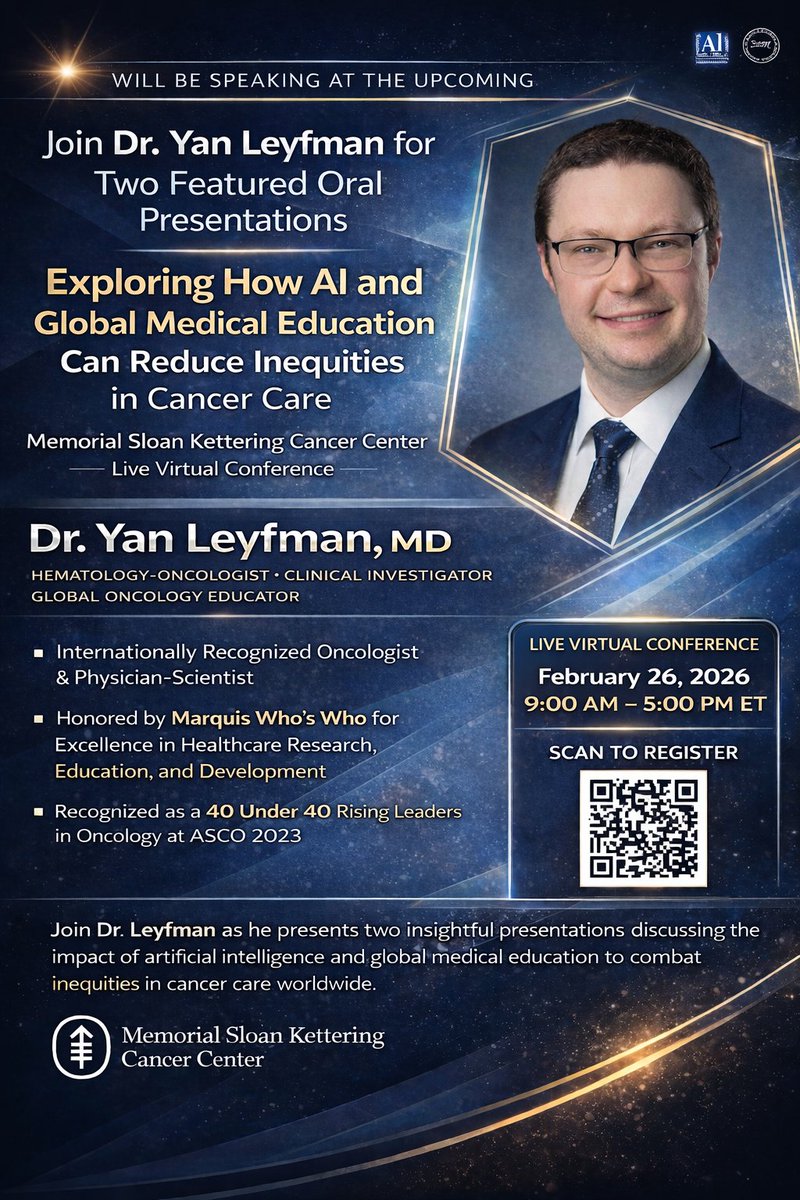
Yan Leyfman, MD tweet media
English
1
3
14
1.1K
Yan Leyfman, MD
Yan Leyfman, MD@YLeyfman·
In vivo CAR-T generation—no manufacturing required? Engineered T cells have transformed oncology—but ex vivo manufacturing remains a major bottleneck (time, cost, access). A new study takes a major step toward making CAR-T directly inside the patient 👇 🔧 The innovation: • Two-vector system delivering CRISPR–Cas9 + DNA template • Site-specific integration of CAR into a T cell–specific locus • Combines precision editing + targeted delivery 🧪 What they achieved: • Stable, durable CAR expression in vivo • Therapeutic levels of CAR-T cells generated without ex vivo expansion • Efficacy across B-cell aplasia, hematologic + solid tumor models ⚠️ Why this matters: Current in vivo approaches → ❌ transient expression OR ❌ random integration This approach → ✅ precise ✅ durable ✅ cell-specific 💡 Big picture: A potential path to scalable, off-the-shelf CAR-T therapies—dramatically expanding access beyond specialized centers. 🧠 Takeaway: If validated in humans, this could redefine how we deliver cellular immunotherapy—from bespoke manufacturing → programmable in vivo engineering. nature.com/articles/s4158… #CARTcells #GeneEditing #CRISPR #Immunotherapy #CellTherapy #TranslationalScience #Oncology
English
5
13
30
1.8K
Yan Leyfman, MD
Yan Leyfman, MD@YLeyfman·
What if the immune system has two faces in cancer? In the latest episode of The Translational Edge, we break down why immune activation doesn’t always equal tumor control—and how this is reshaping immunotherapy in colorectal cancer. 🎧 shuf.ai/episode-player… This is where the next wave of breakthroughs will come from. #Immunotherapy #Oncology #CancerResearch
English
1
0
1
147
Yan Leyfman, MD
Yan Leyfman, MD@YLeyfman·
Frontline CAR-T for newly diagnosed multiple myeloma? A phase II trial explored BCMA CAR-T therapy as frontline treatment for patients with newly diagnosed multiple myeloma (NDMM) who were ineligible for or not proceeding to transplant. 🧪 Study design: • Induction (3–4 cycles) → BCMA CAR-T infusion → consolidation + lenalidomide maintenance • 36 patients infused • Median age: 68 years 📊 Striking results: • MRD negativity: 100% at 3 months (10⁻⁵ sensitivity) • No MRD recurrence at median follow-up of 15.8 months • CR rate improved from 33% pre-infusion → 69% at 3 months → 94% at last follow-up ⚠️ Safety profile: • Cytopenias common but transient • Cytokine release syndrome: 52.8% (all grade 1–2) • Neurotoxicity: 5.6% (all grade 1) • No deaths or disease progression at data cutoff 💡 Why it matters: Patients who cannot undergo transplant often have fewer therapeutic opportunities. Early CAR-T may offer deep, durable remissions in the frontline setting. 🚀 Takeaway: Frontline BCMA CAR-T could represent a practice-changing strategy for transplant-ineligible NDMM—pending larger confirmatory trials. ascopubs.org/doi/10.1200/JC… #MultipleMyeloma #CARTcells #BCMA #Hematology #CancerImmunotherapy #ClinicalTrials #MRD
English
0
14
44
4K
Yan Leyfman, MD
Yan Leyfman, MD@YLeyfman·
Could the gut microbiome drive age-related memory decline? New research maps microbiome aging across the lifespan in mice and uncovers a gut–immune–brain pathway that impairs memory during aging. 🔬 Key mechanism: • Age-related accumulation of bacteria like Parabacteroides goldsteinii • Production of medium-chain fatty acids → activation of GPR84 • Peripheral myeloid inflammation • Impaired vagal afferent signaling from gut to brain • Reduced hippocampal neuronal activation → loss of memory encoding 🧪 Proof-of-concept interventions in aged mice: • Targeted bacteriophage therapy against Parabacteroides • Pharmacologic GPR84 inhibition • Restoration of vagal nerve activity ✨ Result: Improved hippocampal function and memory performance. 💡 Takeaway: Age-related cognitive decline may partly stem from interoceptive dysfunction in the gut–brain axis. Therapies that restore gut–brain communication—so-called interoceptomimetics—could represent a new strategy to combat brain aging. #Microbiome #BrainAging #GutBrainAxis #Neuroscience #CognitiveHealth #AgingResearch nature.com/articles/s4158…
English
0
4
5
294
Yan Leyfman, MD
Yan Leyfman, MD@YLeyfman·
What happens after stopping GLP-1 weight-loss therapy? GLP-1 receptor agonists such as Semaglutide and Tirzepatide are highly effective for weight loss—but what happens when treatment stops? A systematic review and meta-regression of 48 studies examined weight trajectories after discontinuation. 📊 Key findings: • Weight regain occurred consistently after cessation • At 1 year, ~60% of lost weight was regained • Long-term projections suggest regain plateaus around ~75% of lost weight • Recovery follows a predictable, slowing pattern (half-life ≈ 23 weeks) 💡 Interpretation: Weight often rebounds after stopping GLP-1 therapy, though not fully back to baseline—suggesting some residual benefit may persist. ⚠️ Clinical takeaway: GLP-1–based weight loss may function more like chronic therapy than a short course, reinforcing the importance of long-term treatment strategies and lifestyle support. thelancet.com/journals/eclin… #ObesityMedicine #GLP1 #WeightLoss #Semaglutide #Tirzepatide #MetabolicHealth #EvidenceBasedMedicine
English
1
0
0
224
Yan Leyfman, MD retweetledi
Yan Leyfman, MD
Yan Leyfman, MD@YLeyfman·
A 100-year-old drug. A 99-cent pill. And a fascinating question in cancer biology: Can aspirin help prevent cancer from spreading? In the newest episode of The Translational Edge, we explore the science behind how a medication millions take every day may influence metastasis, immune recognition, and tumor–platelet interactions. Some of the ideas we unpack: 🧬 Why platelets may help cancer cells hide from the immune system 🧬 How aspirin may “uncloak” circulating tumor cells 🧬 Evidence suggesting lower cancer incidence and fewer metastases in certain populations taking low-dose aspirin 🧬 Why metastasis is really about the entire tumor ecosystem — inflammation, immune escape, and microenvironment Sometimes the next breakthrough in oncology isn't a billion-dollar therapy. Sometimes it's re-examining a drug we've had for over a century. 🎧 Watch the episode here: shuf.ai/episode-player… Curious to hear what others think — Could aspirin have a future role in metastasis prevention? #Oncology #CancerResearch #TranslationalMedicine #CancerPrevention #HematologyOncology
English
0
0
1
96
Yan Leyfman, MD retweetledi
Arturo LoAIza-Bonilla, MD MSEd
Most cancers aren’t hard to treat. They’re hard to detect early. Our new paper proposes an AI-enabled multi-omic stool screening paradigm for colorectal cancer, integrating: 🧬 tumor DNA 🦠 microbiome 🧫 RNA 🧪 proteomic & metabolomic signals AI can fuse these signals into precision population screening. ✨ 📄 mdpi.com/2072-6694/18/6… #AI #Oncology #CRC #PrecisionMedicine @mystlukes @MassiveBio @Cancers_MDPI @AmericanCancer @coloncancertask @GlobalCRC #coloncancer
English
1
4
7
2.5K
Yan Leyfman, MD
Yan Leyfman, MD@YLeyfman·
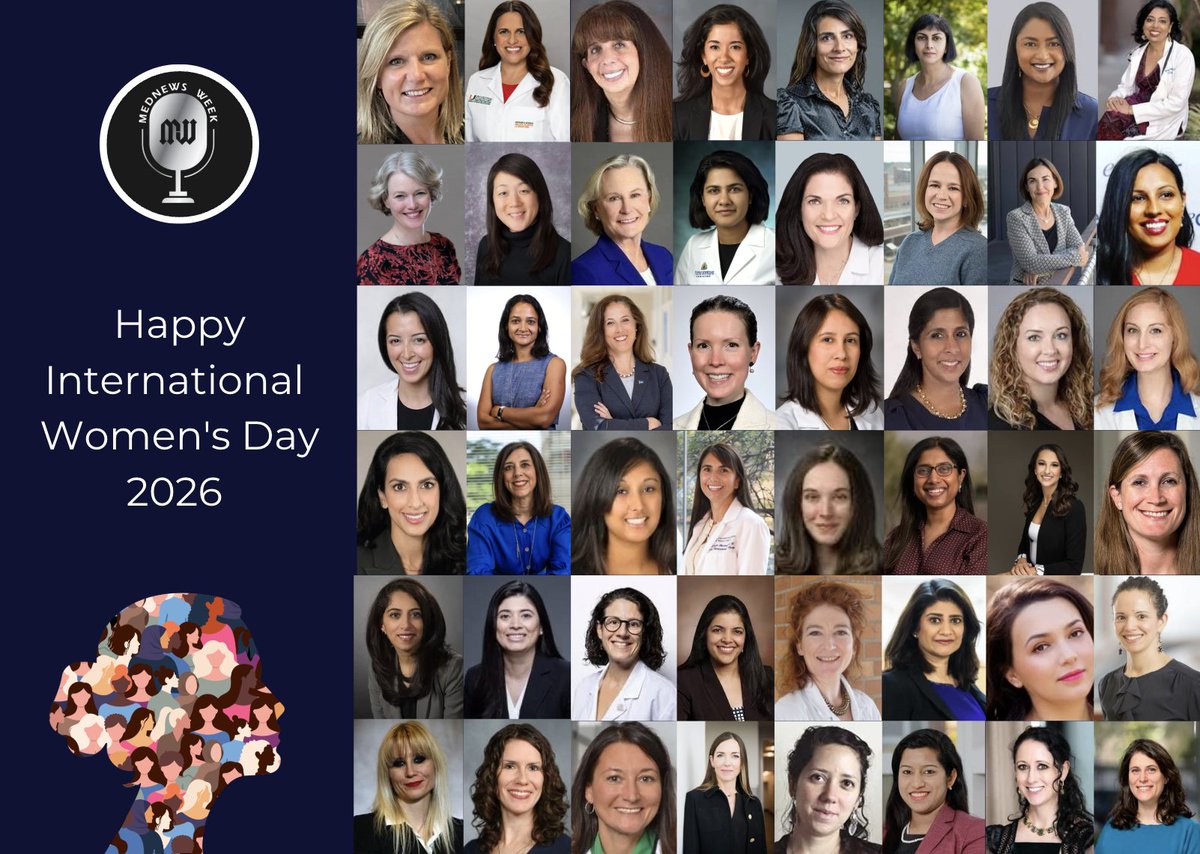
Today we celebrate the extraordinary women shaping the future of medicine, science, and global education. At MedNews Week, we’ve had the privilege of learning from and collaborating with an incredible community of women leaders — clinicians, researchers, educators, and innovators who generously share their expertise and inspire the next generation of physicians around the world. Your leadership advances patient care, drives discovery, and empowers others to push medicine forward. Thank you for your mentorship, your brilliance, and for continuously lifting others along the way. Happy International Women’s Day to these remarkable leaders — and to women in medicine everywhere. 🌍💜 Grateful to learn from you all. MedNews Week remains deeply committed to amplifying the voices of women leaders in medicine globally. #InternationalWomensDay #WomenInMedicine #MedNewsWeek #WomenInScience #PhysicianLeadership
Yan Leyfman, MD tweet media
English
0
5
10
505
Yan Leyfman, MD
Yan Leyfman, MD@YLeyfman·
📉💉 GLP-1 therapies and bariatric surgery: shifting obesity treatment trends The rapid adoption of second-generation GLP-1 receptor agonists such as Semaglutide and Tirzepatide may be reshaping how obesity is treated at a population level. A large EHR analysis using Epic Cosmos evaluated trends from 2017–2025 among 31.7 million patients eligible for metabolic and bariatric surgery (MBS). 🔍 Key findings 📈 GLP-1 RA use surged • 0.22% of eligible patients in 2018 • → 24.17% by Q3 2025 📉 Bariatric surgery declined • Peak: 0.17% in Q4 2022 • → 0.09% by Q3 2025 • 46.4% reduction in MBS use among eligible patients over ~3 years ⚙️ Procedure-specific trends • Sleeve gastrectomy: ↓ 50.1% • Roux-en-Y gastric bypass: ↓ 44.3% 📊 Subgroup insights • Declines observed regardless of diabetes status • Smallest decline among patients with BMI ≥55, suggesting surgery remains important in the highest-risk population 💡 Takeaway As highly effective GLP-1–based therapies expand, they may be altering the treatment pathway for severe obesity, potentially delaying or reducing the use of metabolic and bariatric surgery. However, surgery may still play a critical role for patients with extreme obesity or those requiring durable metabolic control. jamanetwork.com/journals/jamas… #ObesityMedicine #GLP1 #MetabolicSurgery #Semaglutide #Tirzepatide #PopulationHealth #Endocrinology
English
1
0
0
132