Eleonora Teplinsky, MD, FASCO

5.3K posts

Eleonora Teplinsky, MD, FASCO banner
Eleonora Teplinsky, MD, FASCO

Eleonora Teplinsky, MD, FASCO

@drteplinsky

Breast & gyn med onc @valleyhealthnj. Opinions my own. Host of INTERLUDE podcast. 📗 BEYOND THE PINK (2026). Patient education on Instagram.

New Jersey, USA Katılım Aralık 2017
1.2K Takip Edilen3.9K Takipçiler
Eleonora Teplinsky, MD, FASCO retweetledi

Dr. Kelly Shanahan
Dr. Kelly Shanahan@stage4kelly·
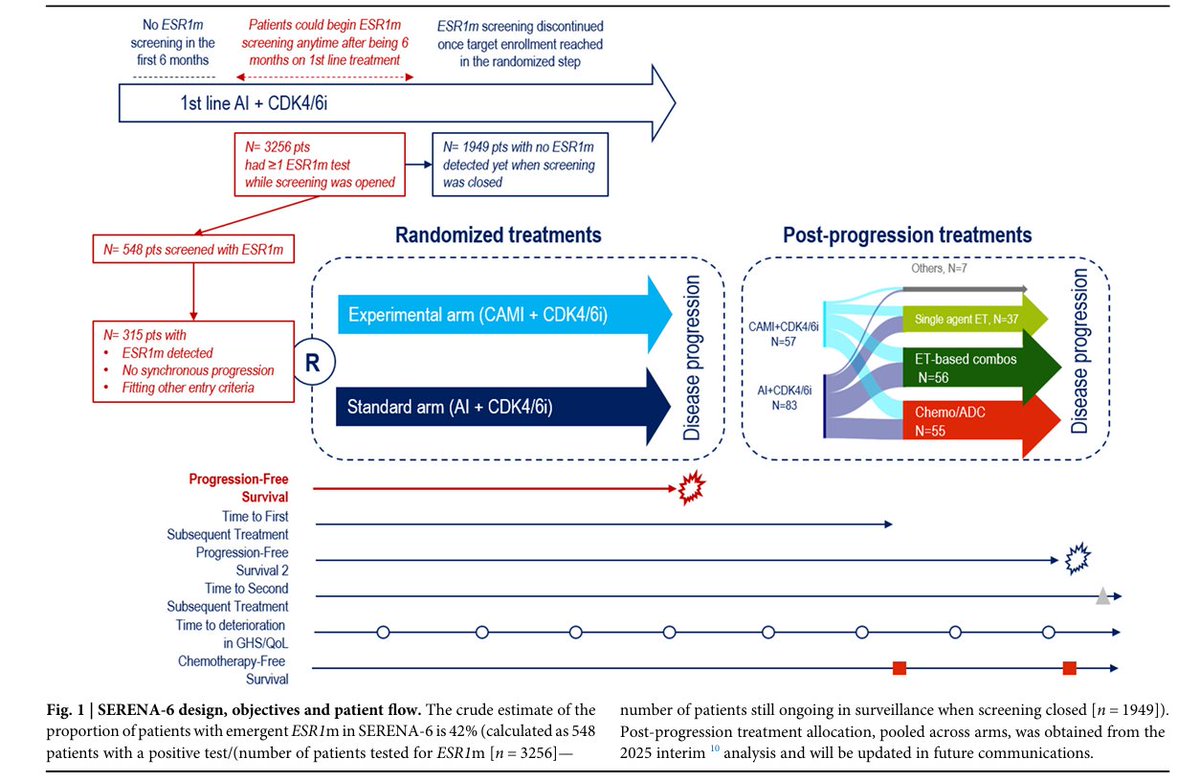
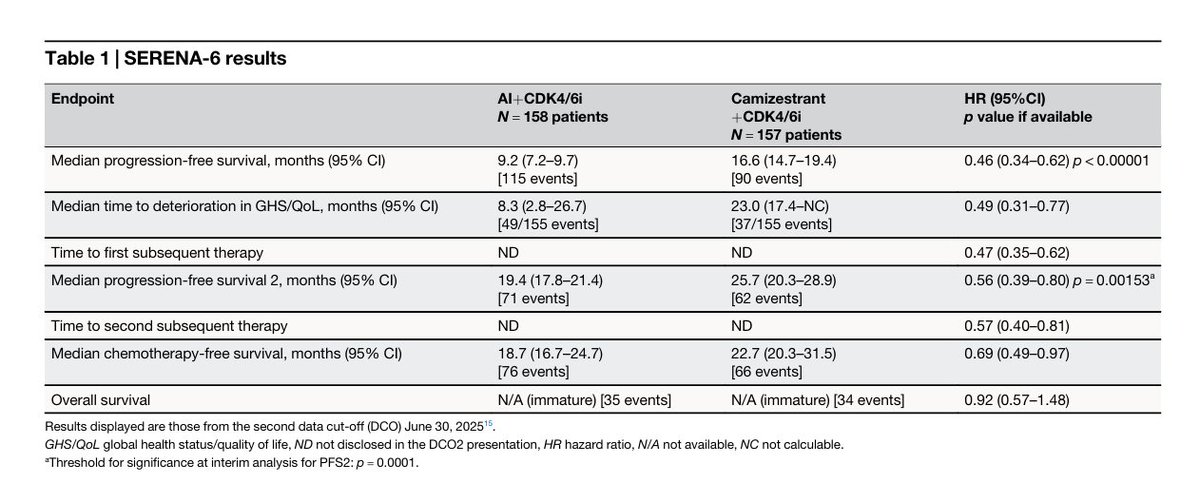
The Europeans have approved camizestrant upon emergence of an ESR1 mutation. In light of the 6-3 ODAC against this, I wonder if the EU vote will sway the FDA 🤔 #bcsm
Sherene Loi, MD@LoiSher

🤩 ✅ EU CHMP approval: Cami is beneficial in emerging ESR1 mt resistant disease. Remember also ✴️ 1. Genomic biomarkers will only just get cheaper 💰 2. Oncology already accepts the principle that biochemical or molecular progression occurs prior to clinical PD ie in prostate cancer - why do #breastcancer patients need to show OS benefit? 🥴 3. Precision medicine also provides better health economics 🎓

English
0
2
3
1K
Eleonora Teplinsky, MD, FASCO retweetledi
Dr. Kelly Shanahan
Dr. Kelly Shanahan@stage4kelly·
And we have another option for metastatic TNBC! #Research for the win. We still have a long way to go across all subtypes for more effective, less toxic therapies. #bcsm
Erika Hamilton, MD, FASCO@ErikaHamilton9

#datoDXd FDA approved 1st line TNBC among pts who are not a candidate for immunotherapy Not 1️⃣, not 2️⃣, but now 3️⃣ approvals in #bcsm this month! #vepdegestrant #TDxd neoadj/adj #datodxD 1st L daiichisankyo.us/press-releases…

English
2
6
29
5.4K
Eleonora Teplinsky, MD, FASCO retweetledi
ASCO
ASCO@ASCO·
#ASCO26 abstracts have dropped! 🎉 Explore over 7,000 newly available studies showcasing the latest breakthroughs transforming global cancer care: bit.ly/3PAl4Qo
ASCO tweet media
English
3
27
48
23.2K
Eleonora Teplinsky, MD, FASCO retweetledi
Janice Cowden
Janice Cowden@JaniceTNBCmets·
#bcsm The ⬆️ trend in stage IV breast cancer diagnoses should concern all of us. De novo stage IV disease can no longer be dismissed as “rare,” & metastatic recurrence still remains poorly tracked in the U.S. From 2010-2021, incidence ⬆️ overall, across ages, & across multiple subtypes. We desperately need better understanding of WHY this is happening, along with better metastatic disease tracking, stronger data collection, & more research/funding. 📈➡️📉 “In this cohort study of individuals with stage IV breast cancer, incidence increased significantly overall, across ages, & for both sexes from 2010 through 2021. The percentage of individuals with stage IV vs stages I to III diagnoses also increased.” #metastaticbreastcancer jamanetwork.com/journals/jaman…
Janice Cowden tweet mediaJanice Cowden tweet media
English
0
14
30
2.5K
Eleonora Teplinsky, MD, FASCO retweetledi
Paolo Tarantino
Paolo Tarantino@PTarantinoMD·
The approval of T-DXd for the (neo)adjuvant treatment of HER2+ breast cancer will add an invaluable tool to our arsenal. Yet, in this era of right-sizing, not all patients require T-DXd treatment to be cured. Some thoughts in my recent JCO editorial. ascopubs.org/doi/full/10.12…
Paolo Tarantino tweet media
English
5
46
137
25.2K
Eleonora Teplinsky, MD, FASCO retweetledi
OncLive.com
OncLive.com@OncLive·
🚨 #BREAKING 🚨 @US_FDA approves T-DXd (#Enhertu) for 2 indications in HER2-positive early-stage breast cancer. The approvals cover: ▪️ Neoadjuvant treatment in stage II/III disease followed by THP ▪️ Patients with residual invasive disease after neoadjuvant HER2-targeted therapy Read more about the expanded role of T-DXd in early-stage breast cancer 👇onclive.com/view/fda-appro… #bcsm #oncology
OncLive.com tweet media
English
0
3
8
524
Eleonora Teplinsky, MD, FASCO retweetledi
OncLive.com
OncLive.com@OncLive·
Only two weeks remain until the OncLive #WomenInOncology event with @drteplinsky ! Take advantage of this chance to engage with inspiring leaders, share challenges, and celebrate the influence of women in cancer medicine. 📅 May 29, 2026 · 4:30-6:30 PM · Chicago, IL Register: hubs.li/Q04gG0JQ0
OncLive.com tweet media
English
0
1
1
252
Dr Sarah Sammons
Dr Sarah Sammons@drsarahsam·
Today is my last day at Dana-Farber Cancer Institute. 💙🎗️ DFCI is a place unlike any other. The standard of care, culture of intellectual curiosity, the relentless focus on patients. A special thank you to Dr. Sara Tolaney and Dr. Nancy Lin for your gracious mentorship. There is no better place. Our hearts are full. We’re heading home to family. 💙 Soon I’m joining the @UMGCCC University of Maryland Marlene and Stewart Greenebaum Comprehensive Cancer Center as Co-Leader of Breast Oncology, with a deep commitment to growing the breast program for the people of Baltimore and the DMV. We plan to initiate a new multidisciplinary CNS Metastases Clinic, home to Maryland’s only Proton Center. 🧠⚡ @UMGCCC is one of 56 NCI-designated comprehensive cancer centers in the country, moving into a brand new state-of-the-art building, and on the rise under the visionary leadership of Dr. Taofeek Owonikoko. To every patient who trusted me: thank you and you are in the best hands. 🎗️ #BreastCancer #Baltimore #BrainMetastases #ProtonTherapy #Oncology #NewChapter #UMGCCC
English
39
11
195
29.7K
Eleonora Teplinsky, MD, FASCO retweetledi
Kostas Arnaoutakis
Kostas Arnaoutakis@KArnaoutakis·
Excited about the 2026 ASCO Med Ed CoP @ Saturday, May 30, from 8:00 to 9:30 AM in Room S103 with Keynote speaker Eleonora Teplinsky @OncMedEdCoP @drteplinsky
Kostas Arnaoutakis tweet media
English
0
1
3
142
Eleonora Teplinsky, MD, FASCO retweetledi
Dr Sarah Sammons
Dr Sarah Sammons@drsarahsam·
Excited to share our latest research, just published in Neuro-Oncology. 🧠🎗️ We studied 2,263 breast cancer patients with brain metastases across 17 institutions. 1) Breast GPA predicts not just overall survival, but intracranial progression-free survival (icPFS). 2) icPFS benchmarks by subtype (what we found): •HR+/HER2+: 12 months •HR-/HER2+: 10 months •HR+/HER2-: 8 months •Triple-negative: 6 months These are now historical controls. 3) icPFS and overall survival correlate strongly (r = 0.783). That means icPFS can serve as a surrogate endpoint giving us a faster, earlier, measurable signal in future BCBM trials without waiting for OS events. #BreastCancer #BrainMetastases #Neurooncology #ClinicalTrials #TNBC #HER2 @nlinmd @CareyAnders1 Intracranial Progression-Free Survival Correlates with Overall Survival and Varies by Tumor Subtype in Patients with Breast Cancer and Brain Metastases academic.oup.com/neuro-oncology…
English
3
24
62
4.2K
Eleonora Teplinsky, MD, FASCO retweetledi
Yakup Ergün
Yakup Ergün@dr_yakupergun·
Survival and Recurrence With GLP-1 Receptor Agonists in Breast Cancer A provocative signal, but not yet an anticancer effect 1. Retrospective EHR-based study; association does not prove causality. 2. High risk of residual confounding despite propensity score matching. 3. Possible healthy-user effect: GLP-1 RA users may have better follow-up, access, adherence, and metabolic care. 4. Strong calendar-time bias: GLP-1 RA use increased in more recent years, when breast cancer care also improved. 5. Weak exposure definition: ≥2 prescriptions do not prove sustained treatment. 6. No time-varying exposure model; immortal-time bias may persist. 7. Landmark analyses reduce bias but do not replace proper time-varying modeling. 8. The signal weakens against the active comparator SGLT2 inhibitors. 9. Insulin/metformin is a problematic comparator because it may represent a sicker diabetes population. 10. Limited tumor biology: ER/HER2 status, grade, nodal burden, tumor size, Ki-67, and genomic risk are inadequately captured. 11. ER-positive rates appear unrealistically low, suggesting incomplete EHR capture. 12. Cancer treatment data appear incomplete; surgery and radiotherapy rates look clinically implausible. 13. RFS is code-based, not a true clinical recurrence endpoint. 14. No breast cancer–specific survival; all-cause mortality may reflect cardiometabolic benefit rather than anticancer effect. 15. No competing-risk analysis despite substantial non-cancer mortality risk. 16. No weight-loss data; the actual metabolic effect is unknown. 17. Effective follow-up is short despite reporting 10-year estimates. 18. Few patients remain at risk beyond 5 years, weakening 10-year KM estimates. 19. High administrative censoring limits late outcome interpretation. 20. Mechanism remains unclear: anticancer effect, weight loss, metabolic control, or patient selection? jamanetwork.com/journals/jaman…
Yakup Ergün tweet media
English
3
11
35
7.6K
Eleonora Teplinsky, MD, FASCO retweetledi
F. Perry Wilson, MD MSCE
F. Perry Wilson, MD MSCE@fperrywilson·
A new study in JAMA Network Open suggests GLP-1s like Ozempic cut the risk of death after breast cancer by 91%. I want to believe it. But this is one of those headlines that falls apart once you read the paper. buff.ly/Cs2VRJ5
F. Perry Wilson, MD MSCE tweet media
English
3
10
53
21.3K
Rebecca Shatsky, MD
Rebecca Shatsky, MD@Dr_RShatsky·
Agree. I think these drugs are promising (in the overweight/obese not healthy weight folks), but we need prospective data. I dislike retrospective correlative studies that reply on prescribing data because that doesn’t even confirm the patient picked up or took the medicine. And as mentioned in the other post this study has a survival bias.
English
2
1
6
516
Dr Sarah Sammons
Dr Sarah Sammons@drsarahsam·
I would love to see a prospective study in overweight or obese breast cancer survivors!
Yakup Ergün@dr_yakupergun

Survival and Recurrence With GLP-1 Receptor Agonists in Breast Cancer A provocative signal, but not yet an anticancer effect 1. Retrospective EHR-based study; association does not prove causality. 2. High risk of residual confounding despite propensity score matching. 3. Possible healthy-user effect: GLP-1 RA users may have better follow-up, access, adherence, and metabolic care. 4. Strong calendar-time bias: GLP-1 RA use increased in more recent years, when breast cancer care also improved. 5. Weak exposure definition: ≥2 prescriptions do not prove sustained treatment. 6. No time-varying exposure model; immortal-time bias may persist. 7. Landmark analyses reduce bias but do not replace proper time-varying modeling. 8. The signal weakens against the active comparator SGLT2 inhibitors. 9. Insulin/metformin is a problematic comparator because it may represent a sicker diabetes population. 10. Limited tumor biology: ER/HER2 status, grade, nodal burden, tumor size, Ki-67, and genomic risk are inadequately captured. 11. ER-positive rates appear unrealistically low, suggesting incomplete EHR capture. 12. Cancer treatment data appear incomplete; surgery and radiotherapy rates look clinically implausible. 13. RFS is code-based, not a true clinical recurrence endpoint. 14. No breast cancer–specific survival; all-cause mortality may reflect cardiometabolic benefit rather than anticancer effect. 15. No competing-risk analysis despite substantial non-cancer mortality risk. 16. No weight-loss data; the actual metabolic effect is unknown. 17. Effective follow-up is short despite reporting 10-year estimates. 18. Few patients remain at risk beyond 5 years, weakening 10-year KM estimates. 19. High administrative censoring limits late outcome interpretation. 20. Mechanism remains unclear: anticancer effect, weight loss, metabolic control, or patient selection? jamanetwork.com/journals/jaman…

English
1
10
41
8.2K
Eleonora Teplinsky, MD, FASCO retweetledi
AllHealthGo
AllHealthGo@allhealthgo·
From new treatments to personalized care—what’s next in breast cancer? Dr. Eleonora Teplinsky shares insight, hope, and guidance for patients navigating it all. @drteplinsky instagram.com/allhealthgo/
AllHealthGo tweet media
English
0
1
2
79
Eleonora Teplinsky, MD, FASCO
I agree. I discuss it especially in higher risk disease. We know patients are getting this information so I think it’s important to have the conversation. I had done an informal poll on my IG and two thirds of patients are getting info re ctDNA from social media and not from their medical teams.
English
0
0
1
30
Dr Sarah Sammons
Dr Sarah Sammons@drsarahsam·
@krill_md @drteplinsky I agree a lot decide not to! Some really just feel the need for more prognostic information to plan their lives regardless of outcome.
English
1
0
1
68
Dr Sarah Sammons
Dr Sarah Sammons@drsarahsam·
I think it is for the patient to decide if they want this prognostic information. Why are we gait keeping incredibly informative technology because we feel patients can’t emotionally handle the truth? A well informed patient can decide if they can handle the info.
Erika Hamilton, MD, FASCO@ErikaHamilton9

Take home @hthrparsons: CtDNA is a powerful tool. We can predict who has a bad prognosis..who is more likely to relapse. But can we CHANGE that prognosis? That's the missing 🔗 needed for ctDNA to be used outside of a trial. For now, not prime time..yet. #ESMOBreast26

English
10
16
63
8.9K