Sabitlenmiş Tweet

I’ve submitted my comment in support of removing “reputational risk” as a legitimate policy for debanking.
federalreserve.gov/apps/proposals…

English
Yosei
47.3K posts

@YoseiSovereign
Anime fairy who Let’s Played the world’s first gay self-insert Super Mario fan RPG! Go watch if you like Mario and the color pink!





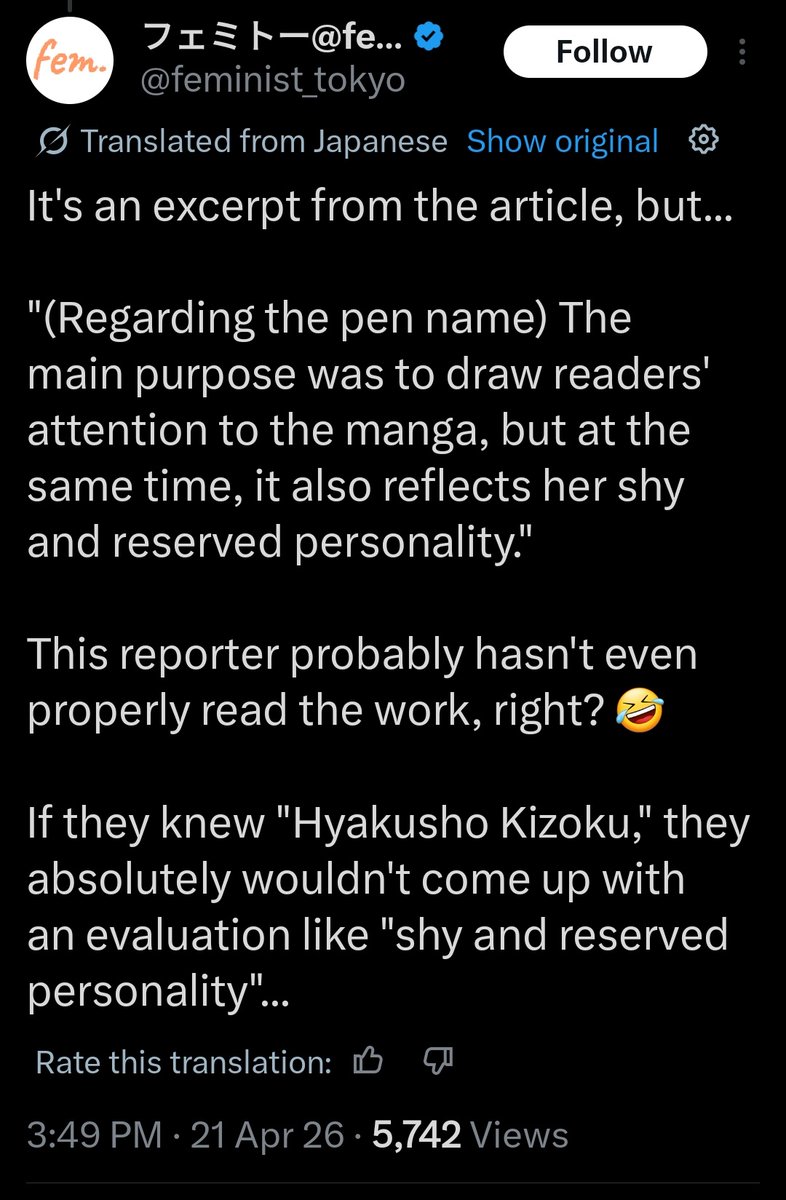
タイトルを直訳すると、 「荒川弘は、性差別的な少年漫画のステレオタイプを破壊する鋼の錬金術師を恐れて、ファンを騙すために名前を変えた」 という、トンデモ記事😇 記事書いた奴はもう二度とマンガ読まないでくれ…。 fandomwire.com/hiromu-arakawa…

海外の兄弟達に聞きたいのですけど…。 海賊版の話で、逆に海賊版ではない日本のアニメを真面目に見てる人っているの?(と、疑いたくなってきた) まともな方法で見てる人は、その方法も教えて欲しい。 Netflixとか、Amazonとか、それともDVDとかなのかな。

You have $15 to pick your favorite retro shoujo MCs. Which ones are you choosing???


now I want a wicked refrigerator

r/BannedBooks celebrates over Amazon banning "Camp of the Saints" The comments are wild: "As a librarian that's not actually a book, I would remove it from my library" "I don't like book bans, but..." "It's not a book ban because it's a private company"

Getting the fed to do this is essential for getting payment processors to stop censoring the internet. Here's my full comment if anyone wants to copy my homework (but please put it in your own words so it doesn't look like we're botting): Payment processors, banks, and other middlemen should not control commerce. Debanking and similar practices, in all their forms, should be banned outright wherever possible and restricted in all available ways where that is not possible. The phone company does not disconnect your call if they don't like what you're saying. UPS doesn't look inside your package and refuse to deliver it if they disagree with its contents. This is how the transfer of money between willing participants in transactions should function, and the middlemen who facilitate those transactions should be treated like common carriers. Without doing this, the entire economy is hostage to the whims of a few bankers. Every year, more and more business takes place online and with electronic transactions rather than face to face with physical cash. Thus, every year, banks and payment processors, and the neutrality thereof, become more essential to a free and functioning market. "Reputational risk" standards expose people and organizations to the risk of getting their financial lives deleted and their existence made impossible whenever a financial institution doesn't like them or a pressure group pushes hard enough for it. If you're on the left, you should worry about how this routinely happens to controversial activists and adult content creators. If you're on the right, you know it's been done to faith groups and gun sellers too. Getting rid of this isn't a partisan issue, it's a necessary part of having a free market and free speech. The free market itself is also not a defense of these practices. Banking is more dominated every year by a few big players financialbrandforum.com/wp-content/upl… removing free market defenses against debanking, such as taking your business to another bank. Those big financial institutions also tend to move together as a cartel. After January 6th, white nationalist Nick Fuentes was banned almost in unison from every major bank and payment processor. Last summer, video game sales platform Steam was forced to remove numerous pornographic video games by MasterCard, Visa, and Stripe. There are many such examples where it seems likely or obvious that several major financial institutions, instead of behaving as independent competitors, instead colluded together to erase content they disliked from the financial system, presenting united fronts that gave their targets essentially no viable options for moving money unless they bowed to the will of this cartel. That isn't a free market. It's technically private entities behaving as though they are a government regulator. And like with "The Twitter Files", it's highly likely that if someday their records were brought to light, a great deal of illegal or dubiously legal cooperation would be found between them and domestic or foreign state actors using private parties to launder censorship around the first amendment. Removing the "reputational risk" standard also in itself protects the reputations of financial institutions, as they would then be able to honestly say that their hands were tied and they cannot be faulted for what disfavored people may use their services, as they are legally bound to neutrality, just as many businesses pressured to segregate in the twilight years of Jim Crow were ultimately happy the Civil Rights Act passed and took the decision out of their hands, allowing them to do business with all and thus not leave money on the table, and simply tell pressure groups that the law was the law and there was nothing they could do. Please put a stop to the reputational risk standard and all forms of debanking and control of digital commerce by busybody middlemen.








日本の漫画が各国の漫画産業に与えた影響、メキシコ編。 メキシコは世界の漫画の歴史の中でも最も劇的な崩壊を迎えたケース。 1960~70年代のメキシコ漫画雑誌発行部数は週間1億部という世界最大クラスの市場だった。全盛期の少年ジャンプですらこの規模には届かない。この時期に限れば世界最大の漫画大国だった。 この時期がメキシコ漫画文化の黄金期であり、ジャンルも豊富で多様性に富んだ漫画文化を持っていた。 この文化を崩壊させたのは1976年、1982年、1994年の三度の経済危機で流通印刷のインフラが崩壊し、検閲で風刺漫画は弾圧され、主要出版社も衰退、倒産に追い込まれた事。 こうしてメキシコの漫画文化が弱っていたところに最悪の外来種が上陸することになる。つまり日本のアニメ、漫画、アメコミだ。そして海賊版だ。 セーラームーンやドラゴンボールのアニメ放映と共にメキシコでは日本のアニメ漫画に対する需要が高まった。それに答えたのが海賊版で2000年代以降急速に普及していった。 結果、あまりに海賊版が浸透しすぎて消費者は正規購入するインセンティブがない。だから現地作家が育たない。 また日本の漫画の海賊版に対抗できるだけのアーティストはこの時にはもうメキシコには存在しなかった。何故なら黄金時代の作家達の後に続く第二世代の作家が育たなかったからだ。 日本漫画の海賊版によってメキシコの漫画文化は再生産すら許されない状況に陥った。 ただでトヨタ車が手に入るのに、なんでメキシコ産の車を買う必要がある?そういう事だ。 そして出版社も日本の漫画の翻訳中心で稼げるから作家育成には熱心じゃない。 こうして、かつては週刊一億部を誇ったメキシコの漫画文化は地上から消え去った。 世界最大の漫画大国がたった60年で影も形もない姿となった。これがメキシコの悲しい漫画史。 ここでも日本の漫画はメキシコの漫画文化を殺した主犯とは言い難い。主犯は三度の経済危機と世代間の技能継承の失敗だ。 だが、日本漫画がまるで外来種のように弱った生態系に入り込み、そこでの生態系を劇的に変えてしまい、再生産すら許さない存在なのは、ここでも否定できない事実ではある。