Olivier Poirier-Leroy

7.7K posts

Olivier Poirier-Leroy banner
Olivier Poirier-Leroy

Olivier Poirier-Leroy

@YourSwimBook

I am obsessed with helping swimmers learn to swim faster. Author of YourSwimBook, Conquer the Pool, etc. Get daily swim tips via my newsletter 👇👇👇

Katılım Ekim 2012
3.7K Takip Edilen5.6K Takipçiler
Olivier Poirier-Leroy
Olivier Poirier-Leroy@YourSwimBook·
What swimmers who “choke” need to train at practice 👇 The most frustrating part about competition isn’t even the swimming. That’s the easy part. It’s dealing with pressure. And the “c” word. (Choking.) One of the reasons that swimmers cho—err, struggle—on race day is the novelty of what they are feeling. In practice, anxiety is at a day--to-day baseline level. But in competition, anxiety spikes. The novelty is enough to throw us off our mental game. The solution? Pressure training. Literally getting more comfortable with high-stakes swimming by… Swimming with higher stakes. Things like: ➡️ “Suit up Saturdays.” Strap on a racing suit and race off the blocks every weekend to rack up more race reps. ➡️ “Get out” swims. Everyone’s favorite—get up and race, chasing a specific target. ➡️ Compete with teammates. Lots of ways to do this that keeps it fun and competitive without becoming a grudge match. ➡️ Forfeits and rewards. Keep it playful. Pressure training doesn’t have to replicate the atmosphere of US Olympic Trials, with pressure and anxiety dripping down the wall. Research with pressure training shows that even mild anxiety is enough to improve your ability to shift pressure into a challenge vs a threat. Practice is for improving the skills you want to deploy on race day. Why shouldn’t your ability to handle pressure be one of them? *** For more high-grade tips and information on how swimmers can learn to perform under pressure, read this complete guide: yourswimlog.com/perform-under-…
Olivier Poirier-Leroy tweet media
English
0
0
0
47
Fortissax
Fortissax@FortySacks·
There’s a weird secret romance going on between Quebec and British Columbia. They import and export each other’s libtards in universities and I was suprised to meet francophone tourists in the middle of nowhere the last time I was in Western Canada.
English
16
2
70
3.1K
Olivier Poirier-Leroy
Olivier Poirier-Leroy@YourSwimBook·
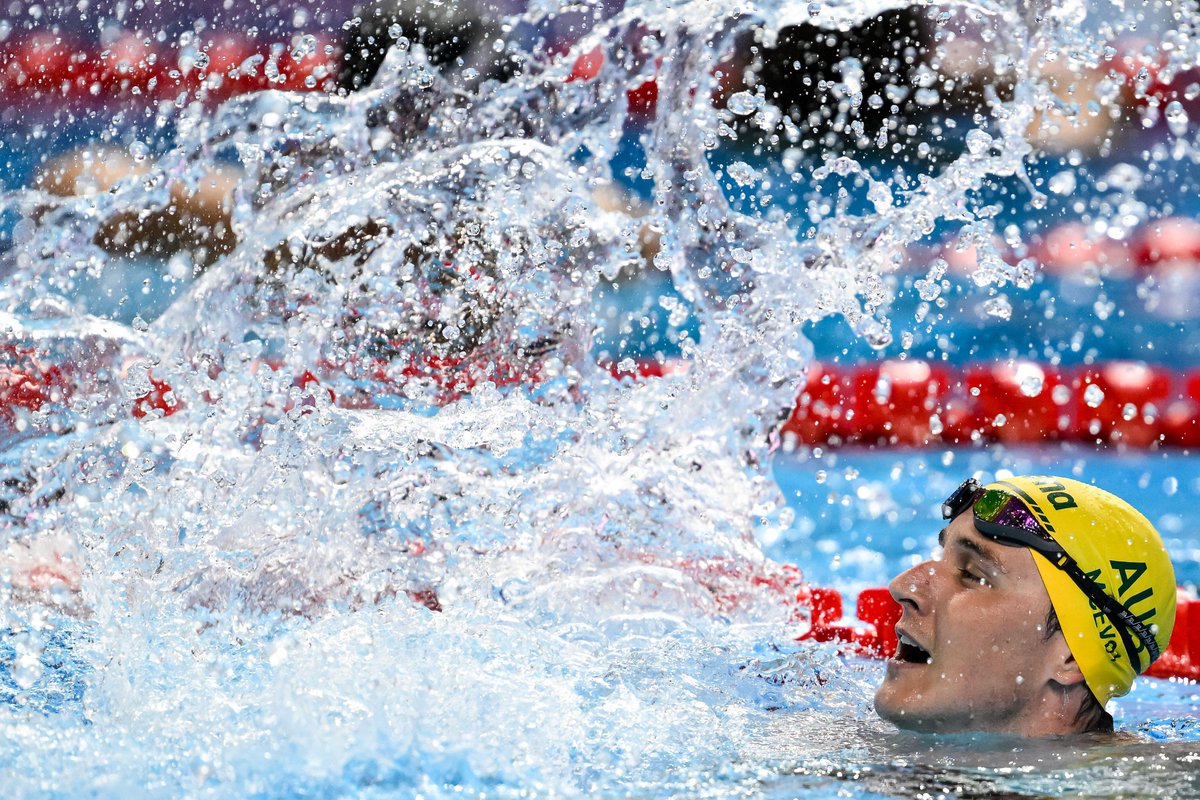
How Cam McEvoy sprints so high (and why it matters) 👇 In case you missed it (the swim was fast, after all), something pretty awesome happened… Cam McEvoy broke the world record in the 50m freestyle. 20.88 seconds. Just like that, sub-21s are the new standard for the 50 free. Lots of things to admire about how Cam is handling his business, but here’s a quick tip enterprising sprinters can use. The Power of the Press Cam swims very high in the water. This is not an accident. At the very start of the stroke, there’s a subtle but powerful pressing action that creates vertical lift. At sprint velocity, we create 2-3x more vertical lift at this point in the stroke compared to middle-distance speeds. This benefits sprinters because: • Higher upper body position increases clearance for the shoulders • The shoulders rotate at much higher velocity when sprinting The shoulders are the engine of the freestyle stroke, dictating global timing and generating almost all the propulsion. So giving them lots of room to operate is key at sprint speeds. And this little “press” is also a very strong predictor of sprint power. A study measured shoulder strength in male swimmers and compared it to max swimming power. They compared force at: • Arm overhead (like the start of the press) • Arm at 90° by the side (internal rotation) The overhead pressing position was a much stronger predictor of sprint power. Keep Your Bodyline Of course, there is a catch (ha)… Working the press only works if it doesn’t also push the legs down (like a see-saw). That kills your body line, increases drag like crazy, and cancels out much of the benefit. Among the many things that make Cam so effective is that he gets the lift without sacrificing alignment. The goal is to create enough lift so that you can: Ride higher in the water Free up the shoulders Increase rotation power and maintain a high stroke rate Experiment with the press, power up the muscles responsible for it, and unlock some more speed in the water. *** For more high-performance sprint insights, check out our complete guide to building an elite 50 freestyle. It includes what sprinters need to know about stroke mechanics, dryland, sample sets, and much more. Unlock your 50 free here 👉: yourswimlog.com/the-50-freesty…
Olivier Poirier-Leroy tweet media
English
0
0
0
73
Olivier Poirier-Leroy
Olivier Poirier-Leroy@YourSwimBook·
Why confidence dips during heavy training 👇 One of the fun (not really) paradoxes of confidence is that it tends to drop hardest exactly when you are training really hard. A study (Chortane et al., 2022) with swimmers showed that during heavy blocks of training, swimmers’ self-confidence crashed by almost 20% while anxiety also spiked. Even though the swimmers were doing the work to get fitter and faster. Which seems counterintuitive. But the problem is that your brain doesn’t know the difference between: “I’m exhausted because I am working my tail off and getting better” And: “I’m exhausted because something is wrong.” So it defaults to doubt. Which means swimmers need to: ➡️ Log the wins each day in training – Collect and stack them in a training journal. Build the trail of evidence. ➡️ Focus on the process – Confidence slides because we attach our feelings of fatigue to future outcomes. Stay present, execute each day to the best of your ability. ➡️ The fatigue is temporary – Remember the fatigue of training is temporary. On the other side of it is improved ability, faster swimming, and the confidence to go with it. Confidence is a skill and a feeling that swimmers should master over the course of the season. For swimmers looking to up their confidence game, we put together a comprehensive guide on self-confidence for swimmers here: yourswimlog.com/confidence-for…
Olivier Poirier-Leroy tweet media
English
0
0
0
72
Olivier Poirier-Leroy
Olivier Poirier-Leroy@YourSwimBook·
Pressure isn’t the enemy. It’s how you frame it 👇 Swimmers train their butt off for months on end so that they can race fast at swim meets. But once they get there, they find something more daunting than the competition… Pressure. And for most swimmers, they try to fight it. Or think that something is wrong by feeling it. And as a result… They choke. Pressure shows up when something meaningful is on the line. The race matters. Your goals matter. And you earned the lane. Pressure isn’t going anywhere. And the difference between performance and choking is how you frame it. One swimmer will see pressure as a threat… ➡️ “If I mess this up, everyone will see it.” ➡️ “I don’t belong in this heat.” ➡️ “What if I lose?” Another will see pressure as a challenge… ➡️ “This is what I trained for.” ➡️ “That guy is going fast—perfect, let’s give him a run for his money.” ➡️ “I’ve earned these nerves and excitement—now stand up and deliver.” When you’ve done the work… And it’s time to shine… Put pressure in perspective. You’ve earned it. *** For swimmers looking for a deep dive into performance under pressure, read this detailed guide that covers choking, pressure, why it happens, how to deal with it, and much more. Read it here: yourswimlog.com/swimmers-under…
Olivier Poirier-Leroy tweet media
English
0
0
1
79
Olivier Poirier-Leroy
Olivier Poirier-Leroy@YourSwimBook·
Mindfulness helps swimmers manage pre-race nerves, sharpen focus, reduce fear of failure, and build the mental resilience to perform under pressure. Research with athletes shows that mindfulness also quiets negative self-talk and speeds up recovery from setbacks—both in training and on race day. All things the enterprising competitive swimmer needs to succeed over the long haul of the swim season. Here's how it breaks down: 🧠 Channels pre-race nerves — A 7-week study with competitive swimmers found mindfulness training significantly reduced competition anxiety and boosted confidence. 🎯 Improves focus — Just 3x20-minute sessions per week improved attention span, concentration, and attention stability in athletes. 😤 Reduces fear of failure — More mindful athletes engage in less perfectionistic thinking, which cuts the mental drain that feeds pre-race dread. 💬 Regulates negative self-talk — Swimmers with higher mindfulness levels are significantly better at keeping that inner critic quiet during competition. 💪 Builds mental resilience — Mindfulness doesn't just help in the moment. Research shows it compounds over time, making setbacks easier to handle across meets and seasons. Ultimately, mindfulness, like other mental skills, should be done consistently. Add some focused breathing and mindfulness to your training routine, and faster swimming awaits on the other side. *** For a more detailed breakdown of the benefits of mindfulness for swimmers and how to get started with it, read our complete guide here: yourswimlog.com/mindfulness-fo…
Olivier Poirier-Leroy tweet media
English
0
0
0
62
Olivier Poirier-Leroy
Olivier Poirier-Leroy@YourSwimBook·
What swimmers need to know about fear of failure 👇 Fear of failure isn’t just about failing. (Although that is plenty sucky on its own.) It’s about what you think the failure says about you. “I’m going to get beat by my competitors.” Turns into: “Everyone will see that I don’t belong here.” The real problem is when failure attacks identity. And when that happens: ➡️ You tighten up ➡️ You play it safe in training/competition ➡️ You stop racing to excel—and start racing not to lose The fixes include: ✅ Process goals – Fear of failure is common with outcome goals. The medals, PBs, cuts. Use process goals to perform at a high level and outflank performance-sapping fears. ✅ Mindfulness – Be more present with your swimming. Fear of failure thrives when we “time travel” with our thoughts. ✅ Journal your performances – Especially when things go poorly: identify the mistake, name the negative thought it triggered, reframe as a learning opportunity, and describe what you will do differently next time. ✅ Reframe failure – Swimmers become fearful of failure when it is personal. Reframe failure as what it is: high-performance feedback. Learn from it, and it becomes less scary. “Failing at something is the best way to learn what it takes to succeed at it. Failing to make the [1988] Olympic team was the beginning of my success, ironically enough.” – Summer Sanders, 1992 Olympic gold medalist *** For more information on fear of failure, read this comprehensive guide for swimmers looking to conquer fear of failure: yourswimlog.com/fear-of-failur…
Olivier Poirier-Leroy tweet media
English
0
0
0
108
Olivier Poirier-Leroy
Olivier Poirier-Leroy@YourSwimBook·
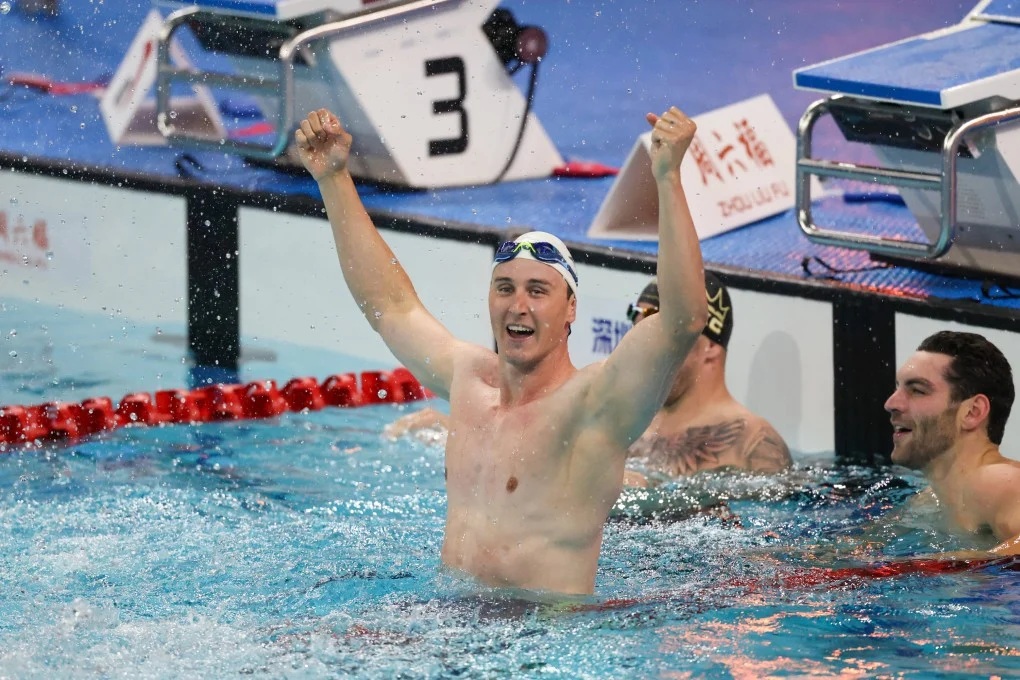
Long course sprint freestyle (in textile suits) has officially entered the 20-second era. Congrats to the boss, Cam McEvoy, breaking the world record in the 50m freestyle in a time of 20.88 seconds. Sprint freestyle (in textile suits) has officially entered the 20-second era. “Ecstatic,” McEvoy said. “I had that target for a very long time. I had an insane season of training after the world champs last year. I was doing some pretty special stuff in training coming into this, so I knew I had a chance to maybe go a PB, maybe go 20.99, but I couldn’t ask for anything better. It’s incredible.”
Olivier Poirier-Leroy tweet media
English
0
1
56
2.1K
Olivier Poirier-Leroy
Olivier Poirier-Leroy@YourSwimBook·
The benefits of goal setting for swimmers include faster swim times, higher motivation in practice, improved focus during competition, and greater consistency in training. Here’s a good example of how powerful goals can be. A study (Ferchichi et al., 2026) tested two groups of competitive swimmers over an 8-week training cycle. Both groups did the exact same training in the pool. But only one group was given a specific time goal for the 100 freestyle. The other group was simply told: “Do your best.” The results? Swimmers with a clear goal improved their 100 freestyle time by 4.3%, while the swimmers without a specific goal improved by 2.5%. Same training. Different mindset. Better results. Why? Clear goals change how swimmers approach training. When we have a clear target in the pool, we: ✅ Are more focused during swim training ✅ Connect effort in practice to a potential outcome, increasing effort ✅ More motivated to show up and do the work ✅ Refine race strategy to meet the requirements of the goal Clear goals tend to sharpen our effort, making training time more impactful. But the study also revealed an important lesson. The swimmers with time goals experienced higher psychological pressure during the training period. Which means an elite goal setting process should also include process goals. For example... The outcome goal: ➡️ Break 54.00 in the 100 freestyle The process goals: ➡️ 5 dolphin kicks off every wall ➡️ Attack every turn ➡️ Give a 9.5/10 effort during the main set every day ➡️ Performance cues to maintain performance under pressure The outcome goal gives swimmers direction. The process goals give them the tools for execution. When swimmers combine both, goal setting becomes one of the most powerful tools for getting faster.
Olivier Poirier-Leroy tweet media
English
1
0
0
174