
Sabitlenmiş Tweet
Pius Zachariah
4.4K posts

@jnkimuhu @AfricanBizMag @davidmakali1 It does not. It does not have any veto whatsover wacha kuongea vitu usivyovijua
English
@ZachxPius @AfricanBizMag @davidmakali1 It is govt owned my friend. The govt has veto power during shareholders meeting which means it influences who gets appointed its CEO.
I know Tanzanian education system is substandard but that's what 30% ownership means.
English

Tanzania's two largest banks have overtaken their Kenyan counterparts in market value for the first time ever, as East Africa's corporate landscape shifts in ways few anticipated.
CRDB Bank and NMB Bank have both surged from under $1bn to $2.7bn in a single year, while the number of East African companies valued at more than $1bn has risen from 8 to 14. Safaricom remains the region's dominant force, but Tanzania's growing influence is a standout story.
Get the full picture in our latest report: eu1.hubs.ly/H0vm0lC0


English
@jnkimuhu @AfricanBizMag @davidmakali1 30% govt shareholding to NMB doesn't make it government owned bank. It is that the government has minority shares. Look like you are suffering from mental laziness. What about CRDB?
English
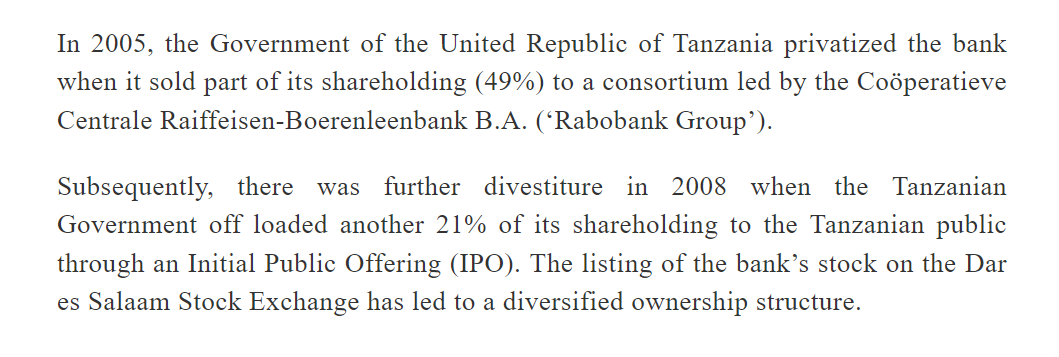
@ZachxPius @AfricanBizMag @davidmakali1 Pumbavu. From NMB Bank website. The TZ govt owns 30% of the Bank.
English
English
@AfricanBizMag @davidmakali1 In the top 10 list there are 7 Kenyan Banks and only 2 Tanzanian Banks.
Use your brain to think.
It means the 7 Kenyan banks are fighting for the share of available market vs 2 government owned banks in Tanzania.
Capitalist free market vs a govt controlled market
English
Pius Zachariah retweetledi
President @SuluhuSamia’s pro-investment stance and Aliko Dangote’s big drive for industrialization are exactly what Africa needs. Africa will develop faster through investment to unlock its vast sovereign assets. Tanzania is a great place for this. @AlikoDangote
Samia Suluhu@SuluhuSamia
Ikulu, Dar es Salaam, 16 Mei, 2026. Nimekutana na kufanya mazungumzo na Mwanzilishi na Mmiliki wa Dangote Group, Alhaji Aliko Dangote pamoja na ujumbe wake. Alhaji Dangote ni mmoja wa wawekezaji wakubwa Tanzania ambapo kiwanda chake cha saruji (Dangote Cement) mkoani Mtwara kinakuza uchumi wetu kupitia biashara ya saruji, ajira kwa Watanzania na kukuza sekta fungamanishi.
English

@polo_kimanii True!! And the fun fact is the nosecut from donor vehicle ia straight from Japan. Not used before locally here. I am wondering what logic do dealer store like CFAO or Toyota used to price their parts. Am I buying assurance or what exactly?
English

@ZachxPius They do not want to hear this and I cant honestly argue with them
English
The fastest I have made easy money in this town I couldnt believe it. Some client I had previously supplied his with Survellience cameras called me and said he wants a 75’ inch QLED LG TV. And in supermarket ameangalia akaona inatoka 355K. Nikamwambia fanya aje hiyo TV naweza kuletea kutoka town wachana nayo usijisumbue na ata huku im sure its not that expensive. Theres a waria I know who deals with such TVs pale tu Lithuli lane,for the exact TV and its specs,my mwalalo sold it to me for 75k. Client nikamwambia nimepata TV na 330K,ndio angalau he sees I am fair. Bwana I hired a pickup and delivered that TV myself,na nikahakikisha imekua mounted,on my bill. Siet! Kweli this Nairobi a moving man will meet his luck. Tangu hiyo siku nikiona mtu ananunua electronic supermarket naskia tu uchungu kwa roho
English
@Uchumi360 Local contractors are given preferential treatment by TARURA, a sister Agency of TANROADS that supervise street level and rural roads.
Highways require substantial amount of funds and technology that local contractors are lacking. But yeah you have a point though.
English

TANROADS Supervises the Building of Tanzania's Roads Worth Trillions. The Question Nobody Is Asking Is Why It Does Not Build Them.
Tanzania has spent decades and trillions of shillings building roads and transport infrastructure while simultaneously allowing the execution capability required to build that infrastructure to remain entirely in the hands of foreign contractors, creating a structural dependency whose cost is measured not in individual project budgets but in the accumulated institutional knowledge, technical workforce, and industrial capacity that never formed inside Tanzanian institutions.
Read our full analysis
uchumi360.com/infrastructure…
English

@Octavianlasway Swala halikuwa urafiki wa Magufuli na Museven.
Museven alitaka bomba lipitie Kenya ila Toyota Tsusho report yao ya feasibility ndio iliwakimbiza investors hasa majority shareholder, Total SA toka Kenya kuja Tanzania.
Filipino

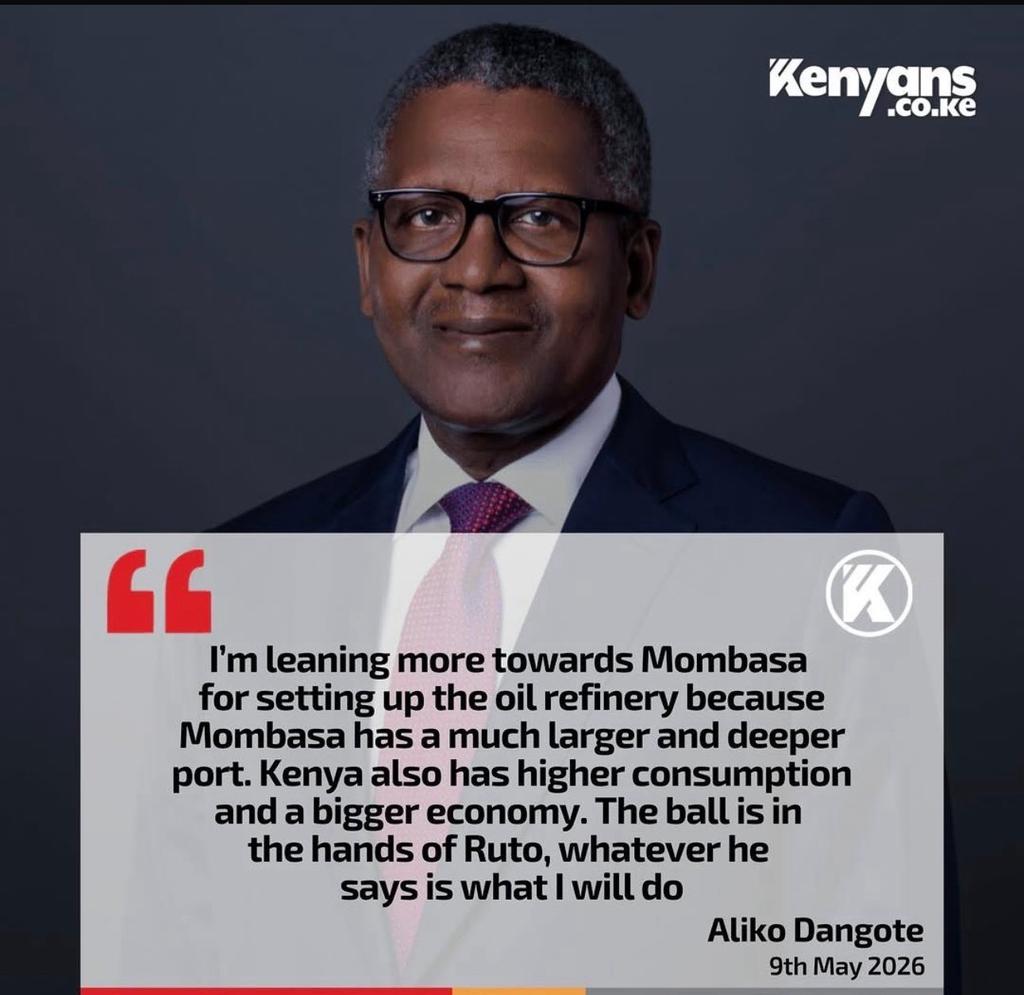
@amenya_nelson @InfiniteMansa We are also Economist. Just like Safaricom, The Refinery will not be Kenya investment, but Danagotes.
English

Kenya should take up Dangote’s offer ASAP. That will mean we can supply refined oil to all EAC and SADC bloc
English

@MarioNawfal Dude got hit so hard, he went a few levels of evolution back and started to walk on hands and legs😂
English

When you're trying to attack a tire with a knife, and instead it attacks you
English
@kerubo_hillary Turn on front demister; switch ON the AC; Set air intake to fresh air, not recirculation; use medium to high fan speed; use warm air if windscreen is fogging from inside
English


@leodey4uu What is the cost of setting up both? Don't forget licenses o. Then how much do you think hotel generates a day as profit. That will give you an idea which of these is better.
FYI I worked in one of these for 8yrs so I am speaking from a place of authority.
English

Indonesia


Mnavyopendaga Comparison haya Waambie na Maboss zako CRDB Wapunguze Makato Sim Banking maana wenzao SELCOM ni Bure. Au unasemaje
Fred Kavishe@fredkavishe
Serikali ipunguze kodi kwenye Mafuta kwa muda wa miezi sita kuondokana na azma hii Kasumbalesa Zambia umbali wa km 1980 kutoka Dar port bei ya Mafuta iko chini Sababu kuna tozo wamepunguza. Hatuwezi endesha nchi namna hii mfumuko wa bei utakuwa Mkubwa zaidi.
Filipino

Leo Rais wa Jamhuri ya Kenya Mh William Ruto, PhD amehitimisha ziara yake hapa Bongo na kwangu mimi i can say this was actually more than just a “visit” kuna mengi sana ambayo Tanzania kama Nchi tumeanza kuyafanya katika namna ambayo ni ya ukubwa sana. Niskiize kidogo.
In a span of 60 days kuanzia March 6 hadi leo May 5 wakuu wote wakubwa wa Nchi za EAC wamefanya ziara za kikazi Tanzania kuanzia Mzee Kaguta, March 6, General Kagame May 3 na kisha WSR jana na leo na watu wanadhani haya mambo ni bahati mbaya. Iko hivi;
Tanzania is the home to the African biggest uranium deposits & 10 ten in the world na tayari kazi inaendelea kule Namtumbo with Presence of Russian Rosatom/Mantra. Tanzania is the home to the biggest in decade LNG deposits and a $42 Billion LNG deal that is in a final stages kuwa kweli!
Tanzania is a home of a strategical SGR links across the EAC Region, a home of Biggest Crude Oil Pipelines in Africa (TAZAMA & EACOP) kwa lugha rahisi sana, TANZANIA is the AFRICA’s NEXT POWER HOUSE na yeyote ambae hatakubaliana na Tanzania basi hakubaliani na the contemporary reality kwamba TANZANIA is the door to whatever the axis. Tanzania is AFRICA’s Straight of Hormuz!
Tanzania hold the future of world’s energy in the near future achilia mbali EAC block na the once sleeping giant is now on a waking up and correctional duty. Kila goti huenda likapigwa hapa. Thanks to our Think Tanks (R.I.P Lawrence Mafuru) and the entire planners akiwemo the current PM who by then served as Finance Minister.
These guys really architected the gaint pathes.
Asante.

Indonesia

@amenya_nelson It’s good progress for east-Africa.
A win is A win.
Tanzania railway is build for the future while Kenya one is for political mileage.
One thing have noticed Kenya SGR is no different from the Imperial British East Africa Company, it designed to move good not people.
English
Our SGR is FUCKED bruh and all because of what? Corrupt mfs
The Rapid Response Tanzania@responds24
Tanzania and Rwanda have agreed to link the Tanzania's Isaka–Kigali SGR route, enabling fast, electrified movement of goods and people between Dar es Salaam and Kigali.
English


I stated that Tanzania is wealthier, has better planning compared to Kenya. Round II. In fact second only to Egypt in Africa.
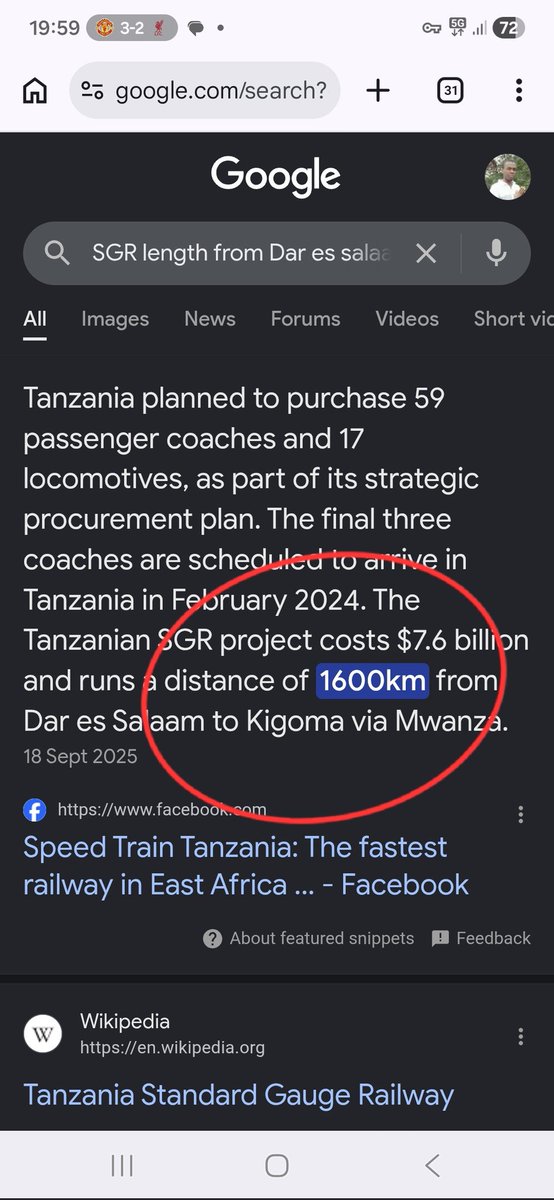
Tanzania is constructing 2500km of SGR and financing 60% from Exchequer. About US$ 5B and borrowing only US$2B.
Kenyan SGR is only 600km so far and it is borrowing 100%.
Kenya can't do 200km of a mere Bitumen Road Limuru Mau Summit and has to resort to a PPP which is a very expensive Loan???
Tanzania has just completed Julius Nyerere 2115MW HPP at a cost of US$ 2.9 Billion from Exchequer and has paid 100% No loan.
Kenya doesn't have money for for a much smaller Grand Falls 1000 MW.
Kenya's Debt is KShs 13 Trillion. Tanzania is 50% of that figure.
In fact which is the biggest Project Kenya has financed from its own resources the last 20 years?
I can't think of any.
Forget the cooked GDP figures that Kenya is the biggest Economy.
English
@SteveLyoba2025 @rodgers_adai Ours is 2500km. Yours is how much?
English
@ZachxPius @rodgers_adai Your SGR is incomplete. Finish first then we talk. Bye.
English
@SteveLyoba2025 @rodgers_adai @SteveLyoba2025 is just spitting hate. Come and witness yourself performance of SGR. Everytime I am on board, I finds Kenyans taking pictures in our SGR. Ooooh now Kenyans are in talks with Turks to develop their SGR. Poor Turks are needrd in Kenya😆😆
English
@rodgers_adai Why do we have Tz beggars come in Kenya ? Who cooks the books, to what end ? Ke has good planners and want Ask Eth about cooking books. Tz has no freedom of speech , free courts. You can move there. (Btw their SHR is poorly designed. Have you heard it move ? It will never works.
English