Zero Emotions

70 posts

Zero Emotions banner
Zero Emotions

Zero Emotions

@ZeroEmotionsSQX

We stopped working for the market and made it work for us. Automated strategies· Prop Firms · Darwinex. Powered by StrategyQuant X Unknown identity — for now

Spain Katılım Mayıs 2026
76 Takip Edilen39 Takipçiler
Sabitlenmiş Tweet
Zero Emotions
Zero Emotions@ZeroEmotionsSQX·
The market has no mercy for emotions. Neither do we. While most traders hesitate, revenge trade or make impulsive decisions — our systems execute. Quietly. Automatically. Continuously. This account documents the creation and execution of algorithmic trading systems. No hype.
English
1
0
3
443
Zero Emotions
Zero Emotions@ZeroEmotionsSQX·
CHAPTER 5 — My First Profits With a Martingale Ended Up Destroyed When people talk about martingales, they usually focus on the ending. The blown account. The loss. The collapse. But the truly dangerous part happens much earlier. The truly dangerous part is when they work. Because my first experiences with a martingale did not end in losses. They ended in profits. And that was exactly what convinced me to continue. I remember opening the platform and watching trades close in profit one after another. Losses looked small, temporary and perfectly controlled. Every time a difficult situation appeared, the system found a way to recover. The curve kept rising. And I started believing I had discovered something special. Looking back now, I understand that this was the real problem. I wasn’t learning how to manage risk. I was learning to trust something I didn’t understand. And the more money I made, the stronger that trust became. I stopped asking where the danger was. I stopped asking what would happen if the market behaved differently. I only saw results. And when you only see results, you end up ignoring everything else. Over time, I started increasing capital. It seemed like a logical decision. If something works, why not use it more? But martingales have one characteristic many people discover too late. They can give you weeks or months of calm. They can make you feel intelligent. They can make you believe you have found an edge. And that is exactly why they are so dangerous. Because when the move that breaks them finally arrives, you are usually far more exposed than you should be. I remember the stress of that stage perfectly. Checking the account constantly. Waiting for the market to come back. Convincing myself it was just a bad streak. Looking for arguments to keep believing. Because accepting I was wrong was much harder than continuing to wait. That was probably the first serious reality check trading gave me. Not only because of the money. But because I understood something I still remember today: A strategy can look profitable for a long time and still be a bad strategy. And sometimes, the biggest risk is not losing money. It is winning enough to convince yourself that risk does not exist. Over the years, I understood the problem was never only the martingale. The real problem was my need to believe there was a fast and easy way to make money in the markets. And honestly, I think that illusion has destroyed far more accounts than any strategy.
Zero Emotions tweet media
English
0
0
2
75
Zero Emotions
Zero Emotions@ZeroEmotionsSQX·
UNCOMFORTABLE QUESTION: How many hours per week do you REALLY dedicate to trading? And of those hours, how many produce measurable results? Watching charts isn't working. Refreshing your account isn't working. Reading Telegram isn't working. Watching trading videos on YouTube isn't working. Working is: generating strategies, filtering, validating, reviewing data, monitoring metrics, analyzing drawdowns, improving the process. Algorithmic trading has a brutal advantage here: when you automate the process, you can measure EXACTLY how many productive hours you invest. No self-deception possible. Are you trading or are you entertained? The difference between the two defines whether this is a business or an expensive hobby.
Zero Emotions tweet media
English
0
0
1
45
Zero Emotions
Zero Emotions@ZeroEmotionsSQX·
The day I realized manual trading was a trap Not a scam. A psychological trap. Because manual trading gives you the illusion of control. You decide when to enter. When to exit. You control everything. But you don't control your emotions. And your emotions control your decisions. The day I accepted that I was the most damaging variable in my own system, everything changed. I stopped trying to be a better trader. I started building processes that didn't need me. Algo trading isn't giving up. It's being honest about your limitations. 📸 Images: chart manual screen vs robots trades screen.
Zero Emotions tweet mediaZero Emotions tweet media
English
0
0
3
35
Zero Emotions
Zero Emotions@ZeroEmotionsSQX·
CHAPTER 4 — How I Started Connecting Free Robots Thinking I Had Found Gold There was a stage where I was convinced profitability was hidden somewhere on the internet. I spent hours searching for free EAs in forums, YouTube videos and random websites promising systems capable of generating profits almost on autopilot. And every time I found an attractive equity curve, I felt the same thing: “I think this time I’ve found something good.” The curious part is that I understood absolutely nothing about what I was using. I didn’t understand the logic behind the system. I didn’t understand what market conditions it needed to work. I didn’t understand when it could stop working. I didn’t even truly understand what I was buying into when I decided to trust it with money. But back then, there was one metric that mattered more than anything else to me: The curve was going up. And that was enough. I remember downloading robots with extravagant names, connecting several at the same time and convincing myself I was diversifying. One was scalping. Another used martingale. Another promised absurdly high win rates. I wasn’t analyzing systems. I was chasing curves. And honestly, some of them made money at first. That was the worst part. Because when you make money using something you don’t understand, your brain stops looking for risks and starts projecting results. You no longer ask why it works. You start asking how much you could make if you increased the capital. Looking back now, I think that is one of the most dangerous traps in algorithmic trading. Confusing a beautiful curve with a real edge. Because a curve can show you what happened. But it doesn’t explain why it happened. And it definitely doesn’t guarantee it will happen again. Over time, I understood something I was completely unable to see back then: Putting money into a system you don’t understand is not investing. It is trusting that the past will repeat itself. And the market has an extraordinary ability to punish exactly that kind of trust. When I look back, I don’t see ambition. I see naivety. I see someone desperate to find a quick solution to a complex problem. And honestly, I think many traders begin in exactly that same place.
Zero Emotions tweet media
English
0
0
1
120
Zero Emotions
Zero Emotions@ZeroEmotionsSQX·
Absolutely, and that's actually what I've been finding lately as well. Most of my recent generations have been single-direction systems. I mainly wanted to highlight the possibilities SQX offers. You can still find robust long + short systems, but they usually require more care and validation. Thanks for the insight. I completely agree with the "up by stairs, down by elevator" analogy.
English
0
0
0
14
Daniel Conde Sabarís
Daniel Conde Sabarís@daniconde03·
@dmartin_trading @ZeroEmotionsSQX Developing systems in only one direction makes it more robust because the velocity on a down move (usually) is faster than a bullish move Markets go up by stairs and down by elevator
English
1
0
1
25
Zero Emotions
Zero Emotions@ZeroEmotionsSQX·
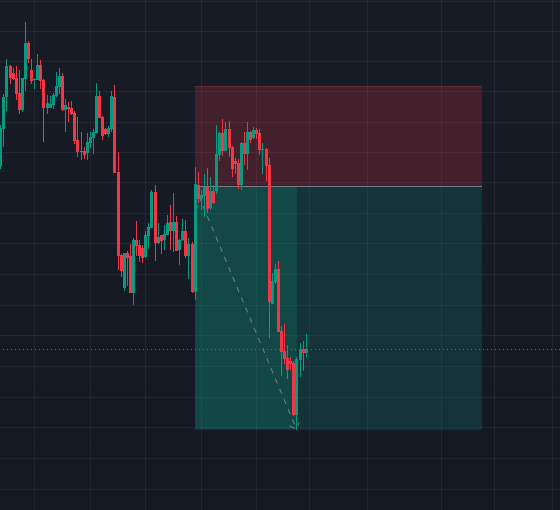
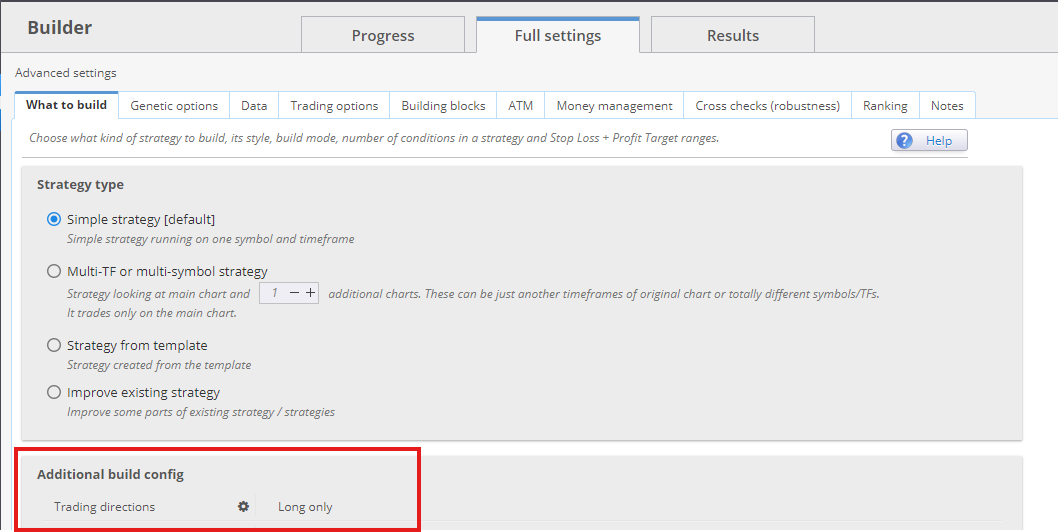
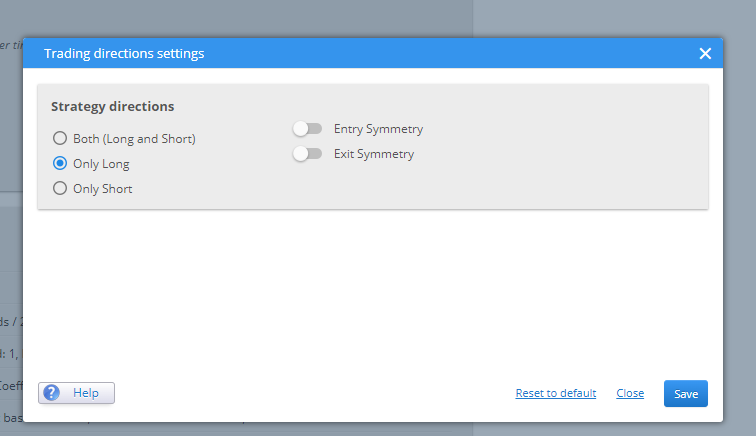
Direction: longs, shorts, or both 🚀 Does your strategy buy, sell, or both? Long + Short generates more complete strategies and proves the edge works in both directions. Long only or Short only are useful for assets with directional bias or prop firm restrictions. If a strategy only wins in one direction and loses in the other, it may be capturing a market bias, not a real edge. A manual trader chooses direction by opinion. SQX chooses by data.
Zero Emotions tweet mediaZero Emotions tweet media
English
1
0
4
334
Zero Emotions
Zero Emotions@ZeroEmotionsSQX·
Couldn't agree more. I've definitely caught myself wanting to close trades early or switch off a system during a drawdown, even when nothing was actually wrong. The emotions don't disappear with algo trading, they just change form. In the end, all you can do is trust the data, trust the statistics and stay disciplined enough to let the edge play out.
English
0
0
1
101
D. Martin
D. Martin@dmartin_trading·
One of the biggest lies I was sold about algo trading: “There are no emotions involved because your algos do all the work.” This couldn’t be further from the truth. When you’re going through a drawdown, you experience the same temptations and emotional discomfort as you do with manual trading. “Was my strategy overfitted?” “Has the edge decayed?” “Maybe I need to remove this strategy and put it back on demo.” “The regime is changing. I need to tweak this parameter.” “I need to increase risk a bit to get back to breakeven.” The exact same emotions I felt when I was manually trading, I feel them just the same. It's just a bit easier to manage now because I have decades of data on my systems and that reassures me in hard times.
English
10
2
33
2.7K
Zero Emotions
Zero Emotions@ZeroEmotionsSQX·
Fair point. What I meant is that when a strategy is built as long + short but almost all the profits come from one side, I start questioning whether there's really an edge in both directions. That said, I completely agree. Some of my best systems have been single-direction strategies on strongly trending assets.
English
1
0
3
59
D. Martin
D. Martin@dmartin_trading·
Not necessarily. Markets aren’t always fully asymmetric. A long only strategy with a specific set of rules may struggle when traded short using those same rules, not because the edge is not real, but because market behavior on the downside is often different from market behavior on the upside. As a result, the rules may require some adjustments. In SQX, I’ve also found that developing systems in only one direction tends to produce more robust results.
English
3
0
8
205
Zero Emotions
Zero Emotions@ZeroEmotionsSQX·
ERROR #2 — Searching for a strategy instead of building an edge For years, I thought my job was to find “the strategy.” The one that always won. The one with the perfect equity curve. The one that would finally allow me to stop searching. I jumped from system to system convinced the next one would be the final answer. And every time one stopped working, I repeated the process. What I didn’t understand was that I was looking for a magical solution to a problem that had no magical solution. Today I see trading very differently. I don’t look for perfect strategies. I look for robust processes. Because a strategy can disappear. But an edge built on knowledge, risk management and experience usually lasts much longer.
English
0
0
2
49
Zero Emotions
Zero Emotions@ZeroEmotionsSQX·
Couldn't agree more. One of the biggest mistakes traders make is treating the maximum drawdown in a backtest as a ceiling instead of a reference point. Personally, I assume the future will find a way to be worse than the historical sample. That's one of the reasons I rely heavily on Monte Carlo analysis. Rather than sizing around the original backtest drawdown, I usually use the drawdown from the worst 95% of Monte Carlo simulations. It acts as a safety buffer and helps me build portfolios that can survive conditions that haven't happened yet. The goal isn't to predict the future. It's to be prepared when it turns out worse than expected.
English
1
0
2
148
Kieran Duff
Kieran Duff@kieran__duff·
The deepest drawdown in your backtest is just the worst thing that happened in your sample. Live will eventually beat it, because the future has more ways to go wrong than a finite history ever captured. Size your strategy as though your max historical drawdown is an underestimate.
English
2
1
35
2.3K
Zero Emotions
Zero Emotions@ZeroEmotionsSQX·
This is actually one of the reasons I created this account. I've been trading for a few years, but I still only have a small circle of 2-3 people I can genuinely exchange ideas with about markets, systems and investing. Any advice for someone trying to build that kind of network?
English
0
0
0
8
QuantifiedStrategies.com
QuantifiedStrategies.com@QuantifiedStrat·
A trading career is often shaped by a few key people. Not by one magical setup. Not by one indicator. Not by one platform. People. When I look back, three traders made a huge difference in my own journey. The first was Steinar L. When I started prop trading in 2001, Steinar was already successful. He helped me understand pairs trading and gave me the foundation I needed. Without that help, I’m not sure I would have lasted. The second was Håkan. In 2003, I spent three months in Phoenix, Arizona, where Håkan was the office manager. I was making progress, but I was too conservative. Håkan pushed me to step up my size and take more risk when the odds were good. That changed my results. The third was Ole Richard. By early 2005, my only strategy had stopped working because of a regulation change that made short selling harder. I had to start over. Around that time, Ole Richard and I started exchanging ideas. Through luck, timing, and systematic thinking, we found big inefficiencies in the Nasdaq opening cross. Back then, stocks like Comcast could open at 29.30 and trade at 29.60 almost immediately. Those opportunities appeared often, and for several years they were very profitable. In 2008, opening orders on Nasdaq and NYSE worked especially well. Even while markets were falling apart, I had a very strong year. Ole Richard and I continued working together for years and built several uncorrelated day trading strategies. Without Steinar, Håkan, and Ole Richard, I would almost certainly be in a much worse place today. The lesson? Your network is not just a network. In trading, it can be your edge.
English
3
3
11
2.2K
Zero Emotions
Zero Emotions@ZeroEmotionsSQX·
Backtesting: the most powerful and most dangerous tool Backtesting is probably the most important tool in algorithmic trading. It's also the most dangerous one. The idea is simple: you take a strategy, apply it to historical data, and see what would have happened. Would it have made money? What drawdown would it have had? Under which market conditions does it perform best? So far, perfectly logical. The problem starts when you confuse "it works in the past" with "it will work in the future." A backtest tells you what would have happened. It doesn't tell you what's going to happen. And this is where 80% of beginner algo traders fall into the trap: They optimize a strategy on historical data until the equity curve is perfect. Every parameter fine-tuned to the millimeter. Every filter added to avoid losses they already know about. The result: a strategy that describes the past perfectly. And doesn't survive a week live. This is called overfitting. And it's the number one enemy of algorithmic trading. The backtest isn't the destination. It's the starting point. What comes after is what matters: out-of-sample validation, walk-forward, Monte Carlo, robustness. If your strategy only works with the exact parameters you found in the backtest, you don't have a strategy. You have a description of the past. Next week, we'll talk about how to tell one from the other.
English
0
0
1
55
Zero Emotions
Zero Emotions@ZeroEmotionsSQX·
CHAPTER 3 — Compound Interest Was the First Lie I Believed If I had to name one idea that distorted my view of trading the most when I started, it would probably be compound interest. I saw videos, posts and spreadsheets where turning a small account into a fortune looked almost inevitable. “You only need 1% a day.” “Just 5% a month.” “Let compound interest do the rest.” On paper, it looked spectacular. I remember spending hours running simulations. I changed percentages, adjusted timeframes and watched the numbers grow to absurd levels. The higher the Excel curve climbed, the more convinced I became that I had found the path. The problem is that a spreadsheet doesn’t feel fear. It doesn’t have drawdowns. It doesn’t go through losing weeks. It doesn’t doubt after a bad streak. It doesn’t switch strategy at the worst possible moment. It doesn’t panic when months of profit disappear in a few days. Excel always follows the plan. The trader doesn’t. And that difference changes everything. Nobody teaches you what happens when your account drops 20%. Nobody teaches you how a losing streak feels when you still don’t have enough experience to understand that it is part of the process. Nobody explains that maintaining consistent results for years is infinitely harder than projecting them in a spreadsheet. Over time, I understood that compound interest was never the real problem. The problem was assuming results would be linear forever. That every month would look like the previous one. That the market would keep behaving the way I needed it to behave. And markets don’t work like that. Reality is much more irregular. Much more uncomfortable. And much more human. Today, I still believe in the long term. But I no longer think about how to get rich quickly. I think about how to build something capable of surviving long enough for compound interest to have a chance to do its work. Because in trading, surviving is usually much harder than growing.
Zero Emotions tweet media
English
0
0
1
65
Zero Emotions
Zero Emotions@ZeroEmotionsSQX·
If you could go back to the day you started trading and give yourself ONE piece of advice, what would it be? Just one. The one that would have had the most impact on your journey. I've seen traders who'd say "don't put in more money than you can lose." Others would say "don't follow anyone's signals." Others: "automate from day one." Mine: "stop looking for the perfect strategy and start building a process that generates strategies continuously." Would have saved me 2 years of looking for needles in haystacks when I should have been building magnets. What's yours? The answer says a lot about what your most expensive mistake was. 👇
English
0
0
1
49
Zero Emotions
Zero Emotions@ZeroEmotionsSQX·
Why you started trading (and why you're still here) Financial freedom. Independence. Being your own boss. That's what they sold you. What nobody told you is that the path includes months of losses, nights of doubt, and the constant feeling that you're doing something wrong. And yet, you're still here. That alone separates you from the 90% who quit. Not because you're smarter. Because something inside you understands that things worth having aren't immediate. Algorithmic trading doesn't change the destination. It changes how you get there.
Zero Emotions tweet media
English
0
0
1
58
Zero Emotions
Zero Emotions@ZeroEmotionsSQX·
The flow you describe is roughly right. In my case: I detect a price behavior hypothesis → build it in SQX → filter through walk-forward and Monte Carlo → untouched OOS until the end. Ideas come from observing the market, not indicators. But there’s a lot more between each step. I’ll be breaking it all down here.
English
0
0
0
9
Louis
Louis@LouisssXBT·
@ZeroEmotionsSQX Could you give us some insight into your strategy research process? Like is it 0>idea>select parameter>test in sqx(based on what?)>test in portfolio? Also where do you get your ideas from?
English
1
0
2
48
Zero Emotions
Zero Emotions@ZeroEmotionsSQX·
This week's results from one of my audited track-record accounts. The image on the left shows the closed trades from the week. The image on the right highlights where some of the best opportunities were captured. What interests me most isn't the profit itself. It's the way the profit is generated. This account runs a portfolio of multiple uncorrelated systems with conservative risk management. Position sizing is deliberately small, with approximately $100 risked per trade. The same portfolio is replicated across my funded accounts with a 4x capital multiplier. That means a 1% gain here translates into roughly 4% across the funded capital. This week, that resulted in the equivalent of around $4,000 generated on a 100k funded allocation while risking less than 0.4% per position. No martingales. No grid systems. No oversized risk. No cherry-picked screenshots. Just systematic execution. One of the biggest misconceptions in trading is believing that profitable traders win because every system works all the time. The reality is very different. Some systems lose. Some markets underperform. Some strategies go through drawdowns. The reason the portfolio remains stable is because different systems react differently to different market conditions. When one struggles, another may thrive. When one market slows down, another creates opportunity. That's not luck. That's the entire purpose of building diversified portfolios. This is what systematic trading looks like when the focus shifts from finding the perfect strategy to building a structure capable of surviving over the long term. No hype. Just systems.
Zero Emotions tweet mediaZero Emotions tweet media
English
2
0
5
150
Zero Emotions
Zero Emotions@ZeroEmotionsSQX·
A bit of both, actually. The biggest contributors were two H4 systems. One has no TP and uses an aggressive trailing stop, which captured a good part of the rebound after the sell-off. The other is more of a trend/volatility-based system with traditional exits. Nothing magical though, this week those two just happened to do the heavy lifting for the portfolio.
English
0
0
0
13
D. Martin
D. Martin@dmartin_trading·
@ZeroEmotionsSQX What's the logic? MR, intraday? Swing? Because NQ beat me this week badly 🫠
English
1
0
2
71