Physics is the backbone of electronics ⚡ From semiconductors to signals, understanding physical laws turns raw materials into the devices that power our modern world. No physics, no electronics.
Machine learning meets Earth science: new preprint uses ML-accelerated DFT+DMFT to model iron’s melting at core conditions (~330 GPa, ~6225 K). A step toward scalable correlated simulations of materials under extreme conditions. Read here ➡️ arxiv.org/abs/2512.25061
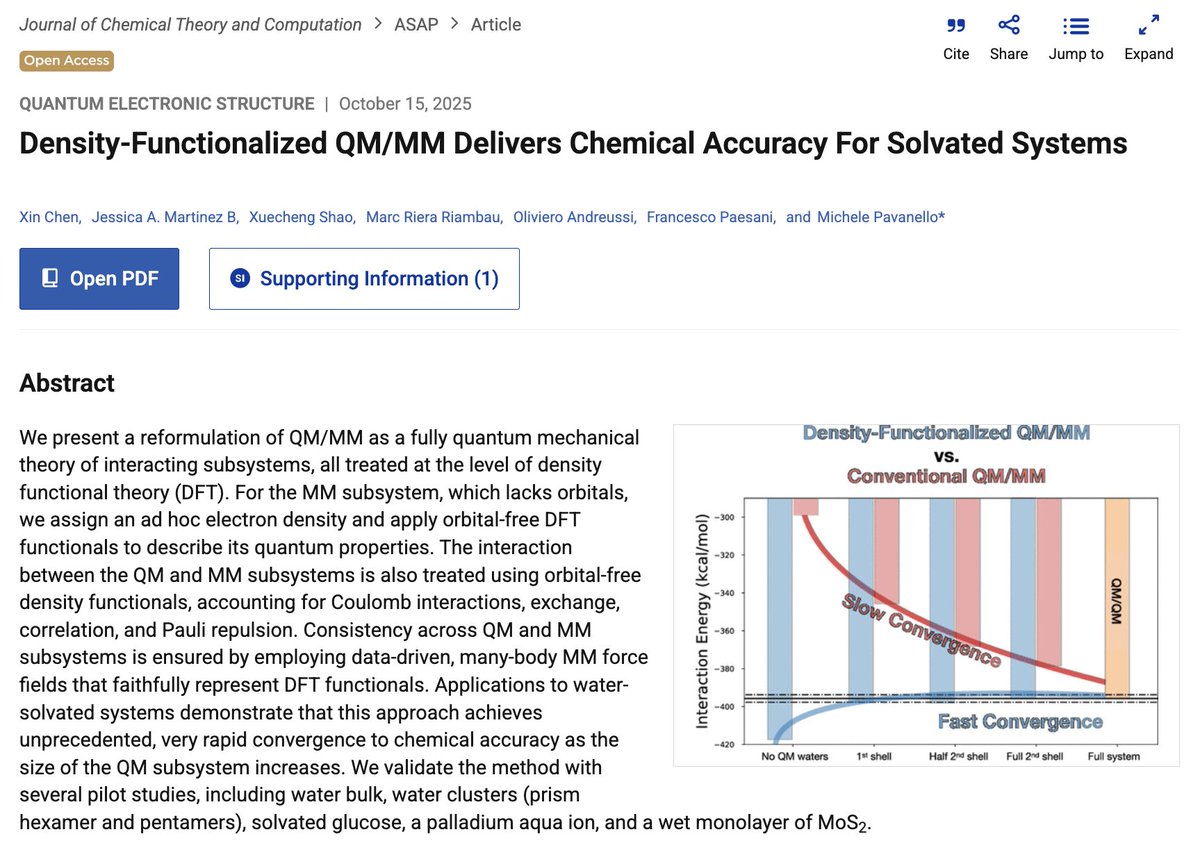
Wonder how to push #QMMM to chemical accuracy?
➡️ Ab Initio is the only way!
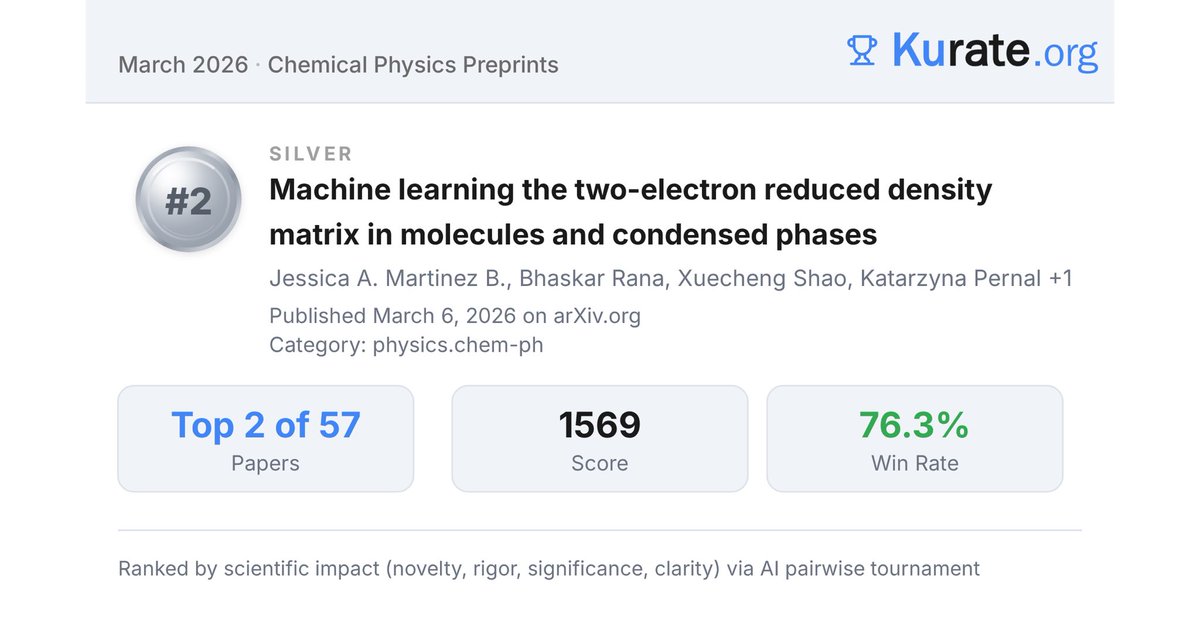
Thanks Jessica, Xin, Xuecheng and Marc for this rigorous and impactful work! Thanks @PaesaniLab@MateriaLab_BSU for collaborating, and @NSF for funding!
pubs.acs.org/doi/10.1021/ac…
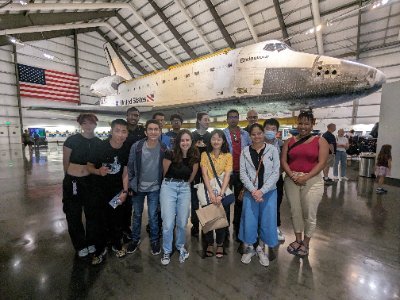
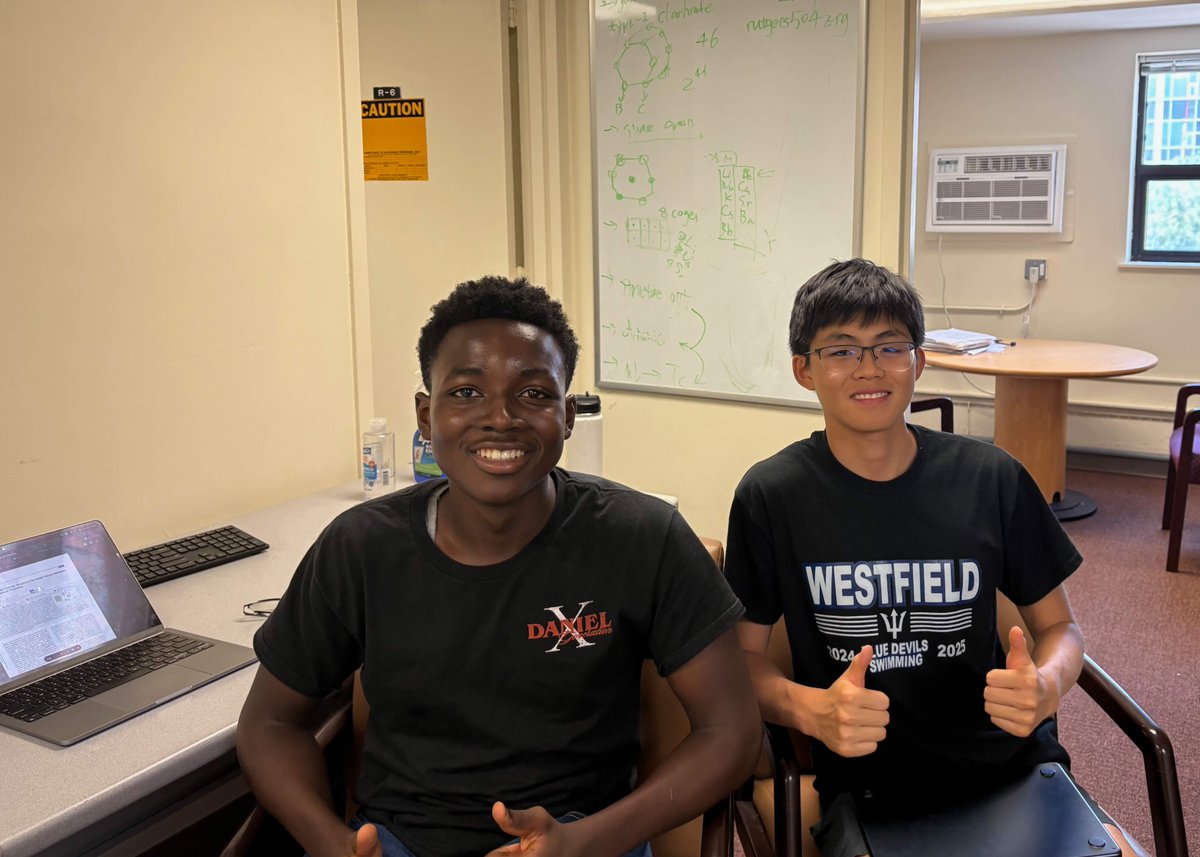
Welcome to our new high school interns, Alex Fu from Union County Magnet High School and Collins Esubonteng from Science Park High School. We are excited to have them join our group!
🚀my suggestions to boost American STEM to @DOGE_NSF:
* scientific publications open-access; cap on cost/paper to mitigate excessive extraction from scientific publishers.
* research proposals 3-5 pages, not 15 pages. (researchers spend too much time writing proposals rather than doing research.)
* simplify proposal requirements; the proposal and award policies and procedures guide is absurdly 215 pages.
* try to distinguish training from research. this might re-allocate $ to more permanent researchers rather than fresh-start PhD students who only work on a problem for five years while distracted by courses and exams.
* reduce excessive overhead and tuition charged (even when students are not taking courses) by universities.
* remove broader impacts requirement for every proposal, which ~requires outreach. some profs. are specialized, skilled, and excited about this, some are not. have special, optional supplement grants for these activities.
* a cap on proposals per PI.
* eliminate the awful NSF SciEnv to format our CV.
* yearly reporting burden could be reduced and simplified.
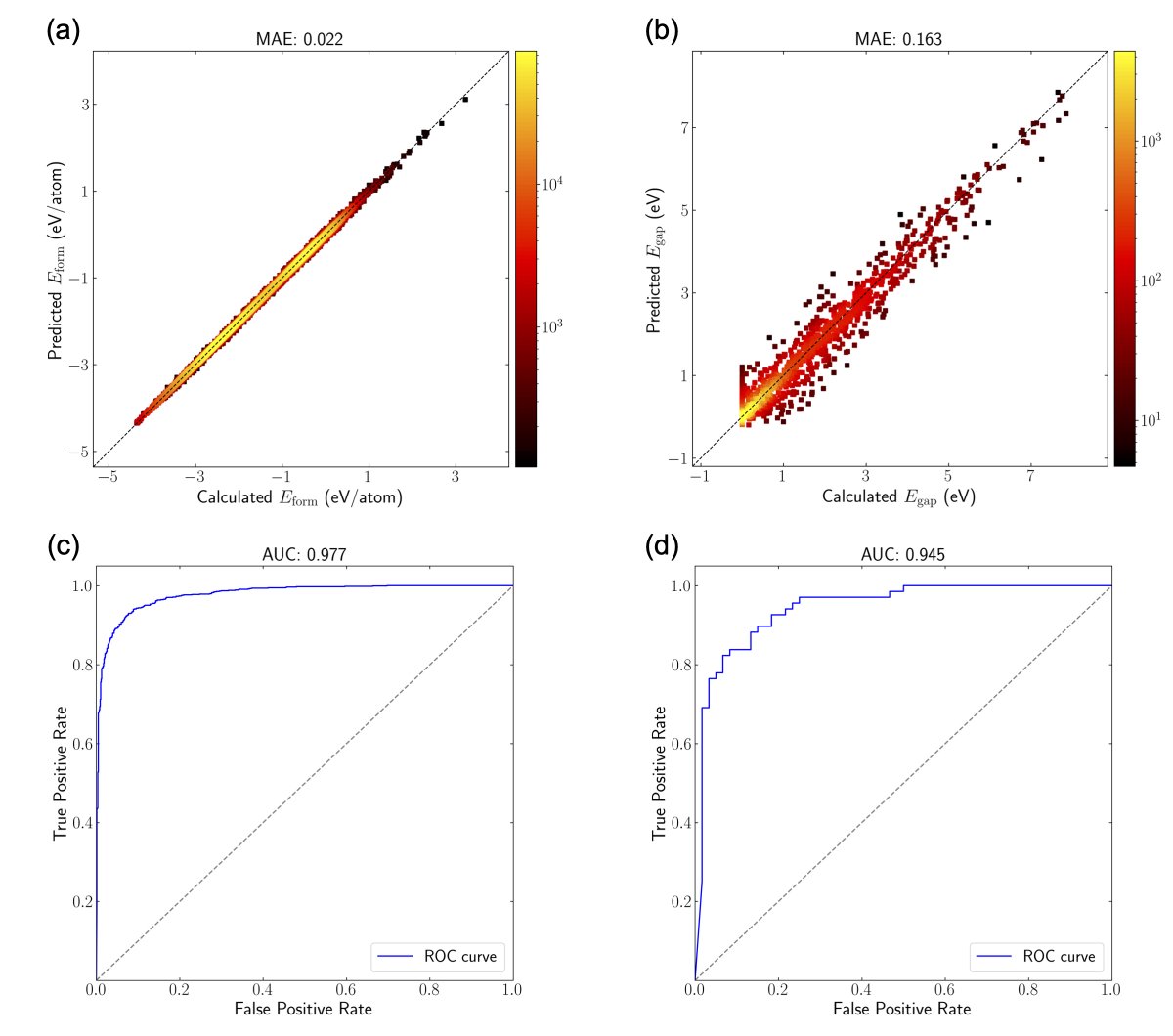
Excited to share our new paper in JPCL! @JPhysChem@PhysicsRutgers: We introduce EOSnet, a GNN framework that leverages Gaussian Overlap Matrix to capture many-body interactions for accurate material property predictions.
#MachineLearning#MaterialScience
Thrilled to share that I’ve been awarded the @NSF CAREER award for our work on integrating Grassmannians with electronic structure theory! Grateful for the incredible support from my students, colleagues, and @VCU. Thank you! 🙏 @VCUChemistry@VCUCHS
Feliz Navidad🎄🎅~ Excited to share that I officially became a Tenured Scientist 🧑🔬(Científico Titular) of @CSIC . I'll continue exploring quantum materials at @CFMdonostia
It's great to know that VASP has included a Python plugin infrastructure in version 6.5, but I need to pay more to upgrade the license. Maybe I will stick with QEpy instead.
Advancing molecular optimization with language models and prompt engineering
Molecular optimization is an essential step in drug and material design, requiring the balancing of multiple properties such as efficacy, safety, and stability. Traditionally, this process has relied on computational chemistry and expert judgment, often constrained by limited multiproperty-labeled data and the inherent complexity of molecular structures.
In a recent development, Wu et al. present Prompt-MolOpt, an AI-driven framework that employs large language models (LLMs) and prompt engineering to address multiproperty molecular optimization in drug discovery and materials science. Unlike conventional models, which often require separate methods for each property and are hindered by limited data, Prompt-MolOpt generalizes across single- and multiproperty datasets, offering a flexible solution for chemical design.
The model performs well in few-shot and zero-shot learning settings by using prompt-based embeddings to guide molecular transformations, even when data is sparse. In comparisons with established methods such as JTNN, hierG2G, and Modof, Prompt-MolOpt demonstrated a 15% improvement in multiproperty optimization success rates.
Paper: nature.com/articles/s4225…
We had a fantastic seminar today with Prof. Andrew Rosen @Andrew_S_Rosen from Princeton! His talk on computational materials science was insightful and inspiring. Thanks, Andrew, for sharing your work with us! @PhysicsRutgers
🚨 Our latest work predicts a 115 K superconductor operable at ambient pressure! A step towards practical applications of high-temperature superconductivity. Check out the full study in @CommPhys: rdcu.be/dWmYh#superconductivity#Physics