

ZimHeartBeat
1K posts

ZimHeartBeat
@ZimHeartBeat
Zimbabwe. My Nation. My Heart
Katılım Eylül 2021
86 Takip Edilen1.1K Takipçiler

Cde Chinamasa Said 'Prove Me Wrong' on Liberation History and CAB3 - No One Has
There is a peculiar intellectual dishonesty at work among the loudest critics of Constitutional Amendment Bill 3. Faced with a substantive constitutional debate, they have chosen to fight a phantom - brandishing historical documents as weapons while fundamentally misreading what those documents actually say. Worse, in their rush to weaponise the liberation struggle, they have inadvertently exposed their own shallow grasp of the history they claim to defend.
Cde Chinamasa's central claim deserves to be stated clearly and evaluated fairly: that the precise mechanism by which a President is selected - whether by direct popular vote or by parliamentary mandate - was never a settled ideological commitment of the liberation struggle. His critics, armed with photocopied pages of the 1973 Mwenje No. 2 ZANU Political Programme and the 1963 ZANU Policy Statement, believe they have demolished this argument. They have not. They have, in fact, confirmed it.
Reading What the Documents Actually Say
Examine the Mwenje No. 2 document that critics thrust forward so triumphantly. It states that every citizen of Zimbabwe shall have the right to exercise a free vote to elect members of the National Assembly and all other state institutions. This is a guarantee of universal franchise - the foundational democratic right that colonialism denied to black Zimbabweans. It is a statement about who gets to vote, not a constitutional blueprint for how an executive is structured.
Similarly, page 65 of the 1963 ZANU Policy Statement - the other favourite exhibit - declares that the only franchise the ZANU republic would recognise is one based on one man, one vote. Read that sentence carefully. It speaks to the basis of franchise, not the architecture of executive selection. "One man, one vote" was the battle cry against a racist weighted voting system that reduced black Zimbabweans to political nonentities. It was a demand for equal citizenship - a rejection of the colonial order in which black skin meant zero representation. It was never, in any of its iterations, a technical prescription for how an executive president should be chosen.
To argue that these passages mandate a direct presidential ballot is to commit a category error of breathtaking proportions. A document demanding that all citizens have the right to vote does not, by logical necessity, specify that those citizens must vote directly for a president rather than for representatives who then form a government. Such an interpretation would disqualify virtually every parliamentary democracy on earth - including South Africa, Botswana, Germany, India and the United Kingdom - from claiming fidelity to the principle of popular sovereignty. Are we prepared to argue that Botswana, which has never held a direct presidential election and remains one of Africa's most stable democracies, has betrayed its people? The suggestion is absurd.
The 1987 Precedent Cuts Both Ways
Critics lean heavily on the 1987 constitutional amendment, arguing that ZANU-PF's own move to introduce direct presidential elections proves the party was always ideologically committed to this model. But this argument backfires with considerable force. If a democratically elected Parliament could legitimately introduce direct presidential elections in 1987 - based on evolving national priorities and the imperative of post-Gukurahundi national unity - then the same constitutional logic permits Parliament to reconfigure that arrangement in 2026 based on equally pressing developmental imperatives. The critics cannot simultaneously celebrate 1987 as a democratic triumph and declare 2026's parliamentary process illegitimate. The constitutional mechanism is identical. The principle is the same. Only the political convenience has changed.
Moreover, the 1987 shift was itself a pragmatic response to specific historical conditions - principally the need to transcend the regional and tribal fractures that had nearly torn the young nation apart. Edison Zvobgo, one of the sharpest legal minds ZANU ever produced, argued persuasively that a nationally elected executive would be accountable to the whole country rather than to sectional interests. That was a valid argument for its time and context. But arguments are not eternal laws. Circumstances evolve. Constitutions, by their very nature, are designed to accommodate that evolution. The 1987 Parliament understood this. So does the 2026 Parliament.
The Cde Chinamasa Challenge Stands
Cde Chinamasa challenged his critics to produce, from pre-independence archives, any evidence that the liberation movement debated and resolved the specific question of whether the president should be elected directly or by parliament. The response has been to produce documents that speak to universal suffrage and majority rule - principles which nobody disputes and which CAB3 does not touch. Not a single document produced shows the liberation movement convening to debate parliamentary versus direct presidential selection as a distinct and deliberate constitutional question.
Because it was not debated. Cde Chinamasa is correct. The liberation struggle was fought for the right of the majority to govern - full stop. The form that governance would take was always understood to be a matter for free Zimbabweans to determine through their own sovereign constitutional processes, generation by generation. To retroactively inscribe a specific electoral mechanism into that struggle - to claim that the fighters in the bush were dying for a particular ballot format - is not history. It is fabrication dressed in revolutionary clothing.
The Practical Stakes: Development, Stability and the Cost of Division
Beyond the historical argument lies a more urgent question that Cde Chinamasa's critics conspicuously avoid: what are the real-world consequences of the constitutional arrangement we choose?
Zimbabwe's 2023 harmonised elections cost the government in excess of USD 165 million to administer - resources that could have built hospitals, funded irrigation schemes, expanded the national road network or equipped rural schools. That is not a trivial sum for a developing economy still clawing its way out of decades of sanctions and economic turbulence. Elections, by their nature, are also divisive events - they inflame factional tensions, suspend developmental focus and redirect national energy toward political contest rather than productive enterprise. The more frequently a country holds high-stakes national elections, the more it pays - not only in direct financial cost but in the incalculable cost of social fragmentation.
Zimbabwe is, by every honest developmental measure, still catching up. The country ranks among the top ten fastest-growing economies in Sub-Saharan Africa, with projected growth of five percent in 2026 and inflation reduced to single digits - achievements that reflect genuine policy discipline and should not be squandered on premature political disruption. The stability that has made this trajectory possible is not accidental. It is the product of deliberate, consistent leadership. Continuity is not an abuse of democracy. In a developing economy, it is often its most important enabler.
Parliamentary systems are not merely a different electoral format - they are architecturally designed for governmental stability. Cabinet is drawn from and remains accountable to the legislature. Policy continuity is structurally protected. The kind of executive paralysis that afflicts directly elected presidencies - where a president and a hostile parliament deadlock over national priorities - is substantially reduced. For a country at Zimbabwe's stage of development, these are not abstract constitutional preferences. They are practical necessities.
On the Question of Democracy
The most intellectually serious objection to CAB3 is not the historical one - which, as shown, collapses under scrutiny - but the democratic one: does a parliamentary selection model dilute popular sovereignty? This is a legitimate question and it deserves a serious answer. Under CAB3, Zimbabwean citizens still vote. They vote for Members of Parliament and councillors. Their elected representatives then exercise a mandate on their behalf - including the formation of government. This is not the abolition of democracy. It is one of democracy's oldest, most stable and most widely practised forms. The franchise is not diminished. It is channelled through representative institutions - precisely the model the liberation struggle's own documents described when they spoke of citizens electing members to all state institutions.
What CAB3 does remove is the spectacle of a fractious, expensive, destabilising direct presidential contest every five years - a contest that, in Zimbabwe's specific political ecology, has historically generated more heat than democratic light.
Conclusion
Those who call Cde Chinamasa a "sellout" for making this argument have substituted insult for analysis. They have waved documents they have not read carefully, invoked history they have not understood fully, and dressed narrow political opposition in the borrowed costume of constitutional scholarship. The liberation struggle deserves better than to be reduced to a factional talking point.
The historical record, read honestly and in full, vindicates Cde Chinamasa's core position. The liberation struggle gave Zimbabwe the right to govern itself. How it structures that self-governance - in ways that best serve its people's development, stability and prosperity - is, and always was, a question for each generation of free Zimbabweans to answer for themselves.
This generation's answer is CAB3. And it is a defensible one.

English
ZimHeartBeat retweetledi

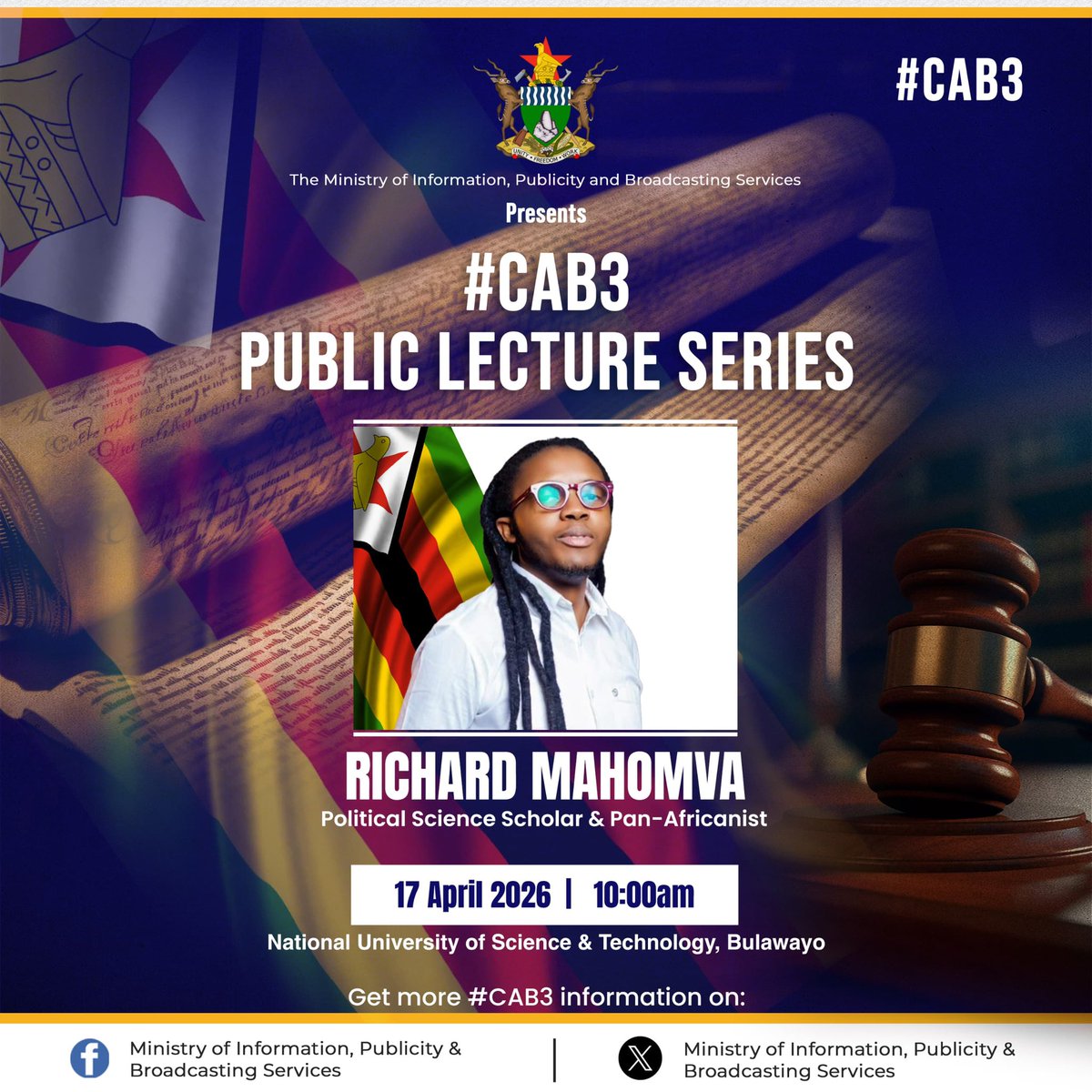
NUST PUBLIC LECTURE
Let’s talk about it. Let’s learn about it. Let’s give feedback on it.
@richardrmahomva will be delivering his take and taking your questions as well as engaging in panel discussions.
Venue: @nustzim in Bulawayo
Date: 17 April 2026
Time: 10:00
Convener: Ministry of Information @InfoMinZW
#CAB3
English
ZimHeartBeat retweetledi

This is NOT AI! This is 🇨🇳Chongqing, and they don't call it "influencer city" for no reason!
English
ZimHeartBeat retweetledi
I spent my early years in Sanyati, Kadoma. I learned at Chiguvare Primary School and later did my secondary education at Sanyati Baptist High School. That’s why I’m still active in several local whatsapp groups from the area.
One of those groups has recently uncovered the truth: Knox is not a war veteran. He was nowhere near our liberation war. His real surname is Mutimusakwa. He only became friends with Geza when he worked as an ARDA manager in Sanyati.
Right now, he’s hiding in South Africa. Let there be no doubt - the man is an outright phony.

English
ZimHeartBeat retweetledi
CAB3: When the People Speak, Parliament Must Listen
As the debate around CAB3 continues, it is necessary to return our national conversation to first principles. Procedure is not an optional luxury - it is the constitutional safeguard that prevents a republic from sliding into disorder. Due process does not silence debate. It protects the legal and institutional framework that makes meaningful debate possible.
A deeply troubling feature of the current discourse is the tendency to confuse disagreement with illegitimacy. In any democracy, citizens - including the prominent, the vocal, and the influential - are fully entitled to critique a bill, oppose it, and organise around that opposition. That right is not in dispute. What is in dispute is the dangerous suggestion that personal prominence can somehow override constitutional method. It cannot. Fame is not a clause. Popularity is not a veto. Emotion is not a legal instrument. In Zimbabwe, constitutional amendments are processed through public hearings, parliamentary scrutiny, and the thresholds set by law - not through the outrage of a few loud voices, however amplified they may be.
If Parliament truly respects the people from whom it derives its mandate, then it must also respect the submissions made by those people during the public hearings. Reports carried by multiple credible news platforms showed overwhelming support for the amendment across the hearings. That matters. It means the electorate did not speak vaguely or ambiguously. It spoke through the very constitutional channels established for that purpose. For parliamentarians to disregard that record would not be an act of principle. It would be a refusal to honour the expressed will of the citizens they claim to represent.
It must also be understood that constitutional debates are rarely only about legal text. They are equally about political authority, institutional legitimacy, and who gets to shape the future of the nation. When some actors sense that lawful processes may produce an outcome they dislike, they often abandon the discipline of constitutional reasoning and retreat into alarmism, speculation, and emotional theatre. That is precisely why sober argument is increasingly being drowned out by exaggeration, panic, and manufactured anxiety.
ZANUPF’s position in this moment is both clear and correct. It is insisting that the matter be handled where the Constitution says it must be handled - through the people, through Parliament, and through due process. That is not rigidity. That is constitutional fidelity. A governing party does not defend democracy by surrendering law to noise. It defends democracy by ensuring that procedure, institutions, and public participation retain their proper authority.
A mature republic cannot be governed by celebrity, by performative outrage, or by elite attempts to delegitimise outcomes they cannot control. Every citizen has the right to be heard. Every argument has the right to be considered. But no individual and no clique has the right to place itself above constitutional order. Once the people have spoken through the lawful process, leadership demands that their voice be treated with seriousness.
ZANUPF did not wage and win the liberation struggle so that the sovereignty of the people could one day be subordinated to the theatrics of a small, attention-seeking minority. The liberation struggle was not only about political independence. It was also about securing a state in which Zimbabweans would determine their affairs through recognised national institutions, not through intimidation, spectacle, or externalised narratives masquerading as democratic virtue.
The law governs; procedure binds and the people decide.
English

ZimHeartBeat retweetledi
Don’t worry about what people say....
Just focus on your goals and your vision.
This explains a lot about the man.
English

@dereckgoto The issue is about trust of the custodians of the power not that the ideas in the ammendment proposal are bad. They are good ideas but vanhu vacho
English
ZimHeartBeat retweetledi
Development or Disruption? The Real Battle Behind Amendment No. 3
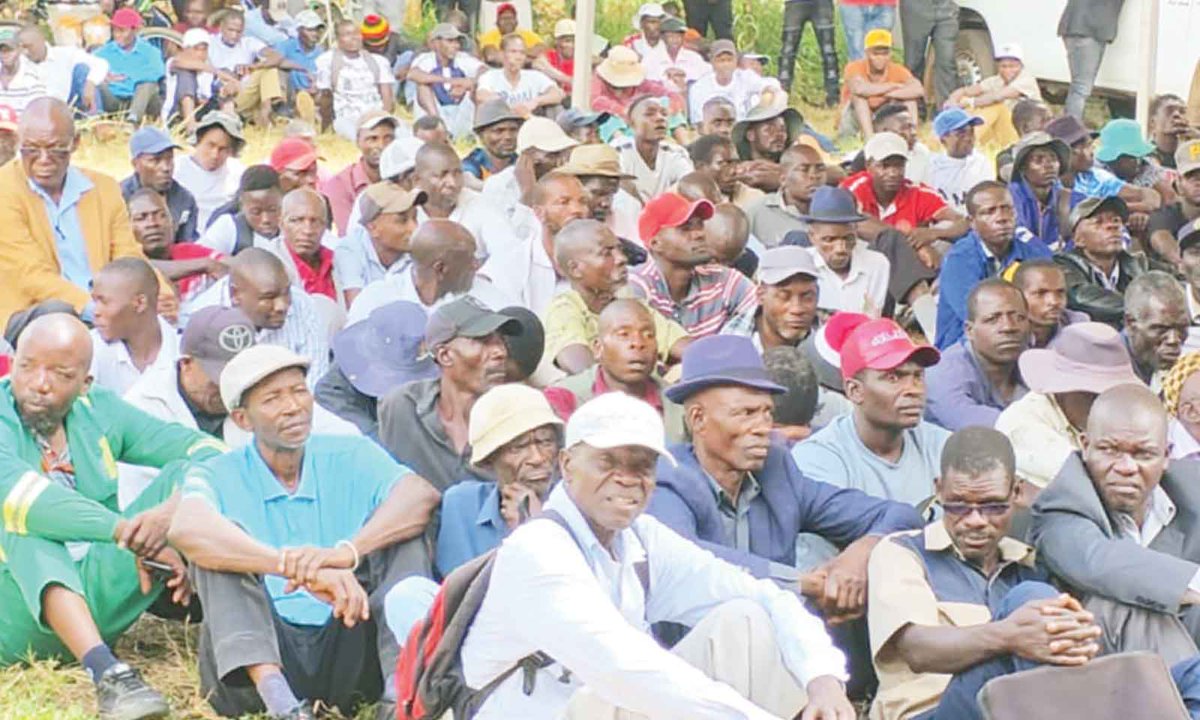
There is a certain kind of observer who insists that constitutional reform must always be treated with suspicion – that any adjustment to presidential terms is, by definition, a retreat. It is a tidy theory, comfortably held at a distance. Yet it begins to unravel the moment one steps into the charged, restless atmosphere of a public hearing – where people queue for hours, where seats run out, where voices strain to be heard because they carry something urgent.
What has emerged across Zimbabwe in these hearings is something far less convenient for the cynic: a pattern. Not a perfect uniformity of opinion, but a convergence of instinct. A shared recognition, cutting across age, class and geography, that the country’s greatest constraint is no longer political choice, but political interruption.
You hear it, quietly but firmly, in the words of Mr Amon Murandu, who speaks with the authority of lived experience, framing the Bill in terms of stability, peace and accountability. You hear it again, from a different generation entirely, in Mr Godknows Makucheti, whose concerns are immediate and unforgiving – jobs, drug abuse, the narrowing horizon confronting young people. Between those two voices lies the country itself: stretched across generations, yet arriving, almost reluctantly, at the same conclusion – that five years is often too short for anything meaningful to take root.
The point, ultimately, is structural. As Bindura lawyer Mr Rainos Gumbo observed with disarming clarity, Zimbabwe has long been caught in a cycle of motion without completion – a perpetual election mode that consumes energy, fragments attention, and leaves too many projects suspended between promise and delivery. It is not that elections are undesirable. It is that their frequency, in a developing context, carries costs that polite debate rarely confronts.
A road does not adjust itself to campaign cycles. A dam does not accelerate because a manifesto demands it. Development follows its own tempo – slower, more exacting, and far less forgiving of disruption. When political timelines fail to respect that tempo, the outcome is familiar: half-finished infrastructure, policies that never quite mature, momentum lost just as it begins to gather force.
What is striking about this moment is that such insights are no longer confined to economists or policy analysts. They are being articulated, plainly and without ornament, by citizens themselves. They have seen projects stall. They have watched priorities reset with each electoral cycle. They have endured the peculiar fatigue of a nation that is always preparing to choose, but rarely allowed to complete.
It is within this context that the language of continuity has gained traction. Not as a slogan, but as a demand for coherence – for a governance framework that allows what is started to be finished, what is planned to be realised. Amendment No. 3, in this light, attempts something deceptively simple: it seeks to align political time with developmental time. There is, whether one admits it or not, a certain strategic clarity in that move.
Predictably, critics reach for familiar alarms – concerns about over-centralisation, or worries about reduced electoral frequency. These are not trivial points. They deserve serious engagement. But they lose much of their force when detached from the context that has produced this conversation. The hearings themselves – open, crowded, at times chaotic – are a reminder that participation in Zimbabwe is not being suppressed; it is being exercised, visibly and insistently.
Perhaps the more revealing shift lies in how accountability is being understood. For years, it has been framed almost exclusively in terms of frequency – how often leaders must return to the electorate. Yet another interpretation is now asserting itself, more quietly but with growing persistence: that accountability also resides in delivery, in whether commitments made are commitments fulfilled.
This is not a rejection of democracy. It is an evolution of it. A recognition that the ballot is not an end in itself, but a means toward a larger objective – a functioning, developing state.
For ZANUPF, this moment carries a certain resonance. The emphasis on infrastructure, stability and long-term planning has long been central to its framing of the Second Republic. What is changing now is not the message, but its reception. It is no longer confined to official platforms; it is being echoed, in varied accents and lived realities, by the citizens themselves.
And so the debate settles into something more grounded than its critics might prefer. Not a contest of slogans, but a negotiation with reality. How long does it take to build? What does it cost to interrupt? What kind of state emerges when policy is allowed to mature rather than perpetually restart?
Increasingly, the answers are not coming from think tanks or social media timelines. They are coming from crowded halls, from patient queues, from individuals who have chosen – sometimes at real personal cost – to participate in shaping the framework that governs their lives.
What they are saying is neither radical nor obscure. It is, in fact, disarmingly straightforward. That stability is not stagnation. That continuity is not the enemy of change, but its precondition. That a nation serious about development must, at some point, organise its politics around the demands of building rather than the rituals of constant contestation.
Amendment No. 3 does not resolve every question. No constitutional reform ever does. But it reflects, with notable fidelity, the direction in which public sentiment appears to be moving – toward a politics that values completion over interruption, substance over spectacle, and progress measured not in cycles, but in outcomes.
It is a shift worth paying attention to because it is already underway!



English
These are the voices that matter - not the hollow, self-serving noise manufactured by social media elites who have turned narratives into a revenue stream.
In the end, it is the quiet, unfiltered verdict from the people on the ground that decides outcomes. It is this enduring disconnect that explains the ritual shock of urban social media circles after every decisive electoral defeat at the hands of ZANUPF.
Nyaya yese iri paground. Pano, it is all performance and echo chambers. Confuse the two, and you will continue to misread the country's politics.
Once you grasp this distinction, you begin to understand ZANUPF politics in its true form.
Uyu ari kutoti tinoda 20 years chaidzo nekuti 2 years ishoma.
Ndatenda.
English
ZimHeartBeat retweetledi
The Rise of Digital Mercenaries and the Threat to Party Discipline
There is a dangerous illusion taking root on Zimbabwean social media - the illusion that noise is authority, that proximity can be manufactured, and that a following is a substitute for ideological grounding. It is an illusion sustained by noise, but beneath that noise lies something far more serious: an erosion of institutional discipline masquerading as participation.
What we are witnessing is counter-revolutionary digital opportunism - an infiltration eating away at the ideological integrity of ZANU PF from within. The tragedy is that many have mistaken this for harmless activism. It is not. It is a distortion that, left unchecked, fragments authority and replaces institutional clarity with performative chaos.
The modern political communication landscape has been flattened by technology. Today, the cost of entry into public discourse is effectively zero. Anyone with a smartphone can construct an identity, project influence, and claim alignment with power. But what has been lowered is access - not legitimacy. That distinction is where many have failed, deliberately or otherwise.
What has emerged is a class of political mercenaries - individuals who trade in perception rather than principle. They manufacture proximity, curate credibility, and weaponise association. To the untrained eye, they appear embedded. In reality, they are external actors operating without ideological anchor, institutional accountability, or discipline.
Visibility is not, and cannot be, authority. A following built on sensation is a house of sand. Those who brand themselves as ZANU PF without the baptism of ideological rigour will always expose their true nature. They lack the one quality that has defined the movement’s success against colonialism, sanctions, and every other onslaught: discipline.
ZANU PF, by contrast, has never been a creature of noise. It is a product of structure. Its endurance was not forged in digital ecosystems, but in the crucible of struggle, where cohesion was not optional and discipline was not negotiable. That tradition did not disappear with independence - it evolved into a political culture anchored on institutions. Debate is not suppressed; it is structured. It occurs within defined platforms - the Conference, the Congress, and Party organs. Once a position is adopted, it ceases to be personal opinion and becomes collective doctrine.
This is the central misunderstanding of the mercenary class. They interpret discipline as weakness and uniformity as suppression. In truth, discipline is what transforms a collection of voices into a movement. Without it, there is no coherence. Without coherence, there is no direction. Without direction, there is no power.
What we are witnessing now is not dissent. It is distortion. The tactics employed are neither organic nor benign. There is a clear pattern - extortion disguised as influence, ghost accounts deployed to simulate consensus, algorithmic manipulation designed to mislead leadership, and calculated double-dealing where individuals play multiple sides for personal gain. This is not engagement. It is infiltration driven by opportunism.
Left unchecked, such behaviour does not democratise communication - it fragments authority. It creates the false impression that the Party is defined by its loudest voices rather than its legitimate structures. That cannot be allowed to stand.
ZANU PF is not a platform for self-appointment. It is an institution governed by rules, hierarchy, and doctrine. Representation is not seized - it is conferred. Credibility is not declared - it is earned and recognised within the system.
This is precisely why the Party’s Social Media Policy exists - not as a symbolic document, but as a regulatory instrument designed to align digital engagement with institutional discipline. The current moment demands not revision, but enforcement.
Clarity must be restored. Only authorised structures speak for the Party. Any individual operating outside those structures does so in a personal capacity, not as a representative voice. This must be stated plainly, and that distinction must be enforced decisively.
The objective is not to silence participation, but to protect integrity. A movement cannot afford ambiguity about who it is, what it stands for, and who speaks on its behalf. Once that ambiguity sets in, the space is quickly captured by those with the least loyalty and the strongest incentives.
The movement has faced greater challenges than digital opportunism and prevailed because of one principle - unity anchored in discipline. That principle must now be reasserted in the digital arena with the same firmness that defined it in the past.
The era of mercenary communication is not sustainable in a system built on ideological clarity.
The choice is simple. Either the Party defines its voice, or it is defined by noise.
The ideological fortress is not for rent. And history has already shown which path ZANU PF takes.
English
ZimHeartBeat retweetledi
Zimbabwe has received a consignment of 5,000 metric tonnes of rice from China to support vulnerable communities and reinforce national social protection programmes.
The assistance will strengthen ongoing food security and humanitarian efforts, helping to cushion households against the impacts of drought and climate-related pressures. It also underscores the continued cooperation between Zimbabwe and China, building on last year’s US$6.9 million food assistance agreement.

English
ZimHeartBeat retweetledi
The Horse Has Bolted and the Referendum Cry Is a Confession of Defeat
Let us name the strategy plainly, because subtlety is wasted on the willfully obtuse. The opposition’s fixation on a referendum is not a matter of constitutional principle – it is a tactical retreat. They know they cannot stand in the arena of ideas and debate the actual contents of Constitutional Amendment Bill No. 3 with the people of Zimbabwe and win. They know that before the bar of public opinion, their objections dissolve into irrelevance. So they have fled to the procedural trenches, hurling the word “referendum” like a grenade, hoping to blow up the process because they have already lost the argument. Not that they would win a referendum anyway – the overwhelming majority of Zimbabweans have witnessed the brilliant delivery of the Second Republic under President Mnangagwa, and the horse has long since bolted. Nothing now stands in its way.
A constitution is not a corpse to be embalmed by sentimentalists. It is the supreme law precisely because it provides for its own evolution. To argue that amendment is improper is to argue against the very document one pretends to defend. The Constitution of Zimbabwe can be changed, and it will be changed – not as a matter of whim, but as a sovereign act of governance. Every republic that endures understands this: a rigid constitution is a brittle one. We do not seek permission to refine our legal architecture; we assert the right of the state to remain responsive to the shifting demands of development, stability and national will. Those who wail against amendment are not conservators of the Constitution; they are undertakers hoping to bury its utility.
Let us be surgical about the law, because the law is unforgiving. Section 328 of our Constitution draws a clear distinction: certain entrenched provisions require a referendum; all other amendments lie within the exclusive competence of Parliament, provided the prescribed majorities are met. CAB3 falls squarely in the latter category. To demand a referendum where none is legally mandated is not an act of democratic vigilance – it is an act of constitutional subversion. It is an attempt to graft an extra-legal condition onto a lawful process. The irony is scathing: those who shriek loudest about “protecting the Constitution” are demanding that we ignore its explicit provisions on amendment. That is not constitutionalism; it is constitutional vandalism dressed in populist costume.
Why the frantic retreat to procedure? Because the substance of CAB3 reflects the incontestable successes of the Second Republic. Under President Mnangagwa, Zimbabwe has witnessed infrastructural transformation, economic re-engagement and a clarity of governance that renders the old opposition playbook obsolete. The people have seen delivery. They have felt the ground shift beneath their feet. And the opposition knows that in a genuine national debate on the merits of the Bill – on how it consolidates institutional efficiency and aligns our legal framework with the pace of development – they would be routed. So they hide behind the procedural smokescreen, hoping to delay what they cannot defeat.
Let this be recorded: the amendment will pass. The Constitution will be refined, as it has been before and as it will be again. The manufactured noise from the usual quarters will amount to nothing more than a footnote in our march towards sovereign efficiency. The people of Zimbabwe have already chosen momentum over stagnation. The horse has bolted. The law is clear. And no amount of procedural histrionics will turn back what has already been set in motion.

English

Constitutional Evolution in a Season of Stability
Zimbabwe is not discussing constitutional change in a vacuum. It is doing so at a moment when inflation has receded into single digits, when macroeconomic stability - fragile yet tangible - has returned, and when the country faces a question older than any amendment: how does a nation convert recovery into permanence?
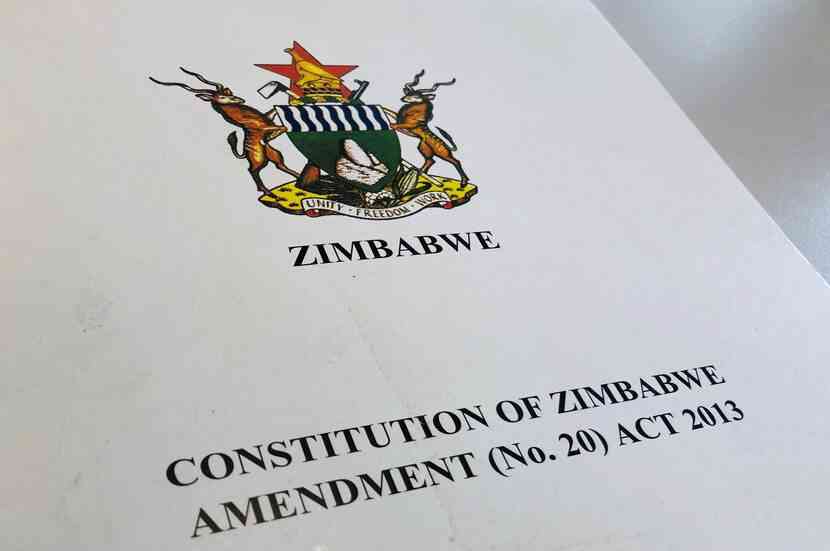
The proposed Constitutional Amendment No. 3 - adopted by Cabinet as the latest refinement of the 2013 Constitution - seeks to recalibrate key aspects of executive selection, electoral administration and institutional design in pursuit of that permanence. It is neither a rupture with the constitutional order nor a symbolic gesture. It is an attempt to adjust the machinery of governance to the lived realities of a maturing State.
A constitution is not a museum exhibit. It is an operating manual for power. When governance reveals friction - policy reversals, electoral fatigue, administrative overlap, institutional duplication - reform becomes not indulgence but necessity. Amendment No. 3 must therefore be assessed not as a partisan instrument, but as an architectural proposal. It asks whether the current design of the State best serves a country attempting to consolidate stability and accelerate development.
At the centre of discussion lies time itself. Five-year electoral cycles were designed to ensure accountability through regular public judgment. That principle remains sound. Yet development rarely moves at electoral speed. Infrastructure corridors, energy expansion, industrialisation strategies and curriculum reform seldom mature within the narrow window between assuming office and preparing for the next campaign. A State perpetually bracing for elections risks prioritising optics over outcomes.
The proposal to extend presidential and parliamentary terms to seven years invites a recalibration of constitutional time. Longer tenure does not erase accountability; term limits remain intact, judicial review persists, parliamentary scrutiny endures, and removal mechanisms continue to exist. What a longer cycle may reduce is volatility - the constant pivot from governing to campaigning. Stability, when paired with oversight, becomes not stagnation but continuity. The question is not whether elections matter, but whether their frequency optimally serves long-term national planning.
More contentious is the proposed shift from direct presidential election to election by Parliament. Direct elections are often equated with democratic purity, and that sentiment must be respected. However, constitutional theory reminds us that democratic legitimacy flows through multiple channels. Members of Parliament derive their authority from the electorate. A requirement that the President secure an absolute parliamentary majority embeds executive authority within representative consensus. It encourages coalition-building, negotiation and programmatic politics over personality-driven mobilisation.
This model does not inherently diminish democracy; it redistributes how legitimacy is aggregated. Whether it deepens accountability or distances citizens will depend on the strength, independence and vibrancy of Parliament itself. A robust legislature enhances the model. A compliant one weakens it. Institutional design alone cannot manufacture democratic culture; it must be animated by political maturity.
Institutional refinement extends beyond electoral mechanics. Elevating the qualification requirements of the Attorney-General to match those of a Supreme Court judge signals a commitment to professionalisation at the highest legal levels. Offices that interpret, defend and operationalise the Constitution must command unimpeachable competence and integrity. Strengthening entry thresholds is not elitism; it is recognition that constitutional guardianship demands the highest calibre.
Clarifying the constitutional role of the Defence Forces within well-defined boundaries reinforces civilian supremacy - a cornerstone of modern republican governance. Stability is secured not merely by economic indicators but by predictable, lawful institutional conduct. When roles are clear, suspicion diminishes and confidence grows.
The proposal to establish a specialised Delimitation Commission and rationalise voter registration functions reflects a principle often overlooked in constitutional design: functional differentiation. When a single institution carries overlapping responsibilities, even absent misconduct, perceptions of conflict may arise. Separating technical boundary demarcation from broader electoral administration sharpens focus and enhances institutional clarity. Centralising civil registration data under a coherent administrative framework may further improve efficiency and integrity, provided transparency remains paramount.
Critics caution - not without reason - that stability can become a pretext for entrenchment. That warning deserves serious engagement. Constitutional reform must never become a vehicle for insulating power from scrutiny. The equilibrium between enabling governance and limiting authority is delicate. Stability without accountability calcifies into control. Accountability without stability fragments into paralysis. The enduring challenge of constitutional design is balancing these competing imperatives without sacrificing either.
For the ordinary citizen, this debate is not abstract theory. It determines whether hospitals are completed or abandoned midway, whether roads reach their destinations or stall at ceremonial launch, whether energy projects achieve generation targets, whether policy remains predictable enough to attract investment and sustain employment. Electoral turbulence has historically disrupted service delivery and long-term planning. If recalibration reduces that disruption while preserving oversight, the public stands to benefit.
Zimbabwe’s constitutional history demonstrates that evolution is not anomaly but norm. The 2013 Constitution itself was the product of national negotiation and reflection. Amendments, when responsibly crafted, reflect lessons learned in practice. They signal adaptation, not abandonment. The legitimacy of reform lies not merely in its passage but in its faithful implementation within the rule of law.
Ultimately, the merit of Amendment No. 3 will be judged less by its theoretical elegance than by its lived consequences. Laws create frameworks; institutions give them life. If judicial independence remains protected, parliamentary scrutiny remains meaningful, opposition participation remains genuine, and political competition remains real, then structural refinement may translate economic stabilisation into durable progress.
History rarely announces its inflection points in dramatic language. Sometimes they arrive quietly, in seasons of relative calm, when a nation has the space to reflect and redesign. In such moments, sobriety is essential. Constitutions are neither sacred relics immune from revision nor disposable tools of convenience. They are living instruments meant to serve a people across generations.
In a season of stability, the architecture chosen today will determine whether recovery matures into renewal - or dissipates into another cycle of uncertainty. The question before Zimbabwe is not whether change is comfortable. It is whether the structure of the State is optimally aligned with the aspirations of its citizens and the demands of sustained national development.
English
ZimHeartBeat retweetledi

ZimHeartBeat retweetledi

IMF Reaches Staff-Level Agreement with Zimbabwe on a New Staff-Monitored Program imf.org/en/news/articl…
English