Zorаn Oklopcic

6.3K posts

Zorаn Oklopcic banner
Zorаn Oklopcic

Zorаn Oklopcic

@ZoranOk

Associate Professor, Department of Law and Legal Studies, Carleton University, Ottawa. Author https://t.co/zjW0s0TpkY

Katılım Mart 2014
941 Takip Edilen1.3K Takipçiler
Zorаn Oklopcic retweetledi

Џендер Захаријевић и слатка Уба
"Od početka ovih protesta koji zapravo nikada nisu bili samo studentski, mene su najviše frustrirali 'nacionalisti'. Svi ostali opozicioni akteri su politički pregaženi i samopregaženi hiljadama puta, i jedini razlog zašto i dalje postoje, kada se stvar simplifikuje, jesu zapadne finansije i infrastruktura iza njih koje služe da se srpskim vlastima drži relativno labava ali ipak realna omča oko vrata. Iz perspektive zapada, svaka vlast u Srbiji je uvek već isuviše srpska, i ta omča se po potrebi jače ili slabije steže." euronews.rs/kolumne/andrea…
9
12
75
2.6K
Zorаn Oklopcic retweetledi
Ben Judah
Ben Judah@b_judah·
A debate worth having: to what extent is this Hard Right surge the result of a flawed taxonomy? If your “hard right” European political party has accepted EU membership, the Euro, LGBTQI+ rights and renounced racialism and antisemitism — how is it not simply a conservative party by 1990s standards?
Ben Judah tweet media
English
4
41
411
150.6K
Zorаn Oklopcic retweetledi
Centre on Constitutional Change
Centre on Constitutional Change@CCC_Research·
The Disunited States - Online Event Join Ryan Griffiths and our panel to discuss his book, The Disunited States, which examines what a project of American secession would look like & why America is ill-suited for a peaceful national divorce Register: edin.ac/40MwMcG
Centre on Constitutional Change tweet media
English
0
2
3
811
Zorаn Oklopcic retweetledi
Jonathan Fine
Jonathan Fine@jonathanbfine·
Kleist’s insight is that it doesn’t even matter whether this speaking partner says anything valuable. The articulation through language, the tool humans use for understanding the world, can transform the confused thoughts into clear knowledge.
English
4
9
306
8.9K
Zorаn Oklopcic
Zorаn Oklopcic@ZoranOk·
I'm deeply saddened by the passing of Emilios Christodoulidis, @UofGlasgow one of the true trailblazers in the field of constitutional and legal theory. Though his Redress of Law has been enormously and deservedly influential I have to admit that my personal favourite will always be Law and Reflexive Politics: an unsurpassable example of how much fun a comprehensive theoretical demolition job may be to read, and what writing with rigor and verve looks like. Rest in peace, Emilios gla.ac.uk/schools/law/ne…
English
0
5
11
971
Zorаn Oklopcic retweetledi
Izabella Kaminska
Izabella Kaminska@izakaminska·
The evolution of the FT (based on my subjective experience) went from the situation described above to => slow realization that saying the truth out loud in the internet age bears consequences, and thus it's better to hold back or push the acceptable party line. Indeed, I would argue it was fine to speak bluntly about what was going on, and the controlling paternalistic role elites played in directing world affairs, for as long as the great unwashed didn't and couldn't stumble upon it, and misinterpret it in sensationalist ways. It was even fine to host a radical subversive blog whose purpose was to test elite assumptions, to ensure they weren't missing a trick or suffering from blind spots. Social media and modern monetization models changed this balance. For one, premium content intended for elite eyes only began to escape through the paywall, whether via stealth circulation or inadvertent self-promotion (journos mouthing off online). This created intensive blowback for journalists, prompting behavioral and ideological adjustments. This was especially the case in the early days, before we realised much of this "blowback" might be synthetic or intended to influence us to self-censor on issues we might otherwise speak freely to an elite audience about. Then, not only did the FT stop being resistant to click-bait competition, but its traditional business model (aka we have a small audience but a powerful one that you will want to spend a lot of money advertising to for influence) began to fall apart as political and corporate influence became tied to quantitative metrics. As corporates themselves went woke, it became taboo to shamelessly peddle luxury goods to elites on the pages of How to Spend it — killing a key source of revenue. Corporate advertising budgets turned towards tempering NGOs on the pages of the popular press, with campaigns centered on proving how frugal and responsible they were. And for that, they needed platforms with large distributions, not small elite audiences (who themselves knew the whole thing was a sham). None of this was helped by poor-quality analytics at the technology level. It took far too long for editors to realise the numbers themselves could be gamed to give a false impression of popularity, and that trusting them could distance the newspaper from reality even further. On the contrary, the teams from "audience engagement" became an increasingly important fixture in morning editorial conferences, influencing the news agenda in a dumbing-down way. I.e. if x did " well online" and y "did not", journalists should do more of x not y, regardless. And since the audience was already skewed towards one side of the polarized debate, rather than the other, this just entrenched disreality even further. The trap facing editors now was the same that every independent writer who builds an audience based on a specific point of view encounters: audience capture. Telling your readers what they don't want to hear kills clicks, and triggers unsubscriptions. So you either attempt to be everything to all people and still find yourself upsetting everyone (i.e. you become the BBC), or you double down on the audience you know will reward you for that perspective. i.e. you become Fox. The FT chose the latter path, on the mistaken assumption — I think — that the pro market, pro technocratic, pro globalism path was above politics, and thus the righteous path. This, however, was a mistake because it ignored that the new politics wasn't like the old politics: left, right and markets as neutral observers which go wherever the wind blows. But rather markets vs the populists, both left and right. In shutting out the populist view, and its effect on markets, the FT became somewhat blinded to reality. Most acutely, it became incapable of reading the room. Hence, the embarrassing array of wrong market calls that have cost plenty of investor readers money. Indeed, I would argue that as the system became more and more polarized — and the elites and journalists became the target of popular angst — rather than confronting that reality, or their role in it, the elites became convinced that they could bend reality to their preferred world view through sheer perseverance alone. In so doing, they became the institutional equivalent of a narcissist. Unconsciously repressing uncomfortable truths because, in Jungian terms, confronting their own shadow was too painful for them to process. It might shatter their reality and sense of self entirely, and pose a moral confrontation that revealed that, rather than being heroes, they were villains. Today the polarization is greater than ever. It is as if two realities are playing out at the same time. What's frightening is that unlike in China, where at least the CCP realised long ago that elites must be exposed to uncomfortable truths even if they don't like them, albeit in a select and guarded way (thus the appearance of two-track journalism: propaganda for the masses, truth for the elite that can handle it) there is no such recognition in the West. And certainly not in written form at the FT. The best we get is Edward Luce interviewing Steve Bannon on a live stage. And even this is performative. I think it's plausible that the exchange of real truths has migrated away from print and over to events and tete-a-tete gatherings that take place in fully private places. What media characters represent online is increasingly detached from what they are like in person. That said, the FT is still a great signal in terms of directing those who can see the bigger picture to where the current battle is being fought. Especially when it comes to corporate battles, markets and finance. At the same time, don't kid yourself. It tells us nothing about the truth of what is happening on the battleground. It can't. It's not a neutral player. Too often, like the Economist, it is now a counter indicator.
English
52
128
676
126.6K
Zorаn Oklopcic
Zorаn Oklopcic@ZoranOk·
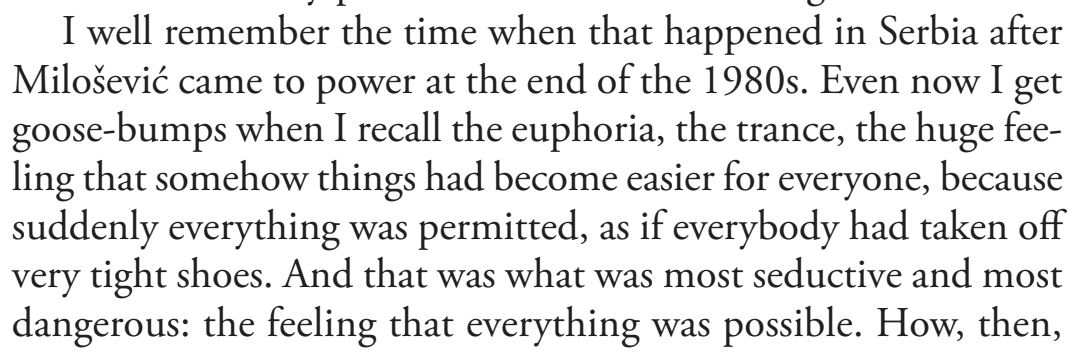
@lilyslynch When it comes to present-day Serbia, the irony is that this applies (or used to, until a moment ago) to the student protests / plenums, first and foremost.
English
0
0
1
150
Lily Lynch
Lily Lynch@lilyslynch·
reading and watching some of the reactions to events this past week i was reminded of this passage
Lily Lynch tweet media
English
5
10
62
5.3K
Zorаn Oklopcic retweetledi
Richard Albert
Richard Albert@RichardAlbert·
📜 I just conducted a first-of-its-kind global survey of 100 constitutional experts around the world, inquiring into their views on the relative benefits of flexible and rigid constitutions. Here are the results of one survey question: 81 percent of constitutional experts agree or strongly agree that constitutional amendment procedures are the democratic foundation of a constitution. Full details in my paper "Against Unamendability" here: papers.ssrn.com/sol3/papers.cf…
Richard Albert tweet media
English
0
9
20
1.3K
Branko Milanovic
Branko Milanovic@BrankoMilan·
Yugoslav 1974 constitution was confederal because the federation was defined as whatever the republics decide it is; but the right of self-determination was not granted to the republics but (importantly) to the "peoples", which is legally an undefined category. The Soviet 1977 constitution was much more radical because it recognized formally the right of secession to the republics and the right of the republics to conduct foreign policy. It was actually crazy if you wished to keep the state together.
English
21
26
142
32.2K
Џендер Захаријевић и слатка Уба
Важне ствари за разумевање политичког суноврата српског национализма у Србији: "инфатилус маскимус" поносно српских елита, њихов морализам, академизам, идеализам, каријеризам, одрођеност, свођење српства на себе, незамерање, пиздунство, вера да су Богом дани, догматичност...
Borisa@Borisa828057175

@prvokanselovani Da da..Da li žele da priznaju da njihov Infantilus Maksimus ili odveć idealistički pogled na stvari možda i odveć akademski odrođen od bazisa, pogled na svijet ima zasluge za stranputice u koje vode,Vukadinović ne želi dakaže bio sam krivuVeć sve luđe tone u N1 I Nova S dubine
Srpski
5
0
50
2.1K
Zorаn Oklopcic retweetledi
Nikhil Pal Singh
Nikhil Pal Singh@nikhil_palsingh·
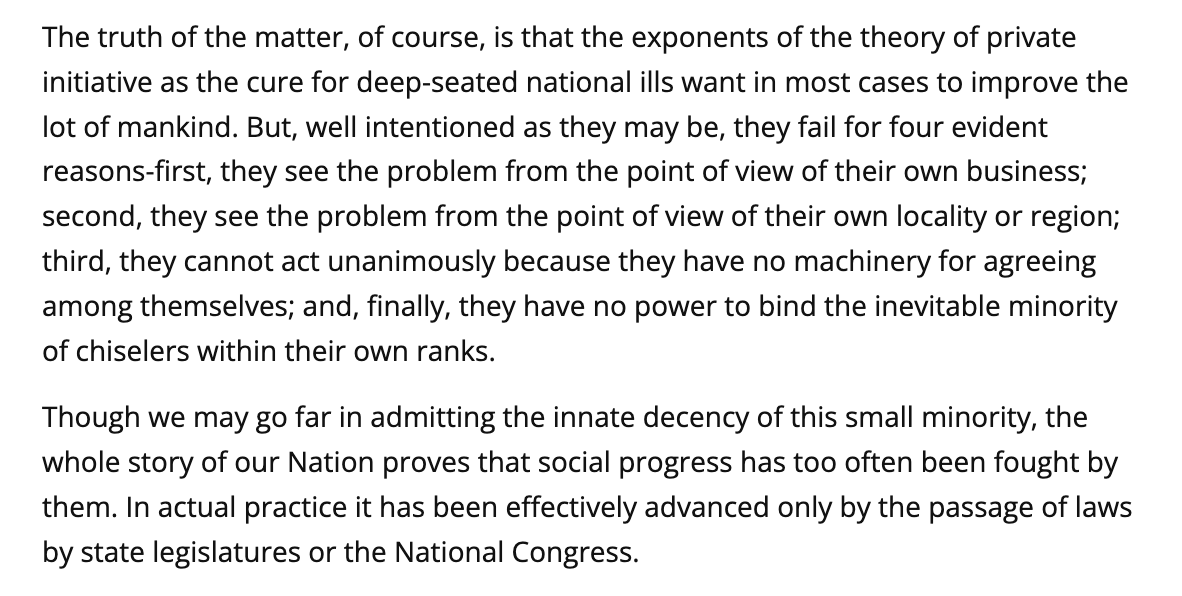
Isn't one of the most obvious features of China's success that it's built on capacity to discipline its capitalist firms - including the "inevitable chiselers in their ranks." Brings to mind this observation from FDR, seemingly lost to Western posterity. presidency.ucsb.edu/documents/mess…
Nikhil Pal Singh tweet media
Nikhil Pal Singh@nikhil_palsingh

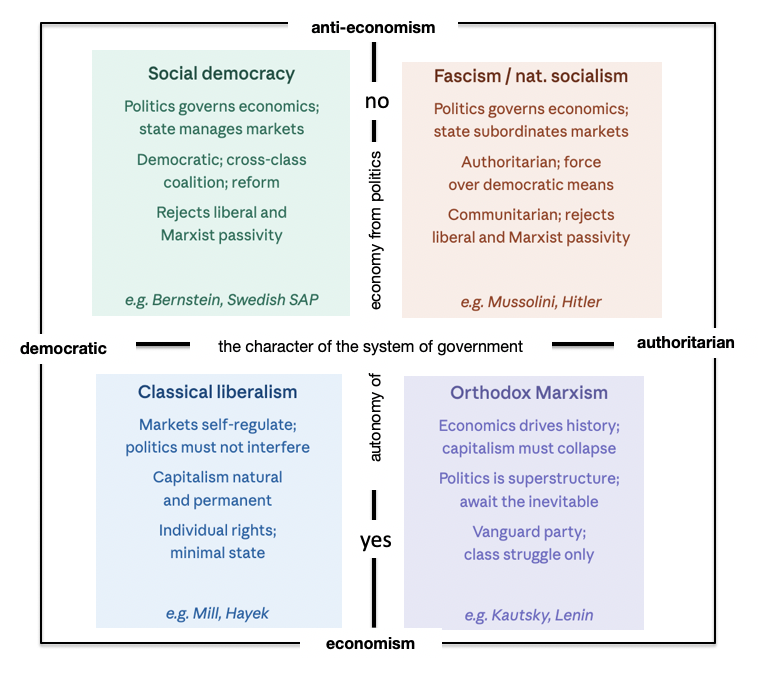
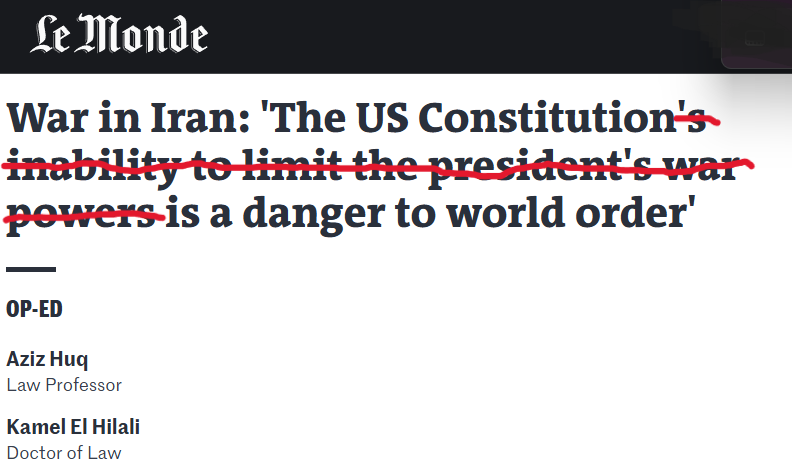
No signs yet of political forces capable of mastering these structuring conditions. The situation demands something on the order of Reconstruction or the New Deal, instead we get propagandistic spectacles and dirty wars at home and abroad.
English
1
84
423
49.3K