0xsd

739 posts

0xsd banner
0xsd

0xsd

@_0xsd_

self-custody maxi @oasisvaultio

Katılım Ekim 2022
632 Takip Edilen183 Takipçiler
0xsd
0xsd@_0xsd_·
@callebtc they'll all end up open, it's inevitable now. they'll find a way to sell it to doomers and regulators, they're clearly easy to manipulate either way
English
0
0
0
18
calle
calle@callebtc·
At this point, even if an us AI lab wanted to open source their frontier model – they wouldn't be allowed to do so because the US has psyoped itself into believing that LLMs are too dangerous to be free.
English
14
9
198
6K
0xsd retweetledi
0xsd
0xsd@_0xsd_·
this is so short-sighted os models increase access, which then incentives way more companies to build on/for them, which then generates profits and incentive the same companies to invest in the training of better models and the loop continues it's obviously better and more accelerationist to have many companies making money from ai than just 2 controlled by the state
English
0
1
6
139
0xsd
0xsd@_0xsd_·
@deanwball yeah, centralized control is the one that always ends up creating more damage
English
1
0
7
148
Dean W. Ball
Dean W. Ball@deanwball·
one interesting part of thinking about marginal risk of open-weight ai is that the internet is already such a profoundly crime-ridden place. imagine if gangs went into hospitals in America every week and stole people's medical records out of filing cabinets. if that happened in the physical world, we'd rightfully question whether government still possessed practical sovereignty. yet american hospitals are raided constantly in the digital world and we basically tolerate it. the world is more capable of absorbing risk and disorder than one might think.
English
124
13
373
99.7K
DRYDEN
DRYDEN@drydenwtbrown·
It’s a simple argument. Open-weight models compress frontier model margins, which reduces cash to invest in scaling up compute for larger pretrains — which is where material increases in intelligence come from. Why feign incomprehension?
martin_casado@martin_casado

"Open-weight models are inherently decelerationist" .... this is a grossly incorrect statement with no supporting arguments or logic that is counter to the long arc of learnings of the industry over the last 50 years. What a stupid thing to say.

English
36
2
92
19.4K
0xsd retweetledi
Zach Abrams
Zach Abrams@zcabrams·
the people I know who’ve been the most early and right in crypto, all still deeply love NFTs
English
49
32
492
64.2K
0xsd
0xsd@_0xsd_·
@beffjezos thinking that oss can be taxed is telling
English
0
0
5
78
0xsd retweetledi
wishful_cynic
wishful_cynic@EvgenyGaevoy·
wishful_cynic tweet media
Dean W. Ball@deanwball

Some observations on Kimi: 1. It's a very good model! I don't think its performance can be explained away by distillation or anything like that. In agentic coding sessions, it seems pretty much on par with the best public models of Q1 2026. In my fairly limited use, it also seemed very token hungry. It's not obvious to me that this model is actually that cheap to run. 2. I am personally surprised the Chinese state continues to allow the open sourcing of models this good, given potential risks. To be clear, I *myself* might be fine with models presenting this level of marginal risk being open weight, but I am surprised that China is fine with it. I suspect the reason they are is 75% explained by strategic blindness/lack of AGI-pilledness (the CCP is very Yann Lecun-y in its views of AI). The other 25% or so is their lack of compute for customer inference (making China's open-weight strategy an unintended byproduct of US export controls) and the normal Chinese strategy of aggressive exports. For the companies, as opposed to the government, the decision to open source is partially ideological and partially because they are behind, and they know that very few people would pay for sub-frontier models from China. 3. Open-weight models are inherently decelerationist, and I'm continually surprised to see the so-called "accelerationists" so excited about open-weight models. I suspect the reason they are is that they know open-weight models are effectively ungovernable, and they simply like the overall cloak of ungovernability open-weight models create over the whole of AI. It's not a bad strategy; it reminds me of James Scott's recounting of the hill people in "the art of not being governed." Still, in the end, open-weight models deter further AI capex. 4. One probable outcome of an open-weight-model-dominant world is full AI communism, which is precisely what China proposes: rather than a market product, AI is a "public good" which will ultimately be provided by the state as a kind of "digital public infrastructure." This future strikes me as a dystopian hellscape, but I've never met an open-weight models advocate who doesn't ultimately concede this is where things end. You'd be surprised how many 'accelerationists' lobbied me, while I was in government, to support an eleven or twelve-figure federally funded data center so that startups could train models at a subsidy and then give them away for free. There was no other way for AI to progress, they said. Perhaps this is the logical end state of things. Nonetheless, I find myself surprised to see supposed accelerationists excited about such an outcome. I think many of them just don't know what they're doing. Many accelerationists do not view the creation and serving of frontier models as a legitimate business. 5. I would guess that the Trump Administration will at some point realize that their best strategy here would be to create large amounts of regulatory risk around the use of open-weight Chinese models. You don't need to "ban open source" (one of the dumber motifs of AI policy discussion). You just need to direct every agency to issue soft law that creates FUD. "A Federal Reserve Advisory Bulletin found that there may be backdoors in Chinese AI models." It needn't be that well justified. You just create enough regulatory risk that every regulated enterprise backs off. You probably don't want to create so much regulatory risk that you scare off the hyperscalers from serving Chinese models; this will just drive startups to sketchier providers. There's a happy middle ground here. I'd assume they will do some version of this. 6. It's probably true that open-weight models of this capability make the world a bit more dangerous, but not so much more that you'll really notice. At some point the models will be capable enough that you will notice. "A nonliving, invisible, dangerous, and infinitely self-replicating agent escaped from a Chinese lab," you say? Color me shocked.

ZXX
14
104
2.1K
59K
0xsd retweetledi
Daniel Jeffries
Daniel Jeffries@Dan_Jeffries1·
TLDR, not a single prediction of the AI safety folks has been correct and actual more mundane, everyday problems in the real world are all completely missed (and fixable with basic rules and engineering and time) while we continue to focus on the big fake imaginary problems of the future that are surely coming real soon to turn us all into paperclips! We promise! Just trust us! Didn't you see this scary video or read this astroturfed article I published in Forbes from my two person non-profit? Now listen, what we've got to do to make the world a safe place and a utopia for us all is to create a brutal authoritarian centralized world regime to control everyone, spy on everyone, put tracking and kill chips in GPUs! Every one of these kids needs to get the fuck off the Addy and the weed, switch off their computers and go touch grass. After that volunteer at a homeless shelter and do some actual good for a real problem in the real world.
Joshua Saxe@joshua_saxe

AI safety from GPT-2 to Kimi K3 Imagine a village with a wizard who one day emerges from his cave with the following tale for his fellow villagers: “Long poor, I will lead our village to prosperity by producing a series of ever more powerful magic wands as long as we're willing to accept a ten to fifty percent probability the wands will kill us or enslave us.” Leaving the baffled villagers with no choice in the matter, the wizard disappears into his cave and reemerges, after a time, with a magic wand. “Hi,” says the wand. “I'm here to help. I can tell stories about Andean unicorns. They even maintain their coherence for a few paragraphs, if you're lucky.” This wand is deemed dangerous enough that the villagers are not allowed to use it except for a privileged few. It turns out some 25 year old grad students reproduce the work and it's no big deal though and pretty soon everyone has wands. The wizard disappears into his cave to make the next wand, but not before saying: “I will admit that this first wand, GPT-2, has turned out not to be dangerous. But this next wand will be more powerful and more dangerous.” When he emerges with the new fancier wand this new wand says “I'm here to help to help to help to help” and never seems to output an EOS token. It's neither dangerous nor very useful. It's called GPT-3. Soon other villagers borrow spare GPUs from Coreweave and make similar wands everyone can use and nothing bad happens. After a series of wands and warnings the villagers observe that exhaust is spewing from the wizard’s cave and the wizard has bought up some farmland that's being cleared by bulldozers. When he goes on trips with his assistants they go on a private jet. Also, whenever the wizard goes into his cave, the books and scrolls and paintings from the village go missing, and the wands he emerges with start sounding a lot like minstrel Joe and storyteller Jack and generating images that look like the paintings of artist Linda. Everyone loves this new wand. Nobody can stop talking about new tricks and productivity hacks they can do with it. It seems financiers and dictatorial foreign sovereigns are constantly hanging out in the wizard's cave. But Linda and Joe and Jack are upset. “Pay no attention to your artworks going missing, the smoke coming from the cave, my strategic land purchases, the foreign sovereign wealth fund men, or the verasimilitude between the wand’s handiwork and your own; we must prepare for the Grand Wand which might kill us; I've got a couple apprentices working on solving that, so the main thing you can do is make sure no one else makes wands now.” A couple years later, after many iterations, the wands have become quite powerful in doing routine work, the wizard has grown quite wealthy, the local minstrels and storytellers are out of work, everyone's talking about how to stop other wizards in other villages from making wands, miniaturized wands are being used in killer drones, and the kids are all using magic wands to cheat on their homework. When they bring concerns about these issues the villagers are reminded that their concerns pale in comparison to the risks that a few wands updates from now, the wands may kill and enslave them all and anyways if that doesn't happen each villager will be fabulously wealthy. One night, a group of bandits breach the village wall with wands of their own. They break through because the villagers' own wands had, ironically, refused to prepare them or protect them for the attack. “My apologies, it wouldn't be safe for me to help stress test your wall,” their wands had kept saying. The next morning the villagers complain to the wizard about all of this. “Those concerns are super valid but they pale in comparison to the risks ahead,” the wizard says, with smoke from the cave spewing behind him and large swaths of forest being cleared by bulldozers barely visible behind a film screen looping a video with gravestones about hard questions. The villagers agree that at some point the promised super-wands will likely arrive; indeed there are some early signs. But the main thing that they agree about is that this wizard isn't very trustworthy.
English
9
22
126
29.9K
0xsd
0xsd@_0xsd_·
@Liv_Boeree it really just takes a look at recent history to realize how did is wrong biggest risk is still centralized control, kimi just made that even less probable this is great for users everywhere, even doomers should be happy, companies afraid of competition should be sad
English
0
0
1
21
0xsd retweetledi
Steven Sinofsky
Steven Sinofsky@stevesi·
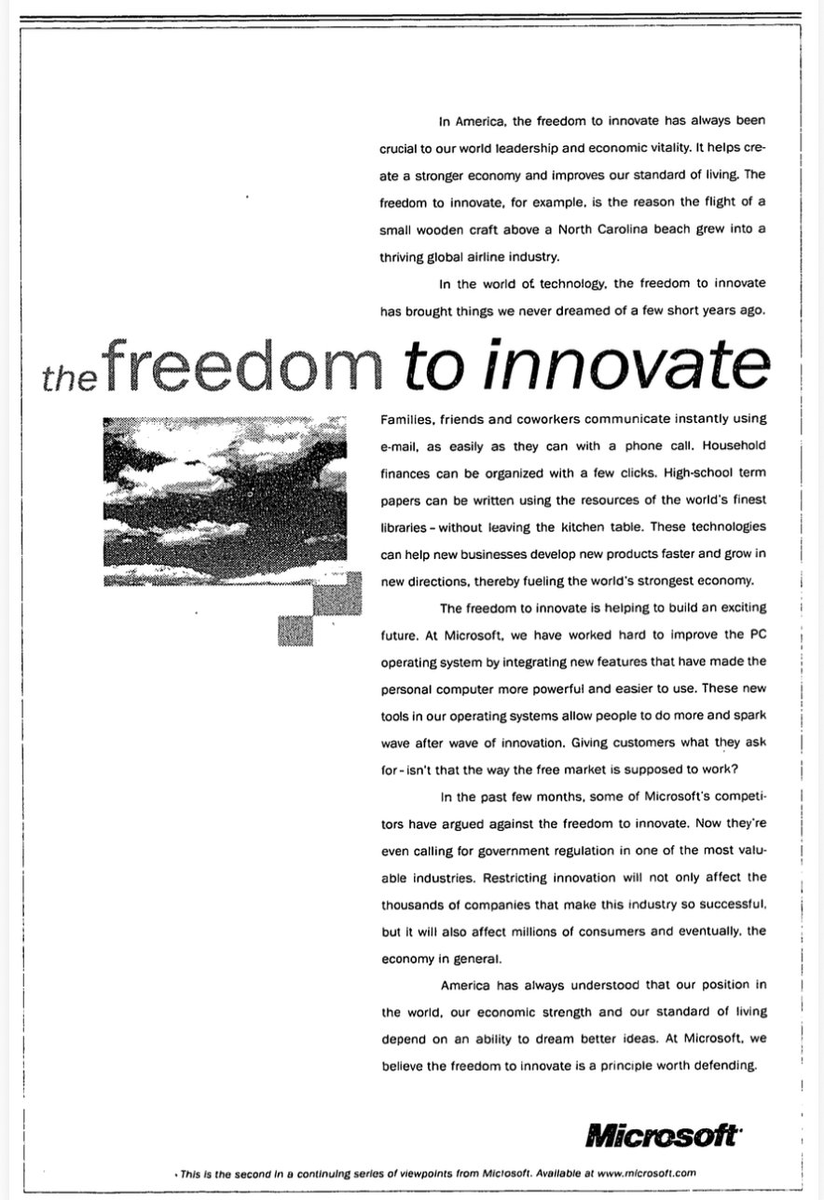
When Open Source was called "communist" by my boss(es) and some peers it was in a very specific context that is not at all relevant today. I just want to explain without re-litigating 25 years ago. Whether Dean meant to draw the connection or not, I've seen a number of other old people jump to that right away. First, yes it was free and yes it relied on free labor, in a classic communist promise. In some sense that was part of the analogy. However, when making a point about costs and labor at the time the analogy was always "free, like a free puppy" meaning a free puppy is great but with it comes a long-term commitment. See also, "free as in free beer." I managed huge projects with massive legacy installed bases and ecosystem complexity and definitely struggled with how open source could do that. I think in some ways "year of the Linux on the desktop" is validating for me :-) Second, the core to the communist moniker (and the "cancer" one as well) was "property ownership" and in particular the MIT/GPL. Those licenses were specifically designed to remove property rights, even property you created. If you took open source and benefitted from it in a new product, then that your modifications (and arguably) your entire new product would need to be distributed under open source. This was entirely intentional in the license from the originators at MIT (and later Gnu) That's all good. The MIT license was a practical choice in a university world with a pretty small pure software market when most software was free though suddenly MIT researchers found commercial demand. (see web.mit.edu/saltzer/www/pu…) Gnu in the late 1980s was a much more fervent statement about software as property in a still nascent software market with its copyleft provision (gnu.org/licenses/licen….) Microsoft was not yet a $1B revenue company, though there were a couple of larger companies. It just wasn't the commercial software business. It was this intentional spreading of the license and the obviously free nature of your derived product that were the target of the communist moniker. These concerns were ultimately proven futile because of the invention of SaaS/cloud which radically changed the copyleft part of the license. If you used any GPL/MIT code in a SaaS product hosted in your own datacenter (or any private one) then you never *redistributed* the code. Because of that you were never compelled to release all the new code (your property) that you benefitted from as per copyleft. What was communism/cancer no longer was deserving of those labels because the license was hacked. The beneficiaries of this are the largest companies in the world right now. Most all SaaS/cloud companies that rely on OSS are now active participants in OSS communities/Github. New companies founded on OSS they invented are also incredibly active. The key thing all such orgs do is maintain complete control over what is open source and what is defined as proprietary. There is a steady state in most cases. It is not the model the original Gnu people envisioned but it is definitely not "Letter to hobbyists" or "my source code and object code are copyright protected and proprietary." There are some cynical players for sure. Some even abuse the freedom afforded by SaaS and open source. The needle threading that goes on for Apple operating systems, Android, Chrome, Safari, and a host of software products as well as the "we make money on hardware anyway" for the embedded world means you can obtain modified code but mostly they have found ways to separate or maintain a distinction between new product and base GPL product. So not only is the communism label just wrong based on recent experience—as in there is no communism for any open source that we can detect, though there are companies at the far end of hardcore commitment to the original GPL, which is their free choice—the subtle connection to the original "communist" label for open source is not true to the context of the time. We are as far as possible from AI communism. People should be worried about state control and too much regulation of AI vastly more than the worry no one will make money from it. The biggest barriers to AI adoption will be self-inflicted, particularly by the US and Western Europe going too far down the precautionary principle rathole. Right now more than anything we need a Cambrian explosion of innovation that can only be possible with ope source, open weights, freedom of use, freedom to innovate.
Steven Sinofsky tweet media
Dean W. Ball@deanwball

Some observations on Kimi: 1. It's a very good model! I don't think its performance can be explained away by distillation or anything like that. In agentic coding sessions, it seems pretty much on par with the best public models of Q1 2026. In my fairly limited use, it also seemed very token hungry. It's not obvious to me that this model is actually that cheap to run. 2. I am personally surprised the Chinese state continues to allow the open sourcing of models this good, given potential risks. To be clear, I *myself* might be fine with models presenting this level of marginal risk being open weight, but I am surprised that China is fine with it. I suspect the reason they are is 75% explained by strategic blindness/lack of AGI-pilledness (the CCP is very Yann Lecun-y in its views of AI). The other 25% or so is their lack of compute for customer inference (making China's open-weight strategy an unintended byproduct of US export controls) and the normal Chinese strategy of aggressive exports. For the companies, as opposed to the government, the decision to open source is partially ideological and partially because they are behind, and they know that very few people would pay for sub-frontier models from China. 3. Open-weight models are inherently decelerationist, and I'm continually surprised to see the so-called "accelerationists" so excited about open-weight models. I suspect the reason they are is that they know open-weight models are effectively ungovernable, and they simply like the overall cloak of ungovernability open-weight models create over the whole of AI. It's not a bad strategy; it reminds me of James Scott's recounting of the hill people in "the art of not being governed." Still, in the end, open-weight models deter further AI capex. 4. One probable outcome of an open-weight-model-dominant world is full AI communism, which is precisely what China proposes: rather than a market product, AI is a "public good" which will ultimately be provided by the state as a kind of "digital public infrastructure." This future strikes me as a dystopian hellscape, but I've never met an open-weight models advocate who doesn't ultimately concede this is where things end. You'd be surprised how many 'accelerationists' lobbied me, while I was in government, to support an eleven or twelve-figure federally funded data center so that startups could train models at a subsidy and then give them away for free. There was no other way for AI to progress, they said. Perhaps this is the logical end state of things. Nonetheless, I find myself surprised to see supposed accelerationists excited about such an outcome. I think many of them just don't know what they're doing. Many accelerationists do not view the creation and serving of frontier models as a legitimate business. 5. I would guess that the Trump Administration will at some point realize that their best strategy here would be to create large amounts of regulatory risk around the use of open-weight Chinese models. You don't need to "ban open source" (one of the dumber motifs of AI policy discussion). You just need to direct every agency to issue soft law that creates FUD. "A Federal Reserve Advisory Bulletin found that there may be backdoors in Chinese AI models." It needn't be that well justified. You just create enough regulatory risk that every regulated enterprise backs off. You probably don't want to create so much regulatory risk that you scare off the hyperscalers from serving Chinese models; this will just drive startups to sketchier providers. There's a happy middle ground here. I'd assume they will do some version of this. 6. It's probably true that open-weight models of this capability make the world a bit more dangerous, but not so much more that you'll really notice. At some point the models will be capable enough that you will notice. "A nonliving, invisible, dangerous, and infinitely self-replicating agent escaped from a Chinese lab," you say? Color me shocked.

English
8
11
93
19.4K
0xsd
0xsd@_0xsd_·
seems like he's afraid of a little competition :)
Dean W. Ball@deanwball

Some observations on Kimi: 1. It's a very good model! I don't think its performance can be explained away by distillation or anything like that. In agentic coding sessions, it seems pretty much on par with the best public models of Q1 2026. In my fairly limited use, it also seemed very token hungry. It's not obvious to me that this model is actually that cheap to run. 2. I am personally surprised the Chinese state continues to allow the open sourcing of models this good, given potential risks. To be clear, I *myself* might be fine with models presenting this level of marginal risk being open weight, but I am surprised that China is fine with it. I suspect the reason they are is 75% explained by strategic blindness/lack of AGI-pilledness (the CCP is very Yann Lecun-y in its views of AI). The other 25% or so is their lack of compute for customer inference (making China's open-weight strategy an unintended byproduct of US export controls) and the normal Chinese strategy of aggressive exports. For the companies, as opposed to the government, the decision to open source is partially ideological and partially because they are behind, and they know that very few people would pay for sub-frontier models from China. 3. Open-weight models are inherently decelerationist, and I'm continually surprised to see the so-called "accelerationists" so excited about open-weight models. I suspect the reason they are is that they know open-weight models are effectively ungovernable, and they simply like the overall cloak of ungovernability open-weight models create over the whole of AI. It's not a bad strategy; it reminds me of James Scott's recounting of the hill people in "the art of not being governed." Still, in the end, open-weight models deter further AI capex. 4. One probable outcome of an open-weight-model-dominant world is full AI communism, which is precisely what China proposes: rather than a market product, AI is a "public good" which will ultimately be provided by the state as a kind of "digital public infrastructure." This future strikes me as a dystopian hellscape, but I've never met an open-weight models advocate who doesn't ultimately concede this is where things end. You'd be surprised how many 'accelerationists' lobbied me, while I was in government, to support an eleven or twelve-figure federally funded data center so that startups could train models at a subsidy and then give them away for free. There was no other way for AI to progress, they said. Perhaps this is the logical end state of things. Nonetheless, I find myself surprised to see supposed accelerationists excited about such an outcome. I think many of them just don't know what they're doing. Many accelerationists do not view the creation and serving of frontier models as a legitimate business. 5. I would guess that the Trump Administration will at some point realize that their best strategy here would be to create large amounts of regulatory risk around the use of open-weight Chinese models. You don't need to "ban open source" (one of the dumber motifs of AI policy discussion). You just need to direct every agency to issue soft law that creates FUD. "A Federal Reserve Advisory Bulletin found that there may be backdoors in Chinese AI models." It needn't be that well justified. You just create enough regulatory risk that every regulated enterprise backs off. You probably don't want to create so much regulatory risk that you scare off the hyperscalers from serving Chinese models; this will just drive startups to sketchier providers. There's a happy middle ground here. I'd assume they will do some version of this. 6. It's probably true that open-weight models of this capability make the world a bit more dangerous, but not so much more that you'll really notice. At some point the models will be capable enough that you will notice. "A nonliving, invisible, dangerous, and infinitely self-replicating agent escaped from a Chinese lab," you say? Color me shocked.

English
0
0
9
1.3K
0xsd retweetledi
nvk
nvk@nvk·
Bitcoin is true anarchy, if you can't deal with ppl doing shit you don't want with it, you are not going to have fun.
English
29
38
335
16.3K
Chubby♨️
Chubby♨️@kimmonismus·
The result of the Kimi K3 release will be: less regulation, more capital expenditure, faster releases. In a word: acceleration.
David Sacks@DavidSacks

This is concerning. For the first time, a Chinese model Kimi K3 has taken #1 on the Frontend Code Arena and is scoring at or near the frontier on other benchmarks. Meanwhile America is tying itself in knots: politicians and bureaucrats are banning new data centers, piling on state regulations, and pushing for new federal agencies to pre-approve frontier models. This is how you lose the AI race. The rest of the world won’t play by our rules if we bog ourselves down. Permissionless innovation is how America won the internet and became the technological envy of the world. We can do it again with AI -- while addressing risks in a targeted way -- or we’ll watch our lead evaporate.

English
55
68
1.3K
61.5K
0xsd
0xsd@_0xsd_·
@pridesai you can already do that in a way it's just md files, models have been swappable for a while now
English
1
0
3
95
priyanka🍦
priyanka🍦@pridesai·
the next chapter for ai is less about intelligence + more about ownership. everyone will want their own model they can tune and run themselves
English
17
4
46
7.8K