cem akas

5K posts

cem akas banner
cem akas

cem akas

@_CemAkas

yazar: https://t.co/FZbbEeFFF6 yayıncı: https://t.co/UIbsq2jgQ2 müzik: https://t.co/dmkxvh5l59

Yeni Roma, Türkiye Katılım Ocak 2016
791 Takip Edilen10.3K Takipçiler
cem akas
cem akas@_CemAkas·
yazma eylemime dair iki gözlemim var. 1.tıkandığımda yürüyüşe çıkmak ve kendi kendime konuşmak çok işe yarıyor (eskiden deli diyorlardı herhalde, şimdi telefondayım sanıyorlardır). 2.kurguyu elle yazmak çok daha iyi sonuç veriyor. kendi şahitliği olan var mıdır merak ediyorum.
Türkçe
18
10
220
29.7K
cem akas
cem akas@_CemAkas·
farklı işler yapan 60 new york'lu, geçen yıl ne kadar kazandığını anlatıyor: archive.is/ezKAu
Türkçe
0
0
5
790
cem akas
cem akas@_CemAkas·
şöyle bir projem var, punduna getirirsem yapmak istiyorum: "YAZICAZ".
cem akas tweet media
Türkçe
3
3
45
3K
cem akas
cem akas@_CemAkas·
sözlük gibi yapay zeka da bir alet. daha kapsamlı evet, ama bir alet. edebi çeviri için tek başına kesinlikle yeterli değil ama işi hızlandırıyor mu, evet.
Türkçe
0
1
10
572
cem akas
cem akas@_CemAkas·
1641'de ilk fransızca-ingilizce sözlük yayımlandığında, edebiyat dünyasında "sözlük kullanan çevirmen namerttir, sözlükten bulunmuş kelimelerle yapılan çeviri benden uzak olsun" tartışmaları olmuş muydu, mesela susan duverger eleştirilmiş miydi acaba...
cem akas tweet media
Türkçe
1
0
14
1.1K
cem akas
cem akas@_CemAkas·
yazmak atölyesi'nde "sözcüklerin anlamı" - abdullah ezik, armağan ekici, selçuk orhan. 28 mart.
cem akas tweet media
Türkçe
0
4
14
1.8K
cem akas
cem akas@_CemAkas·
küçük bir deneyi paylaşmak istiyorum. ingilizce bir romanın giriş bölümünü google'a çevirtip yazım hataları ekledim, chatgpt'ye redaksiyon yaptırdım, sonra orijinali doğrudan chatgpt'ye verip ona çevirttim. dört metin de burada. redaksiyon ve çeviri kalitesi hakkında ne dersiniz?
cem akas tweet media
Türkçe
3
1
15
6K
cem akas
cem akas@_CemAkas·
latife tekin'in "para gürültüsü" geldi. bir çağ romanı. "sevgili arsız ölüm", "zamansız" ve bu roman kadar hem iyi hem de birbirine benzemez kitaplar yazdıran ajiliteye şapka çıkarmak gibi bir borcumuz var.
cem akas tweet media
cem akas@_CemAkas

latife tekin, dünya sistemi değişirken yoksullara yol göstermeye çalışan bir karakter üzerinden, yalnızca tekin'in yazabileceği bir romanla geliyor. bambaşka bir algısı var, hep öyle oldu tabii, ama zamanı okuyabilme yetisi çok çarpıcı.

Türkçe
1
4
95
7.7K
cem akas
cem akas@_CemAkas·
epstein dosyalarında bu çıkmış.
cem akas tweet media
Türkçe
0
0
3
1.9K
cem akas
cem akas@_CemAkas·
“My job is to turn out students who are acceptable at a dance, invaluable at a shipwreck.” -J.F. Roxburgh (1888-1954), headmaster at the Stowe School, England. "Benim işim danslara davet edilebilecek, gemi kazalarındaysa muazzam faydalı olacak öğrenciler yetiştirmek."
Türkçe
0
0
2
598
cem akas
cem akas@_CemAkas·
japon tarihi ve şogun-samuray hikayelerine özel bir ilgim olduğunu söyleyemem ama "musashi"yi okurken eğlendim. biraz dövüş, biraz aşk, biraz mistisizm, biraz felsefe, biraz tarih. üçlemenin devamını merak ediyorum.
cem akas tweet media
Türkçe
3
5
86
4.8K
cem akas
cem akas@_CemAkas·
gospodinov - "bahçıvan ve ölüm". bu kitabın satış başarısı üzerinde yeterince durulmadı. yazarın en iyi kitabı değil, yayınevinin en iyi tanıttığı kitap değil; "kulaktan kulağa"nın ("akıştan akışa"nın) en iyi çalıştığı örneklerden biri bence.
cem akas tweet media
Türkçe
11
3
186
62.3K
cem akas retweetledi
God of Prompt
God of Prompt@godofprompt·
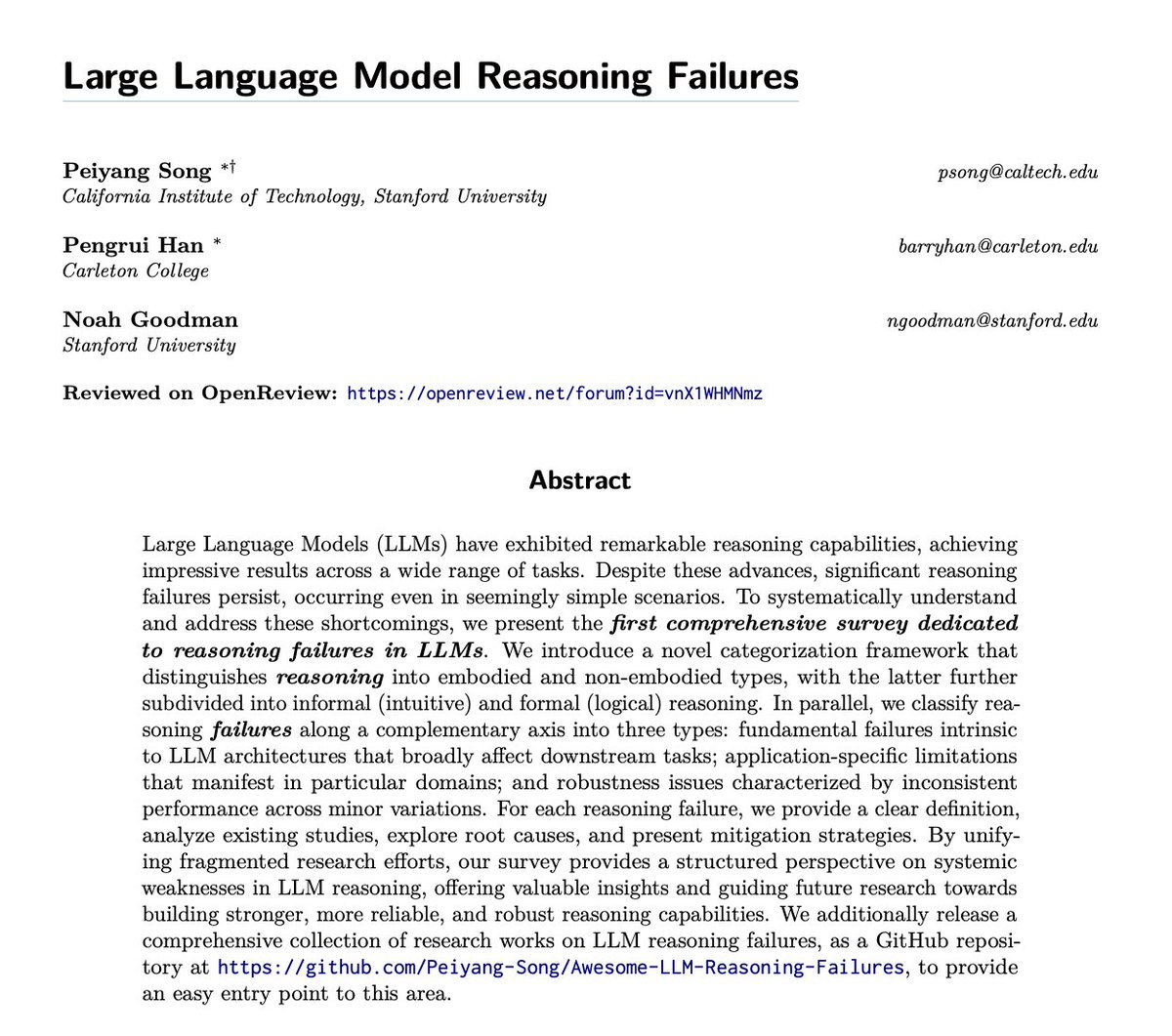
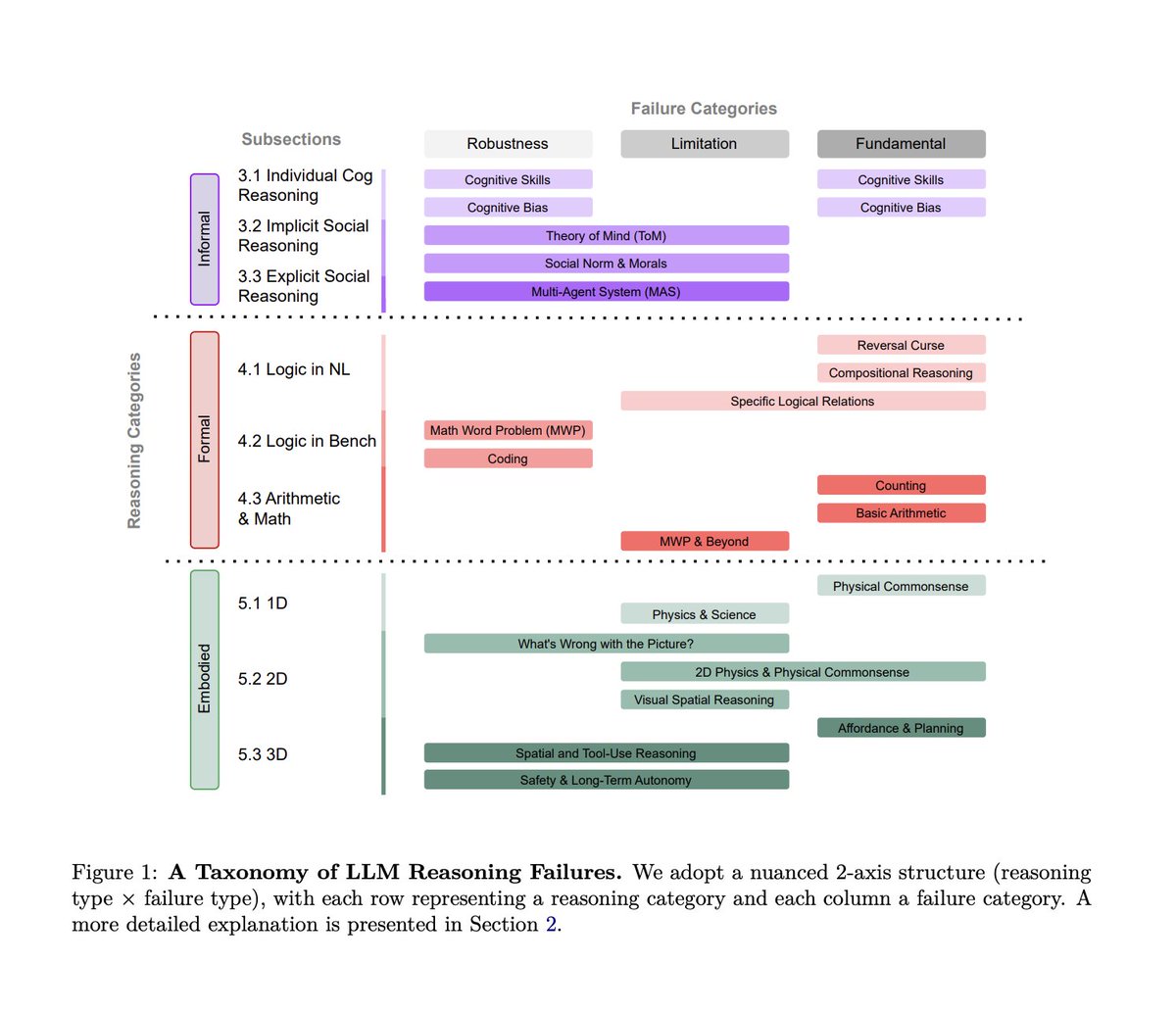
🚨 Holy shit… Stanford just published the most uncomfortable paper on LLM reasoning I’ve read in a long time. This isn’t a flashy new model or a leaderboard win. It’s a systematic teardown of how and why large language models keep failing at reasoning even when benchmarks say they’re doing great. The paper does one very smart thing upfront: it introduces a clean taxonomy instead of more anecdotes. The authors split reasoning into non-embodied and embodied. Non-embodied reasoning is what most benchmarks test and it’s further divided into informal reasoning (intuition, social judgment, commonsense heuristics) and formal reasoning (logic, math, code, symbolic manipulation). Embodied reasoning is where models must reason about the physical world, space, causality, and action under real constraints. Across all three, the same failure patterns keep showing up. > First are fundamental failures baked into current architectures. Models generate answers that look coherent but collapse under light logical pressure. They shortcut, pattern-match, or hallucinate steps instead of executing a consistent reasoning process. > Second are application-specific failures. A model that looks strong on math benchmarks can quietly fall apart in scientific reasoning, planning, or multi-step decision making. Performance does not transfer nearly as well as leaderboards imply. > Third are robustness failures. Tiny changes in wording, ordering, or context can flip an answer entirely. The reasoning wasn’t stable to begin with; it just happened to work for that phrasing. One of the most disturbing findings is how often models produce unfaithful reasoning. They give the correct final answer while providing explanations that are logically wrong, incomplete, or fabricated. This is worse than being wrong, because it trains users to trust explanations that don’t correspond to the actual decision process. Embodied reasoning is where things really fall apart. LLMs systematically fail at physical commonsense, spatial reasoning, and basic physics because they have no grounded experience. Even in text-only settings, as soon as a task implicitly depends on real-world dynamics, failures become predictable and repeatable. The authors don’t just criticize. They outline mitigation paths: inference-time scaling, analogical memory, external verification, and evaluations that deliberately inject known failure cases instead of optimizing for leaderboard performance. But they’re very clear that none of these are silver bullets yet. The takeaway isn’t that LLMs can’t reason. It’s more uncomfortable than that. LLMs reason just enough to sound convincing, but not enough to be reliable. And unless we start measuring how models fail not just how often they succeed we’ll keep deploying systems that pass benchmarks, fail silently in production, and explain themselves with total confidence while doing the wrong thing. That’s the real warning shot in this paper. Paper: Large Language Model Reasoning Failures
God of Prompt tweet mediaGod of Prompt tweet media
English
270
1.4K
7K
963.8K