Finn Völkel

69 posts

Finn Völkel

Finn Völkel

@_FiV0

Programming, Databases, Distributed systems, Beachvolley. Currently working on @xtdb_com.

Berlin Katılım Ocak 2019
190 Takip Edilen40 Takipçiler
Finn Völkel
Finn Völkel@_FiV0·
@mgill25 Are they failing because they don't know the syntax anymore or because they don't know how to model the problems in code?
English
0
0
0
11
Manish Gill
Manish Gill@mgill25·
We are seeing a lot of solid and experienced candidates fail coding interviews. They’re getting so used to generative AI and Agentic coding that they are failing to build simple abstractions…
English
6
0
49
5.9K
Finn Völkel retweetledi
Finn Völkel
Finn Völkel@_FiV0·
The 4th post in the WCOJ series. An intro to DBSP, Z-Sets and connections to EDN Datalog indices. This will set us up for a WCOJ meets DBSP algorithm. finnvolkel.com/wcoj-dbsp-zset…
English
1
1
1
36
Finn Völkel
Finn Völkel@_FiV0·
Idea from a friend of mine. People who set off fireworks should be drafted immediately.
English
0
0
0
14
Finn Völkel
Finn Völkel@_FiV0·
@simonw Live coding. You can always throw it away if you got really stuck or find it painful to rewatch.
English
0
0
2
80
Simon Willison
Simon Willison@simonw·
YouTube question: I've been making a few videos recently and I'm torn between the honest no-cheating live coding approach and the here's-something-I-prepared-earlier approach I'm aiming for 10-30 minutes per video Which format do people find more useful?
English
147
3
334
42K
Finn Völkel retweetledi
Simon Willison
Simon Willison@simonw·
"In this new programming paradigm then, the new most predictive feature to look at is verifiability. If a task/job is verifiable, then it is optimizable directly or via reinforcement learning, and a neural net can be trained to work extremely well."
Andrej Karpathy@karpathy

Sharing an interesting recent conversation on AI's impact on the economy. AI has been compared to various historical precedents: electricity, industrial revolution, etc., I think the strongest analogy is that of AI as a new computing paradigm (Software 2.0) because both are fundamentally about the automation of digital information processing. If you were to forecast the impact of computing on the job market in ~1980s, the most predictive feature of a task/job you'd look at is to what extent the algorithm of it is fixed, i.e. are you just mechanically transforming information according to rote, easy to specify rules (e.g. typing, bookkeeping, human calculators, etc.)? Back then, this was the class of programs that the computing capability of that era allowed us to write (by hand, manually). With AI now, we are able to write new programs that we could never hope to write by hand before. We do it by specifying objectives (e.g. classification accuracy, reward functions), and we search the program space via gradient descent to find neural networks that work well against that objective. This is my Software 2.0 blog post from a while ago. In this new programming paradigm then, the new most predictive feature to look at is verifiability. If a task/job is verifiable, then it is optimizable directly or via reinforcement learning, and a neural net can be trained to work extremely well. It's about to what extent an AI can "practice" something. The environment has to be resettable (you can start a new attempt), efficient (a lot attempts can be made), and rewardable (there is some automated process to reward any specific attempt that was made). The more a task/job is verifiable, the more amenable it is to automation in the new programming paradigm. If it is not verifiable, it has to fall out from neural net magic of generalization fingers crossed, or via weaker means like imitation. This is what's driving the "jagged" frontier of progress in LLMs. Tasks that are verifiable progress rapidly, including possibly beyond the ability of top experts (e.g. math, code, amount of time spent watching videos, anything that looks like puzzles with correct answers), while many others lag by comparison (creative, strategic, tasks that combine real-world knowledge, state, context and common sense). Software 1.0 easily automates what you can specify. Software 2.0 easily automates what you can verify.

English
30
58
1K
172.8K
Finn Völkel retweetledi
Andrej Karpathy
Andrej Karpathy@karpathy·
How to become expert at thing: 1 iteratively take on concrete projects and accomplish them depth wise, learning “on demand” (ie don’t learn bottom up breadth wise) 2 teach/summarize everything you learn in your own words 3 only compare yourself to younger you, never to others
English
172
2.6K
13.9K
0
Finn Völkel retweetledi
eu/acc
eu/acc@euacchq·
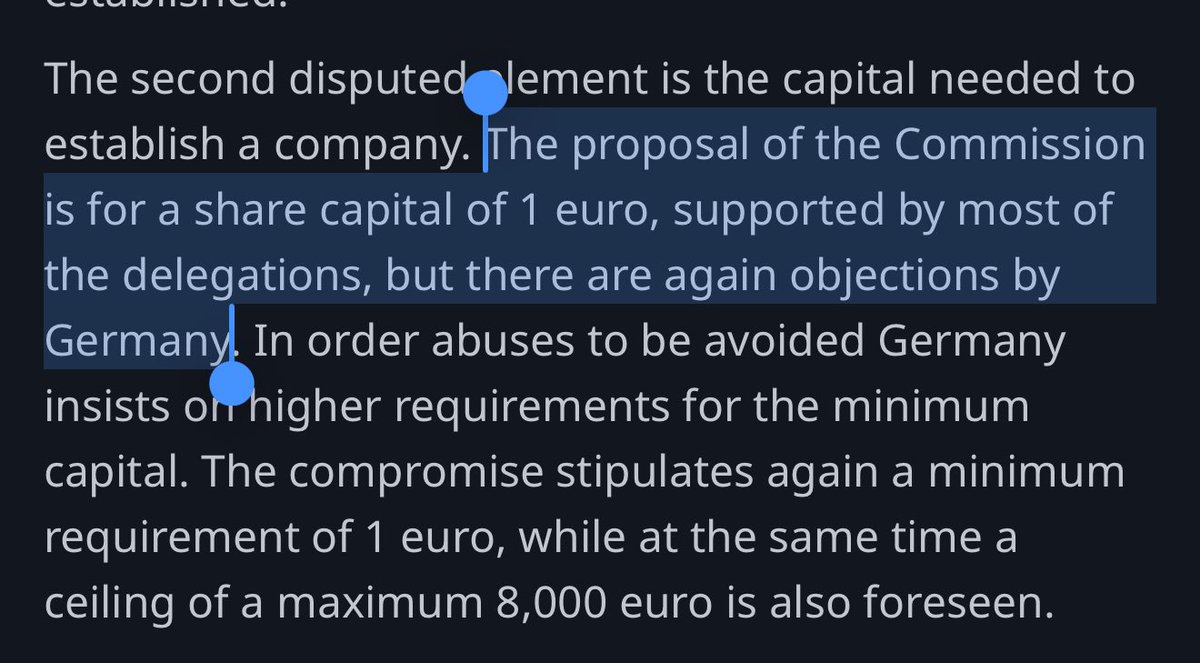
History on European law, 28th regime attempt Last time it was vetoed by 🇩🇪@CDU again in power with Chancelor @_FriedrichMerz . Will F Merz do (much) better than Merkel? Germany was against the min 1 euro requirement, which would have made Europe competitive with 🇺🇸
eu/acc tweet media
English
17
17
138
13K
Finn Völkel retweetledi
Clojure Berlin
Clojure Berlin@ClojureBerlin·
Summer ClojureBerlin meetup on Wed, Jul 23 - sign up here: clojure.berlin/events/2025-07… The topic this month will be clojure-mcp - using Clojure with LLMs Hope to see you in Kreuzberg!
English
0
3
3
1.2K
Finn Völkel
Finn Völkel@_FiV0·
I confusingly said it would be next Wednesday. It's Wednesday in a week (23.7) from now.
English
0
0
0
15