

boyMoon
6.1K posts
boyMoon
@_boyMoon
The only boy on the Moon.
Bonnybridge, Scotland Katılım Nisan 2009
850 Takip Edilen152 Takipçiler

PLEASE REMEMBER
The clocks go forward an hour this Sunday, which means we will have one less hour of Labour ruining our country 💥
English
boyMoon retweetledi

Iran is now releasing cartoons that Trump can understand. 😂🤣👇
English
boyMoon retweetledi

@SarahForRuncorn This is like the Antiques Roadshow but with cunts instead of antiques.
English

We made it to Scotland for Reform Scotland’s 2026 Conference! 🏴 🇬🇧
I’ll be on stage in less than 5 minutes, so make sure you tune in!
English
@A_J_Snowden MPs are getting more and more nasty, disgusting and deluded, shouting your also pre-scripted nonsense do fuck all.
English

Thanks for all the messages and comments following yesterdays #PMQs
People clearly see through the pre-scripted nonsense from Starmer, and it appears you were as annoyed by it as I was.
The official 📸 from yesterday captures my frustration at his disrespect to the House well ⬇️

English
boyMoon retweetledi
boyMoon retweetledi

'Please, you don't have to have your hand on me'
Watch the moment ITV News' @PeterAdamSmith was grabbed by a Reform UK staffer after being told to move on from his line of questioning while interviewing the party's new Scottish leader, Malcolm Offord
English
boyMoon retweetledi

Epstein files on St. Patrick's Day Ballinrobe, Co Mayo, Ireland 🇮🇪🤣
English

Cuba is next.
Then Greenland.
Then Canada.
Brace yourselves!
English

🚨"No more sharia courts, no more cousin marriage, no more separate communities. We are now going to focus on assimilation."
Author Matt Goodwin says, "If you live in Britain, you integrate into Britain."
@JuliaHB1 | @GoodwinMJ
English


The removal of historical figures such as Winston Churchill from English banknotes may appear trivial to some.
But it isn’t.
It matters far more than many people realise.
Because what we are witnessing is not an isolated decision about banknote design.
It is part of something much larger: a slow but relentless erosion of our national culture, identity, and collective memory.
As Professor Frank Furedi has observed, we are living through what he calls “the War Against the Past.”
Across the Western world, an assortment of Diversity, Equity and Inclusion bureaucrats, radical activists, and increasingly compliant public institutions are engaged in a cultural project that seeks to delegitimise our national histories and strip away the symbols that once anchored our collective identity and memory.
The pattern is now familiar.
Statues are toppled.
Historical figures are reframed as morally suspect or “divisive”.
Public institutions rename buildings, spaces, Tube lines.
School and university reading lists are “decolonised”.
The past itself is rewritten to emphasise only its sins while ignoring its achievements.
Even the quiet symbolism of everyday life — the images on our currency, the names of our streets, the monuments in our squares — is steadily edited and sanitised.
What replaces these symbols is rarely anything meaningful.
Instead of historically significant figures who helped shape the nation, we are offered neutral, universal imagery that stands for almost nothing at all — landscapes, wildlife, abstractions.
On the surface this seems harmless.
But symbolism matters.
For centuries, historical figures served as cultural signposts, reminders of the history, struggles and achievements that shaped the nation and its people.
Remove those signposts, and something subtle but important begins to change.
The past becomes distant. Then contested. And then disposable.
Gradually, the story of a nation — its triumphs, failures, and defining moments — is hollowed out.
In its place emerges a new idea of national identity that is deliberately thin: one that defines Britain not through its history or traditions but through the abstract celebration of diversity itself.
In other words, the only thing that is meant to define us is that we have no defining identity at all.
The endpoint of this cultural project is not inclusion but historical amnesia, or cultural erasure.
A society that is detached from its past, uncertain of its traditions, and unsure of what binds it together.
This is what Sir Roger Scruton meant when he wrote: “A society that loses its memory loses its identity.”
And that loss happens gradually, through thousands of seemingly small decisions — a statue removed here, a curriculum altered there, a historical figure quietly replaced on a banknote.
Each individual change may appear insignificant.
But taken together they represent something far more profound: the slow disconnection of a people from their own history and collective memory.
A people who no longer really know who “we” are.
I doubt the bureaucrats who made this decision at the Bank of England fully grasp the cultural significance of what they are doing.
But intention is not the point. The effect is what matters.
When we remove the symbols of our past, we further weaken the very foundations of our identity.
Or Orwell warned: “The most effective way to destroy people is to deny and obliterate their own understanding of their history.”
This is what is happening and accelerating around us.
This is what Furedi meant by the “War Against Our Past”.
And this is why it really matters.
Not because of one banknote.
But because of the much larger cultural story it represents.
English

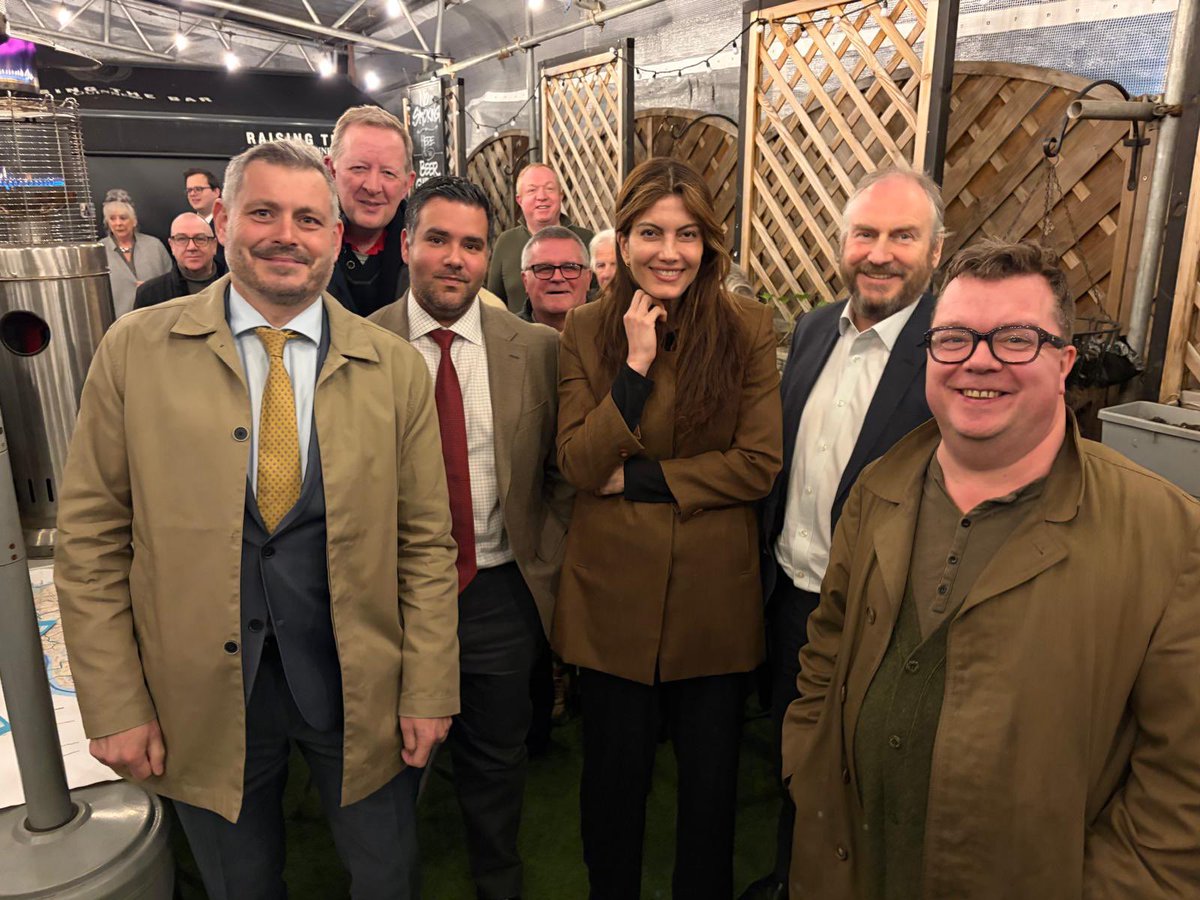

It has taken Labour two weeks to send a single naval vessel from Portsmouth behind me to defend our British base in Cyprus.
The depleted state of our armed forces is making the rest of the world lose respect for us.
This is a wake-up call.
English
@KemiBadenoch @Conservatives How many camera angles needed for this real world working class gobshite?
English

Rachel Reeves is in a parallel universe 🧑🚀
She needs to get out and talk to people in the real world to see the harm she is doing.
The @Conservatives are the only Party with a plan to get Britain working again.
English

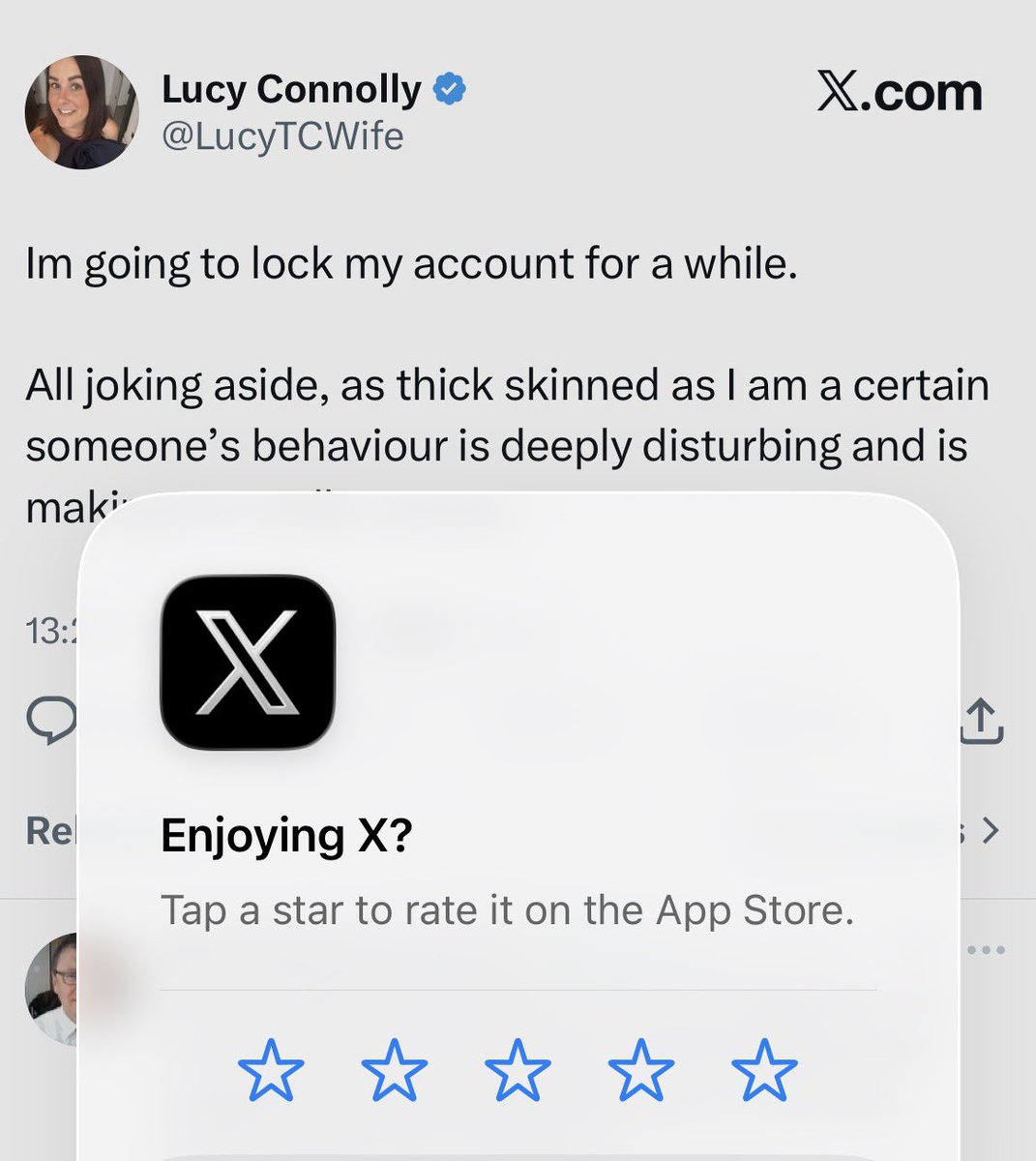

Im going to lock my account for a while.
All joking aside, as thick skinned as I am a certain someone’s behaviour is deeply disturbing and is making me really uneasy,
English