

Lil Uzi Clay
594 posts


most people using AI for cold email are prompting it wrong.
they ask: "write me a cold email for a b2b saas company"
and get exactly what you'd expect. generic. forgettable. deleted.
the prompts that actually produce good cold copy are structured around the prospect's situation, not your product.
i've been refining this prompt library across 10+ client campaigns.
it includes:
-> the account research prompt (extracts likely pain from public data)
-> the problem framing prompt (turns research into a specific one-line hook)
-> the email structure prompt (builds the 4-line cold email from the hook)
-> the subject line generator (5 variants, pick the least obvious one)
-> the reply handler prompt (drafts the first response to a warm reply)
like + comment 'PROMPTS' and i'll DM you. (must be following)
English

Everyone is using Claude right now.
Very few founders are using it to drive real pipeline from LinkedIn.
So I built a free resource with the exact Claude prompts I use to build full LinkedIn funnels… the same system behind the multiple clients we’ve generated over 6-figs for.
Most people are using AI to write posts. Almost nobody is using it to build the actual infrastructure that turns LinkedIn into a lead machine.
I’m sure I could sell these prompts in the future but for now they’re yours:
Comment "Funnel" and I'll send it over.
(You need to be following so I can DM it to you.)
English

Everyone’s hyped about Claude… but very few people know how to actually use it to replace real work.
I’ve compiled 700+ powerful prompts that turn Claude into a serious productivity machine—for writing, research, business, marketing, coding, and more.
If you want them all:
1. Like this post
2. Comment “AI”
I’ll DM you the full prompt library. 🚀

English

I stopped sending text-only outreach to my best prospects.
Instead, I built personalized ‘microsites’ using Gamma's API and Clay:
Each microsite pulls in the prospect's company colors, logos, ICP research, TAM breakdowns, and a customized proposal with a scheduling link.
(and it’s all 100% automated)
This way, every prospect sees a custom proposal before we ever get on a call.
I documented the full workflow so anyone can set this up:
• Clay template for account enrichment (importable)
• Gamma API call format for microsite generation
• Auto-branding logic for colors and logos
• GTM analysis prompt structure
• Scheduling link integration
Comment "MICROSITE" and I'll send it over.
PS - The template is reusable. Once it's set up, you can generate a new microsite for any prospect in minutes.
English


Lil Uzi Clay retweetledi

99% of people using Claude are doing it wrong.
They’re prompting.
Not building systems.
Not automating GTM.
Not printing leverage.
Meanwhile, a small group is using Claude to run:
• Full GTM workflows on autopilot
• Sub-agents working 24/7
• MCP-powered systems that replace entire teams
That’s the gap.
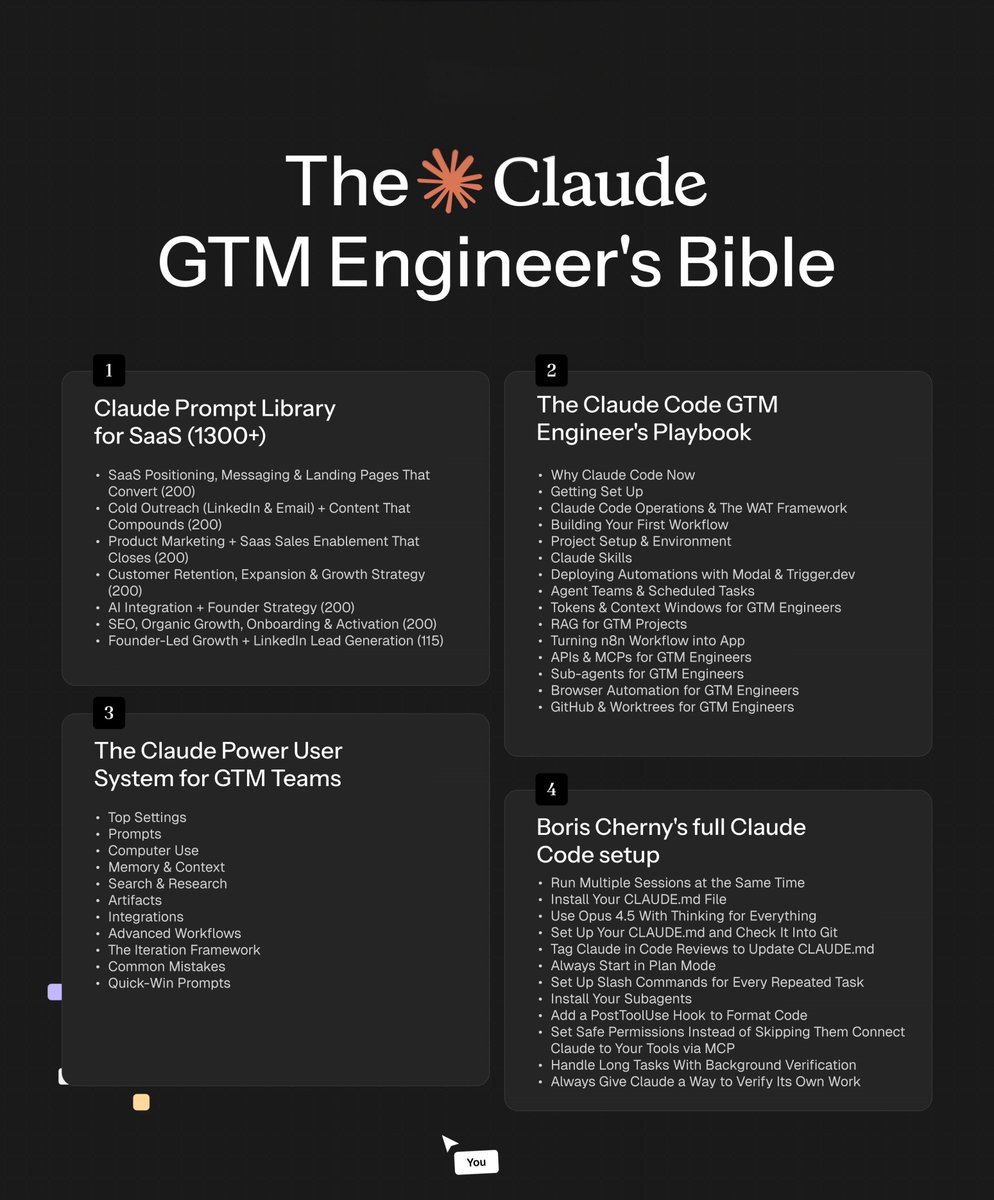
So I spent 100+ hours building The Claude GTM Engineer’s Bible —
everything you actually need:
• 1300+ battle-tested prompts
• Claude Code + WAT framework setup
• MCP, agents, automations (step-by-step)
• Real GTM systems you can deploy immediately
Not theory. Execution.
I’m giving it to only 500 people.
Want it?
Follow me Must (so I can dm)
Rt + Like
Comment “CLAUDE”
I’ll DM it.
Miss this → stay stuck prompting.
English
R.I.P 2026 LinkedIn Algorithm.
No more wondering what works.
Most people right now are:
Posting more
Adding hashtags
Dropping external links
And wondering why impressions disappear.
But something dramatically changed:
LinkedIn stopped rewarding activity.
It now rewards attention.
Slow reading.
Long comments.
Posts people save.
I studied 1,000s of LinkedIn posts from the past few weeks.
The pattern was obvious:
High dwell time = distribution.
Low-effort content = invisible.
So I turned the findings into one practical resource.
A step-by-step LinkedIn growth guide built for the 2026 algorithm.
Inside you'll find:
→ The 4-phase LinkedIn algorithm model explained simply
→ The hook structure that increases “see more” clicks
→ The post format generating the highest save rates
→ The comment strategy that multiplies reach
→ The content mix top creators use every week
→ The first-hour engagement protocol most people miss
One founder applied this structure and their first post had over 100,000 impressions.
If you want the full guide:
1️⃣ Follow me
2️⃣ Comment GUIDE
I'll send it to you.
English
Lil Uzi Clay retweetledi

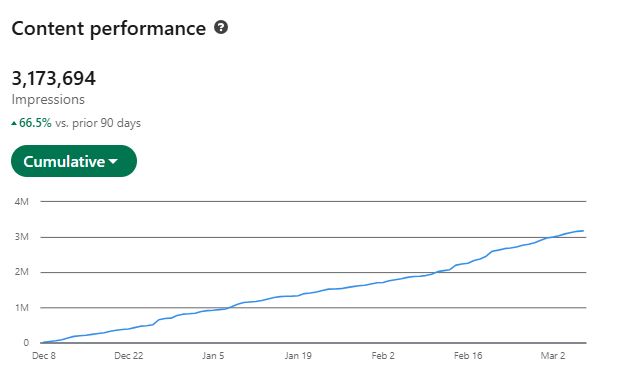
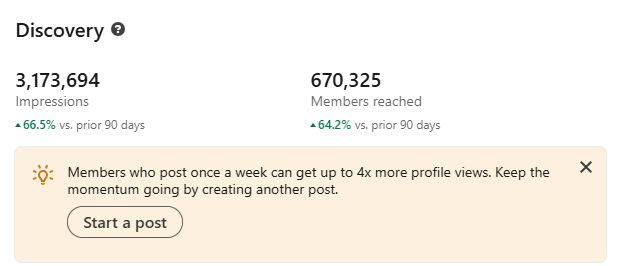
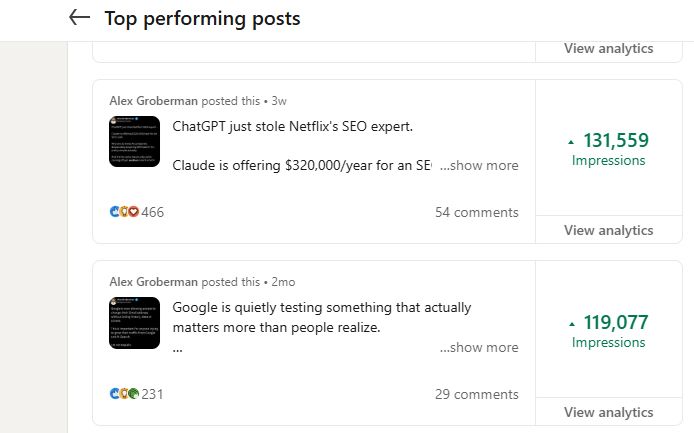
I created my LinkedIn account ~64 weeks ago.
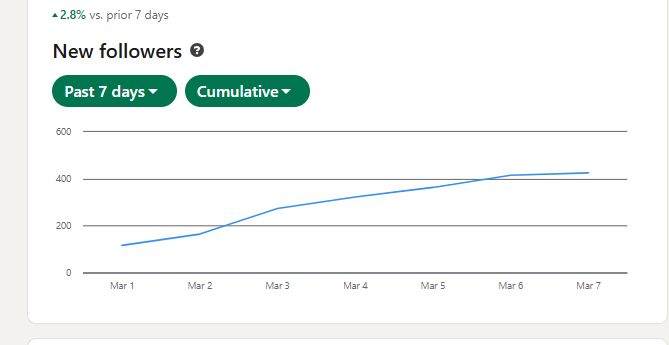
Since then I’ve added $335,000+ in direct revenue from LinkedIn and 14,300 followers.
Easiest algo to crack by a country mile.
And the single *best* social media for signing enterprise clients.
Here is the exact framework I’m using right now...
Oh, and if you want my full unfiltered cheat sheet with engagement group templates, carousel structures, DM workflows, and my posting system, follow me, repost this, and reply “LinkedIn Growth Guide.”
You must do all 3 to receive the DM.
Let me start with what remains true after 64 weeks of daily testing:
Proof-based content continues to outperform everything else.
By proof-based, I mean posts that literally show a real metric, revenue, traffic, pipeline, booked calls, etc. and then add tight context with a clear business takeaway.
Use real numbers whenever possible.
Dwell time still plays a major role too.
If people read the entire post, swipe through multiple carousel slides, or pause on video, the post continues circulating longer.
First-hour replies from people outside your immediate network are still one of the strongest distribution signals you can influence.
On-platform formats beat outbound links in almost every case.
Text posts, carousels and native short video outperform link posts on average.
Link posts without setup consistently stall.
That said, a lower-reach link post with strong intent can still outperform in revenue.
Distribution and conversion are different games.
If you include a link, deliver value first and either modify the preview image or drop the link in the comments.
Topic consistency builds on itself over time.
Posting repeatedly around the same core theme strengthens how LinkedIn categorizes your profile.
Your content then gets shown to people already engaging with that topic.
That improves early engagement quality and comment depth.
Cross-niche engagement still expands reach.
Engaging consistently in two to three adjacent industries pushes your profile into overlapping networks.
Generic likes do almost nothing.
Thoughtful comments that add insight create second-level engagement and extend reach.
Reposting with a new hook still works extremely well.
Most of your followers never saw the original post.
Repost after one to three weeks with a sharper angle, updated numbers, or a clearer outcome.
Posts with replies to replies stay alive longer.
Multi-layer comment threads can extend post lifespan by days compared to shallow discussions.
My posting schedule has not changed.
I post three times per day, every day.
Morning is proof-driven or a strong point of view.
Afternoon is a carousel, teardown, or case study.
Evening is a lesson, system breakdown, or actionable walkthrough.
Skipping even one day reduces momentum for the next 24 hours.
Formats performing best right now:
Carousels with a bold first slide tied to a specific outcome or pain point.
Three to six concise slides with steps, visuals, or proof.
A final slide with a clear next step.
Short native videos under 60 seconds with subtitles.
The hook must land in the first two to four seconds.
Walkthrough and behind-the-scenes videos continue outperforming polished talking-head content when the information is concrete and tactical.
What is underperforming:
Link posts with no setup.
Metrics with no narrative.
Large, dense text blocks.
Generic advice that applies to everyone.
Posts where the author disappears after publishing and does not reply in the first hour.
My engagement strategy:
Comment on 20 to 30 posts per day with insight tied directly to the post.
Like 50 or more posts per day.
Reply to every comment on your own posts within the first hour.
DM five to ten people per day with context-first value tied to something they posted.
Ask follow-up questions inside comment threads to deepen discussion.
Repeated engagement from the same people increases future distribution.
Hooks performing best right now:
“I started this account 64 weeks ago. Here is what $335,000 in LinkedIn revenue actually looks like.”
“This 4-slide carousel booked 5 calls in 24 hours.”
“If I had to rebuild my LinkedIn from zero today, this is the exact system I would use.”
“My 3-post-per-day routine for consistent inbound.”
“I made X this month from LinkedIn. Here is the breakdown.”
Every hook must be backed by proof.
Without proof, credibility drops fast.
Here is a 30-day plan that still works:
Post three times per day with at least one proof-based post.
Comment on 20 to 30 posts daily with substance.
Like 50 or more posts per day.
Reply to every comment within the first hour.
Repost one winner each week with a new angle.
DM five to ten people per day with context-first value.
Track impressions, comment depth, leads, and repeating commenters weekly.
Test hooks, formats, and timing every week.
Run this system for 30 days.
Screenshot your Day 31 results.
Tag me when inbound starts.
If you want the full cheat sheet, follow me, repost this, and reply “LinkedIn Growth Guide.”
You must do all 3 to receive the DM.
English
Lil Uzi Clay retweetledi

after booking 59 calls in 16 days for a b2b agency
i’m leaking the ENTIRE cold outreach system that made it all possible
like + comment “B2B” for a 128-page copy/paste guide about it
(must be following + RT for priority access)
English

Most people suck at LinkedIn.
So I built the most comprehensive LinkedIn GPT you can implement today.
What it does:
→ Builds a 2026 strategy plan for your LinkedIn content
→ Shows you how to structure content around buyer psychology
→ Generates 100+ mapped post ideas (with an idea engine)
→ Teaches you how to use AI for strategy (not just “write a post”)
→ Gives you strategy-first workflows so you stop guessing what to post
→ Runs a content audit (what to kill, keep, and double down on)
→ Roasts your drafts with honest feedback
→ Bakes in positioning so you look like the go-to expert
→ Helps you write in a style that feels human, not robotic
→ Gives you sharp, scroll-stopping post structures
→ Flags common AI mistakes that make posts sound generic (and shows you how to fix them)
If you run outreach, build an agency, or want inbound from LinkedIn - this is the only LinkedIn GPT you’ll need.
Reply “GPT” and I’ll send the link.
English
Lil Uzi Clay retweetledi

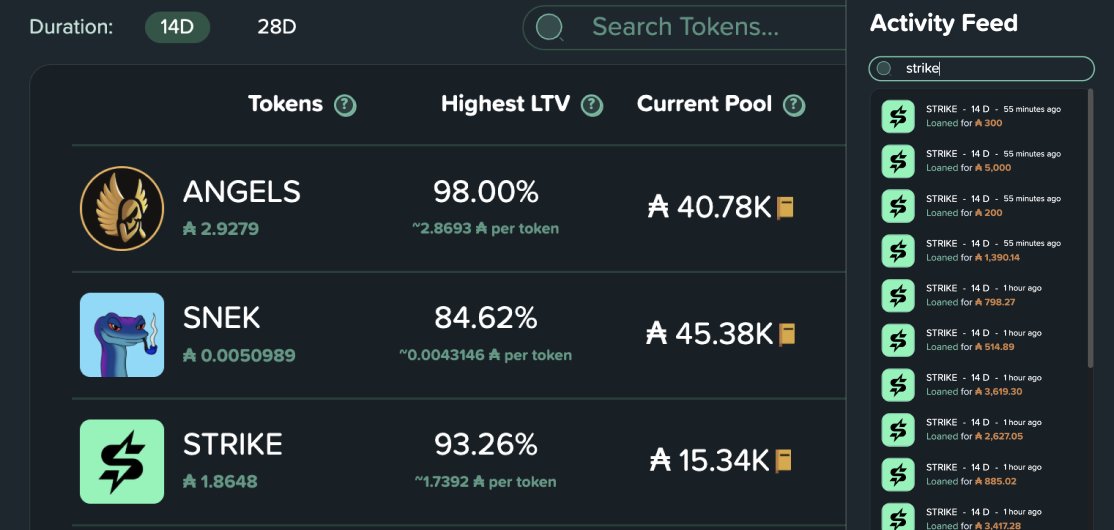
Seeing some big loans on $STRIKE lately with the recent dip and higher LTVs.
Borrowers are hedging their bets on @levvyfinance, using loans where $STRIKE collateral can’t be liquidated.
If the price corrects in 14 days, they repay with interest and get their $STRIKE back. If it keeps dipping, they default, which gives them a way to play both sides of the trade.
Lenders win either way, they receive the $STRIKE collateral at the set price, or earn the highest interest rates on Cardano if they pay it back.
Lend more. Borrow more. Earn more. Only on Levvy. 🦥
English
Lil Uzi Clay retweetledi

How about a thread on the September/October and Q4 plan? We will note key dates, and key levels
You know the “thread” I keep talking about, all going to plan
This is in fact the most excited I have been this cycle
I will explain.
You run this up 100 likes and we get to work.
English

@stakepool_ I did not follow what the criteria is for the drop.. But I’ve been active on the chain for over 4 years now but barely hold any ada in my wallet (since it’s always put to work). Will they look at chain activity as well? Or will they reward people that simply stock Ada?
English
@JanoJano1977 @gl_sk Teba vidieť plakať pod každým postom o kontrole je najväčšia istota v tomto živote:Dd

@gl_sk To nebola kontrola iba bezzubá provokácia zo strany sekty PS , už mal Miško plačovku?
GIF

@Labakan1276 @lukasrucka @miro81s real ale teba by prekorčuloval aj prípravkár, tak opatrno s otváraním úst😀😀

@lukasrucka @miro81s Ale vy Slováci jste nikdy neuměli hrát hokej 😀😀😀
Čeština

Proputinské legendy pod vedením ostrieľaného SNSáka @miro81s dostávajú riadne na piču od Lotyšov a skončia tam, kde celá vládna koalícia, ktorá z účasti žebrákov z KHL dostávala orgazmus - na smetisku dejín.
