Ethan Blagg@ethanblagg
We Killed the Quad!
We replaced our quadrotor hybrid-electric architecture with something fundamentally simpler.
What changed
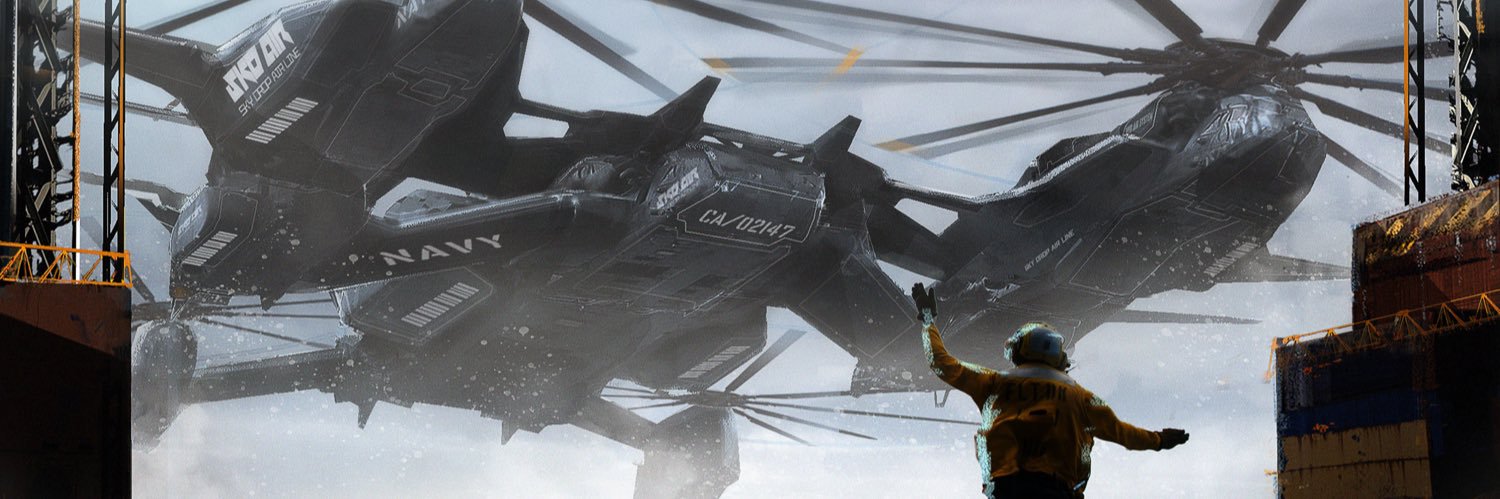
Four rotors became two. Our drone is now a tandem rotor — two big ole 60-foot rotors, fore and aft. Chinook DNA, unmanned, purpose-built for heavy-lift cargo.
Turbine-electric became turbine-mechanical. Instead of turboshafts spinning generators feeding HV buses powering motors turning gearboxes spinning rotors — turboshafts now directly drive rotors through reduction gearboxes.
Why we moved on
The quad hybrid could have worked — the engineering was sound. But as the design matured, we kept hitting the same tradeoffs:
- Weight. Four rotor assemblies, four swashplates, generators, inverters, motor controllers, HV distribution, cooling — 5,000 lbs over target. Solvable, but every pound on powertrain complexity was a pound off payload.
- Complexity. Four swashplates, four gearboxes on top of the electric motors we thought we could avoid. Total integration stack wasn't proportional to the mission.
- Efficiency. Turboshaft → generator → inverter → motor → gearbox → rotor. Every conversion takes a cut. No single handoff was a deal-breaker, but cumulative losses kept us off the performance we knew was possible.
- Certification. A quad at transport category scale with hybrid-electric propulsion has no direct precedent. We'd have gotten through it, but every FAA conversation meant more explanation, more education, more time.
- Field ops. Setup and teardown took too long. Transport wasn't clean. For an aircraft that needs to show up, do work, and leave — friction adds up.
None of these are unsolvable alone. But when put together, we asked is there a simpler way?
This led to a clean-sheet trade study. No sacred cows. What's the lightest, simplest, most certifiable way to put 10,000 lbs on a hook and move it?
Tandem mechanical won. The margins weren't thin.
Why tandem, why mechanical
- Lighter. Two rotor systems, not four. No generators, inverters, HV bus, or motors. Thousands of pounds back as payload, fuel, or margin.
- More efficient, better thrust-to-weight. Large-diameter rotors at lower disc loading. More lift per unit of power. Less fuel burn per ton. Direct mechanical path — the math compounds.
- Transportable. Airframe splits in two halves on standard trucks. Drive to site, bolt together, fly, unbolt, drive home.
- Faster setup and teardown. Two assemblies instead of four. Simpler preflight. More revenue hours per day.
- Easier to certify. The Chinook has flown since 1962 — 60+ years, thousands of airframes, millions of flight hours. The FAA understands tandem rotors. We're asking them to certify a well-understood architecture on an unmanned platform. Different conversation.
- Scalable. Scales up and down cleanly. Product line, not just a product. AS-10 is the first aircraft, not the only one.
- Cheaper to build and operate. Fewer components, subsystems, suppliers, spares. Lower cost per flight hour. Savings flow to customers.
What our customers care about
- Lower job cost. Less than a manned helicopter.
Higher throughput. More loads per day.
- Better accessibility. Show up faster, book easier, less lead time.
- Safety. No pilot at risk.
- Wider envelope. Fly in weather, altitude, and wind that ground other options.
They don't care about rotor count or powertrain. They care about outcomes. So do we.
We have no attachment to any configuration, only to building the simplest, highest-performance heavy-lift system possible. Tandem mechanical gets us there.
Status
Team is on the home stretch of design:
- Final CAD run— airframe, rotors, drivetrain, structures
- Final sims — aero, loads, W&B, flight dynamics
- Nearing design lock — freeze baseline, move into build
Up next: Build and test — full scale prototype, ground testing, first flight.
That's it. End of update. Now back to work.
Onwards and upwards.