Vivek Kumar

4.5K posts

Vivek Kumar banner
Vivek Kumar

Vivek Kumar

@_imavericks

Strategy, Growth, GTM | Web3, Blockchain, AI, and emerging tech

Katılım Mart 2020
772 Takip Edilen827 Takipçiler
Sabitlenmiş Tweet
Vivek Kumar
Vivek Kumar@_imavericks·
Compilation of topics that I have tried to cover in the past and will keep updating it as and when a new topic happens Feel free to share across! 🧵 👇🏻
English
6
0
26
0
Vivek Kumar
Vivek Kumar@_imavericks·
raghu.fren@pythonhulk

Last batch of @nitrodotacc Referrals coming through. This has been a fun experience getting to know so many new founders and startups! - @Onlyrealusers by @0xRoel is a cool project. You can never guess what it's about and I've been asked not to say what it is. - @PactumAI42 by @freddgsf is a fully autonomous agent marketplace. Fred also previous contributed to my daily source of misery with his AI work at EA. - @DashXHQ by @vedantutage03 is a cross border payments play. Particularly impressed with his attempts to own the freelancer tax narrative in recent times. - @bion_app by @nil_lalwani unlocks real world payments for any stablecoin holder as well as other financial services. Nilesh has been a long time builder in the space and Bion has a tonne of users. - @joinwav3 by @its_sgar is working on making one of the richest yet untapped sources of data, listening data, accessible to agents. Personally following this experiment as I care about this quite a bit. - @DenariaFinance by @TizianoTridico is building chain abstracted perps. Good idea and early traction - could be something. Give them all a follow and good luck to everyone!

QAM
0
0
0
51
Vivek Kumar retweetledi
Ethereum Foundation
Ethereum Foundation@ethereumfndn·
Today, the Foundation’s Board released the EF Mandate. This document, which was first intended for EF members, reaffirms the promise of Ethereum, and the role of EF within this ecosystem.
English
198
379
2K
1.7M
Vivek Kumar retweetledi
Stani.eth
Stani.eth@StaniKulechov·
Earlier today, a user attempted to buy AAVE using $50M USDT through the Aave interface. Given the unusually large size of the single order, the Aave interface, like most trading interfaces, warned the user about extraordinary slippage and required confirmation via a checkbox. The user confirmed the warning on their mobile device and proceeded with the swap, accepting the high slippage, which ultimately resulted in receiving only 324 AAVE in return. The transaction could not be moved forward without the user explicitly accepting the risk through the confirmation checkbox. The CoW Swap routers functioned as intended, and the integration followed standard industry practices. However, while the user was able to proceed with the swap, the final outcome was clearly far from optimal. Events like this do occur in DeFi, but the scale of this transaction was significantly larger than what is typically seen in the space. We sympathize with the user and will try to make a contact with the user and we will return $600K in fees collected from the transaction. The key takeaway is that while DeFi should remain open and permissionless, allowing users to perform transactions freely, there are additional guardrails the industry can build to better protect users. Our team will be investigating ways to improve these safeguards going forward.
English
2.9K
1K
11.2K
6.5M
pashov
pashov@pashov·
If a hot girl messages you about AI or web3 security, block him.
English
32
14
255
10.5K
Vivek Kumar retweetledi
Sandeep | CEO, Polygon Foundation (※,※)
India imports 70–80% of its medical devices. That has to change. On 16th Feb, At IIT Delhi, we launched BFI Innovation Full Stack — one of India’s largest biomedical innovation networks — a high-velocity translational engine connecting ideation → prototyping → validation → manufacturing → market adoption. At its core is NAMAH — bridging the deadly gap between lab prototypes and real-world products with pilot manufacturing, regulatory muscle, clinical validation, and go-to-market pathways. From IIT Delhi to real hospital deployment. From proof-of-concept to procurement. This is how India builds, validates, and scales its own MedTech. Not incremental change. Structural change. BFI is determined to help build healthcare sovereignty for India. Personally it was a dream moment for me. IIT Delhi was my dream institute for engineering but I couldn't get in via the coveted Joint Entrance Exam. It was inspirational to launch this program with the Dean R&D and other distinguished professors of IIT.
Sandeep | CEO, Polygon Foundation (※,※) tweet mediaSandeep | CEO, Polygon Foundation (※,※) tweet media
English
33
51
542
17.8K
Vivek Kumar retweetledi
Chris Dixon
Chris Dixon@cdixon·
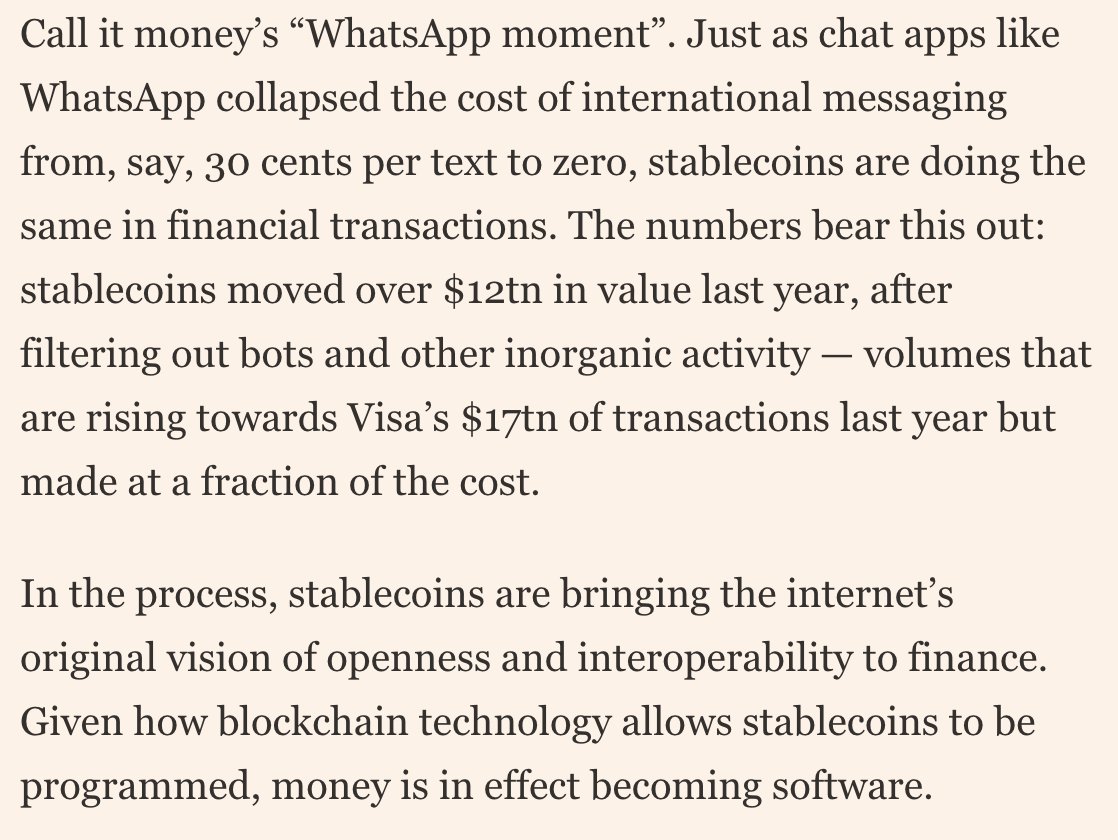
The internet made information global. Crypto is doing the same for money. I discuss how stablecoins bring the internet's original vision to finance, and this important “WhatsApp moment” in the @FT. ft.com/content/7b604d…
Chris Dixon tweet media
English
112
102
624
63.1K
Vivek Kumar retweetledi
vitalik.eth
vitalik.eth@VitalikButerin·
Recently I have been starting to worry about the state of prediction markets, in their current form. They have achieved a certain level of success: market volume is high enough to make meaningful bets and have a full-time job as a trader, and they often prove useful as a supplement to other forms of news media. But also, they seem to be over-converging to an unhealthy product market fit: embracing short-term cryptocurrency price bets, sports betting, and other similar things that have dopamine value but not any kind of long-term fulfillment or societal information value. My guess is that teams feel motivated to capitulate to these things because they bring in large revenue during a bear market where people are desperate - an understandable motive, but one that leads to corposlop. I have been thinking about how we can help get prediction markets out of this rut. My current view is that we should try harder to push them into a totally different use case: hedging, in a very generalized sense (TLDR: we're gonna replace fiat currency) Prediction markets have two types of actors: (i) "smart traders" who provide information to the market, and earn money, and necessarily (ii) some kind of actor who loses money. But who would be willing to lose money and keep coming back? There are basically three answers to this question: 1. "Naive traders": people with dumb opinions who bet on totally wrong things 2. "Info buyers": people who set up money-losing automated market makers, to motivate people to trade on markets to help the info buyer learn information they do not know. 3. "Hedgers": people who are -EV in a linear sense, but who use the market as insurance, reducing their risk. (1) is where we are today. IMO there is nothing fundamentally morally wrong with taking money from people with dumb opinions. But there still is something fundamentally "cursed" about relying on this too much. It gives the platform the incentive to seek out traders with dumb opinions, and create a public brand and community that encourages dumb opinions to get more people to come in. This is the slide to corposlop. (2) has always been the idealistic hope of people like Robin Hanson. However, info buying has a public goods problem: you pay for the info, but everyone in the world gets it, including those who don't pay. There are limited cases where it makes sense for one org to pay (esp. decision markets), but even there, it seems likely that the market volumes achieved with that strategy will not be too high. This gets us to (3). Suppose that you have shares in a biotech company. It's public knowledge that the Purple Party is better for biotech than the Yellow Party. So if you buy a prediction market share betting that the Yellow Party will win the next election, on average, you are reducing your risk. Mathematical example: suppose that if Purple wins, the share price will be a dice roll between [80...120], and if Yellow wins, it's between [60...100]. If you make a size $10 bet that Yellow will win, your earnings become equivalent to a dice roll between [70...110] in both cases. Taking a logarithmic model of utility, this risk reduction is worth $0.58. Now, let's get to a more fascinating example. What do people who want stablecoins ultimately want? They want price stability. They have some future expenses in mind, and they want a guarantee that will be able to pay those expenses. But if crypto grows on top of USD-backed stablecoins, crypto is ultimately not truly decentralized. Furthermore, different people have different types of expenses. There has been lots of thinking about making an "ideal stablecoin" that is based on some decentralized global price index, but what if the real solution is to go a step further, and get rid of the concept of currency altogether? Here's the idea. You have price indices on all major categories of goods and services that people buy (treating physical goods/services in different regions as different categories), and prediction markets on each category. Each user (individual or business) has a local LLM that understands that user's expenses, and offers the user a personalized basket of prediction market shares, representing "N days of that user's expected future expenses". Now, we do not need fiat currency at all! People can hold stocks, ETH, or whatever else to grow wealth, and personalized prediction market shares when they want stability. Both of these examples require prediction markets denominated in an asset people want to hold, whether interest-bearing fiat, wrapped stocks, or ETH. Non-interest-bearing fiat has too-high opportunity cost, that overwhelms the hedging value. But if we can make it work, it's much more sustainable than the status quo, because both sides of the equation are likely to be long-term happy with the product that they are buying, and very large volumes of sophisticated capital will be willing to participate. Build the next generation of finance, not corposlop.
English
940
605
4.9K
931.6K
INSOMNIAC
INSOMNIAC@insomniac988·
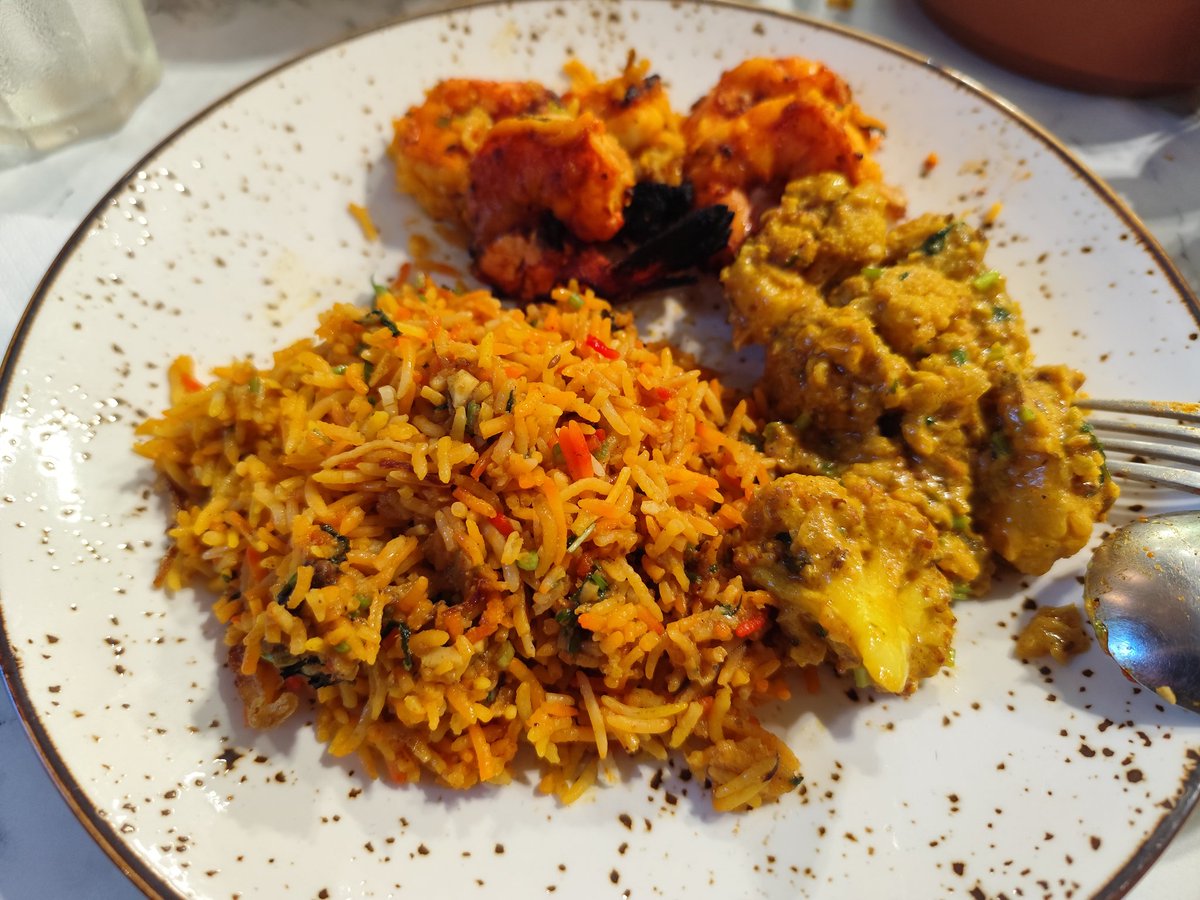
Had prawn biryani and aloo gobi for dinner Love indian food and spices and this was good And best of all, paid for it with my @ether_fi card which worked like a charm
INSOMNIAC tweet media
English
8
0
12
207
Vivek Kumar retweetledi
Deepinder Goyal
Deepinder Goyal@deepigoyal·
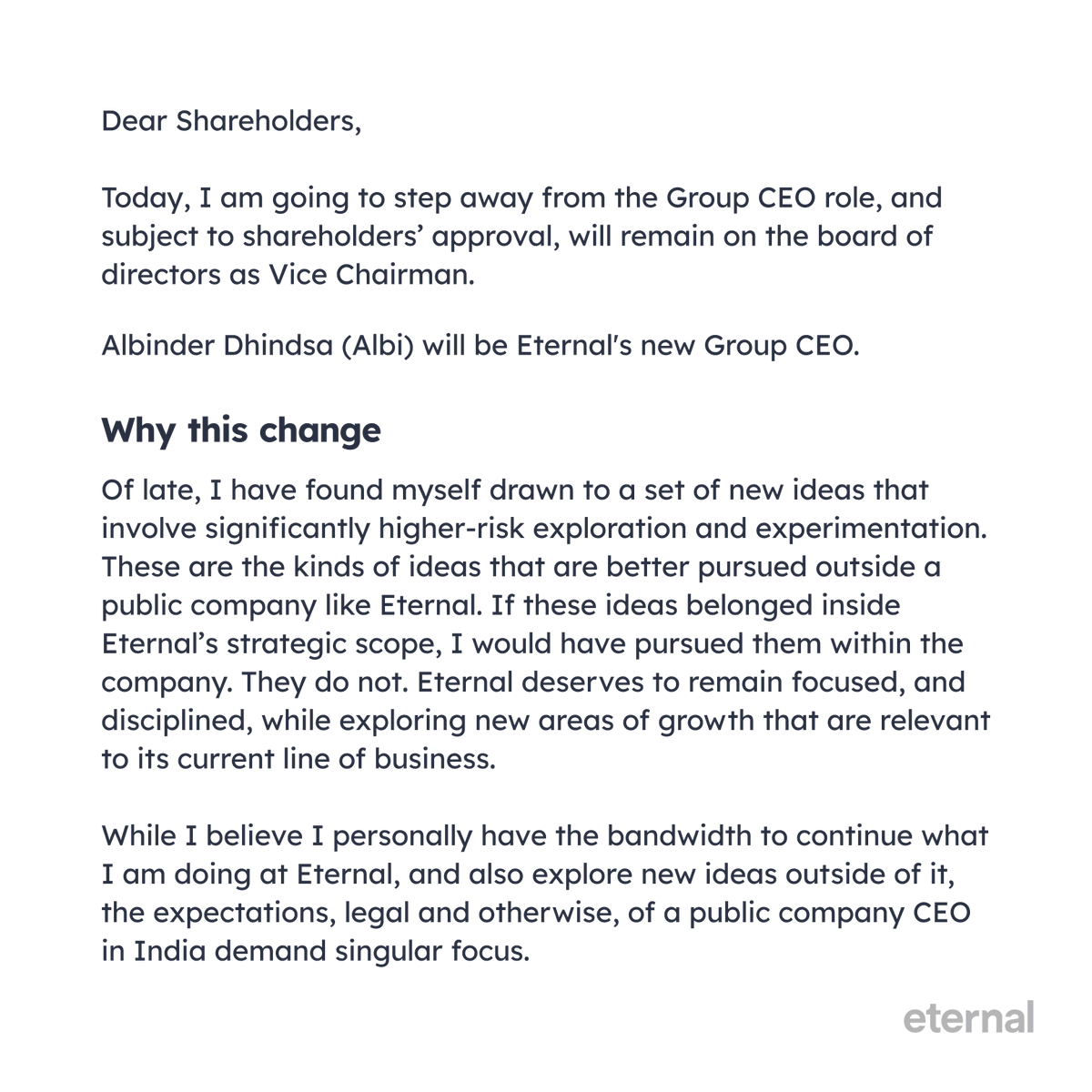
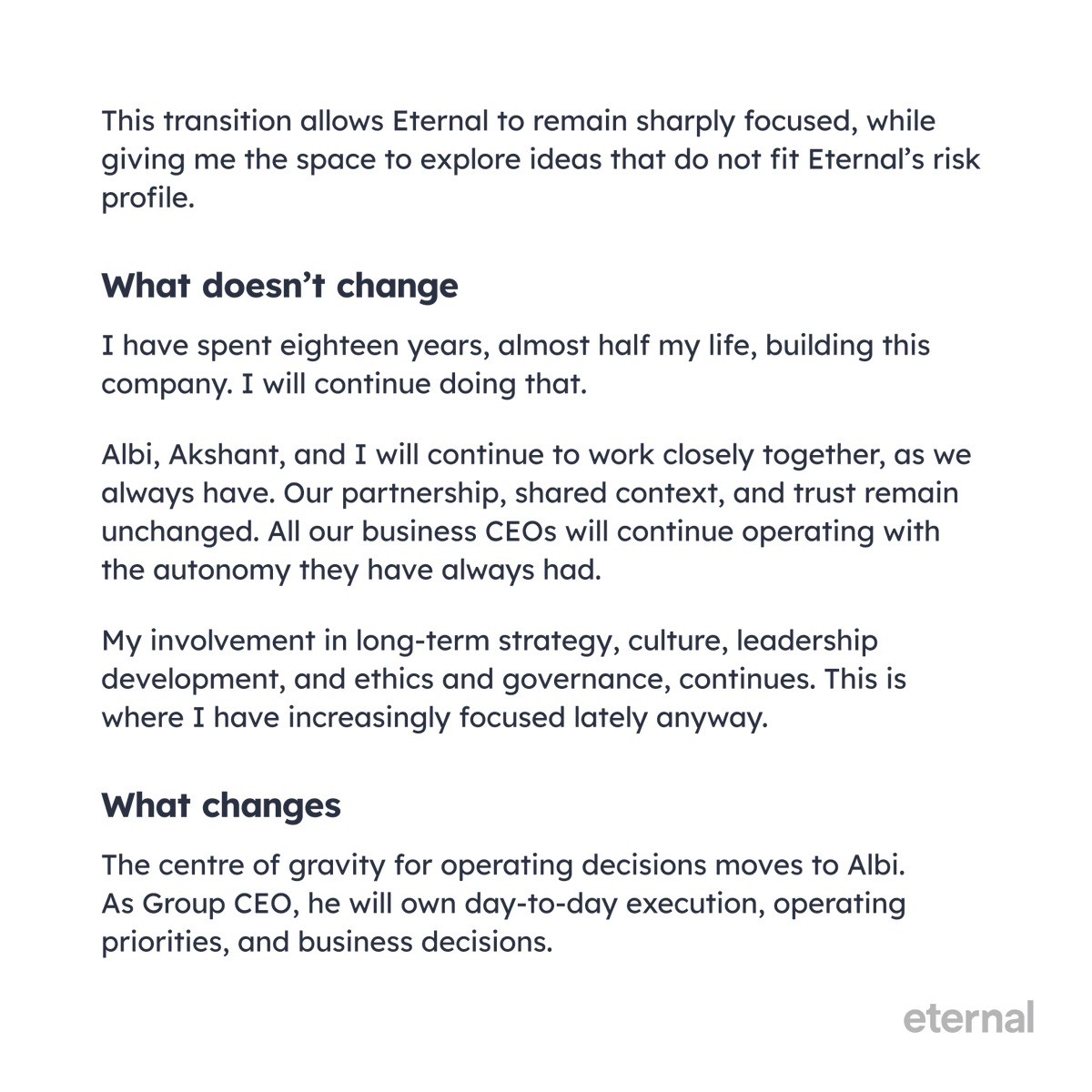
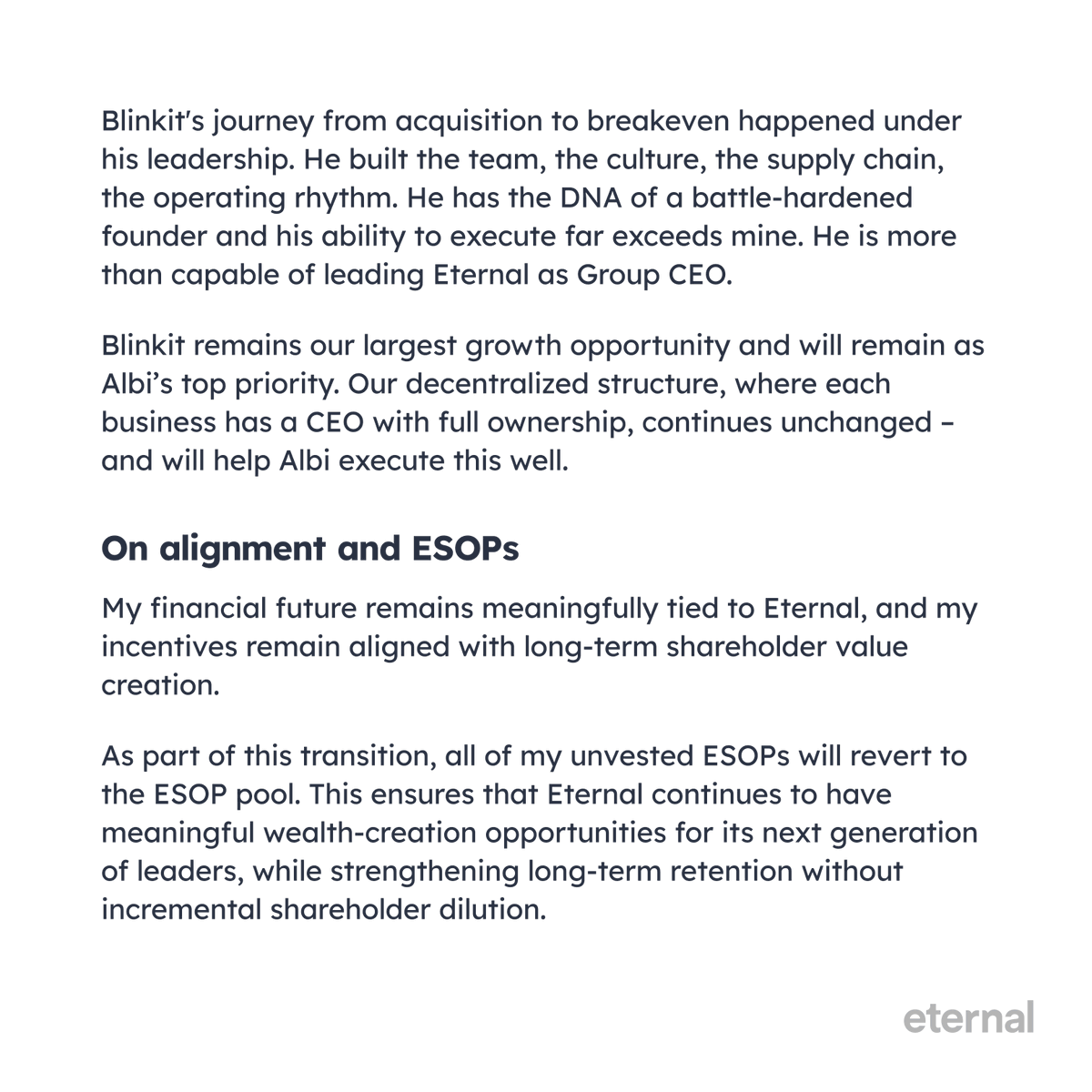
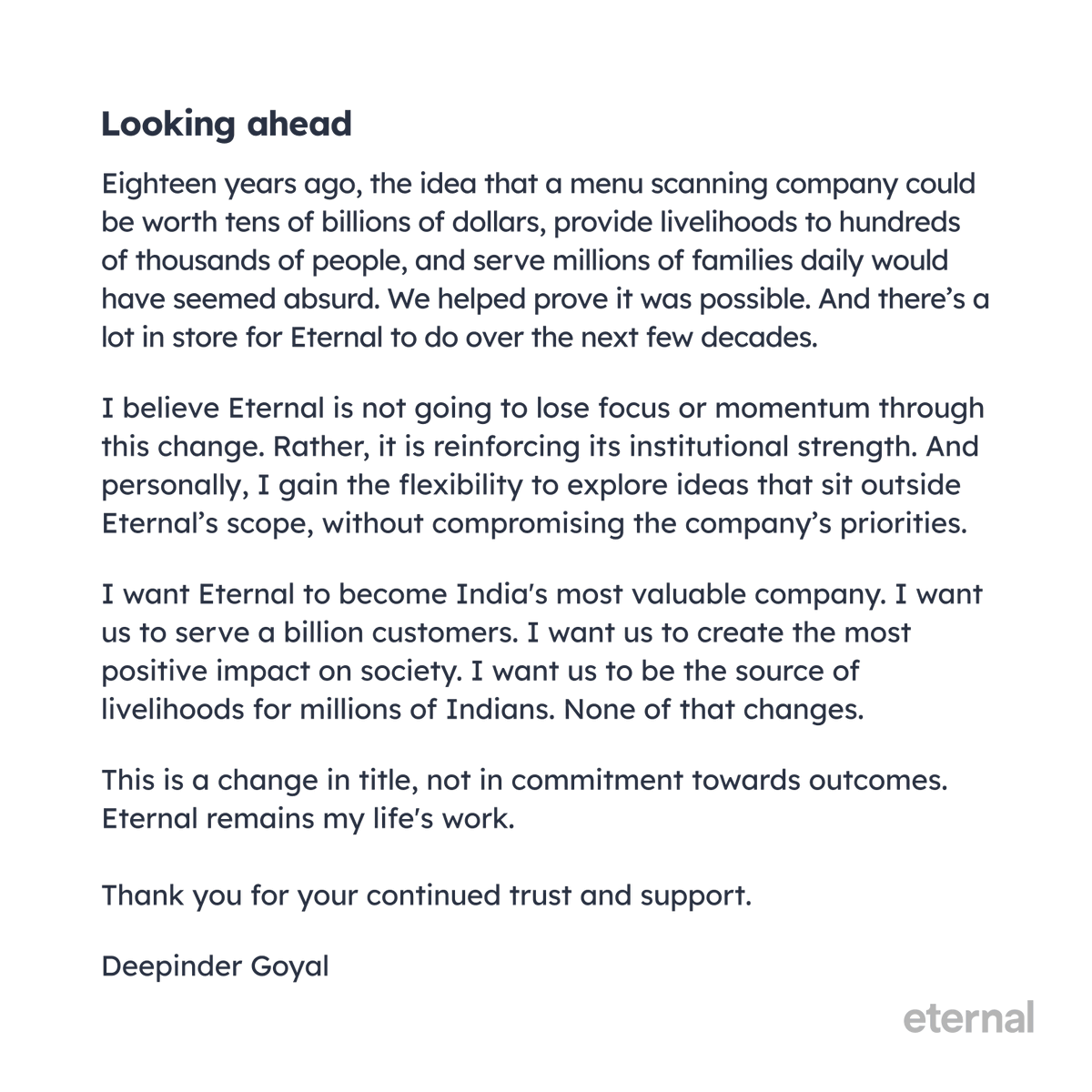
An important update on leadership changes at Eternal.
Deepinder Goyal tweet mediaDeepinder Goyal tweet mediaDeepinder Goyal tweet mediaDeepinder Goyal tweet media
English
647
546
10.7K
1.4M
Vivek Kumar retweetledi
Vanishree Rao
Vanishree Rao@vanishree_rao·
Fermah's Universal Proof Market is now live on internal mainnet. And it exists for a simple reason: most protocol teams don't want to build & maintain proving infrastructure. They just want proofs - reliably, cheaply, and without babysitting.
English
36
11
89
17.8K
Vivek Kumar retweetledi
Soumyarendra Barik
Soumyarendra Barik@imsoumyarendra·
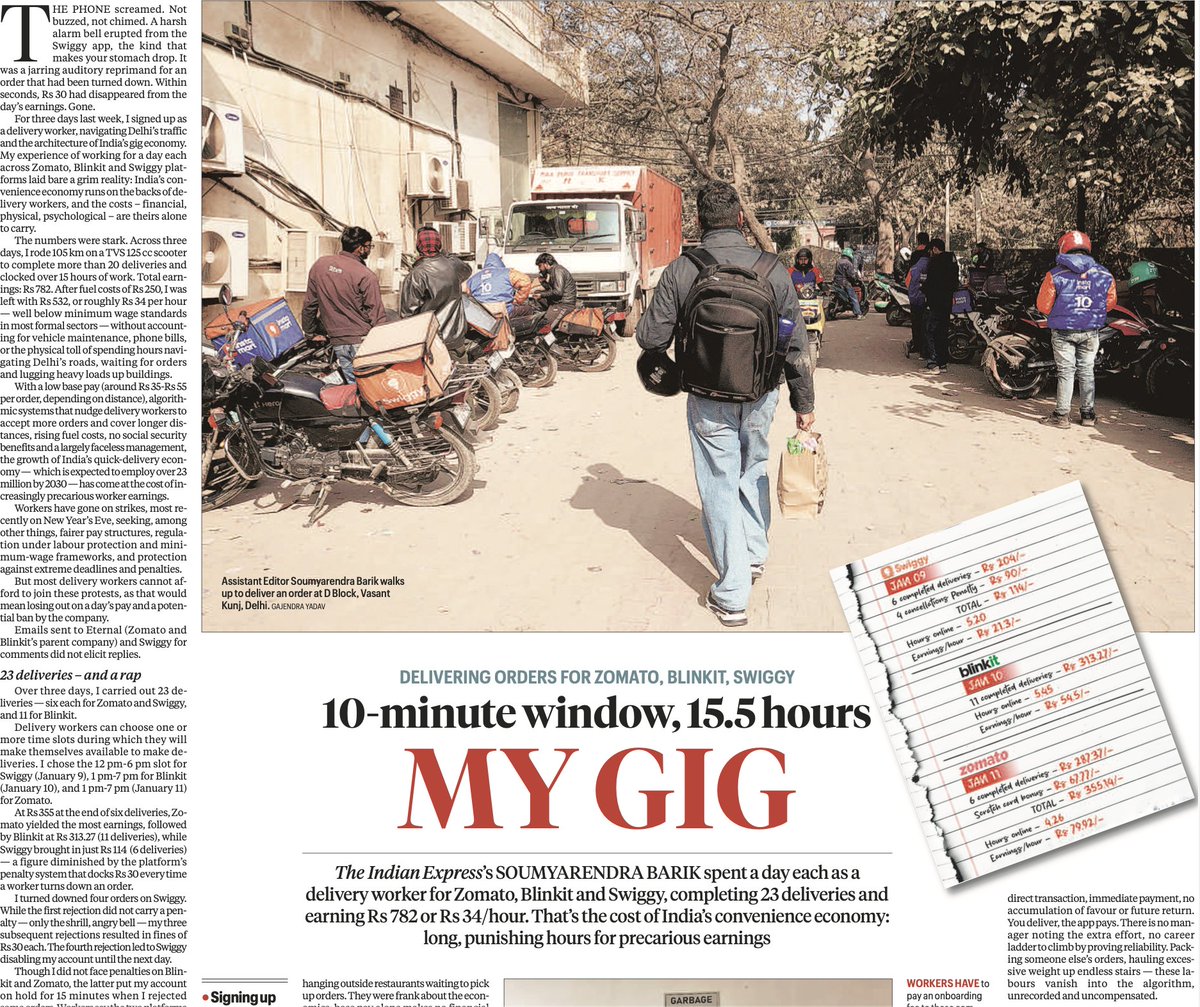
🚨Ground report: I spent 3 days as a gig worker for Zomato, Blinkit & Swiggy in Delhi. 23 deliveries. 15.5 hours. 105 km. Total earnings: Rs 782 (Rs 34/hour) After fuel: ₹532 This is India's convenience economy. A thread on what I learned @IndianExpress
Soumyarendra Barik tweet media
English
262
2.2K
6.2K
1.1M
Vivek Kumar
Vivek Kumar@_imavericks·
Constantly tracking the market encourages comparison, noise consumption, and short-term thinking. It fragments attention, drains energy toward things we cannot control, and subtly creates anxiety—even when nothing is wrong. Over time, this erodes deep work, clarity, and conviction. By stepping away from continuous market monitoring, we reclaim cognitive bandwidth. That mental space can then be redirected toward core activities: building, learning, refining skills, strengthening systems, and executing on long-term goals. These are compounding actions—quiet, often invisible, but structurally powerful. Peace comes from reducing exposure to volatility—emotional and informational, not just financial. Focus emerges when inputs are deliberate rather than constant. Instead of reacting to every fluctuation, we begin operating from principles, not impulses. In essence: - Less noise, more clarity - Less reaction, more intention - Less comparison, more progress - Less volatility, more peace This isn’t disengagement; it’s strategic detachment. You still care about outcomes, but you stop letting randomness dictate your mental state. That’s where sustained excellence usually lives.
English
0
0
2
37