@avi_press we can finally solve slow compile times with AI. eg gitlab.haskell.org/ghc/ghc/-/merg… done with claude cuts 30%. a few iterations of this and we could have 10x faster compile times
Nix + Haskell is an elite combo, but it's also a special recipe for compilation time land-mines. If you maintain such a codebase over several years, you will periodically be in a situation where you have absolutely no cache, and you just lose 90 minutes compiling the universe.
As a side-quest I've joined the board of the Haskell Foundation @haskellfound 🎉
Looking forward to helping grow the ecosystem and support the Haskell community
haskell.foundation/who-we-are/
I got to meet @_marcscholten in person. He created the Haskell IHP framework, which was a gateway drug that got me hooked on haskell. Was a fun evening in Palo alto. We even explored Stanford together.
rausgegangen was just acquired by DuMont
They were our first customer in 2016/17 - and I joined as an investor in 2023.
Flew in from SFO to honor the sacred German ritual of wet signatures & listen to the notary read the contract aloud (14hours+)
dumont.de/en/german-pres…
The #1 most important thing Haskell needs to do to be the best language for AI coding is to speed up compilation. Haskell code really does often work once it compiles.
i've been experimenting with haskell vibe coding. it's a very interesting approach as it allows for automatic verification of the generated code. this feels like the future of web frameworks and web development itself. going to link the demo below, appreciate any feedback
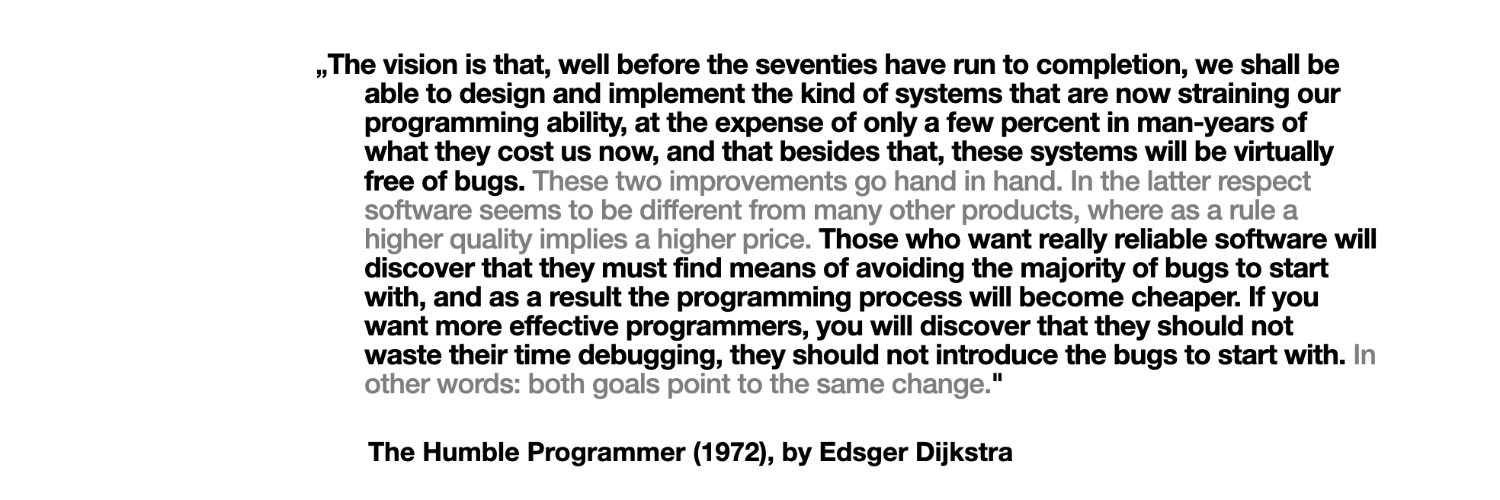
@hendi the future has arrived and it turns out: care and accuracy is a lost art - the average intelligent programmer produces about the same nonsense as the average artificial intelligence programmer. but the ai is cheaper, faster and likes to talk to humans
The most promising technical area today is applying Large Language Models for software code generation. In that sense LLMs are bridging human languages (like English) with computer languages (like Python).
Even as a kid, the most fascinating area for me was grammar (nerd alert!) - starting with Tamil grammar and then later English grammar.
I remember teaching myself English by trying to construct more and more complex grammatically correct sentences. I wasn't as interested in prose or poetry as I was in their *grammatical structure*. That was why "free form" (implying a loose time varying structure) did not attract me as much.
LLMs are trying to bridge the free form, loosely structured world of human textual prompt with the highly structured output of software code. That takes me back to my childhood fascination.
Ancient Bharat produced excellent grammarians in Panini (Sanskrit) and Agasthiyar (Tamil) and those things may be relevant again in the world of LLMs, the interplay of loose structure and rigid structure.
In computer languages, they call the structure as "type systems" and type systems have seen a resurgence lately, in languages like Rust. I believe there is a lot more to be done here.