Michael Coates

7.2K posts

Michael Coates banner
Michael Coates

Michael Coates

@_mwc

CyberSecurity Venture Capitalist - Former: CISO @Twitter, @Mozilla, @Coinlist, Chairman @OWASP, Startup Founder (Acquired)

San Francisco, CA Katılım Eylül 2008
1.8K Takip Edilen11K Takipçiler
Sabitlenmiş Tweet
Michael Coates
Michael Coates@_mwc·
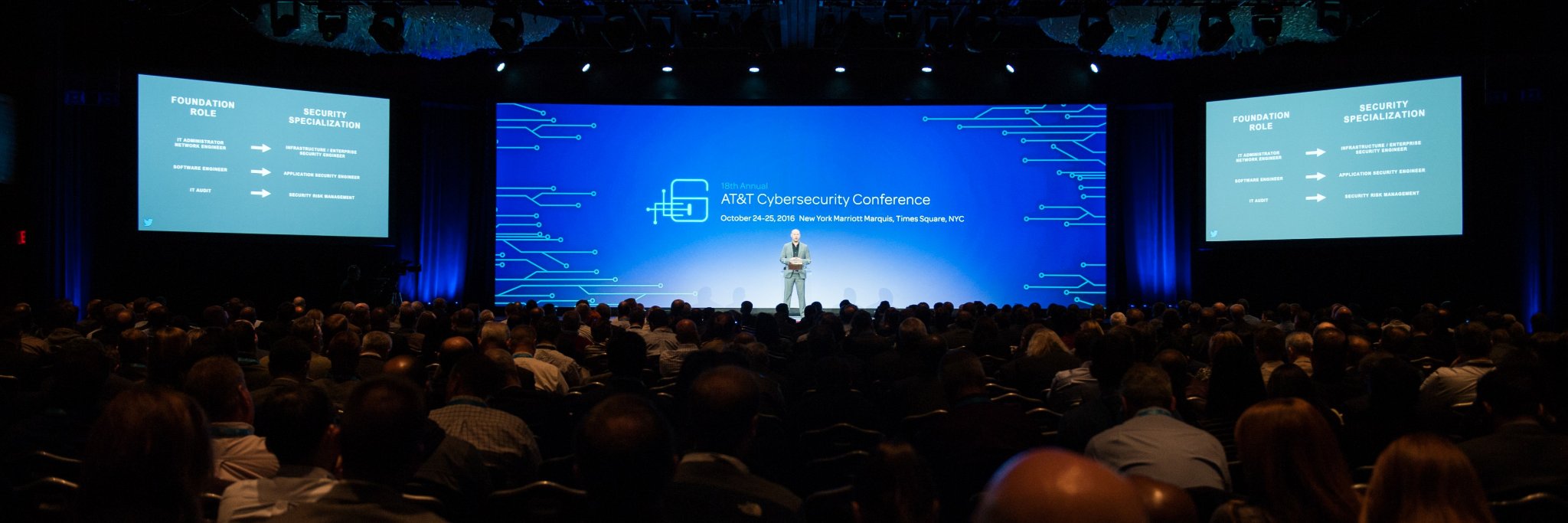
Honored to testify to Homeland Security and joint session on AI, Quantum and Cybersecurity. Full info below
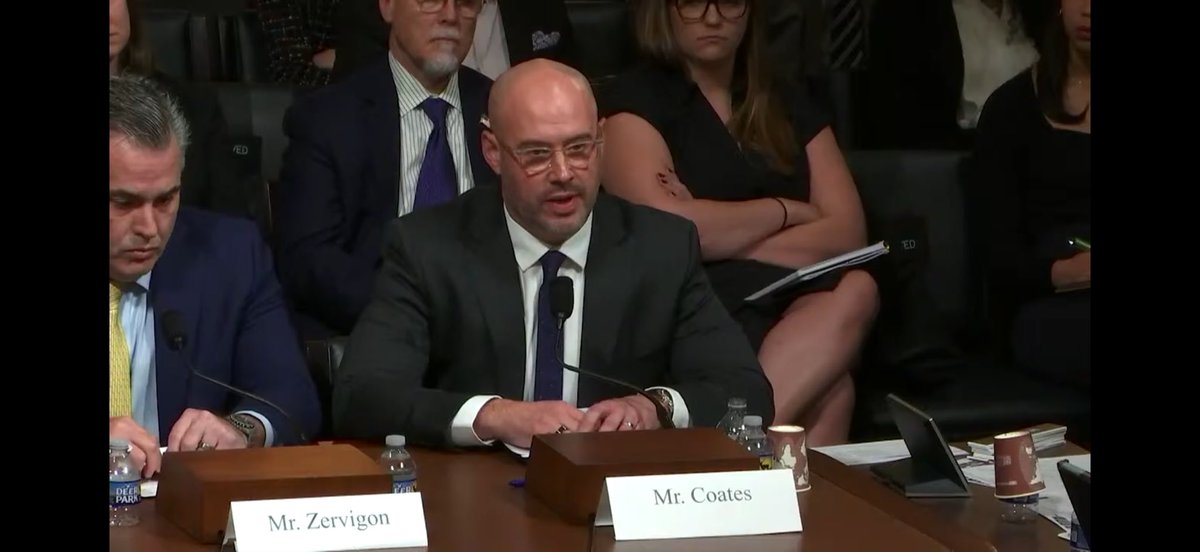
Michael Coates tweet media
English
3
0
8
946
Michael Coates retweetledi
Brendan Falk
Brendan Falk@BrendanFalk·
I believe we've found the best AI-native coding interview We call it the “Composer 1 interview” Candidates get 1 hour to build a real, medium-sized project live The only constraint: they have to use Cursor’s Composer 1 model
English
122
47
1.8K
289.3K
Michael Coates retweetledi
Anthony Kline
Anthony Kline@akline_SF·
Capability isn’t the bottleneck for AI agents anymore. Serif gets this. Instead of “automate anything,” they picked the workflows professionals actually do every day and went deep. Narrow surface area. Reliable execution. Agents that come to you — not the other way around. That’s the right bet. Congrats on the launch.
Kevin Yang@kevinyang

We raised $6.5M to build the agent for professionals. When your reputation is on the line, you need an agent that's reliable, secure, and one step ahead. Try it now at serif.ai

English
0
3
8
1.7K
Michael Coates retweetledi
Mark Gadala-Maria
Mark Gadala-Maria@markgadala·
This is wild. 143 million people thought they were catching Pokémon. They were actually building one of the largest real-world visual datasets in AI history. Niantic just disclosed that photos and AR scans collected through Pokémon Go have produced a dataset of over 30 billion real-world images. The company is now using that data to power visual navigation AI for delivery robots. Players didn't just walk around with their phones. They scanned landmarks, storefronts, parks, and sidewalks from every angle, at every time of day, in lighting and weather conditions that staged photography would never capture. They documented the physical world at a scale no mapping company with a fleet of vehicles could have replicated on the same timeline or budget. Niantic collected this systematically, data point by data point, across eight years, while users thought the only thing at stake was catching a rare Charizard. The most valuable AI training datasets in the world aren't being assembled in data centers. They're being built by people who have no idea they're building them.
NewsForce@Newsforce

POKÉMON GO PLAYERS TRAINED 30 BILLION IMAGE AI MAP Niantic says photos and scans collected through Pokémon Go and its AR apps have produced a massive dataset of more than 30 billion real-world images. The company is now using that data to power visual navigation for delivery robots, letting them identify exact locations on city streets without relying on GPS. Source: NewsForce

English
2.2K
24.4K
107.3K
13.9M
Michael Coates
The AI coding mind swap: “I bet there’s a browser plugin or open source project for this” - to - “I bet I could just have this coded up real quick” Just build things
English
2
0
3
298
Michael Coates retweetledi
Dr. Jebra Faushay
Dr. Jebra Faushay@JebraFaushay·
Saturday Night Live occasionally makes me laugh. Welcome to MAHAspital. Where emergencies are treated with beef tallow and raw eggs.
English
439
3.6K
24.9K
4.4M
Michael Coates
@trikcode Yes, but… Those that push the bounds will rise and orchestrate computers doing the work of many engineers. Those that sit back and let the computers do the work today will be replaced by the computers themselves (or the orchestrator above)
English
0
0
2
493
Wise
Wise@trikcode·
Software engineers are the happiest people on Earth now. They pay $100/month for Claude Code to do the work. Their employer pays them $10,000/month for the results. $9,900 profit for sipping coffee and talking to AI. The funniest part? Not a single dev with a full-time job will ever admit this publicly What a time to be alive.
English
711
238
5.2K
618K
Michael Coates retweetledi
vittorio
vittorio@IterIntellectus·
this is actually insane > be tech guy in australia > adopt cancer riddled rescue dog, months to live > not_going_to_give_you_up.mp4 > pay $3,000 to sequence her tumor DNA > feed it to ChatGPT and AlphaFold > zero background in biology > identify mutated proteins, match them to drug targets > design a custom mRNA cancer vaccine from scratch > genomics professor is “gobsmacked” that some puppy lover did this on his own > need ethics approval to administer it > red tape takes longer than designing the vaccine > 3 months, finally approved > drive 10 hours to get rosie her first injection > tumor halves > coat gets glossy again > dog is alive and happy > professor: “if we can do this for a dog, why aren’t we rolling this out to humans?” one man with a chatbot, and $3,000 just outperformed the entire pharmaceutical discovery pipeline. we are going to cure so many diseases. I dont think people realize how good things are going to get
vittorio tweet mediavittorio tweet mediavittorio tweet mediavittorio tweet media
Séb Krier@sebkrier

This is wild. theaustralian.com.au/business/techn…

English
2.5K
19.9K
118K
17.3M
Michael Coates retweetledi
ClearText
ClearText@ClearTextFM·
16 #cybersecurity publications. 1 daily briefing. 10 minutes. 🎧 Cleartext gives CISOs & security leaders the signal without the noise — threat radar, top stories, CISO angles. Free every morning. 👉 Podcast + newsletter → cleartext.fm
ClearText tweet media
English
0
1
1
93
Michael Coates retweetledi
Bojan Tunguz
Bojan Tunguz@tunguz·
We've reached the point in software development where it's far far easier for a small cracked team to actually build a product than for any team in a big co get the "approval" from "all the relevant stakeholders". This will have major consequences for most incumbents.
English
106
175
1.7K
77.4K
Michael Coates
Michael Coates@_mwc·
@elinesterov I fear the bots would only do this if it were advantageous to be classified as not human. Otherwise the malicious bots would just take the most beneficial path.
English
0
0
0
13
Eli Nesterov
Eli Nesterov@elinesterov·
@_mwc another thought: maybe we should make bots to prove that they are not humans.
English
1
0
0
21
Michael Coates
Michael Coates@_mwc·
For years, the answer to "prove you're human" was a CAPTCHA. Pick the traffic lights. Select all the fire hydrants (and wow did I fail those all the time). That era is over. AI agents now browse the web indistinguishably from real people. The old signals we used to catch bots don't work when the "bot" is a reasoning model running a real browser. I've watched this exact shift play out before — first in anti-bot work at Shape Security, then in crypto KYC at CoinList. Here's how I think the market responds, and why it won't be foolproof but doesn't need to be. x.com/_mwc/status/20…
English
3
0
3
343
Michael Coates retweetledi
Vadim
Vadim@VadimStrizheus·
Maturing is realizing that Tony Stark was a vibe-coder.
English
313
1.7K
24.7K
829.1K
Quiet Operator
Quiet Operator@quietoperatorl·
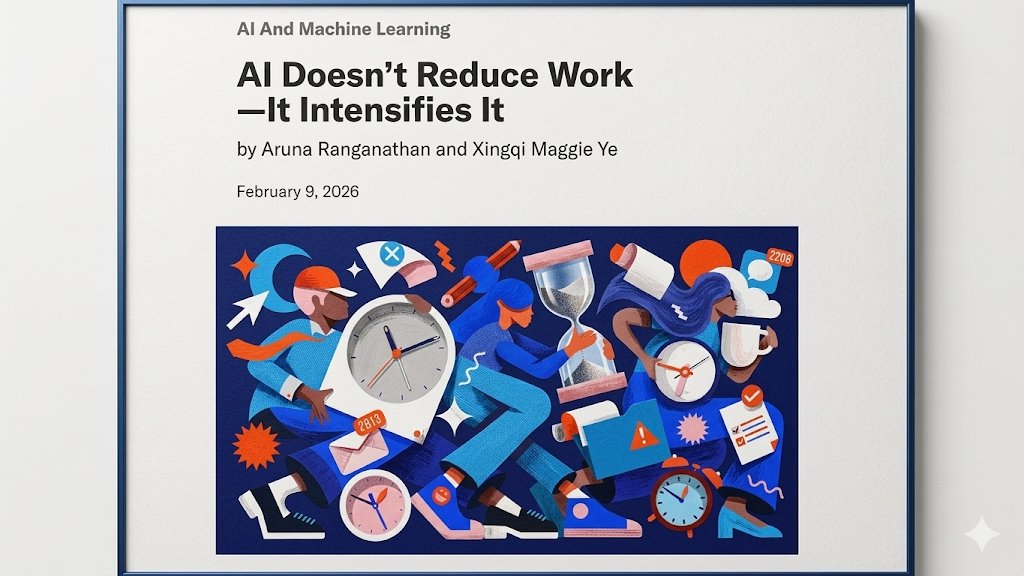
The finding everyone is missing: 62% of entry-level workers burned out. Only 38% of executives. That’s not a seniority privilege gap. That’s a communication structure gap. Junior professionals used AI to do more. More tasks, more drafts, more output, more hours. They measured productivity in volume. And volume without structure is just noise that exhausts you. Senior executives used AI differently — or didn’t feel the pressure to use it at all. Why? Because they already had the operating system. They know that one clear status update beats five detailed ones. That a decision-ready escalation beats three follow-up threads. That a 150-word summary with clear ownership beats a 600-word brain dump that leadership has to decode. The researchers call it workload creep. I’d call it something simpler: using AI to produce more of the wrong thing, faster. The trap isn’t that AI creates more work. The trap is that most people don’t have a framework for what “good output” looks like — so they fill the time gap with quantity instead of quality. AI makes it easy to write ten emails. It doesn’t tell you that one well-structured message would have replaced all ten. The burnout isn’t caused by AI. It’s caused by using AI without a system for knowing when to stop — when the communication is clear enough, concise enough, and structured enough to send. Fewer outputs. Better structure. That’s the exit from the trap. Free guide on building the foundation: quietoperatorlab.gumroad.com/l/before-the-p… The full system — 45 frameworks for producing less output that gets better results: quietoperatorlab.gumroad.com/l/quiet-operat…
English
2
12
45
11.9K
Nav Toor
Nav Toor@heynavtoor·
🚨BREAKING: Berkeley researchers spent 8 months inside a tech company watching how employees actually use AI. The promise was simple: AI will save you time. Do less. Work smarter. The opposite happened. Workers didn't use AI to finish early and go home. They used it to take on more. More tasks. More projects. More hours. Nobody asked them to. They did it to themselves. The researchers sat inside the company two days a week for 8 months. They watched 200 employees in real time. They tracked work channels. They conducted 40+ interviews across engineering, product, design, and operations. Here's what they found. AI made everything feel faster, so people filled every gap. They sent prompts during lunch. Before meetings. Late at night. The natural stopping points in the workday disappeared. People ran multiple AI agents in the background while writing code, drafting documents, and sitting in meetings simultaneously. It felt like momentum. It felt productive. But when they stepped back, they described feeling stretched, busier, and completely unable to disconnect. 83% said AI increased their workload. Not decreased. Increased. 62% of associates and 61% of entry-level workers reported burnout. Only 38% of executives felt the same strain. The people doing the actual work absorbed the damage while leadership celebrated the productivity numbers. Then came the trap nobody saw coming. When one person uses AI to take on extra work, everyone else feels like they're falling behind. So the whole team speeds up. Nobody formally raises expectations. But the new pace quietly becomes the default. What AI made possible became what was expected. The researchers gave it a name: workload creep. It looks like productivity at first. Then it becomes the new baseline. Then it becomes burnout. AI was supposed to give you your time back. Instead it's eating more of it. And the worst part? You're doing it to yourself. Voluntarily.
Nav Toor tweet media
English
315
2.2K
7K
1.1M
Michael Coates retweetledi
Tech Layoff Tracker
Tech Layoff Tracker@TechLayoffLover·
Kid graduated Berkeley CS three weeks ago with $183k in student debt and zero job prospects His cohort of 340 CS majors? 31 have offers. The rest are competing for internships that now require 3 years experience. LinkedIn shows him as "actively seeking" while watching his classmates pivot to product management, consulting, anything that isn't engineering The brutal part: he spent his final semester learning advanced algorithms and distributed systems Meanwhile every "entry-level" posting now lists "AI/ML experience" as a basic requirement. They want someone who can ship features using Cursor and manage offshore teams from day one. His professors told him junior roles were about learning on the job. That world ended somewhere between GPT-4 and Sonnet 3.5. Companies realized they don't need someone to write boilerplate anymore. They need someone who can review AI-generated code and catch the edge cases. The new math: one L5 engineer with Claude can do what a full junior dev team did 24 months ago His $183k debt assumes a starting salary that no longer exists for someone at his level The entry-level SWE role is extinct. The market just hasn't told the universities yet.
English
21
45
323
189.8K