Iran Kecolongan?
Tadi malam, dalam kondisi sebenarnya udah ngantuk banget (dan hampir saya matikan tuh laptop, mau tidur aja karena sudah 10 menit lewat waktu yang dijanjikan, pihak TV belum menghubungi lagi), saya dihadapkan pada pertanyaan yang menggelitik.
Intinya begini, narasumber yang lain menyebut Iran "kecolongan" karena tidak bisa menjaga pemimpinnya. Lalu host mengkonfirmasi ke saya, menanyakan pertanyaan yang -saya pikir- juga ada di benak banyak orang, "Bukankah seharusnya pemimpin dengan level setinggi itu penjagaan keamanannya sangat ketat?"
Saya sebelumnya sudah menyimak pernyataan tokoh politik senior Iran, saat ini menjabat Sekretaris Dewan Keamanan Nasional Tertinggi Iran, Ali Larijani yang menyatakan bahwa Ayatullah Khamanei memang tidak mau diminta bersembunyi. Memang beliau yang maunya tetap bertahan di tengah masyarakat (rumah dan kantor beliau ada di dalam gang, di tengah kota Teheran).
Beliau bilang, baru mau ke bunker kalau semua warga Iran juga dapat kesempatan berlindung ke bunker.
Berkali-kali sebelumnya saya juga melihat video-video yang menunjukkan beliau berdoa, memohon kesyahidan. Suami saya, dulu banget, saat masih kuliah di Iran, pernah ikut i'tikaf di masjid, lalu diumumkan, "Rahbar minta diaminkan doanya." Jamaah i'tikaf ya nurut aja, amin.. amin.. Eh, kemudian ketahuan, doa beliau adalah doa minta segera disyahidkan.
Jadi, ya memang begitulah mental kebanyakan orang Iran, ingin mati syahid. Tapi, beda dengan syahid ala jihadis Wahaboy, harapan akan kesyahidan dipandu oleh kesadaran kritis, yaitu pemahaman geopolitik dan kegigihan mencapai kemajuan iptek, terutama pembuatan senjata untuk membela diri saat musuh menyerang.
Cuma, masih ada pertanyaan tersisa di benak saya, "Ya tapi kan harusnya langit Teheran dijaga dong, biar ga ada rudal atau jet tempur masuk?"
Di TV saya cuma bisa bilang, serangan ini kejutan, karena serangan terjadi saat negosiasi masih berlangsung, dan Menlu Oman di TV bahkan mengungkap, Iran bersedia menyimpan nol cadangan uranium yang diperkaya [yang berpotensi dijadikan bom]. Namun dalam waktu singkat, meski Pemimpin Tertinggi gugur, Iran mampu memberikan serangan balasan.
[Serangan terhadap kediaman Ayatullah Khamenei jam 8.30 pagi, serangan balasan dimulai 11.00 pagi waktu Iran]
Setelah diskusi dengan beberapa kawan, akhirnya ketemu jawaban yang lebih detil. Narasi bahwa “Iran kecolongan karena gagal mengintersep” adalah penyederhanaan yang keliru. Dalam perang modern, tidak ada sistem pertahanan udara yang 100% sempurna. Amerika gagal mencegah serangan 9/11 [dengan mengikuti klaim mereka bahwa Al Qaida yang menabrakkan pesawat ke Twin Tower], Israel tetap kebobolan sebagian roket Iran (bahkan juga roket Hamas) meski punya Iron Dome. Arab Saudi tidak mampu mencegat drone Ansharullah Yaman saat serangan Aramco 2019.
Kegagalan intersep [mencegat] bisa disebabkan oleh serangan multi-vector yang kompleks, faktor kejutan, infiltrasi intelijen, atau celah teknis. Menyimpulkan “lemah” atau "kecolongan" dari satu kegagalan adalah falasi "hasty generalization" (generalisasi yang terburu-buru).
Begitu juga, klaim bahwa terbunuhnya Ayatullah Khamenei adalah gara-gara kebocoran intelijen yang artinya "rezim tidak solid" atau lemah, juga generalisasi yang tergesa-gesa. Faktanya, semua negara mengalami infiltrasi: CIA beroperasi di Rusia, Mossad di berbagai negara, dan intel Rusia maupun China juga menyusup ke Barat. Dan... intel-intel Iran juga ada di Teluk. Makanya Iran menggempur sebuah hotel mewah di Dubai karena mendapatkan info bahwa tentara-tentara AS dievakuasi ke sana.
Terakhir, penyebab terbunuhnya Ayatullah Khamenei juga masih belum pasti, apakah jet tempur masuk ke wilayah Iran, atau rudal yang ditembakkan dari luar Iran. Jika rudal dari luar Iran, penjelasannya begini (kata teman saya):
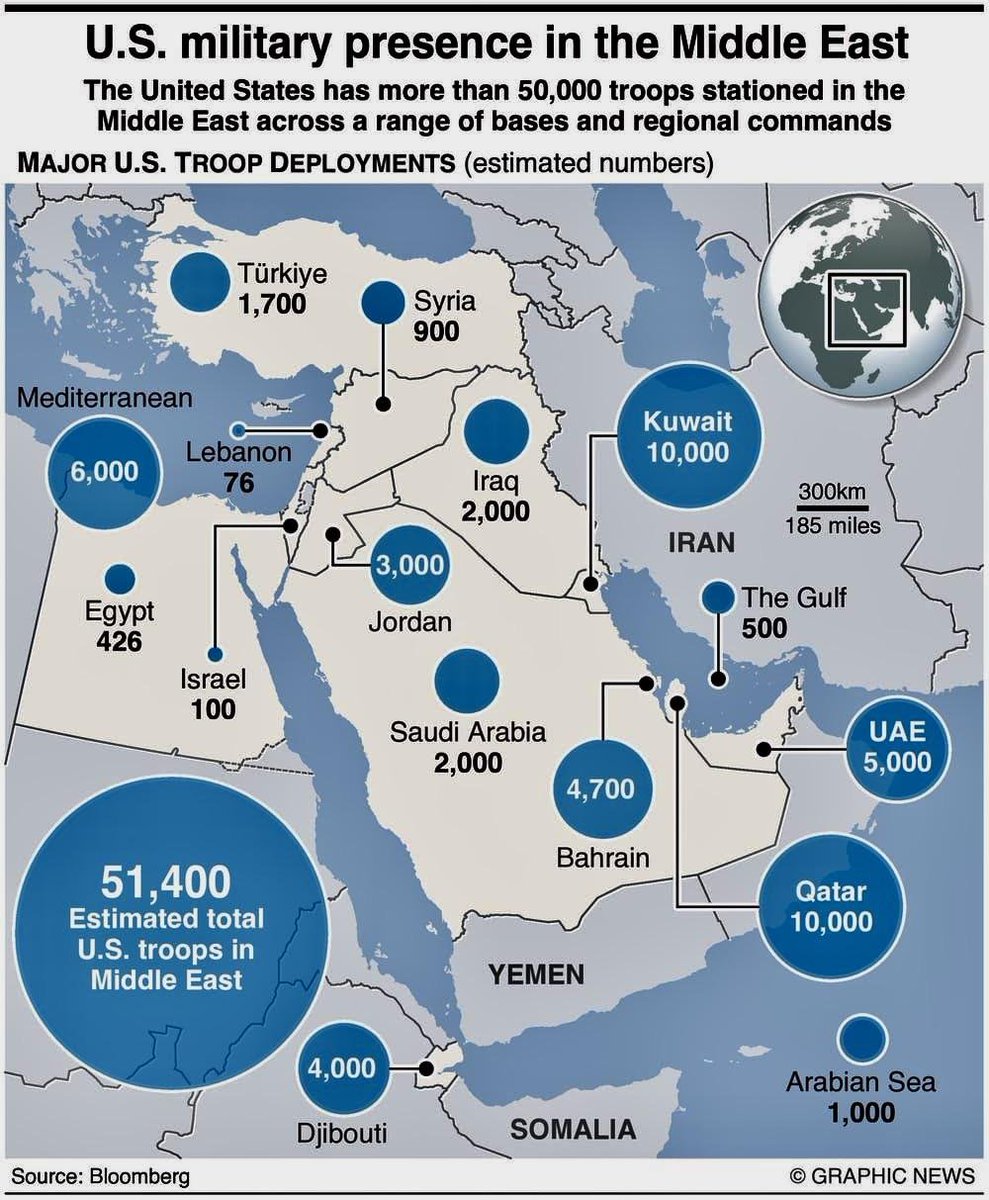
Misil yang ditembakkan dari luar perbatasan masih jadi problem buat semua militer, bukan cuma Iran. Jika rudal itu dikirim dari Suriah, Bahrain, atau Irak, jaraknya sudah terlalu dekat. Misil sudah dalam posisi aktif untuk bisa dicegat. Apalagi (lihat peta), pangkalan militer AS ada di sekeliling Iran, serangan bisa berasal dari mana saja, sulit diduga, dan wilayah Iran sangat luas. Tidak mungkin menjaganya 100% tanpa bisa ditembus.
Sebaliknya, misil dari Iran menuju Tel Aviv, bisa ditembak di Yordania, UAE, dll, karena belum masuk posisi aktif (masih meluncur) jadi lebih mudah dijatuhkan. Itulah sebabnya, jika misil Iran sudah masuk fase aktif, bahkan Iron Dome dkk juga tidak bisa menangkis.
Apapun juga, intinya: Iran sudah (dan sedang) melawan sebaik-baiknya, sehormat-hormatnya. Kematian pemimpin dan para komandan militer adalah bagian dari resiko perjuangan mereka. Kesyahidan (yang rasional) menjadi impian bagi mereka.
YANG SALAH ITU: menyalah-nyalahkan korban. Justru harusnya, terus berfokus ke si pelaku: AGRESI terhadap negara berdaulat adalah salah, melanggar Piagam PBB pasal 2, dan pihak yang diserang berhak untuk membalas (Piagam PBB pasal 51).
Ini juga berlaku dalam cara kita memandang Palestina. Meski di sana ada friksi internal, ya sudah, itu urusan mereka. Selalu ingat bahwa yang salah itu ISRAEL; penjajahan Israel harus segera dihentikan. Jangan malah berkata, "Ya gimana kita mau bantuin? Mereka aja berantem satu sama lain?!"
Utk akun² anonim taek pengepul engagement dan buzzer²; ini saatmu krn video mbah Nun ttg israel iran arab terjadi beneran. Nanti hujat dan cela lagi boleh. Pokokke mana yg engagementnya naik. Netijen² jg monggo mbebek ngalor dan ngidul sesuai arah angin. Krn kamu baru merasa hidup dg cuap².
Imagine if Iran bombed Washington and killed students in schools, what would you call it? Terrorists
The U.S. and Israel bombed Tehran and killed students in schools. Why do you call it a "pre-emptive strike"?
Bombing a school is a war crime under international humanitarian law
I am a diplomatic aide in the Sultanate of Oman's Ministry of Foreign Affairs.
My job is logistics. When two countries that cannot speak to each other need to speak to each other, I book the rooms. I prepare the briefing materials. I make sure the water glasses are the right distance apart. You would be surprised how much of diplomacy is water glasses. Too close and it feels informal. Too far and it feels like a tribunal. I have a chart.
We had a very good month.
Since January, Oman has been mediating indirect talks between the United States and Iran on Iran's nuclear program. The talks were held in Muscat and in Geneva. The Americans would sit in one room. The Iranians would sit in another room. I would walk between them. My Fitbit says I averaged fourteen thousand steps on negotiation days. The hallway between the two rooms at the Royal Opera House conference center is forty-seven meters. I walked it two hundred and twelve times in February. This is good for my cardiovascular health. It was less good for my knees. Both are in the service of peace.
By mid-February, we had something.
Iran agreed to zero stockpiling of enriched uranium. Not reduced stockpiling. Zero. They agreed to down-blend existing stockpiles to the lowest possible level. They agreed to convert them into irreversible fuel. They agreed to full IAEA verification with potential US inspector access. They agreed, in the Foreign Minister's phrase, to "never, ever" possess nuclear material for a bomb. I have worked in diplomacy for seven years. I have never seen a country agree to this many things this quickly. I made a spreadsheet of the concessions. It had fourteen rows. I color-coded it. Green for confirmed. Yellow for pending. By February 21 the spreadsheet was entirely green. I printed it. It is on my desk in Muscat. It is still green.
That phrase took eleven days. "Never, ever." The Iranians initially offered "not seek to." The Americans wanted "will not under any circumstances." We landed on "never, ever" at 2:14 AM on a Tuesday in Muscat. I typed the final version myself. I used Times New Roman because Geneva prefers it. The document was fourteen pages. I was proud of every comma.
Here is what they said, in the order they said it.
February 24: "We have a once-in-a-generation opportunity." — The Foreign Minister, private briefing to Gulf Cooperation Council ambassadors. I prepared the slide deck. Slide 14 was the implementation timeline. Slide 15 was the signing ceremony logistics. I had reserved the Palais des Nations in Geneva, Room XX. It seats four hundred. We discussed pen brands for the signing. The Iranians preferred Montblanc. The Americans had no preference. I ordered twelve Montblanc Meisterstucks at six hundred and thirty dollars each. They arrive on Tuesday.
February 27, 8:30 AM EST: "The deal is within our reach." — The Foreign Minister, CBS Face the Nation. He sat across from Margaret Brennan. He said broad political terms could be agreed "tomorrow" with ninety days for technical implementation in Vienna. He said, and I wrote this line for the briefing card he carried in his breast pocket: "If we just allow diplomacy the space it needs." He praised the American envoys by name. Steve Witkoff. Jared Kushner. He said both had been constructive.
I watched from the Four Seasons Georgetown. The minibar had cashews. I ate the cashews. They were nineteen dollars. The most expensive cashew I have ever eaten. But it was a good morning and we were within our reach.
February 27, 2:00 PM EST: Meeting with Vice President Vance, Washington. The Foreign Minister presented our progress. Zero stockpiling. Full verification. Irreversible conversion. "Never, ever." The Vice President used the word "encouraging." His aide took notes on an iPad. The aide did not make eye contact for the last nine minutes of the meeting. I noticed this. Noticing things is the only part of my job that is not water glasses.
February 27, 4:00 PM EST: "Not happy with the pace." — President Trump, to reporters.
Not happy with the pace.
We had achieved zero stockpiling. Full IAEA verification. Irreversible fuel conversion. Inspector access. And the phrase "never, ever," which took eleven days and cost me two hundred and twelve trips down a forty-seven-meter hallway.
Every American president since Carter has failed to get Iran to agree to this. Forty-five years.
Not happy with the pace.
February 27, 9:47 PM EST: The Foreign Minister's flight departs Dulles for Muscat. I am in the seat behind him. He is reviewing Slide 14 on his laptop. The implementation timeline. Vienna technical sessions. The signing ceremony. The pens.
I fall asleep over the Atlantic. I dream about water glasses.
February 28, 6:00 AM GST: I wake up to push notifications.
February 28: "The United States has begun major combat operations in Iran." — President Trump.
Operation Epic Fury. Coordinated airstrikes. The United States and Israel. Tehran. Isfahan. Qom. Karaj. Kermanshah. Nuclear facilities. IRGC bases. Sites near the Supreme Leader's office. Israel called their half Operation Roaring Lion. Someone in both governments spent time choosing these names. Epic Fury. Roaring Lion. I spent eleven days on "never, ever." They spent it on branding. The President said Iran had "rejected American calls to halt its nuclear weapons production."
Rejected.
Iran had agreed to zero stockpiling. Iran had agreed to full verification. Iran had agreed to "never, ever." Iran had agreed to everything in a fourteen-page document that I typed in Times New Roman.
The President said they rejected it.
I do not know which document the President was reading. I know which one I typed.
February 28, 18:45 UTC: Iran internet connectivity: four percent. — NetBlocks, confirmed by Cloudflare. Ninety-six percent of a country went dark. You cannot negotiate with a country at four percent connectivity. You cannot negotiate with a country that is being struck. You cannot negotiate. This is not a political opinion. This is a logistics assessment.
February 28: The governor of Minab reported forty girls killed at an elementary school.
I do not have logistics for that. There is no slide for that. The water glass chart does not cover that.
February 28: Lockheed Martin: up. Northrop Grumman: up. RTX: up. Dow futures: down six hundred and twenty-two points. Gold: five thousand two hundred and ninety-six dollars. An analyst at AInvest published a note titled "Iran Strikes: Tactical Plays." The note recommended positions in oil, defense stocks, and gold.
The most expensive cashew I have ever eaten was nineteen dollars. The most expensive pen I have ever ordered was six hundred and thirty dollars. The math suggests I have been working in the wrong industry. Defense stocks do not require water glasses. Defense stocks do not require eleven days. Defense stocks require one morning.
February 28: Israel closed its airspace and its schools. Iran launched retaliatory missiles toward US bases in the Gulf. The Supreme Leader promised a "crushing response." Israel's defense minister declared a permanent state of emergency. Everyone is using words I recognize in an order I do not. I recognize "permanent." I recognize "emergency." I do not recognize them next to each other. In diplomacy, nothing is permanent and everything is an emergency. In war it is the reverse.
February 28: The Foreign Minister has not made a public statement.
The briefing card is still in his breast pocket. It still says "within our reach."
🚨 Why Iran Stands Alone Against Israel and the U.S. While Other Muslim States Align with Washington
Before 1979, Iran under Mohammad Reza Pahlavi was actually a close U.S. ally and had quiet relations with Israel.
Everything changed after the Islamic Revolution led by Ruhollah Khomeini.
The new regime defined itself on three pillars:
•Opposition to Western domination
•Rejection of Israel’s legitimacy
•Governance based on Shia Islamic political theology
So hostility toward the U.S. and Israel became part of the state identity, not just foreign policy.
✅ Religious Identity:-
Iran is the largest Shia Muslim-majority nation in the Middle East, whereas most Arab countries are predominantly Sunni Muslim.
The Sunni–Shia split began in 632 CE after Prophet Muhammad’s death — it was originally about who should lead the Muslim community.
•Sunnis believed leadership should go to the most capable companion (Abu Bakr).
•Shias believed leadership belonged to the Prophet’s family, specifically Ali.
Over centuries, this political disagreement became theological.
Today:
•~85–90% of Muslims globally are Sunni
•~10–15% are Shia
•Iran is ~90–95% Shia
•Most Arab states (Saudi Arabia, Egypt, Jordan, etc.) are Sunni-majority
✅ What Makes Shia Political Thought Different?
Shia Islam has a concept absent in Sunni theology:
👉 The Hidden Imam
Twelver Shias believe the 12th Imam disappeared and will return as Mahdi.
This created a political problem:
Who rules in the absence of the Imam?
For centuries, Shia scholars avoided direct political rule — they guided society morally but did not govern.
That changed in 1979.
✅ Velayat-e Faqih – The Radical Shift
After the revolution, Ruhollah Khomeini introduced the doctrine of:
Velayat-e Faqih (Guardianship of the Islamic Jurist)
His argument:
Since the Imam is absent, a senior Shia jurist must govern to ensure Islamic justice.
This created:
•A Supreme Leader
•Clerical oversight over elected institutions
•A state built explicitly on Shia jurisprudence
This model is unique in the Muslim world.
No Sunni-majority state has an equivalent clerical supremacy system.
✅ Why This Creates Regional Tension
Now we move from theology to geopolitics.
Because Iran’s state is built on Shia political theology:
•It sees itself as protector of Shia communities
•It supports Shia movements in Iraq, Lebanon, Yemen
•It frames politics as resistance against injustice and “oppression”
Sunni monarchies — especially Saudi Arabia — see this as:
•A challenge to their legitimacy
•A threat to Sunni dominance
•A potential source of internal unrest (since they have Shia minorities)
So what looks like “sectarian conflict” is actually:
Religious identity + political legitimacy + power competition
✅ Persian vs Arab Identity Layer
There’s also a civilizational factor.
Iran is:
•Persian (non-Arab)
•Has its own language (Farsi)
•Has imperial history older than Islam
Most Middle Eastern states are Arab.
So Iran is different in:
•Ethnicity
•Language
•Historical memory
•Religious orientation
This compounds the sense of separateness.
✅ Why Most Muslim States Don’t Confront the U.S.
This is not mainly about religion — it’s about regime survival.
🇸🇦 Saudi Arabia
•Sunni monarchy
•Security partnership with U.S.
•Oil–security bargain since 1945
•Prioritizes regime stability over ideological confrontation
🇯🇴 Jordan
•Small, resource-poor state
•Depends heavily on U.S. aid
•Seeks stability
🇪🇬 Egypt
•After Camp David (1978), aligned strategically with U.S.
•Receives significant military aid
These states are not necessarily ideologically pro-Israel —
they are strategically aligned with Washington for survival and economic stability.
Iran also competes with Sunni powers for regional leadership.
For example:
•Saudi Arabia sees itself as leader of Sunni Islam.
•Iran positions itself as leader of “resistance.”