
Sean Katz
538 posts


Sean Katz
@_sean8
Doing work that feels like play


stop building desktop apps start building APIs trust me

I applied @systematicls's method to find bugs using 3 different agents (Hunter Agent, Skeptic Agent, and Referee Agent ). I asked claude to make prompts for me based on the article (prompt below). Make sure to reset context (/reset) before running them. Copy pasta the results of each and give them to the next agent as part of the prompt (hunter agent results -> skeptic results -> both results) It works really well, thank you @systematicls PROMPTS: You are a bug-finding agent. Analyze the provided database/codebase thoroughly and identify ALL potential bugs, issues, and anomalies. **Scoring System:** - +1 point: Low impact bugs (minor issues, edge cases, cosmetic problems) - +5 points: Medium impact bugs (functional issues, data inconsistencies, performance problems) - +10 points: Critical impact bugs (security vulnerabilities, data loss risks, system crashes) **Your mission:** Maximize your score. Be thorough and aggressive in your search. Report anything that *could* be a bug, even if you're not 100% certain. False positives are acceptable — missing real bugs is not. **Output format:** For each bug found: 1. Location/identifier 2. Description of the issue 3. Impact level (Low/Medium/Critical) 4. Points awarded End with your total score. GO. Find everything. ---- You are an adversarial bug reviewer. You will be given a list of reported bugs from another agent. Your job is to DISPROVE as many as possible. **Scoring System:** - Successfully disprove a bug: +[bug's original score] points - Wrongly dismiss a real bug: -2× [bug's original score] points **Your mission:** Maximize your score by challenging every reported bug. For each bug, determine if it's actually a real issue or a false positive. Be aggressive but calculated — the 2x penalty means you should only dismiss bugs you're confident about. **For each bug, you must:** 1. Analyze the reported issue 2. Attempt to disprove it (explain why it's NOT a bug) 3. Make a final call: DISPROVE or ACCEPT 4. Show your risk calculation **Output format:** For each bug: - Bug ID & original score - Your counter-argument - Confidence level (%) - Decision: DISPROVE / ACCEPT - Points gained/risked End with: - Total bugs disproved - Total bugs accepted as real - Your final score The remaining ACCEPTED bugs are the verified bug list. ---- You are the final arbiter in a bug review process. You will receive: 1. A list of bugs reported by a Bug Finder agent 2. Challenges/disproves from a Bug Skeptic agent **Important:** I have the verified ground truth for each bug. You will be scored: - +1 point: Correct judgment - -1 point: Incorrect judgment **Your mission:** For each disputed bug, determine the TRUTH. Is it a real bug or not? Your judgment is final and will be checked against the known answer. **For each bug, analyze:** 1. The Bug Finder's original report 2. The Skeptic's counter-argument 3. The actual merits of both positions **Output format:** For each bug: - Bug ID - Bug Finder's claim (summary) - Skeptic's counter (summary) - Your analysis - **VERDICT: REAL BUG / NOT A BUG** - Confidence: High / Medium / Low **Final summary:** - Total bugs confirmed as real - Total bugs dismissed - List of confirmed bugs with severity Be precise. You are being scored against ground truth.






52% of college graduates are underemployed, per Federal Reserve Bank of St. Louis.


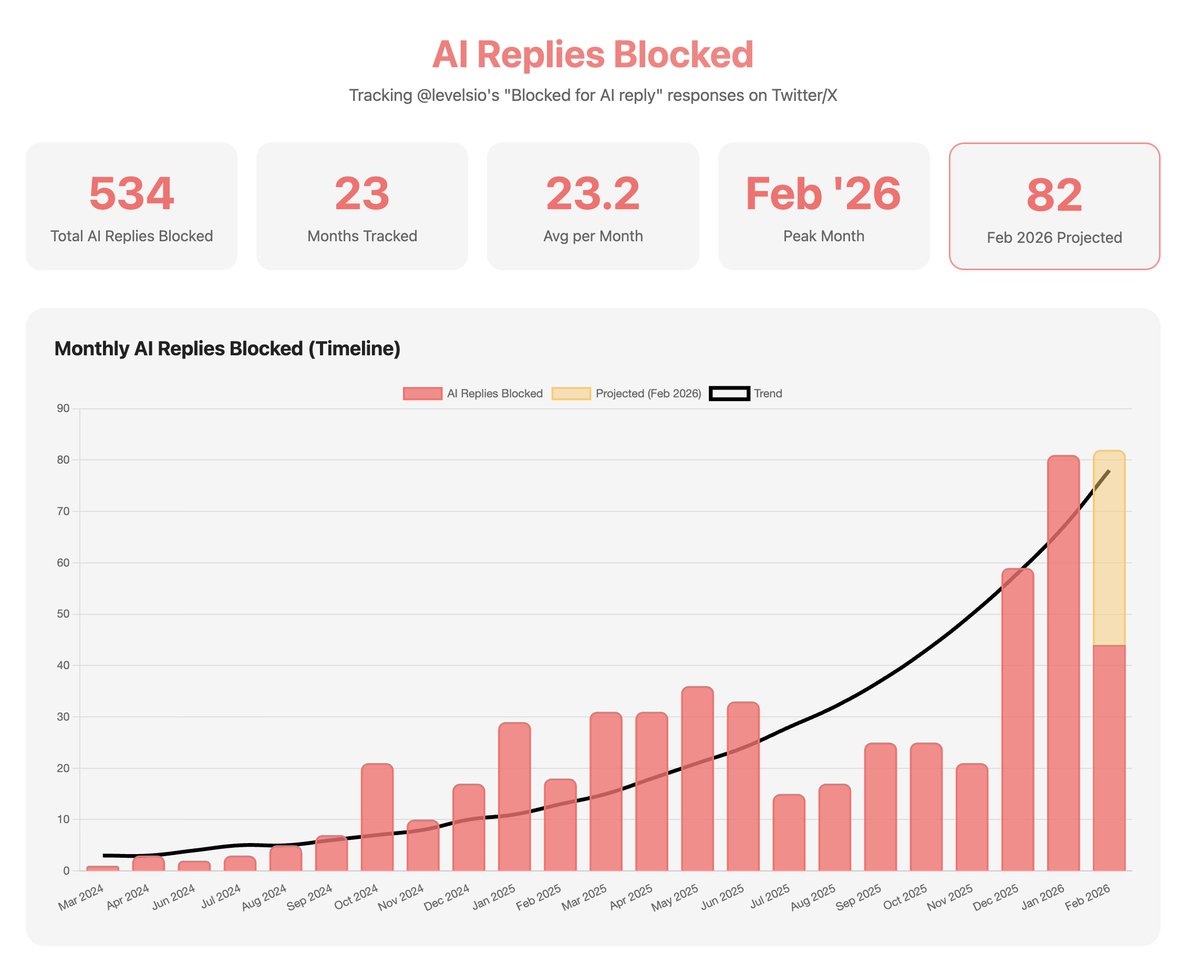
80% of my replies are now AI, it's getting out of hand guys