Aadl
199 posts


Aadl
@aadilomar
trying to figure this thing out but I’d take being lucky any day
Katılım Nisan 2012
713 Takip Edilen130 Takipçiler



@TedHZhang @cperruna Killer how people need to rebuff a mere recounting of well known literature when it does not comply with one’s current view of the world.
English

I remember a passage in Reminiscences of a Stock Operator where Livermore started shorting either 1907 or 1929. Jesse Livremore said one by one, the leaders and groups started getting shot down and couldn’t rally back.
Optical, Memory, Space, Data centers now
Meanwhile, his pilot positions in shorts started working en masse. That was the telltale for him to go even more short,
English
There are a few gems in here you’ve articulated that I’d had a sense of but never been able to eloquently verbalize like one’s own reaction is feedback because you’re developing YOUR system. I’ve already started making adjustments to fit my weaknesses.
You’re right that the work is the moat - it’s a really tough game and getting gut punched is just a normal day at the office.
Thank you for sharing as generously as you have.
GIF
English
The issue with BO is that it’s not actually a setup. Like everything BOs all the time on any timeframe. So saying you have a system which basically is based on buying things that look strong that breakout from tight ranges is not enough on its own as a meaningfully profitable edge. Markets are only THAT inefficient at rare and opportune moments. So the WAITING is what the edge is or rather “equity curve filtering” (ie not taking trades but tracking them at points in time AND/or potentially varying position sizing in an exponential way rather than a linear way for trades you take during particular periods vs others). Unfortunately 99% of what I see on fintwit is massively survivorship biased stuff like “look I bought this setup and it’s a lot higher”, very little discussion of PROCESS or even a baseline strategy that consistently leads you to find the high performing breakouts AND not trade the 999 other ones that stop you out.
Re your point on first principles. The cycle is:
You consistently notice something. Initially it’s just anecdotal. Emotional feedback is also very useful. Like if you are feeling resistance or pressure, that could be the most valuable input FOR YOU, because it’s specific to exactly how you trade. Everyone has a unique lens of viewing the market, if you commit to aligning that lens to how markets actually work, like how they move - you end up with an approach that’s unique to you, but it’s based on principles that don’t belong to you or me. They are a fundamental part of market nature.
So in this process of seeking there’s no ego, there’s just a never ending curiosity to keep fine tuning you awareness so you see the markets for how they actually are more and more precisely.
Unfortunately, you’re rarely going to come across the exact alpha handed out to you because it’s closely guarded for good reasons.
But the good alpha is inevitably rooted in sound fundamental principles , and they are not a secret, they don’t belong to anyone.
Rest is just a ton of work and finetuning. The work is the moat because no one wants to do it :)
English
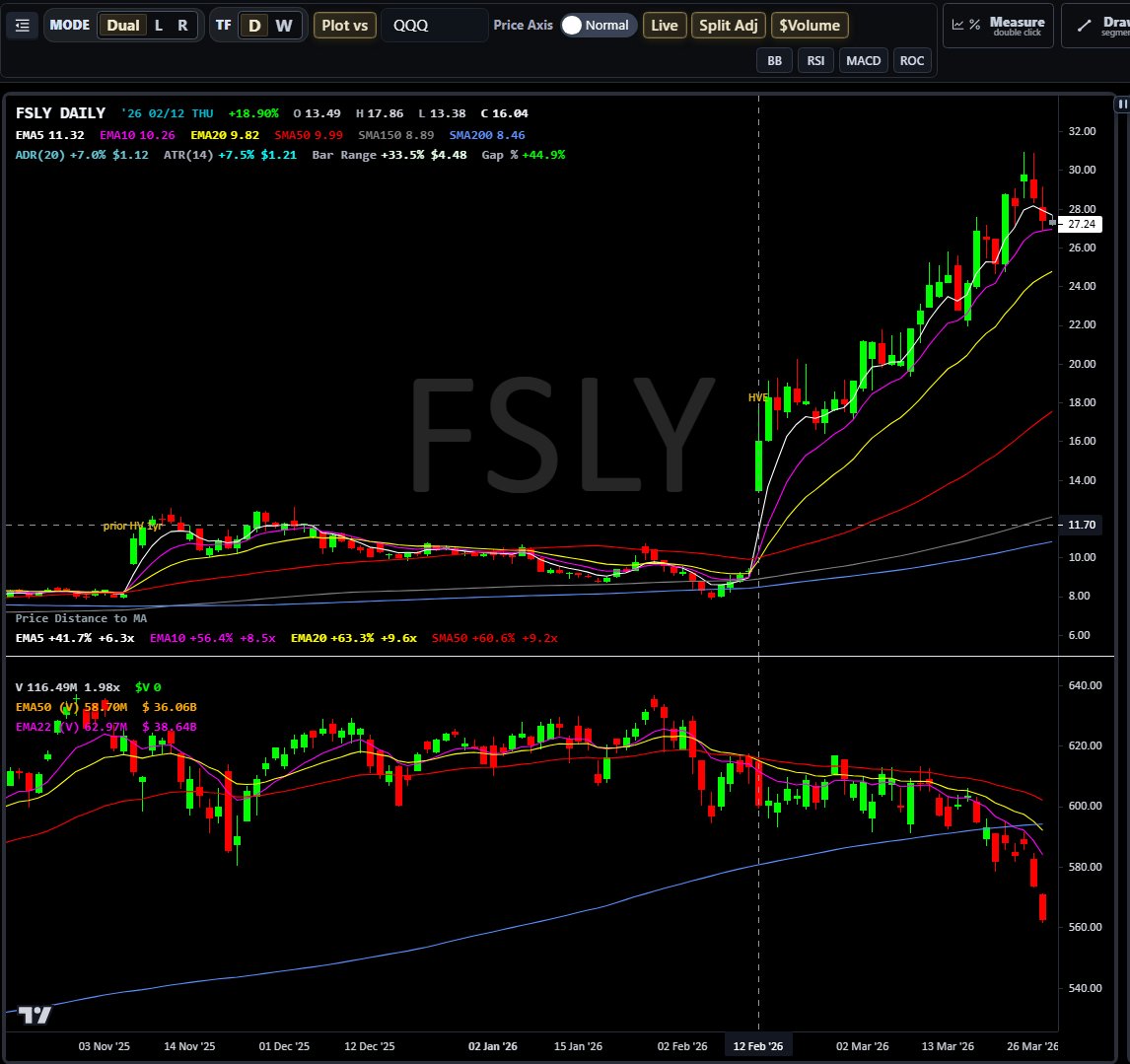
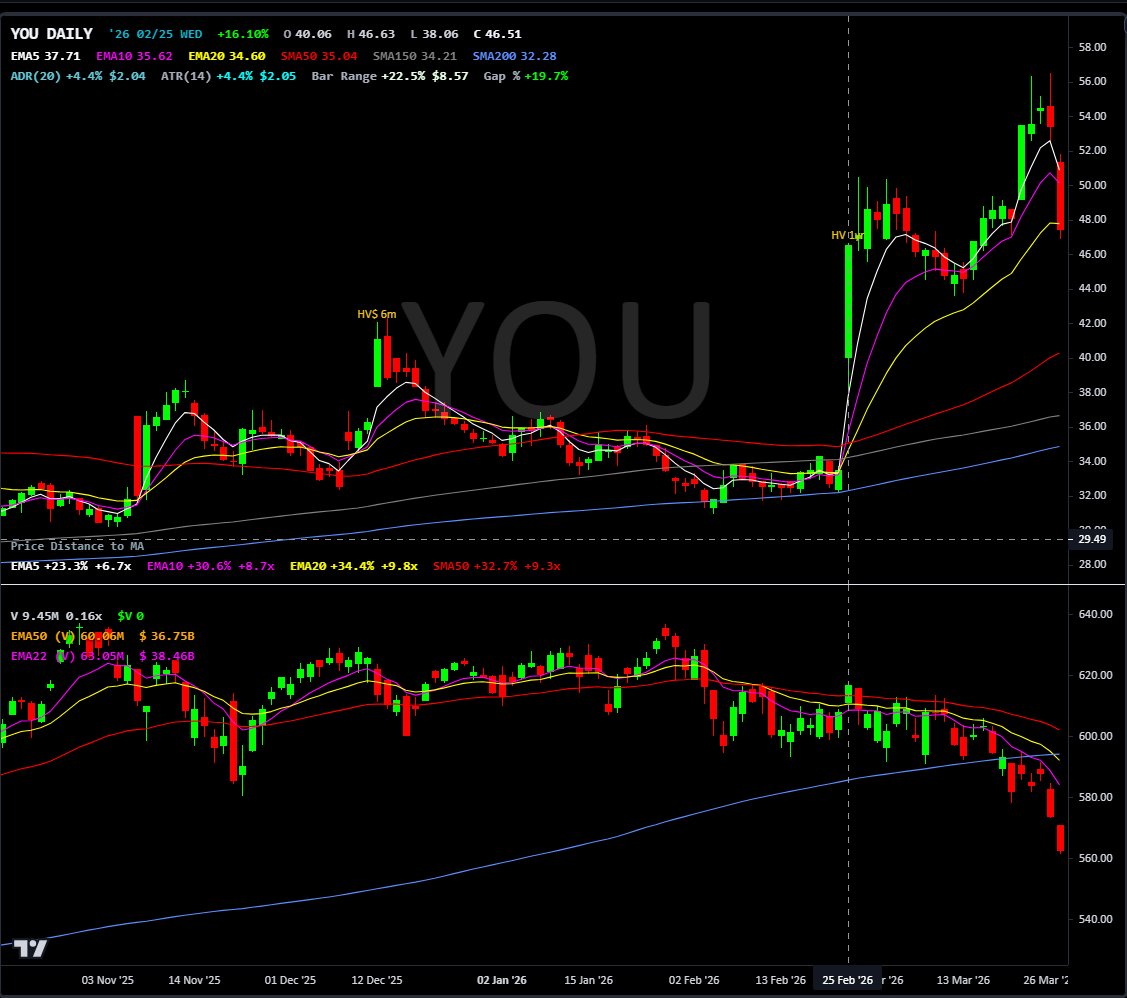
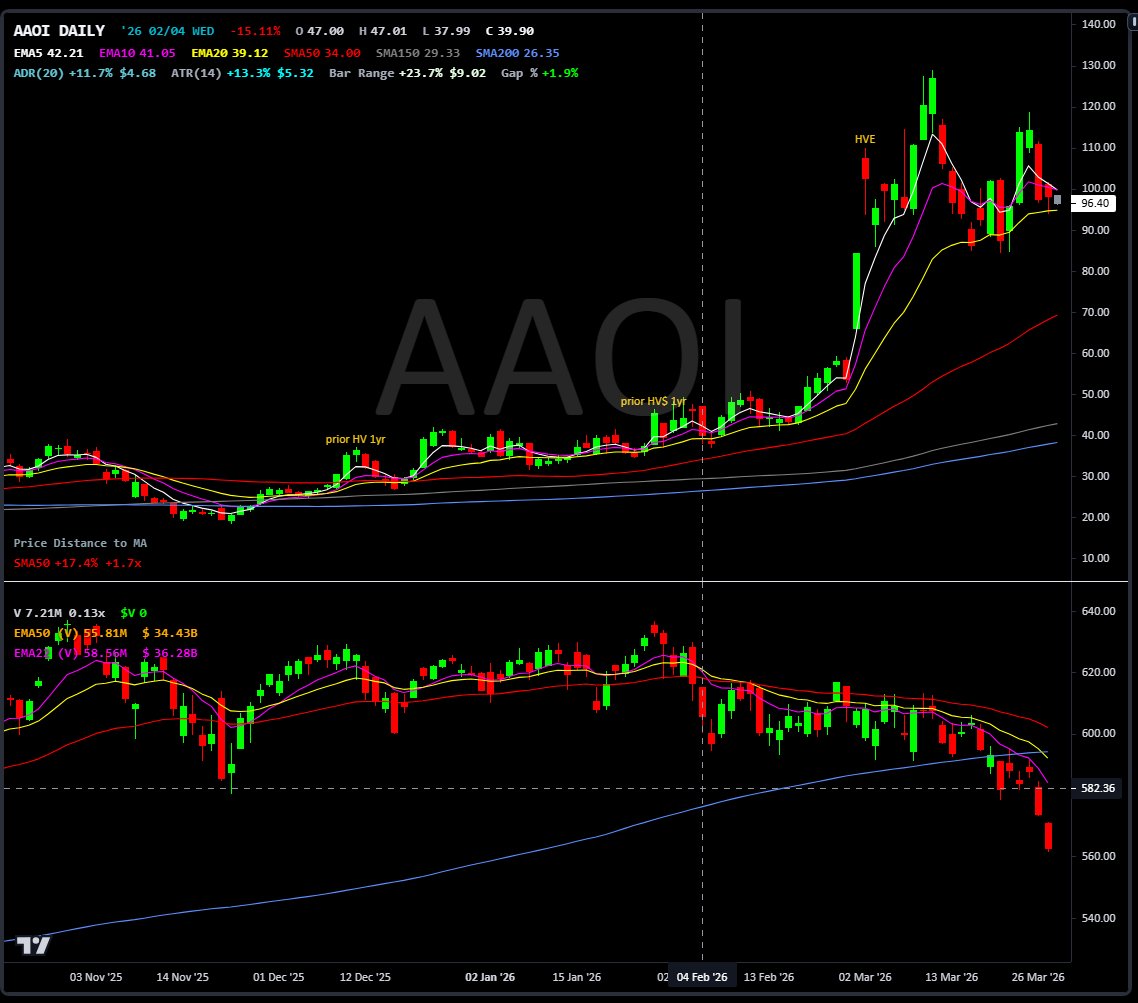
when you plot some EPs side by side vs a market benchmark like $QQQ, you are reminded how you were drawn to the setup in the first place whilst you were in search of alpha :)
if i had to pick the most profitable non-market-correlated setup in my arsenal right now, it would be
the EP opening drive on 4*+ catalyst . most reliable is using 09:50-10:30 target zone for exit.
2nd place - EP 3-5day hold
3rd place - 5*+ parabolic short in a small cap or a just a stock/instrument NOT part of a group move.
4rd place - 6*+ parabolic if an instrument is part of a group move.
5th place - EP swing hold.
...
999th place - $CRWV / $ONDS BO :)
$FSLY $YOU $DELL $AAOI

English
This is a thought provoking response - I very much appreciate you sharing this.
I agree that that fundamental principles are key to bed down to have any chance of sustainability in this game - but it’s really tricky to land on the “fundamental foundation”, requires kissing many frogs before something shows robustness. This process itself is never ending.
It’s one of the first steps to B/O rehabilitation imo - not that b/o don’t work but that they’re not a fundamental quality that can be relied upon without context.
I got asked in an interview many years ago “what makes a stock go up?”
Simple enough and the answer is assumed to be known by every market participant yet consensus on an answer is not achievable
I’ve been working to answer the question for many years…despite many notes, diagrams and flow charts and anecdotes the answer remains ; it depends
English
Tax that’s hard to kick is right lol. Re setup rating its combination of factors/features.
For a long/ breakout:
- if applicable, quality of catalyst
- daily context (eg BO into fresh highs from neglect range vs BO into recent overhead supply zone)
- relative strength of the stock vs group and market
Stock “personality” / character:
- (a) cleanliness / orderliness / linearity in the way it trades. Linearity is correlated with order vs randomness/chaos.
Think lack of overlapping bars, clean looking vs choppy looking.
- (b) stock relationship with its MAs : orderly vs chaotic / random
- (c) historic follow through the stock has had from the setup in question. Some stocks put in clean moves from breakouts like $TSLA, other stocks put in clean moves from Undercuts & Reclaims or pullbacks. Think $NBIS.. if it’s about an EP and the catalyst is monumental, prior history can be disregarded.
- VOLUME.
- if applicable, relative strength of group vs market
- how tight realistic set risk is relative to ATR
- time of day
Some factors are context and setup specific.
Relative “rank” in importance of how the factors above apply is also non linear and setup / context specific .
Eg
Mean reversion criteria are different. I’m looking for a stock to be down more and more, ie relative weakness when extended on downside is better than strength.
The edge in M/R comes from the extension itself, so you don’t care about relative strength you actually want it to be more extended on downside for a long but not orderly extended. And then as it’s turning up you want it to show relative strength on the burst higher. Eg higher low vs an undercut, adds to the quality.
Similarly, in an orderly market correction you care about relative strength as an edge on longs.
In a deep market correction that ends with a capitulation, you care about relative weakness as a better edge on longs.
You can consider all of these as features that apply and interact in non linear ways depending on setup.
It’s also important to think process and strategy vs hindsight.
Eg recently $VCX parabolic short setup day 5 as it broke through VWAP is 5*+. But it ended up putting you underwater on entry and was difficult to carry overnight. The next day $VCX broke through PDL, it’s actually lower grade Parabolic D2 but it ended up working much better.
It’s also interesting that besides $BYND since late last year, a lot of high grade parabolics ended up giving cleaner follow through on D2. So if this persists, the grading may require a revision.
I personally believe your best guide is always First Principles Thinking. Focusing on how a factor fundamentally affects edge or quality of a setup, then paying attention to how it interacts with others.
With this method you end up constructing something that you can reverse engineer back to foundations, and I believe it is more robust as an edge, something that can withstand changing market conditions and can evolve in the face of edge erosion we are all up against.
A total black box hindsight driven approach, can over realise over short term samples but once it inevitably faces underperformance, it becomes difficult to see what adjustments one should make.
English


$SPY Market Cycle is now at -20 days.
This has probably been my best negative market cycle considering the setups that are available in the markets like $FSLY $CRCL $LWLG $FIGS and others.
The market regime/dynamic is favoring the new-tech AI-driven companies while S&P and Nasdaq indexes don't fully reflect the future just yet and are slow to adapt.
Its also been a market where "setup" has been working while "environment" remains poor as the regime shifts and those watching indexes are overly bearish where setups exist to make big & meaningful progress.
Also the EC is at new all-time highs while the markets trades below 200-day SMA.

English
All of life is the study of attention. Where your attention goes, your life follows.
- Jiddu Krishnamurti
“Attention is all you need.” - 2017 seminal academic paper by Ashish Vaswani and Google Brain/Google Research team, which introduced the Transformer architecture, the “T” in the GPT model.
English

Idk if you’re joking or not but Capitulation trade
To put thing in perspective Gold is a 30T asset and isn’t suppose to move 10% down in a straight line
Also on the Parabolic short earlier this year (2nd biggest red day ever on Silver) Gold was down 13% we tagged -10% in couple hours
English
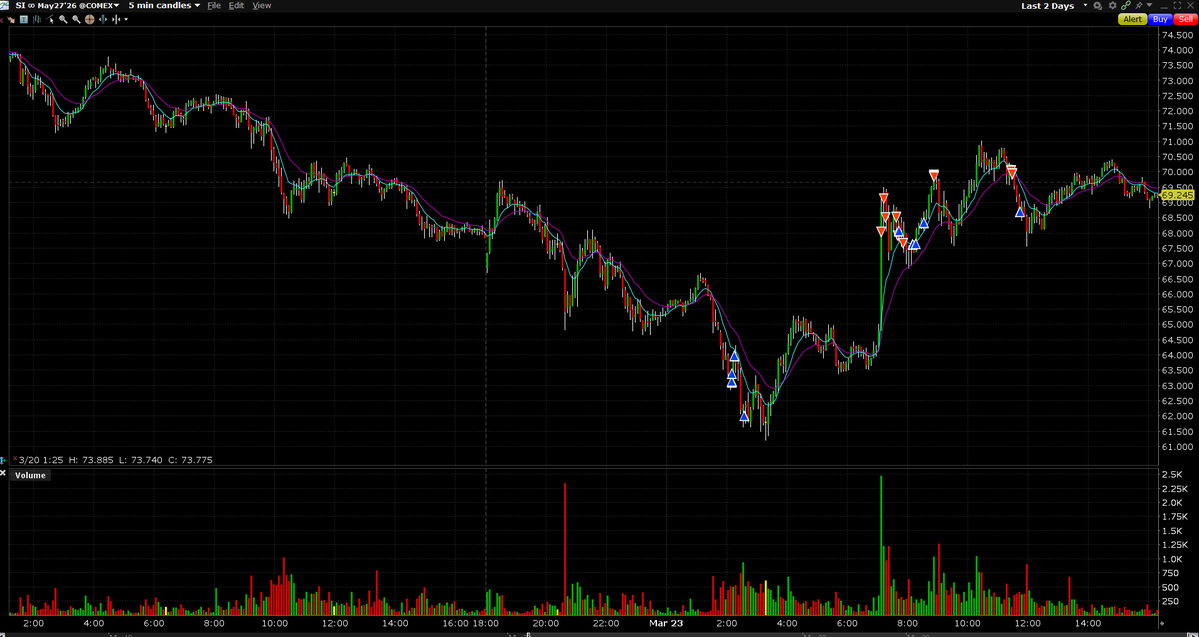
519% YTD on my IB account (Futures)
Today +42.67% growth
Metals + Trump Breaking News 03/23/26
I'll share my trading day experience here with you.
I'll post charts from my Overnight Session + Premarket & some memories that will last forever 😅
Every chart is the same thesis executed on a different instrument $SI, $GC, $SLV, $GLD, $IAU, $CL, $USO
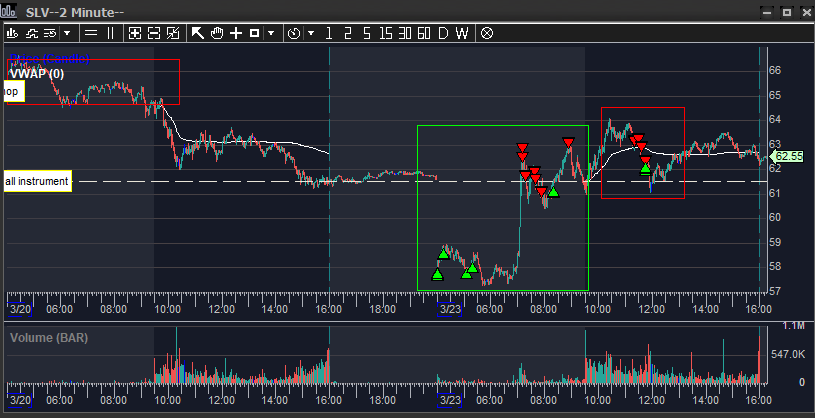
English
@PhenixInvesting @Jeppez420 What was the rationale to go long at this time?
English
@Jeppez420 That was f...king amazing
So happy for everyone who joined us on that !!!
That's how meaningful relationship should be✨
Cheers brother onto the next✌️
Here's some Chart p..rn
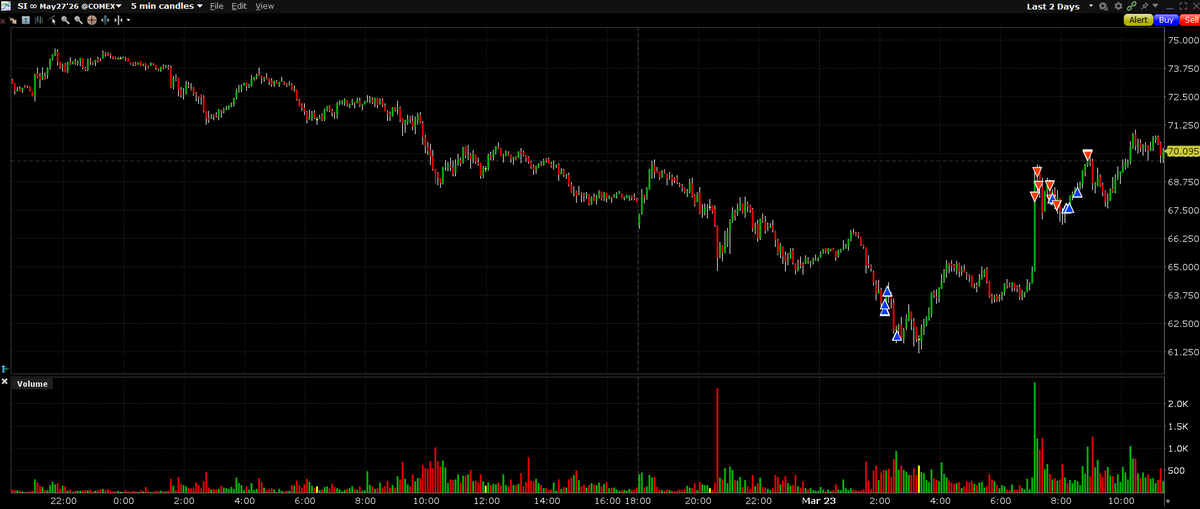
English

Wasn't supposed to do any discretionary trading today.
Ended up going full port long on GLD SLV BMNR MSTR in pre-market and was lucky to be in those for Trump's post. +415k to start the week.
Thanks @PhenixInvesting for alert on the metals, that's one benefit of trading pods🫡
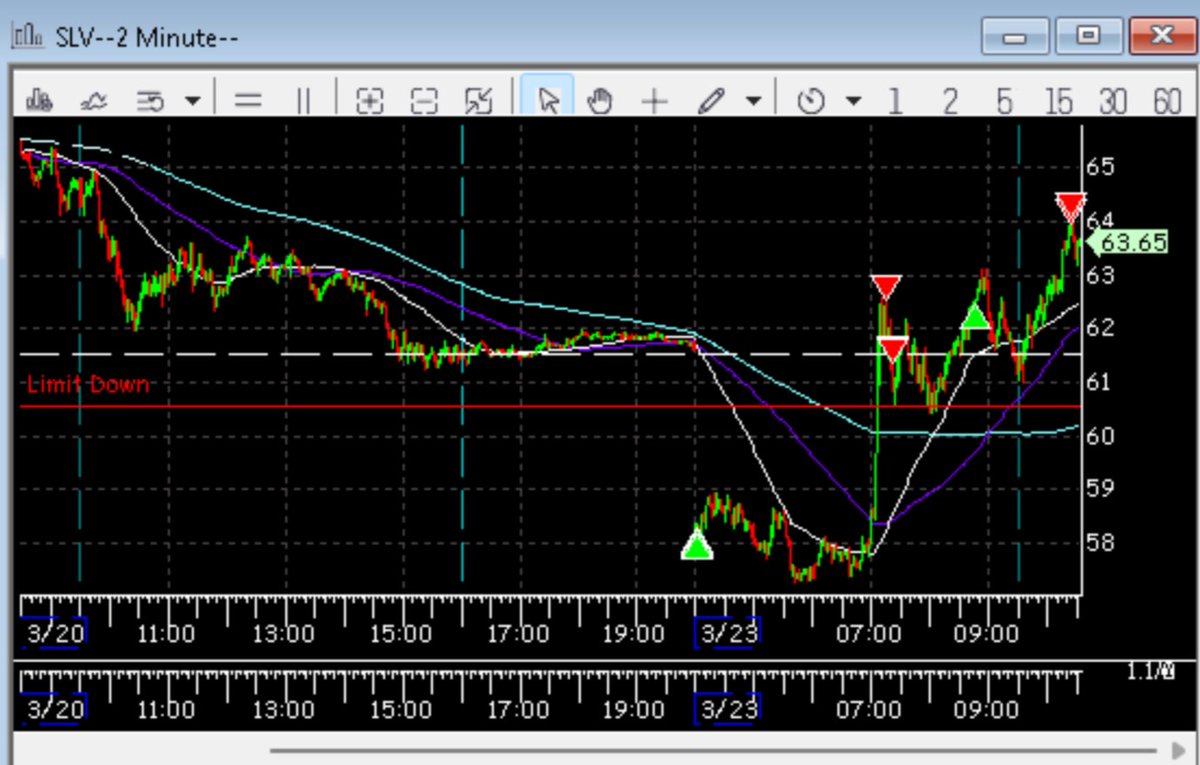
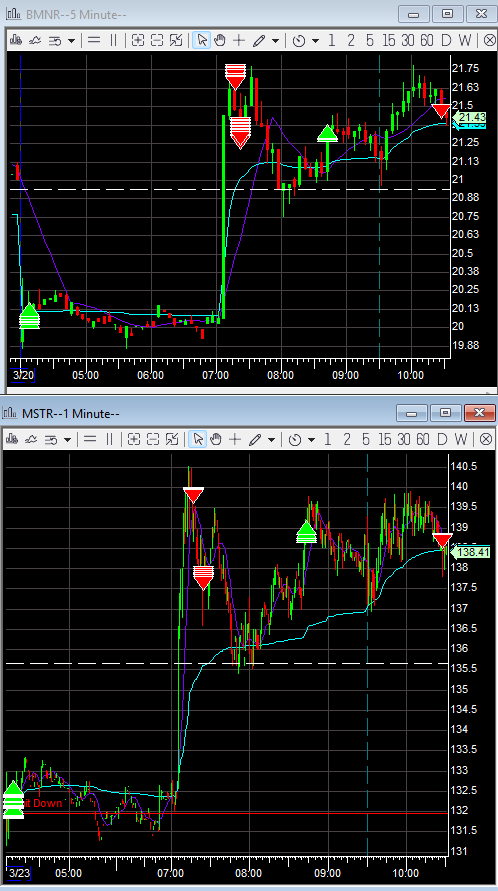
English
@Peoplewish Presume this is a pattern for entry?
What would the “setup” be?
English

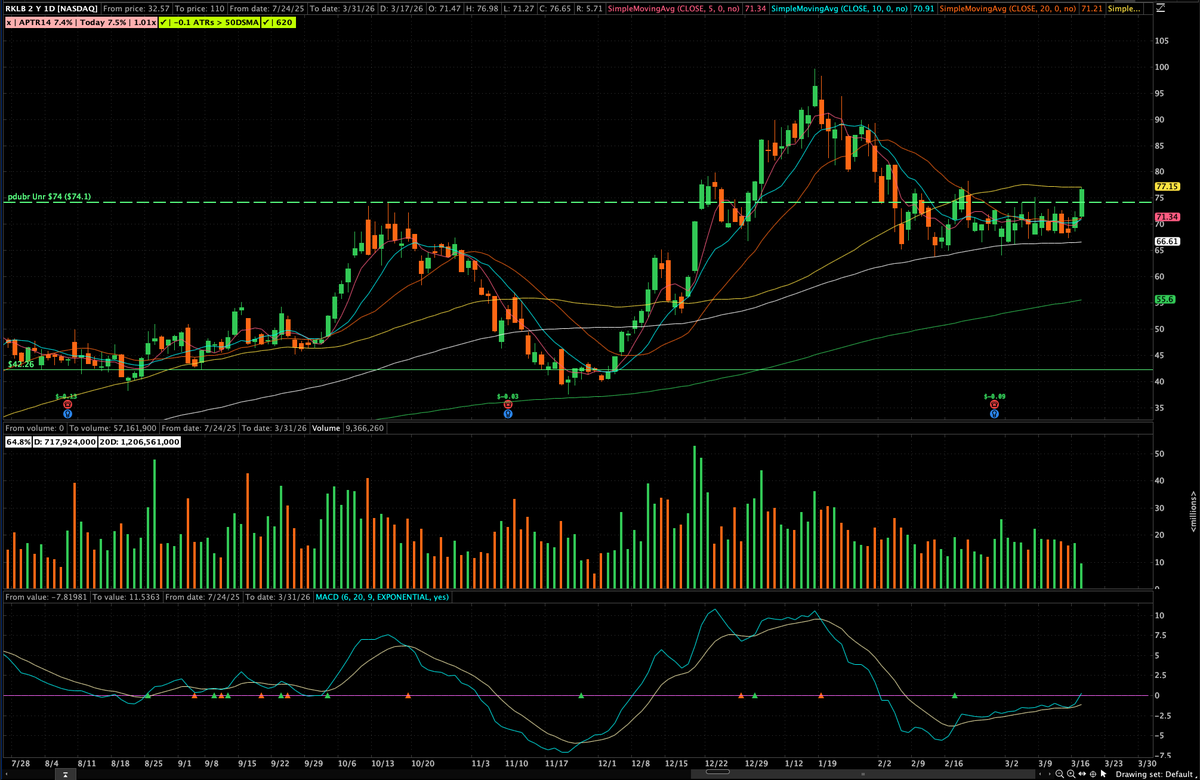
Chart theme: lots of undercut and rallies setting up and triggering right now. My favorite UnR variant, dubbed the “pdub UnR,” has some solid current examples in the market: $RKLB $ONDS $HUT $OPEN $ASTS $MP HG_F.
It is a subtype of the "classic" undercut and rally where price undercuts a left-side peak, sometimes called a shoulder, after a big run-up and failure, then builds a small flag just below or just above that shoulder line long enough for the short-term MAs to catch up and untangle. From there, it puts in a tight day and then expands through the line. Sometimes, with news, price just gaps over the line, like $NBIS did through $100.
My system uses the term "Undercut and Rally" as a pattern category label, not a setup itself. Under this category of technical pattern I have definitions setup for:
-pdub unr
-u-turns
-ep unr
-classic unr
-ma unr
English
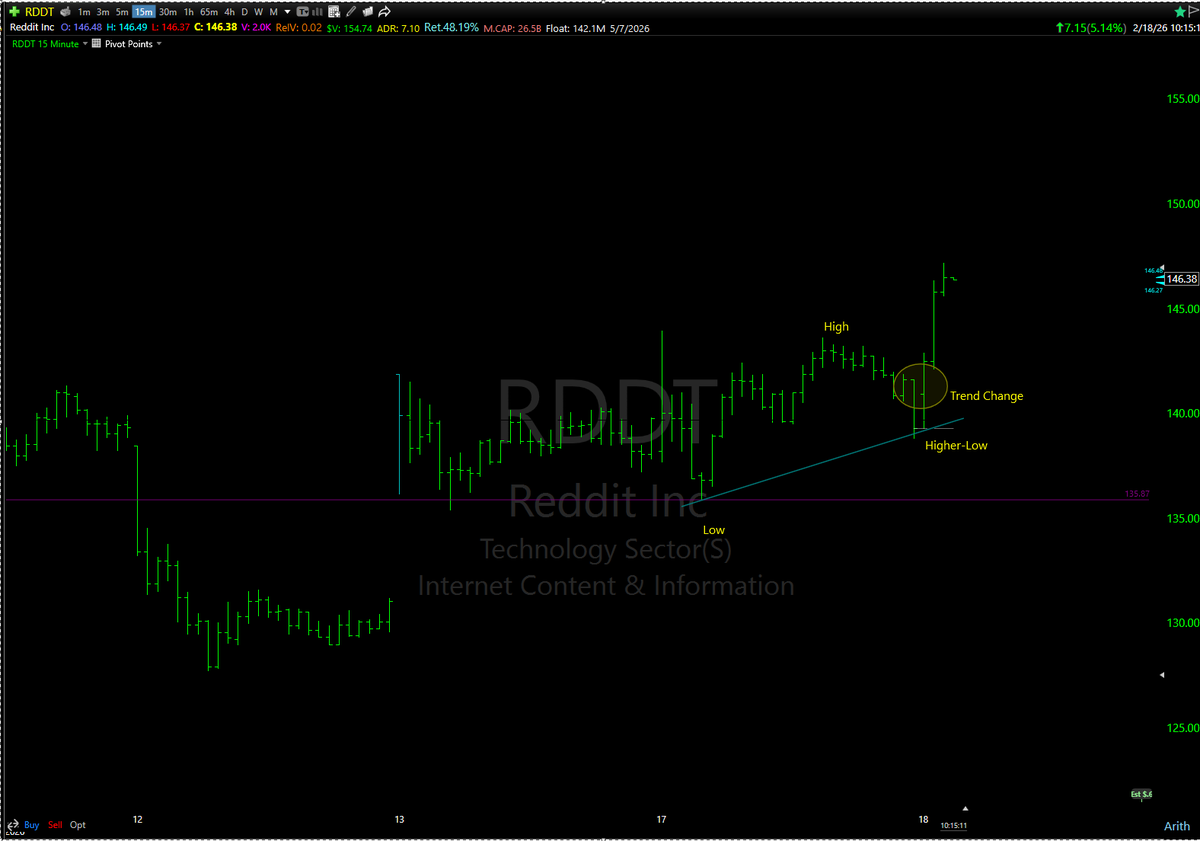
@mmonis @MarioRo73607588 Should entry not have been at trend change ($140) or is there another area you’re watching?
English

@MarioRo73607588 See the annotation on the chart
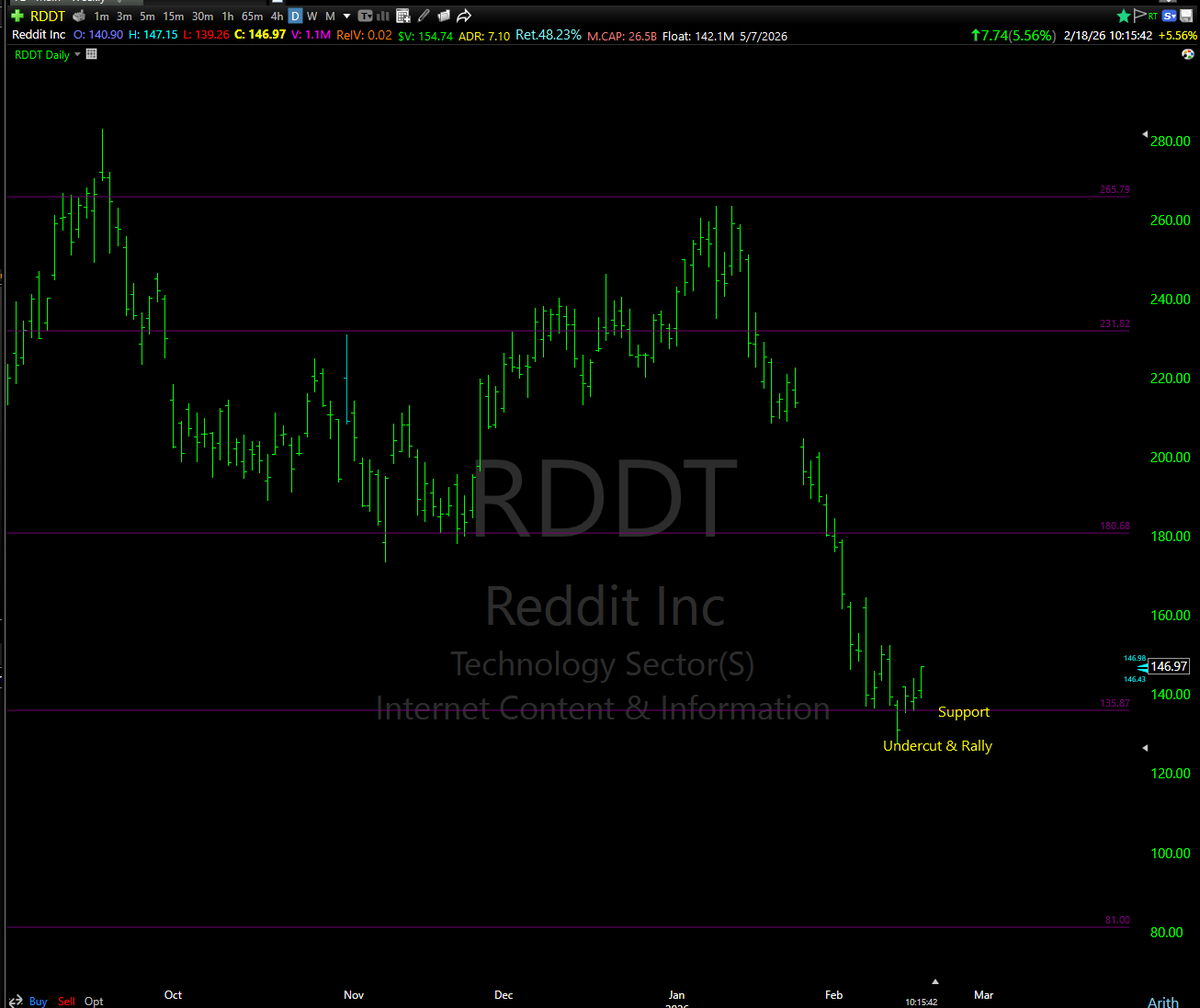
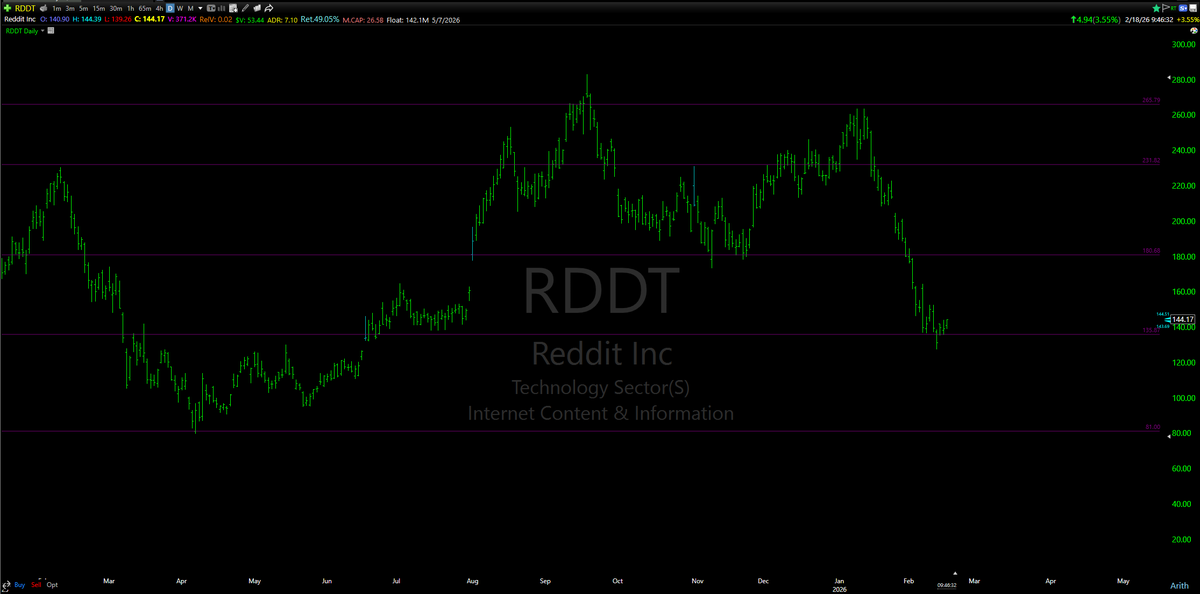
Successful test of Support. - Chart-1
Undercut and Rally - Chart 1
Lower time granularity - Trend change - Chart 2
English
@ZubairHabib That too, but mainly because you don’t get a tactile feel of the material. Digital mediums reduce book reading to 2D surfaces and I think quite a bit is lost not having pages to turn and feel. I often use book depth to navigate, can’t do that with a kindle.
English

"When people cannot follow arguments, they become vulnerable to slogans. When they cannot read deeply, they cannot think deeply. When they cannot think deeply, they become emotionally ruled. And when people become emotionally ruled, they become easy to control."
Culture Explorer@CultureExploreX
English


@maxxxmueller I have 6 of these
Dell UltraSharp U3415W 34-Inch QHD Ultra Wide 1440p Curved LED-Lit Monitor
and 2 - 24 inch
English