Caterina Carpathia

1.5K posts

Caterina Carpathia banner
Caterina Carpathia

Caterina Carpathia

@acciduob

Animal lover therefore vegan. Artist. Writer. Teacher. Follower of the teachings of Jesus Christ and NOT the church. Lucid dreamer. Major depression sucks.

Katılım Şubat 2026
39 Takip Edilen44 Takipçiler
Sabitlenmiş Tweet
Caterina Carpathia
Caterina Carpathia@acciduob·
@MmisterNobody Do not be afraid. They want you to be afraid. Be strong. Be Faithful. Be Loving.
Caterina Carpathia tweet media
English
3
1
7
398
Enezator
Enezator@Enezator·
Cows are truly some of the most gentle and peaceful beings on Earth. 🐄💚
English
38
269
3.6K
70.5K
Peter Hogarth - Artist
Peter Hogarth - Artist@peterhogarth55·
Portrait of a Springer Spaniel, commissioned in 2021. Soft pastels on archival quality paper 😊
Peter Hogarth - Artist tweet media
English
6
28
159
1.2K
Caterina Carpathia
Caterina Carpathia@acciduob·
@DreyfusJames They are extremely fortunate that it was not me that was delivering their punishment. I hope there are many animal lovers I the prison they go to and I hope those prisoners make their lives a living hell.
English
1
0
1
49
James Dreyfus
James Dreyfus@DreyfusJames·
Irene Lima & Chad Kabecz. The epitome of evil. 🤬🤬🤬
James Dreyfus tweet media
English
293
542
2.3K
83K
Alexandra Marshall
Alexandra Marshall@ellymelly·
Curious. When was the last time you picked up a real pen and wrote something on a piece of paper???
English
4.2K
123
2K
117.2K
Caterina Carpathia
Caterina Carpathia@acciduob·
@IghoThony @archeohistories Don't always assume people are being patronising when they are simply using logic. Must you take offense at everything? Get that negative lense out of your glasses!
English
0
0
1
55
Caterina Carpathia
Caterina Carpathia@acciduob·
@IghoThony @archeohistories He said they could not resolve the question of them knowing the science behind what they had observed. You can't fully understand bacteria until you see it under a microscope. Sometimes we use things without understanding the science. For example : soap. How does soap work? 1/2
English
1
0
5
354
Archaeo - Histories
Archaeo - Histories@archeohistories·
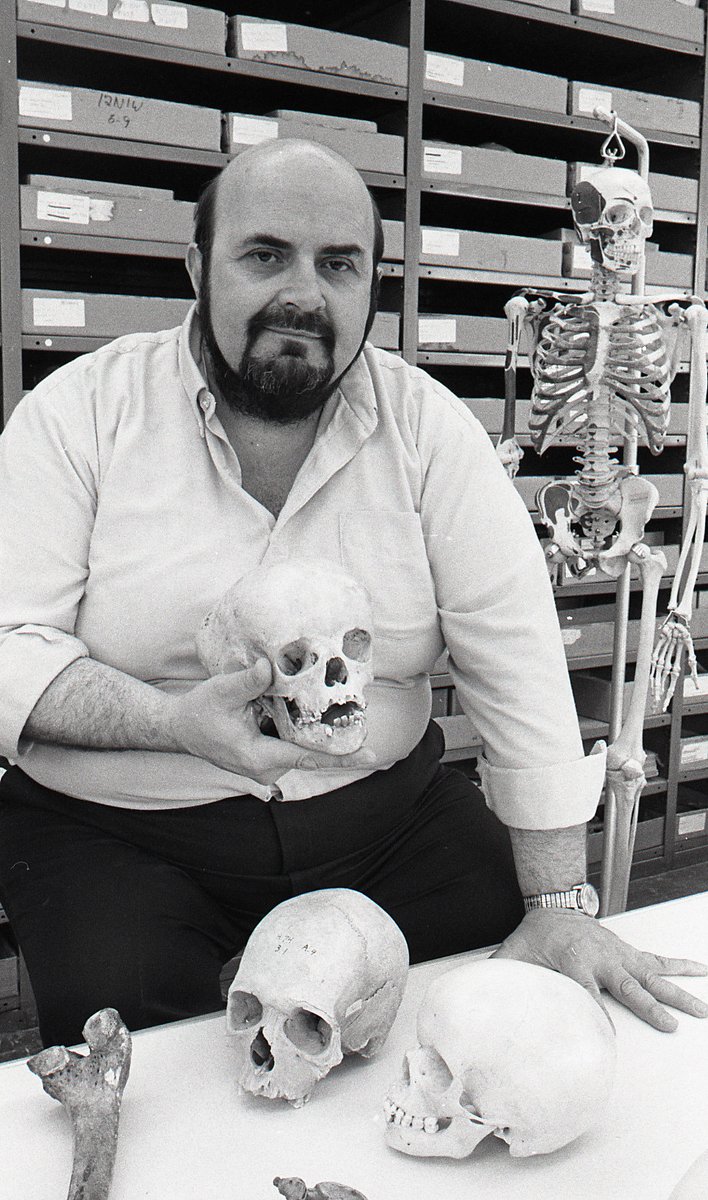
In 1980, a bioarchaeologist at Emory University named George Armelagos was studying ancient human bones from Sudanese Nubia, the kingdom that flourished along the Nile south of Egypt between roughly 350-550 CE, when something stopped him. Under ultraviolet light, the bones glowed. They fluoresced with a distinctive yellow-green color that Armelagos recognized immediately, because the same glow appeared in the bones of modern patients who had been treated with tetracycline. The antibiotic binds tightly to calcium and phosphorus in bone tissue as the body metabolizes it, leaving a permanent fluorescent marker. What Armelagos was seeing in bones nearly two thousand years old was chemically identical to what he saw in twentieth-century medical subjects. The archaeological community was skeptical. The received history of antibiotics began with Alexander Fleming’s discovery of penicillin in 1928, and tetracycline itself was not isolated until 1948. The idea that a pre-literate population in the Nile valley had been routinely ingesting it seemed implausible, and the initial findings were dismissed as post-mortem contamination from soil bacteria. Armelagos spent three more decades building the case. He eventually partnered with Mark Nelson, a leading tetracycline specialist at Paratek Pharmaceuticals, who agreed to perform a definitive chemical analysis. The process required dissolving the ancient bones in hydrogen fluoride, one of the most corrosive and dangerous acids in existence. What the resulting liquid-chromatography mass-spectrometry analysis found was not a trace of tetracycline. The bones were saturated with it. Multiple tetracycline variants were identified, including chlortetracycline and oxytetracycline, in concentrations indicating sustained exposure beginning in early childhood and continuing throughout life. Ninety percent of the Nubian individuals tested showed the labeling. The exposure had not been accidental or occasional. It had been lifelong and deliberate. The source was their beer. Ancient Egyptian and Nubian brewing began with grain, typically emmer wheat or barley, which in that region was naturally contaminated with Streptomyces, a soil bacterium that produces tetracycline as a metabolic byproduct. The grain was germinated, made into bread, then incompletely baked to preserve an active center, and finally fermented in vats of water. The standard practice was to seed each new batch with ten percent of the previous one, which kept the Streptomyces culture alive and active from batch to batch in a continuous chain. The resulting brew was thick, sour, low in alcohol, and highly nutritious. Everyone drank it, including children as young as two years old. The critical question Armelagos could not fully resolve was whether the Nubians understood what they were doing. The consensus among researchers is that they almost certainly did not know the mechanism. They had no concept of bacteria, no understanding of antibiotics as a drug class, and no language for what tetracycline was doing in their bodies. What they likely did know, accumulated through generations of observation and passed down as practical knowledge, was that this particular preparation of beer had medicinal effects. Ancient Egyptian and Jordanian medical texts record beer being used to treat gum disease, wounds, and other infections. The brewing method that produced tetracycline appears to have been deliberately maintained and refined over centuries, not by any understanding of the chemistry involved, but by the accumulated recognition that it worked. #archaeohistories
Archaeo - Histories tweet media
English
156
1.8K
8.5K
388.9K
Lina
Lina@catapinacaro·
@Rothmus Shocking 🙄
Lina tweet media
English
2
2
11
924
Cats with Aura 😺
Cats with Aura 😺@catwithaura·
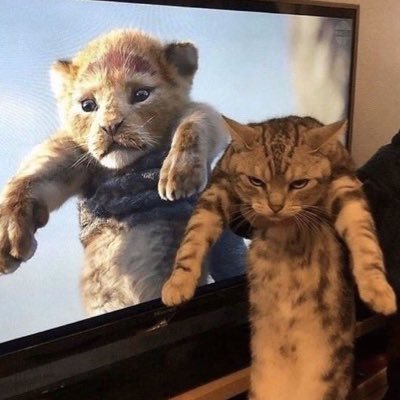
The cat knew exactly what he was getting into 🤣
English
343
2.3K
24.8K
1.2M
maro
maro@ProofofMaro·
I’m oscillating between dimensions, yall want anything?
English
175
147
650
18.1K
SonnyBoy🇺🇸
SonnyBoy🇺🇸@gotrice2024·
Their 18 year old daughter just graduated a few weeks ago. Her parents thought they were being fair for not kicking her out at 18 but they are kicking her out after she graduates. They told her if she wanted to stay, effective June 1st, she would have to start paying them $200 a month plus the costs of her own food. If she wanted the rent with meal plan, it’s $300 a month and she can eat from their fridge. They feel they are teaching her responsibility in a controlled environment. I think the amount they are charging is reasonable and fair, it’s still cheaper than being on her own. Do you think this is too expensive too cheap, or do the just hate their kid?
SonnyBoy🇺🇸@gotrice2024

This man complains that his daughter stays in her room all day and doesn’t enjoy talking to him and his wife. Whenever she does come down for food or water, he’s always reminding her that when she turns 18 either she can move out or pay rent. I never understood why people do this as a scare tactic to teach kids responsible. Is it possible that his interactions like this is actually damaging his relationship with his daughter. Isn’t he giving her a vibe that he doesn’t want her around or is this a part of teaching her responsibility?

English
4.4K
373
4.6K
4.8M
Wholesome Side of 𝕏
Wholesome Side of 𝕏@itsme_urstruly·
Winning the match was one victory making her opponent smile after was the real one. 👏👏
English
19
137
2.7K
52.8K
Kasumi
Kasumi@KasumiKriss·
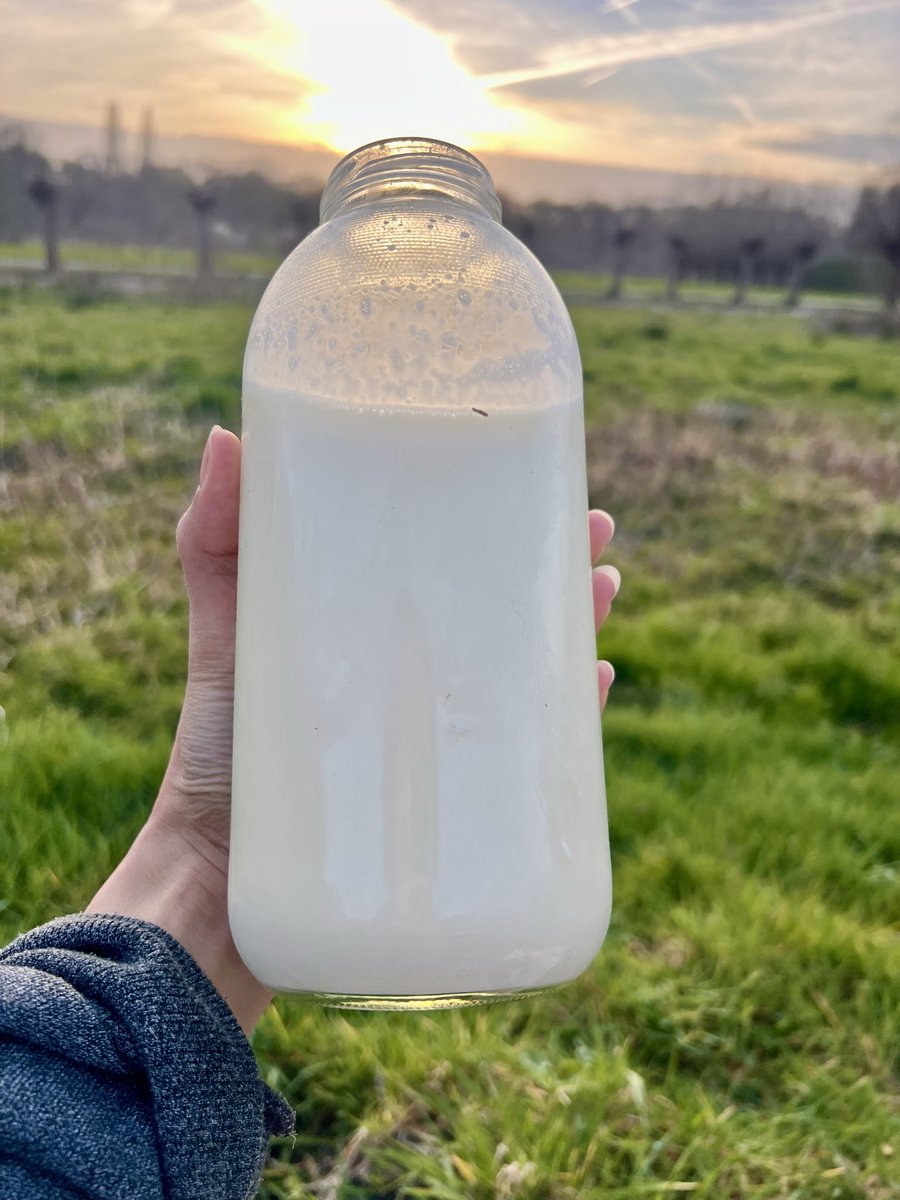
Very lucky to have access to such high-quality milk! This is A2 raw milk from Jersey cows. Jerseys are an older dairy breed that hasn’t been selected as aggressively for extremely high milk production like some modern breeds. Their milk is naturally richer, typically containing higher levels of fat and protein, which tastes fantastic! For some people who struggle with milk digestion, milk from A2-producing cows may feel easier to tolerate due to various reasons Because this milk hasn’t been pasteurized, its natural microbial community and heat-sensitive compounds remain intact. Very beneficial for the gut Of course, sourcing it from farms with very high hygiene standards is important. That should be a given
Kasumi tweet media
English
14
5
94
2.7K
Noor
Noor@Nooor_Khan021·
We need a rediculous old boy name.??.....
Noor tweet media
English
764
57
694
22.9K
Caterina Carpathia retweetledi
Erika 
Erika @ExploreCosmos_·
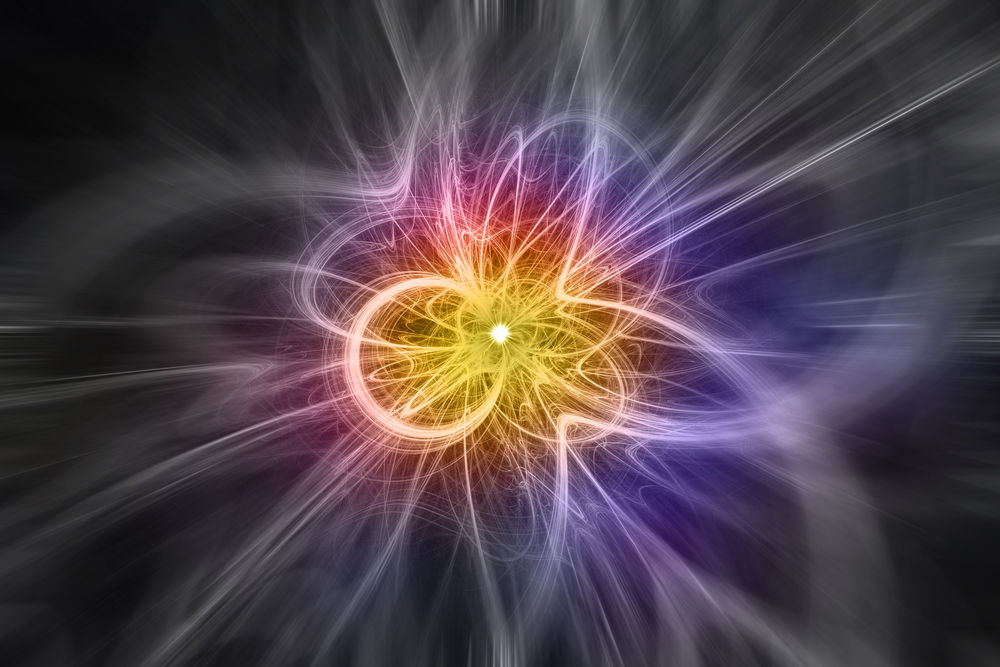
One of the deepest questions in modern physics can be phrased in a surprisingly simple way: why does anything exist at all? According to the laws of particle physics, the early universe should have produced matter and antimatter in almost perfectly equal amounts. Yet the universe we observe today is clearly dominated by matter. Galaxies, stars, planets, and people are all made of it, while antimatter is extraordinarily rare. Somewhere in the earliest moments of cosmic history, something tipped the balance. Antimatter itself is not exotic or speculative. It is a well-established part of modern physics. For almost every known particle of matter there exists a corresponding antiparticle with the same mass but opposite electric charge and other quantum properties. An electron has a positron. A proton has an antiproton. When a particle meets its antiparticle, they annihilate each other, converting their mass into pure energy. There are a few subtle exceptions. Some particles, such as photons, are their own antiparticles. Physicists are also intensely interested in whether neutrinos might belong to this category as well. If neutrinos turn out to be their own antiparticles, so-called Majorana particles, it could provide important clues about the origin of the matter–antimatter imbalance. In the extremely hot environment of the early universe, energy should have produced particles and antiparticles in pairs. The basic interactions governing their creation are largely symmetric. As the universe cooled, matter and antimatter should have collided and annihilated each other almost completely. If that process had played out perfectly, the universe today would be filled with radiation and almost no matter at all. But that is not what happened. We are here. One of the reasons we know the universe around us is made almost entirely of ordinary matter is surprisingly simple. If the Moon were made of antimatter, the moment Neil Armstrong stepped onto its surface the contact between his spacesuit and the lunar dust would have produced a flash of gamma rays. Clearly, that did not happen. On larger scales, astronomers also see no evidence of the intense radiation that would appear where large regions of matter and antimatter meet. Everything we observe, from nearby planets to distant galaxies, appears to be made of matter. Observations indicate that a tiny excess of matter survived the early universe. For roughly every billion pairs of matter and antimatter particles that annihilated each other, one extra particle of matter remained. That tiny imbalance, about one part in a billion, was enough to build everything we see today. Galaxies, stars, planets, and life itself exist because of what might be described as a cosmic rounding error. Physicists refer to this mystery as baryogenesis, the origin of the matter–antimatter asymmetry. In 1967 the Russian physicist Andrei Sakharov identified three basic conditions that must be satisfied for such an imbalance to arise. First, there must be processes that can change the number of baryons, the family of particles that includes protons and neutrons. Second, the laws of physics must treat matter and antimatter slightly differently, a phenomenon known as CP violation. Third, these processes must occur outside of thermal equilibrium so that the imbalance can grow rather than cancel out. You can think of these three requirements as the rules needed to subtly “rig” the cosmic game in favor of matter. The second requirement, CP violation, is particularly important. Under perfect symmetry, the laws of physics should behave the same if particles are replaced by antiparticles and left and right are swapped like a mirror reflection. But nature does not follow that rule perfectly. Certain particle decays show small differences between matter and antimatter. A helpful way to picture this is to imagine looking into a mirror that should reflect reality exactly, but the image is ever so slightly distorted. The reflection is almost perfect, but not quite. That tiny imperfection is what physicists call CP violation. Experiments have confirmed that CP violation exists. It was first observed in particles called kaons and later studied in detail in B mesons. Modern experiments such as LHCb at CERN and Belle II in Japan continue measuring these asymmetries with increasing precision. Yet there is a problem. The amount of CP violation predicted by the Standard Model appears far too small to explain the enormous imbalance that ultimately produced the matter-dominated universe. Something else must have happened. One possible explanation involves neutrinos, the ghostlike particles that stream through the universe in vast numbers. Some theories suggest that heavy versions of neutrinos in the early universe may have decayed in ways that produced more matter than antimatter. This idea, known as leptogenesis, is one of the leading candidates for explaining the asymmetry. Other possibilities involve new particles or interactions that existed only at extremely high energies shortly after the Big Bang. In these scenarios, the imbalance between matter and antimatter could have been generated during phase transitions in the early universe, when fundamental forces and fields were settling into the forms we observe today. Despite decades of work, the precise mechanism that produced the cosmic imbalance remains unknown. Experiments around the world continue searching for clues: precision measurements of particle decays, studies of neutrino properties, and attempts to detect rare processes that could reveal new sources of CP violation. What makes this mystery so profound is how small the original asymmetry was. The entire visible universe depends on a difference of roughly one extra particle of matter for every billion particle–antiparticle pairs created in the early universe. A tiny imbalance. A cosmic rounding error. And yet it was enough to shape the entire history of the universe. Understanding why matter won over antimatter remains one of the central goals of modern physics. If scientists can uncover the mechanism behind this imbalance, they will not only solve a long-standing puzzle but also gain deeper insight into the laws that governed the universe at its very beginning.
Erika  tweet media
English
36
41
207
5.7K