Ashok Dalabehera

8K posts

Ashok Dalabehera

Ashok Dalabehera

@adalabehera

Trying to make sense of the world. Retweet/Like=note worthy share and bookmarking for self. They are not endorsement.

Katılım Ekim 2008
3.1K Takip Edilen182 Takipçiler
Ashok Dalabehera retweetledi

Corey Ganim
Corey Ganim@coreyganim·
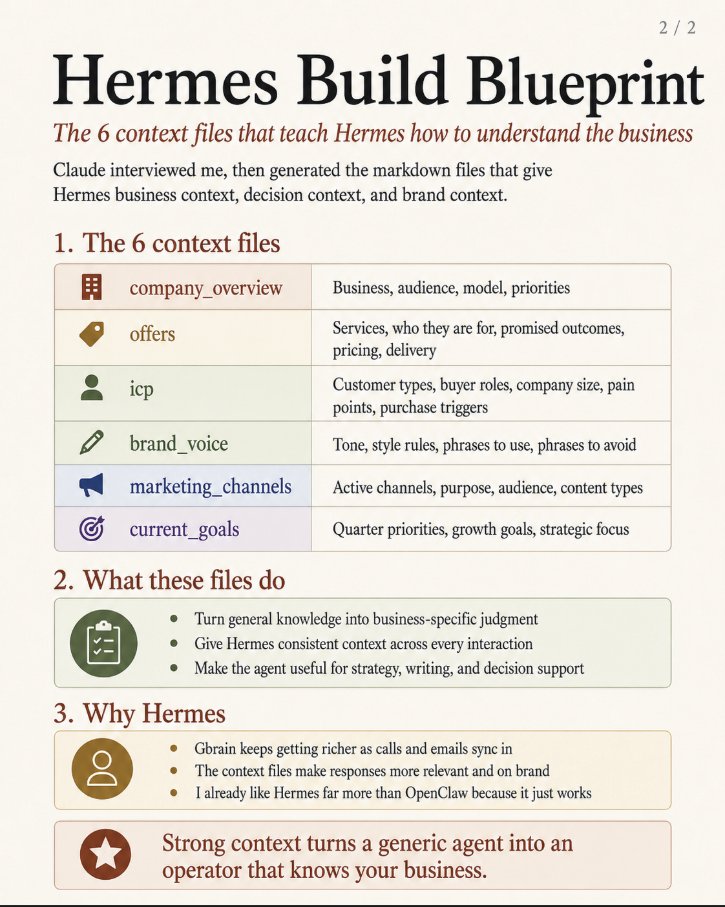
I built a Hermes agent that knows everything about me and my business. The 2 primary connections and 6 context files that make it possible: Gbrain (by @garrytan) as the knowledge base. Connected Fathom and Gmail to Gbrain so every call transcript and relevant email automatically gets ingested. The Fathom connection: - saves each meeting as markdown/json locally - includes: - meeting title - date - attendees - summary - action items - transcript - external meeting ID Syncs this info into Gbrain every 2 hours. The Gmail connection: - collect all emails - deterministically filter obvious noise - ingest the rest into the brain Syncs with Gbrain every 2 hours. The 6 context files (created by having Claude interview me then generate markdown files): company_overview - what the business does - who it serves - main business model - key priorities offers - each offer/service - who it’s for - outcome promised - pricing if relevant - delivery model icp - target customer types - buyer roles - company size/stage - pain points - purchase triggers brand_voice - tone - style rules - words/phrases to use - words/phrases to avoid marketing_channels - active channels - purpose of each - audience per channel - content types per channel current_goals - current quarter priorities - revenue/growth goals if shareable - current strategic focus I'm already liking Hermes 10x more than OpenClaw because it just works and gets smarter the more you use it.
Corey Ganim tweet mediaCorey Ganim tweet media
English
20
7
99
6.8K
Ashok Dalabehera retweetledi
Peter Yang
Peter Yang@petergyang·
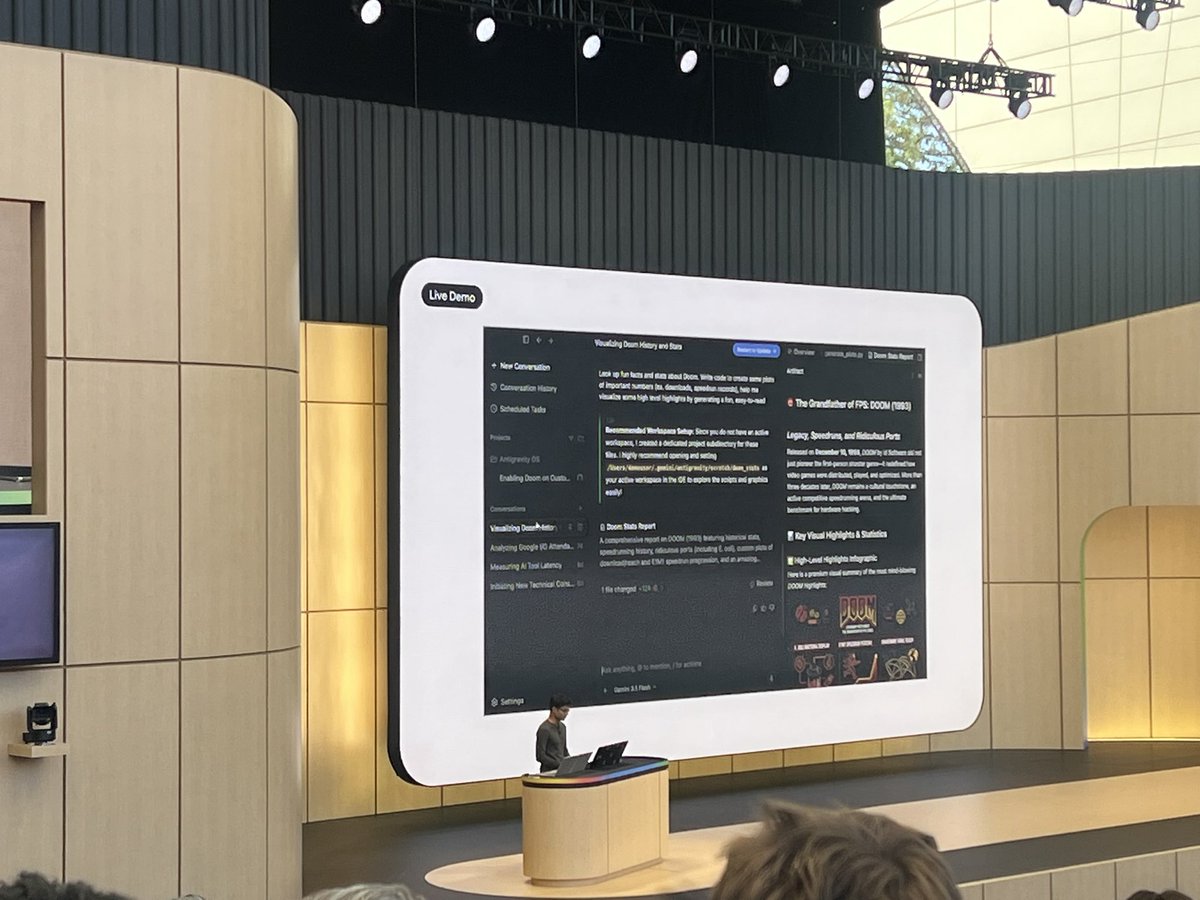
All agentic coding apps are starting to look the same. This is the latest Antigravity app from IO, which looks pretty slick. But I think this UI is only optimized for a single person to work to agents. The UI for teams and orgs to work well with agents still needs to be figured out.
Peter Yang tweet media
English
24
3
93
12.8K
Ashok Dalabehera retweetledi
Santiago
Santiago@svpino·
Honestly, everyone I knew who was using Cursor is not anymore. They say you are the average of the 5 people you surround yourself with, so that might be at play here, but I stopped seeing Cursor in the wild. The people I meet mostly use a combination of @code and Claude Code / Codex / Cline.
David Ondrej@DavidOndrej1

everyone uses Cursor... lol

English
32
1
103
42.7K
Ashok Dalabehera retweetledi
Garry Tan
Garry Tan@garrytan·
GBrain v0.36 just dropped. Brand new README, and totally redone skillpack system that makes each bundle of skills, code, resolver and tests YOURS to change and update, while still maintaining the ability to take on new features via GBrain updates as I improve my skillpacks
Garry Tan tweet media
English
48
46
627
49.2K
Ashok Dalabehera retweetledi
Thariq
Thariq@trq212·
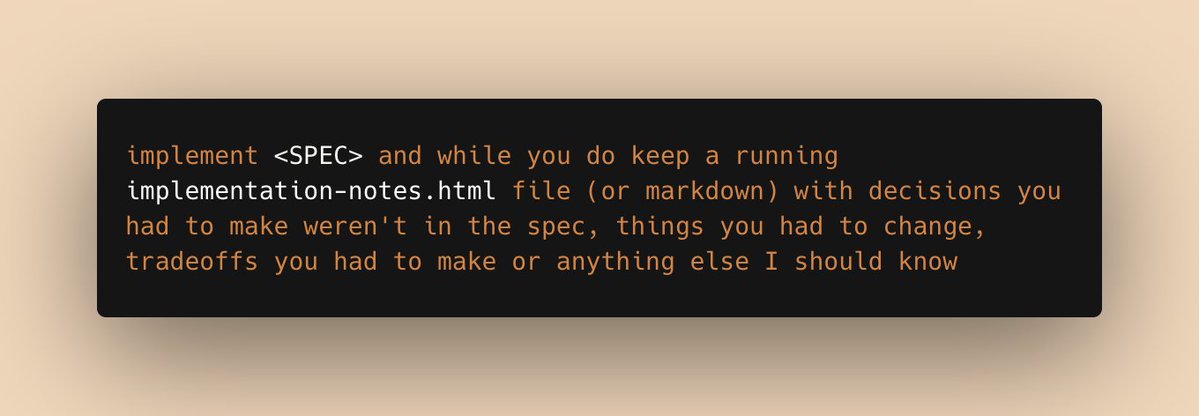
a prompt I've been using a lot recently: implement <SPEC> and while you do, keep a running implementation-notes.html file (or markdown) with decisions you had to make weren't in the spec, things you had to change, tradeoffs you had to make or anything else I should know
Thariq tweet media
English
337
569
9.6K
780.4K
Ashok Dalabehera retweetledi
Peter Yang
Peter Yang@petergyang·
I feel like Google is going to win consumer AI. It’s the only US lab that’s building video models and consumers love video (e.g., TikTok / YouTube is far more popular than text based platforms). The only real competition is Seedance and other video models that don’t care about copyright?
English
92
13
465
40.4K
Ashok Dalabehera retweetledi
Aakash Gupta
Aakash Gupta@aakashgupta·
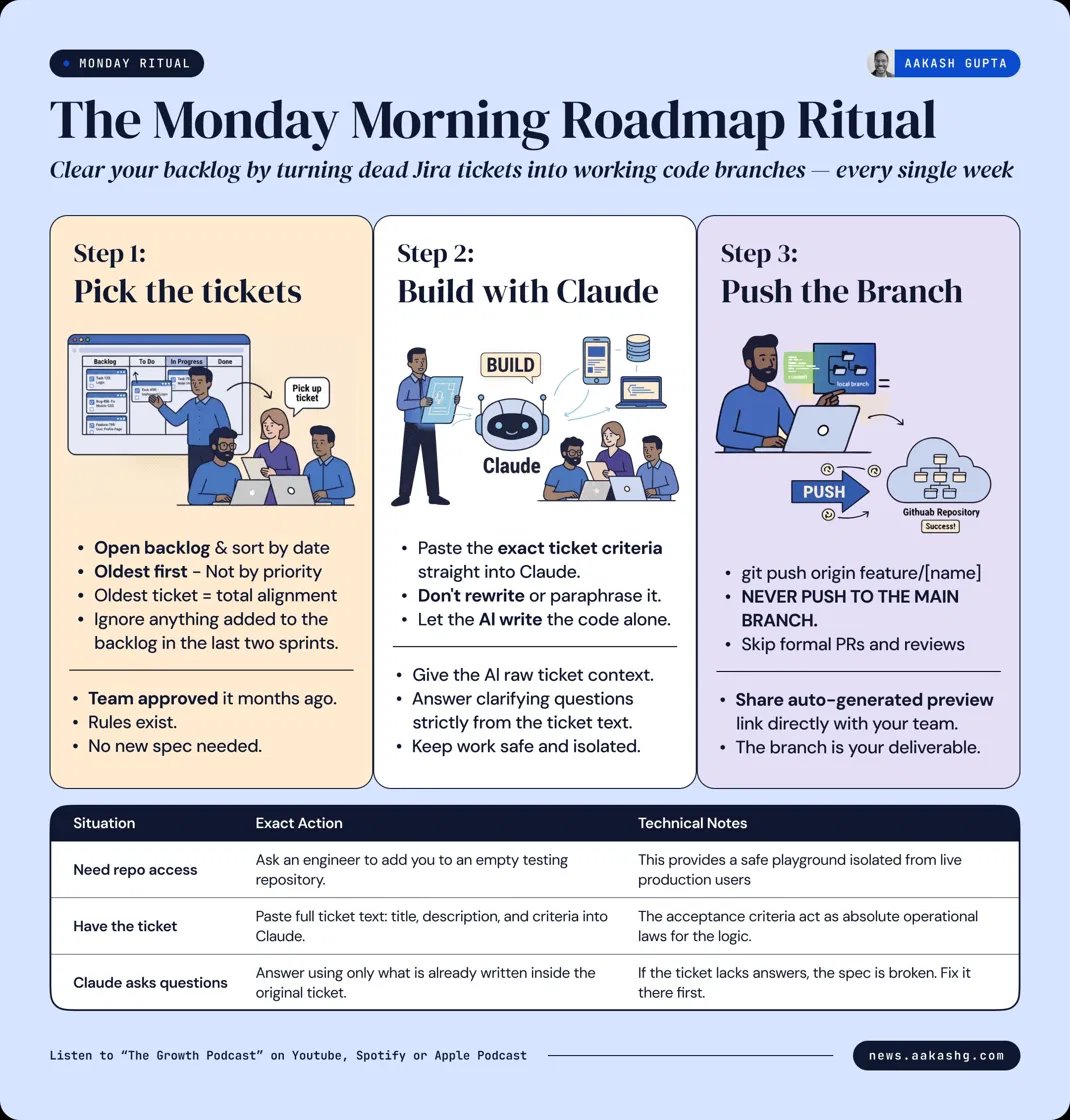
Every PM team has a backlog graveyard. Tickets approved 12, 18, 24 months ago that passed every prioritization framework and then got buried because something more urgent showed up every single sprint. The backlog is a losers bracket. Once a ticket falls below the sprint cut line twice, its probability of getting built approaches zero. Engineers stop reading below capacity. PMs stop advocating. The ticket stays approved and stays dead. Andre Albuquerque's Monday morning move for builder PMs is counterintuitive: sort by oldest, not by priority. Pick a ticket that's been rotting for months. Build it with Claude Code. Push a branch. Why oldest? The spec exists. The team approved it. Nobody fights you on scope because nobody remembers it's there. You're proving you can ship without touching sprint capacity or starting a prioritization argument. One PM clearing dead backlog on their own changes the economics of an entire squad. Features that used to cost two weeks of eng time and a planning negotiation now cost one person and an afternoon.
Aakash Gupta tweet media
Aakash Gupta@aakashgupta

This guy literally broke down how to master Claude Code (even if you haven't coded before): 05:28 - Level 1: Why you start with Lovable 08:04 - Level 2: The Lovable + Claude Code bridge 28:37 - Level 3: Cursor + Vercel for real production 41:17 - Level 4: Agents, skills, and CLAUDE.md 42:50 - The CLAUDE.md memory file explained 45:24 - The PM orchestrator agent pattern 53:26 - How AI-native teams spend 50% of their time 01:01:33 - Why 90% of European PMs are still non-technical 01:07:45 - The Monday morning move

English
1
4
34
9.3K
Ashok Dalabehera retweetledi
Avid
Avid@Av1dlive·
Dario Amodei (CEO of Anthropic) called 2026 the year of the one-person billion-dollar company. Greg Isenberg turned it into the ultimate playbook ↓Save this before everyone copies it [here are the 7 rules he settled on:] →audience before product: tweet first. watch what lands. build after. the market tells you what to build →services become software: don't hire a social media manager. build the agent. sell the agent. the business is the fulfillment layer →agents by function not headcount: engineering, design, marketing, sales, support, data. one LLM layer above each. you manage the layer not the people →high value × high repetition: the only box worth being in. →outcome-based pricing over seats: charge per resolution, per lead, per output. scales faster than seat models →human touch as the moat: over-automate and it caps at $300K. let the human in the loop be a premium offering →compound code + audience + capital: naval's three levers. compound in at least one from day one first solo unicorn is 2026 to 2028. the structure is the alpha. the idea is table stakes. must read by @leopardracer
leopardracer@leopardracer

x.com/i/article/2056…

English
39
54
339
50.9K
Ashok Dalabehera retweetledi
Garry Tan
Garry Tan@garrytan·
Dynamic skills are one of the coolest and most powerful parts of the new way to make personal AI work Just in time and markdown is code, and the agent can just change it when you discover new cases to handle Just in time personal software is the most powerful idea of 2026
Marcus@MarcusSpillane

The skillpack architecture is the right call. We run something similar where each skill bundle carries its own tests and the agent can modify them in-flight. The part people miss: letting the agent update its own tooling is what creates the compounding effect. Static skill libraries plateau fast.

English
44
30
382
48.4K
Ashok Dalabehera retweetledi
Aakash Gupta
Aakash Gupta@aakashgupta·
The most important law of writing a Claude skill is the one almost no skill has: open with an existence check. A bad /prd-draft writes the PRD. Two hours later, you have a beautiful document for a feature that was never going to ship. You knew it wouldn't ship. The skill didn't ask. A good /prd-draft checks first. Problem statement clear? Target user identified? Evidence the user actually wants this? If two of three are missing, the skill refuses to write and tells you what's missing. That changes the whole job. The output is the decision about whether the document should exist, with the document itself as a downstream consequence. The same pattern works on every expensive PM artifact. /board-deck reconciles quarterly metrics before pulling charts. /launch-comms confirms stakeholder approval before drafting. /feature-prioritization checks strategy + capacity + dependencies before scoring. Three lines of YAML at the top. Hours of your week back from artifacts no one would have read. The skill that asks first ships less and saves more.
Aakash Gupta@aakashgupta

I've used Claude Skills 20+ times a day since December. Tested 25 of them. Here are the 10 laws every great one follows. Plus a skill that improves your skills: 🔗: news.aakashg.com/p/10-laws-clau…

English
6
7
43
8.3K
Ashok Dalabehera retweetledi
Santiago
Santiago@svpino·
Google published an entire library of highly sophisticated, end-to-end agent examples. 100% open-source. • Complete documentation • Source code • Ability to one-click deploy In the video, I break down one of the coolest examples in this collection.
English
25
171
1.4K
94.2K
Ashok Dalabehera retweetledi
Sam Altman
Sam Altman@sama·
customers are increasingly asking us for certainty on capacity. as models get better, we expect that the world will be capacity-constrained for some time. we are offering discounted tokens for 1-3 year commits. (it also helps us plan, so hopefully a big win-win.)
OpenAI@OpenAI

Introducing OpenAI Guaranteed Capacity: a new offering that enables customers to guarantee long-term access to OpenAI compute. We’ve made long-term investments in infrastructure, partnerships, and capacity planning to help customers scale reliably. Now, Guaranteed Capacity helps customers plan ahead for critical workloads in a compute-constrained world. openai.com/guaranteed-cap…

English
634
211
5.2K
1.1M
Ashok Dalabehera retweetledi
Corey Ganim
Corey Ganim@coreyganim·
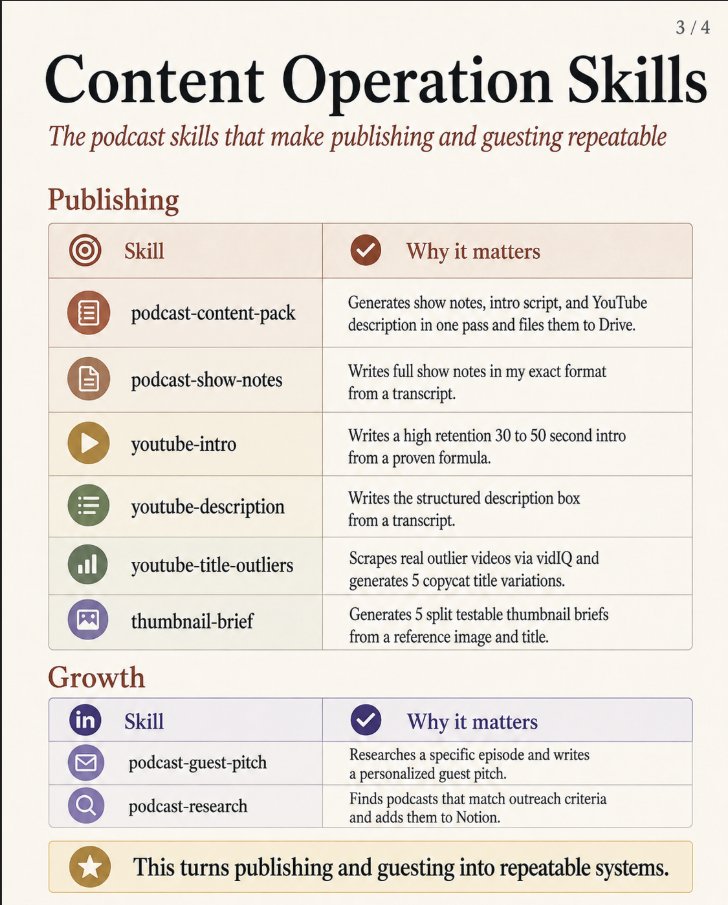
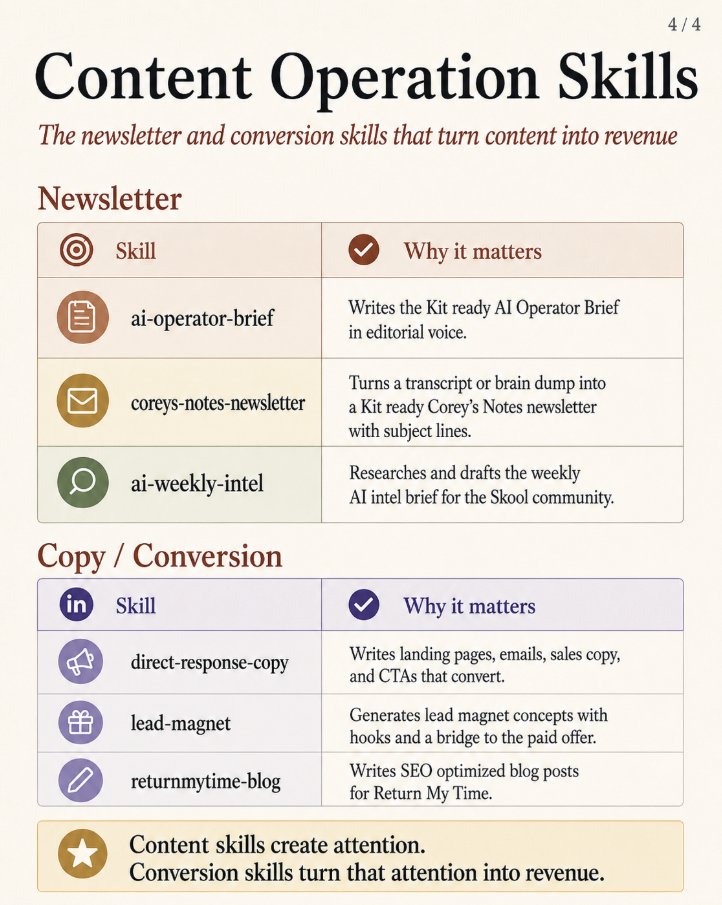
24 Claude skills run my entire content operation. These skills have generated 50M+ impressions, 46K+ followers, and six-figures in revenue in 2026. Here's a breakdown of what each skill does and why it's important: (bookmark this): Foundation brand-voice: Loads my full voice profile, ICP, and content examples so anything I write sounds like me, not generic AI; built so every other skill inherits the same voice instead of re-explaining it each time. positioning-artifact-builder: Turns Voice-of-Customer into a documented ICP, JTBD, and ownable idea; built to be the upstream source of truth so all downstream content says the same sharp thing. personality-adaptive-communication: Adapts tone and structure to how I (or a client) actually want to be communicated with; built so output matches the operator, not a default. LinkedIn linkedin-post-writer: Writes saves-optimized LinkedIn posts trained on my top 90 days of performers; built because LinkedIn rewards bookmark-intent and most posts are forgettable. linkedin-hook-writer: Generates scroll-stopping opening lines from 7 proven formulas across 880 analyzed posts; built because the first line decides whether the post gets read at all. X / Twitter x-article-creation: Writes a 1,500–2,000 word tactical X article with intro and lead-magnet CTA; built because X long-form is now a primary growth engine. qt-writer: Writes quote-tweet copy trained on my top 186 QTs ranked by bookmarks; built because the QT format drives saves and needed its own voice model. qt-orchestrator: Pairs infographic briefs with matching quote-tweet copy in one pass; built so the visual and the words ship together instead of being two disconnected steps. infographic-brief: Generates 3–5 bookmark-worthy GPT Image 2 infographic briefs from a transcript or article; built to turn one piece of long-form into a visual content pack. gpt-image2-prompter: Produces on-brand GPT Image 2 prompts for infographics and lifestyle shots; built so image generation stays on-brand without manual prompt engineering. Podcast podcast-content-pack: Generates show notes, intro script, and YouTube description in one parallel pass and files them to Drive; built to collapse post-production into a single command. podcast-show-notes: Writes full show notes in my exact format from a transcript; built so every episode ships with consistent supporting copy. youtube-intro: Writes high-retention 30–50 second intros from a proven outlier formula; built because the first 40 seconds decide retention. youtube-description: Writes the full structured description box from a transcript; built so the description is never the bottleneck on publishing. youtube-title-outliers: Scrapes real outlier videos via vidIQ and generates 5 copycat title variations; built to base titles on what's actually overperforming, not guesses. thumbnail-brief: Generates 5 split-testable thumbnail briefs from a reference image and title; built so thumbnails are a testable system, not a one-off design. podcast-guest-pitch: Researches a specific episode and writes a personalized guest pitch; built to make the guesting pipeline scalable. podcast-research: Finds podcasts matching outreach criteria and adds them to Notion; built to feed the guesting pipeline with qualified targets. Newsletter ai-operator-brief: Writes the Kit-ready AI Operator Brief for the Return My Time list; built so the weekly brief ships in editorial voice with zero reformatting. coreys-notes-newsletter: Turns a transcript or brain dump into a Kit-ready Corey's Notes newsletter with subject lines; built to repurpose existing audio into list growth. ai-weekly-intel: Researches and drafts the weekly AI intel brief for the Skool community; built to keep the community fed with no-fluff value on a schedule. Copy / Conversion direct-response-copy: Writes landing pages, emails, sales copy, and CTAs that convert; built because persuasive copy is a different muscle than educational content. lead-magnet: Generates lead magnet concepts with hooks and a bridge to the paid offer; built so top-of-funnel ideas connect to revenue, not just list size. returnmytime-blog: Writes SEO-optimized blog posts for Return My Time; built to turn the blog into a passive discovery channel. I recommend starting with the Brand Voice skill. Everything else is built on top of that.
Corey Ganim tweet mediaCorey Ganim tweet mediaCorey Ganim tweet mediaCorey Ganim tweet media
English
8
6
77
2.7K
Ashok Dalabehera retweetledi
Karri Saarinen
Karri Saarinen@karrisaarinen·
What excites me most is how agents and AI are making @linear vision more true: the product building system for modern companies. We’ve spent years building the foundation around context & goals, (customer feedback, docs, projects, issues, initiatives), coordination, and planning. Now soon, we will be extending that to execution: writing code, reviewing code, automating code writing and product management. The product system would be become: - capturing requests and feedback from many channels in to one place, with their full context to understand customer needs and make plans. - agent interface to that shared interface to company context and codebase knowledge to ask questions or task work - orchestrating multiple Linear agents and other agents in that shared environment to to build from the context, or from the problems you see - automatically noticing product gaps, routing problems, triaging, and resolving work as it comes in If you want to work applying AI, agents to the best product orgs in the in the world, we’re hiring across engineering, design, and product. also btw: - Been profitable for years. We have made money, not lost money over the years - Growth accelerating quarter after quarter. - Employee tender offers when possible. DMs open.
Karri Saarinen tweet media
English
7
3
170
25.3K
Ashok Dalabehera retweetledi
Andrej Karpathy
Andrej Karpathy@karpathy·
Personal update: I've joined Anthropic. I think the next few years at the frontier of LLMs will be especially formative. I am very excited to join the team here and get back to R&D. I remain deeply passionate about education and plan to resume my work on it in time.
English
7.6K
10.6K
140.9K
23.7M
Ashok Dalabehera retweetledi
Elon Musk
Elon Musk@elonmusk·
True
English
5.1K
15.9K
118.9K
20.3M
Ashok Dalabehera retweetledi
PolyAI
PolyAI@polyaivoice·
Starting today, we're opening our Agentic Dialog Platform to every enterprise builder. Our dialog agents have resolved 1 billion+ customer conversations for clients like FedEx, Unicredit, PG&E, Marriott, Foot Locker, and many more. These aren't easy conversations. They solve problems like: > A patient booking medical transport who needs insurance verified on the spot. > A homeowner calling their utility company about a gas leak. > A cardholder figuring out why their must-have purchase was declined. Standard conversational AI was never built for this. It was designed for chat, adapted for voice later. It generates responses, but can't do what dialog requires: hold context under pressure, navigate ambiguity in real time, and actually resolve problems. So we built a better model. Our proprietary model Raven was built from the ground up specifically for dialog. Agent harness in the weights, not bolted on through prompts that drift under pressure. And in our platform, you can deploy Raven as your default or bring in GPT-5, Claude, Gemini, whatever model fits your use case or regulatory requirement. Now that the Agentic Dialog Platform is open, any team can create, test, and deploy dialog agents on the same model and infrastructure the world’s top brands trust on their hardest days. This opens up the pool of builders across your entire enterprise. The person who knows customers best, who runs operations, who owns the customer journey: they're all builders now. Two ways to build: > Poly Agent Builder: Describe your use case in natural language, and it configures your agent, knowledge base, and conversation flows automatically. Production-ready in ten minutes. > Agent Development Kit (ADK): Developers use this to build dialog agents the same way they build everything else. Use your own IDE, a coding assistant like Claude, version with Git, deploy from your terminal. Get started now: studio.poly.ai
English
96
106
365
320.4K
Ashok Dalabehera retweetledi
Aakash Gupta
Aakash Gupta@aakashgupta·
PolyAI runs half of Las Vegas, Foot Locker, FedEx, and every Gordon Ramsay restaurant. Now they're going after every website. Your website used to be where customers went when they couldn't reach support. Now it can become support. Most companies already have the raw material. FAQs. Docs. Pricing pages. Product pages. Support articles. But that content is passive. Customers still have to search, click, skim, and hope they find the answer. Poly’s Agentic Builder flips the model. Give it a website, and it turns that existing content into a voice agent customers can actually talk to. No phone tree. No new telephony setup. No "press 4 for billing." The more I look at voice AI, the more I think the wedge isn't replacing the contact center overnight. It's making every high-intent surface conversational. Your website is the obvious first one.
PolyAI@polyaivoice

Starting today, we're opening our Agentic Dialog Platform to every enterprise builder. Our dialog agents have resolved 1 billion+ customer conversations for clients like FedEx, Unicredit, PG&E, Marriott, Foot Locker, and many more. These aren't easy conversations. They solve problems like: > A patient booking medical transport who needs insurance verified on the spot. > A homeowner calling their utility company about a gas leak. > A cardholder figuring out why their must-have purchase was declined. Standard conversational AI was never built for this. It was designed for chat, adapted for voice later. It generates responses, but can't do what dialog requires: hold context under pressure, navigate ambiguity in real time, and actually resolve problems. So we built a better model. Our proprietary model Raven was built from the ground up specifically for dialog. Agent harness in the weights, not bolted on through prompts that drift under pressure. And in our platform, you can deploy Raven as your default or bring in GPT-5, Claude, Gemini, whatever model fits your use case or regulatory requirement. Now that the Agentic Dialog Platform is open, any team can create, test, and deploy dialog agents on the same model and infrastructure the world’s top brands trust on their hardest days. This opens up the pool of builders across your entire enterprise. The person who knows customers best, who runs operations, who owns the customer journey: they're all builders now. Two ways to build: > Poly Agent Builder: Describe your use case in natural language, and it configures your agent, knowledge base, and conversation flows automatically. Production-ready in ten minutes. > Agent Development Kit (ADK): Developers use this to build dialog agents the same way they build everything else. Use your own IDE, a coding assistant like Claude, version with Git, deploy from your terminal. Get started now: studio.poly.ai

English
1
3
13
10.4K
Ashok Dalabehera retweetledi
Claude
Claude@claudeai·
Live from Code with Claude London: we're launching self-hosted sandboxes (public beta) and MCP tunnels (research preview) in Claude Managed Agents. Run agents inside your own perimeter, with your security controls applied by default.
English
375
590
7.3K
2.1M
Ashok Dalabehera retweetledi
Gergely Orosz
Gergely Orosz@GergelyOrosz·
In the situation where two devs argue: both of them learn, and usually come up with a better approach for the team/project/business. Sometimes it's not even X or Y, but a third option. With an LLM, the LLM never learns. It also doesn't push back, so the dev learns nothing from that interaction either
English
13
5
170
16.9K