Sabitlenmiş Tweet
Adam Krell
2.2K posts

Adam Krell
@adamkrell
Abbot of Life Mission Fellowship.
Hammonton, New Jersey, USA Katılım Mart 2009
195 Takip Edilen555 Takipçiler


I think the definitions of the Benedict Option and the Boethius Option tend to be too dichotomous. I also think they are aiming at different things. The Benedict Option, rather than being a “withdrawal," should be understood as embodying a concrete commitment to others in the body of Christ. Whereas the Boethius Option should be understood as a commitment to Christian civilization. These two need not be incompatible.
English

We inhabit an age that earlier centuries could scarcely imagine – a world that has not merely drifted from Christianity but has turned decisively against it.
The modern West, once shaped by the liturgy, the sacraments, and the moral imagination of Christendom, now treats its own inheritance as a superstition to be purged from public life.
Instead, public life is governed by a radically secular creed that tolerates Christianity only when it is silent, private, and politically harmless.
As a result, the Church is increasingly pushed to the margins, its institutions weakened, its symbols mocked, and its moral claims dismissed as relics of an unenlightened past.
We live, unmistakably, in a post‑Christian society, and the hostility is no longer subtle.
The question presses upon us with new urgency: what are we to do, and how should Christians respond when the civilization built by their ancestors no longer recognizes them?
Two answers have emerged in our time – the Benedict Option and the Boethius Option – each founded in a different moment of civilizational crisis, and each offering a distinct vision of Christian fidelity in an age of dissolution.

English
Adam Krell retweetledi

"The debut novel of a Protestant monk, Twin Suns Burning is a haunting fantasy exploring the Christian understanding of death and rebirth. Steeped in Biblical imagery, rich symbolism, and profound mystery, it will resonate with anyone who cherishes the strange and wondrous worlds of Narnia and A Wrinkle in Time."

English
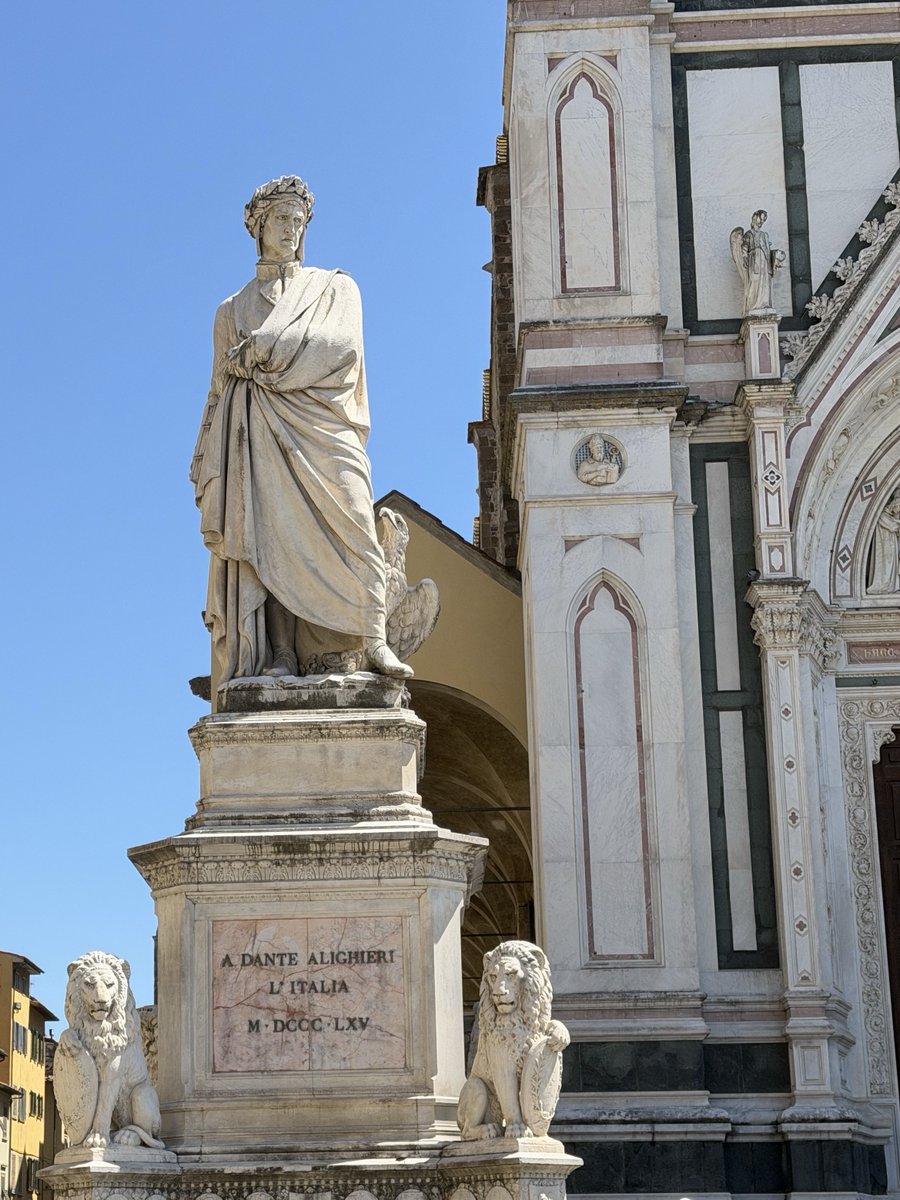
Dante Alighieri, whose Divine Comedy is “widely considered one of the most important poems of the Middle Ages and the greatest literary work in the Italian language,” is greatly honored in Florence, his home city, but was once exiled and therefore lies to rest in Ravenna. This is his statue outside the Basilica of Santa Croce in Florence.

English

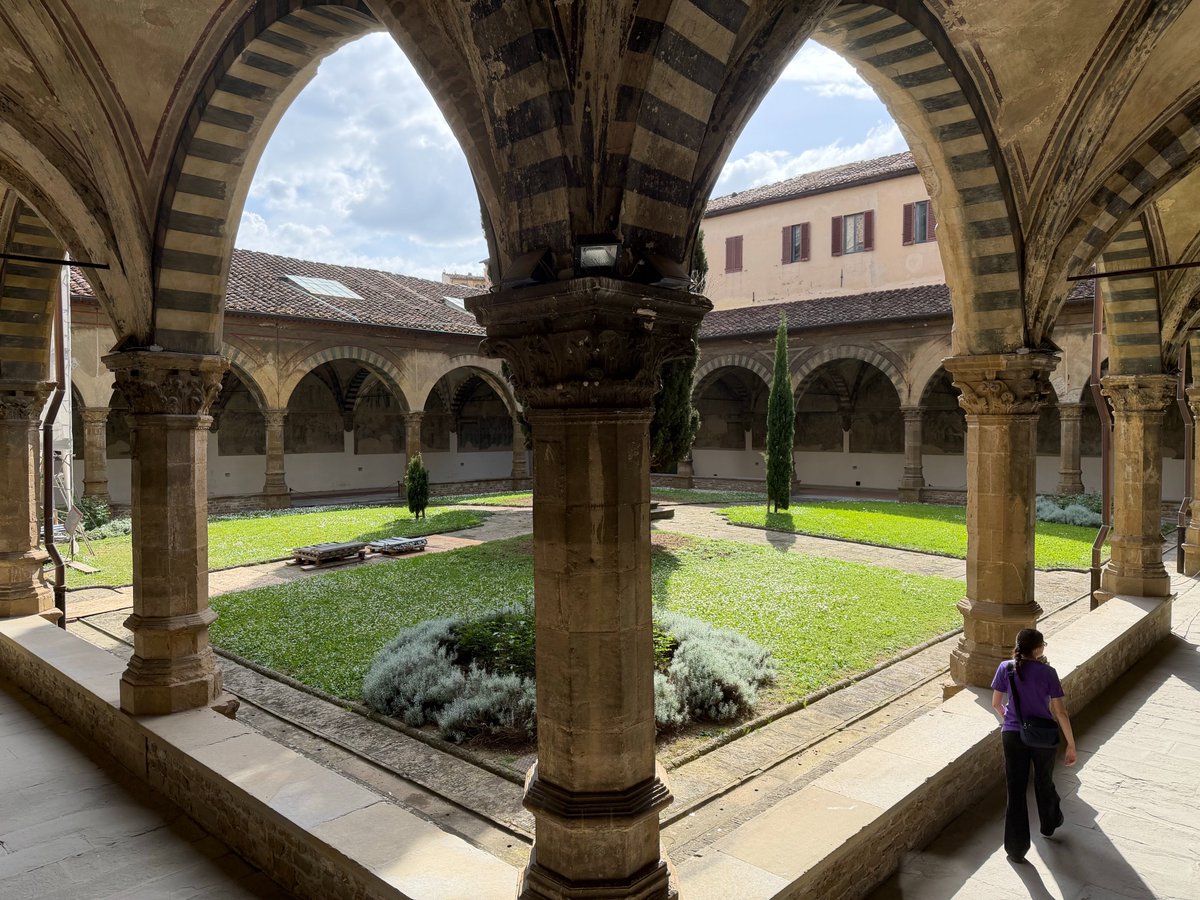
We could do with some modern cloisters - places of meditation and contemplation. This is the Green Cloister at the Basilica of Santa Maria Novella complex in Florence. Built between 1332 and 1350, it is an example of Italian Gothic architecture that bridges the medieval and Renaissance worlds.


English

I was intrigued looking at the 14th-century frescos inspired by Dante Alighieri’s Divine Comedy in the Strozzi di Mantova Chapel in the Basilica of Santa Maria Novella in Florence. Once I learned that these images reflected the somber atmosphere of Florence after the 1348 Black Death plague, which wiped out half of the city’s population, they took on an even deeper meaning.


English

It’s interesting to see what the young Michelangelo, as an apprentice, was exposed to. This is the Cappella Tornabuoni, the sanctuary chapel located directly behind the main altar of the Basilica of Santa Maria Novella. These frescos were painted by Domenico Ghirlandaio and his workshop (where Michelangelo was an apprentice) between 1485 and 1490. They depict the lives of the Virgin Mary and St. John the Baptist. Michelangelo came to dislike this style and went on to focus on idealized, heroic human anatomy.


English

@TheBabylonBee It’s a joke, but it assumes a compatibilist view of freedom: Adam freely chooses, but “circumstances” compel him.
English


The choir stalls in Santa Maria Novella in Florence are the masterpiece of Baccio d’Agnolo, constructed between 1491 and 1496 and later expanded and modified by Giovanni Gargiolli in 1566. Notable panels include depictions of St. John the Baptist, the patron saint of Florence, and St. Lawrence.


English