adım_adım retweetledi
adım_adım
482 posts


adım_adım retweetledi

Any small thing for snap "⌛"
Woo, I don tire😭😭
English
adım_adım retweetledi

adım_adım retweetledi

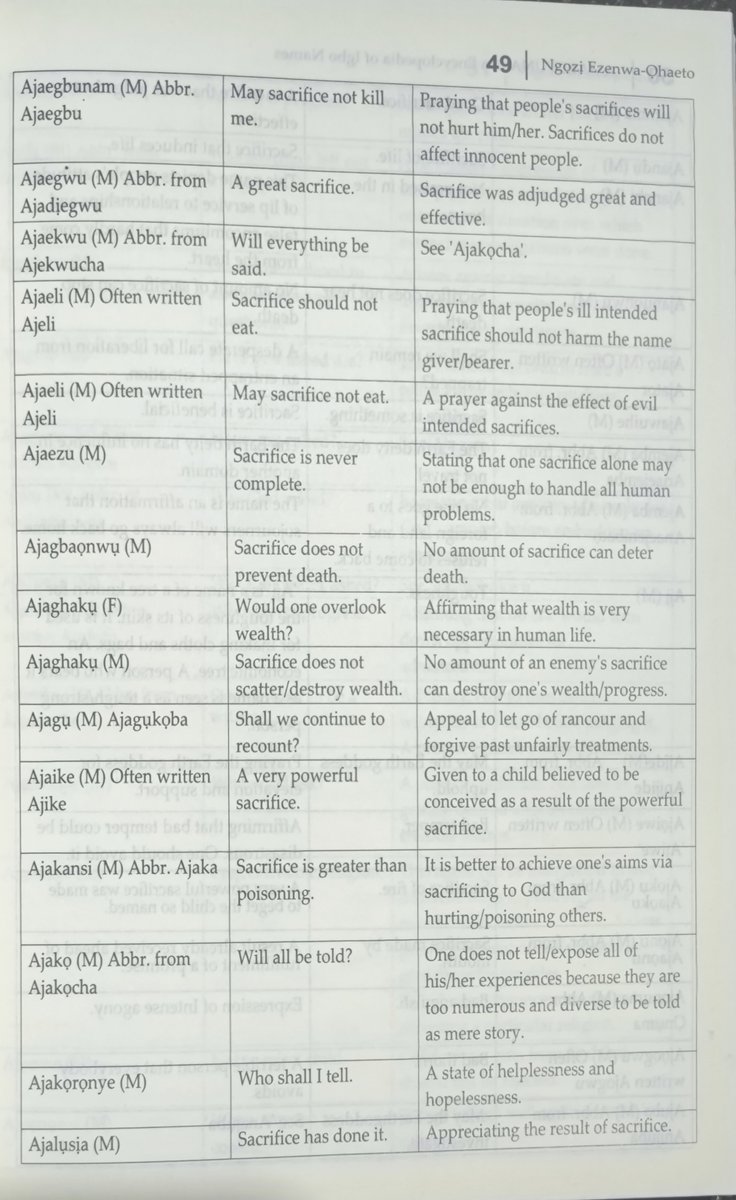
Ngozi Ezenwa-Ohaeto's 433-page encyclopedia of Igbo Names is titled, Afamefuna. As the book explains on page 33, 'Afamefuna (Afam)' is a male name that means 'May I not lose my name'. 'It is a prayer for a lasting linage which is often assured by having male children.'
I have a habit of asking people - at a first meeting - the meaning and ancestry of their names. That habit has enriched my education greatly, although I have also suffered some blowback: a Somali lady once rebuked me, thinking that I was trying to identify her clan in order to pigeonhole and discriminate against her.🤷
Books like Afamefuna might reduce my rudeness some, though I find that my curiosity brings insight. Years ago, I asked my friend, Amulo, about his unique name. Turns out it was short for Amulonaiweagwusia (We're all smiles now, right? But I'm still angry with you). Turns out that at the birth of her firstborn son his mum had been irritated by the celebration of the same neighbours who had mocked her throughout her years of barrenness.
So, she gave him a name that would rebuke those neighours every time they called him.
By the way, 'Amulo' is not in the encyclopedia. Neither is that memorable name, Uwachommadu (The world needs a real person), about which I have written previously. But in the last two pages of the book the author lists some names whose meaning she is still seeking for future edition. Cultural preservation is always a communal project.
I find that the ancestors packed a long more baggage into the names they gave their children. Modern couples are more likely to pick a name for how it sounds. I reckon corporate-sounding names will find more takers today. For the ancestors, names were often short stories and histories, entrancing nuggets for writers to sink their imaginations into.
The schism in naming styles and religious beliefs between past and present generations of Igbo families means that large tranches of Igbo names have slipped and are slipping into oblivion. There are not likely to be many Ogbenyeanus (A pauper should not marry me) in Gen Zee and Gen Alpha. There is probably less variety in Igbo names today than at any time in history. This validates Prof. Ezenwa-Ohaeto's book. Afamefuna should make namings a more thoughtful exercise, with a lot more choices for new parents.
I could say a lot more on the philosophy, sociology and gendering of names, or open up some of those short stories and histories concatenated into some deeper Igbo names but, no... don't get me started on names tonight!



English
adım_adım retweetledi

I feel sorry for Netflix era kids. They will never know the high stakes adrenaline of running to the bathroom/fridge/bedroom in a single ad break, with the beckoning call of a sibling screaming “It’s ONNNNNN” to send you hurdling over furniture to get back in time.
English
adım_adım retweetledi

adım_adım retweetledi

adım_adım retweetledi

adım_adım retweetledi

adım_adım retweetledi

Sometimes i see a text and not reply because I know I don't have the attention span required for the upcoming conversation
English
adım_adım retweetledi
I envy people that calmly talk oo
Omo my voice loud eh😂😂any small thing them don ask me why are you now shouting 😂😭
English
adım_adım retweetledi
adım_adım retweetledi

adım_adım retweetledi

adım_adım retweetledi

On the Issue of Changing Surnames After MarriageI find it unnecessary to pick issues with a woman simply because she refuses to change her surname. Here are a few reasons why name changes can be messy, unreasonable, and often unnecessary.
In the olden days, women were largely seen as property, traded for money, position, or alliances. They had nothing in their own names: no school certificates, no property documents, no bank accounts. Transitioning from "nothing" to a husband's name was straightforward. Women today, however, are going to school, buying land, building houses, investing in stocks, opening businesses, acquiring cars, and making major financial moves all documented under their names. Demanding that such a person turns her entire life upside down just to fit a tradition is unfair.
Second, the Nigerian system is already bureaucratic and frustrating. Updating documents after a name change is rigorous, time-consuming, and often incomplete. Many records simply never get updated properly.
Third, ancestry and identity: A good number of us cannot trace our grandmothers' lineages because their surnames disappeared into their husbands' families. Demanding a surname change is asking someone to alter a core part of their identity , effectively transferring them from one family system to another. It's a big ask. Many girls our parents went to school with are now "nowhere to be found" in records because their surnames changed.Besides that,the Nigerian Constitution doesn't demand a woman to change her name.
In summary: Women can choose to change their surnames. The problem arises when it is demanded. It is not a husband's right. It is not something you are owed. It is her autonomy. Respect her choice whether she keeps her name, changes it fully, or hyphenates. You don't get to demand her autonomy.
Thank you for reading.
English
adım_adım retweetledi

people who r excited for a potential lockdown r so weird 2 me. why would u wanna experience that shit again? the lockdown genuinely changed how humans interact wit one another & themselves.
English
adım_adım retweetledi
Social media has convinced an entire generation that ordinary human behavior requires a diagnostic label.
This isn't healthy.
Sophia ❣️@KeruboSk
Does anyone else with ADHD have a “wear again” pile? Like clothes you wore out for a bit, not long enough to be dirty, but not clean enough to put back, so they just live in a nearby pile for “later”… or is it just me?
English
adım_adım retweetledi

idk how to verbalise this but I hate being pursued with romantic intent, especially when motivated by physical attraction. let’s be friends and allow romantic confusion to brew like some middle schooler with a crush, the way God intended true love to be.
English
adım_adım retweetledi