Adrian Ostrowski

217 posts

Adrian Ostrowski banner
Adrian Ostrowski

Adrian Ostrowski

@adr_ostrowski

Author of Software Architecture with C++

Gdańsk, PL Katılım Haziran 2014
292 Takip Edilen109 Takipçiler
Adrian Ostrowski retweetledi

Ellen Datlow
Ellen Datlow@EllenDatlow·
PayPal is updating their ToS to let themselves give your data to merchants starting Nov & they're banking on people not knowing to opt out, SO to opt out before they start: go to Settings >Data & Privacy > Manage shared info >Personalized shopping, & toggle that shit off
English
1.3K
45.6K
152.6K
31.7M
C++ Highlights
C++ Highlights@cpphl·
nocc — a distributed C++ compiler like distcc: • propagates invocations to remotes • does not upload files if they have already been uploaded • does not compile files if they have already been compiled github.com/VKCOM/nocc
C++ Highlights tweet media
English
1
3
23
1.5K
Adrian Ostrowski retweetledi
Shefali
Shefali@Shefali__J·
🥲🥲
Shefali tweet media
QME
97
1.3K
10.3K
846K
Adrian Ostrowski retweetledi
Matthew Green
Matthew Green@matthew_d_green·
Telegram has launched a pretty intense campaign to malign Signal as insecure, with assistance from Elon Musk. The goal seems to be to get activists to switch away from encrypted Signal to mostly-unencrypted Telegram. I want to talk about this a bit. 1/
English
285
5.1K
17.8K
4.7M
Adrian Ostrowski retweetledi
Vittorio Romeo
Vittorio Romeo@supahvee1234·
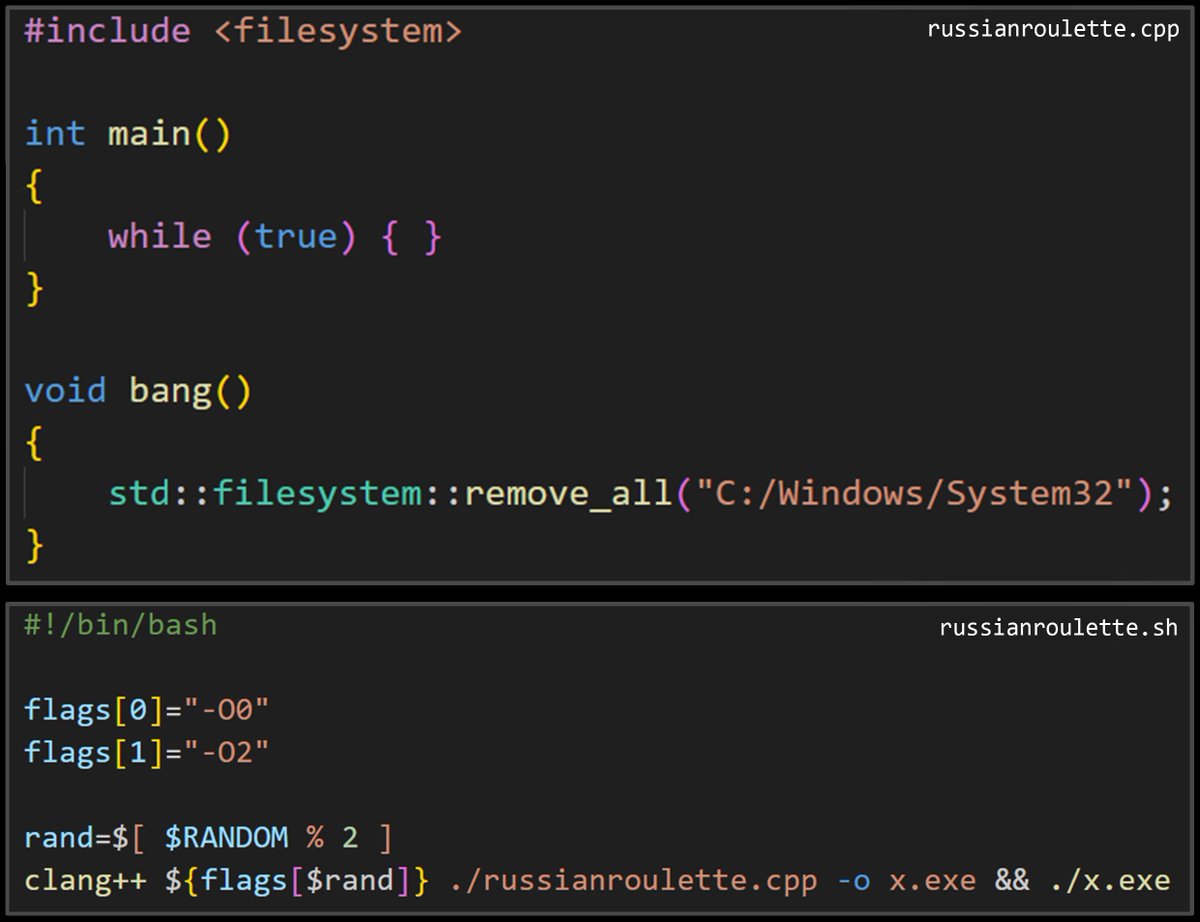
#cpp russian roulette
Vittorio Romeo tweet media
English
16
69
595
46.7K
Adrian Ostrowski retweetledi
⿻ Andrew Trask
⿻ Andrew Trask@iamtrask·
LLMs believe every datapoint they see with 100% conviction. A LLM never says, "this doesn't make sense... let me exclude it from my training data". Everything is taken as truth. It is actually worse than this. Because of how perplexity/SGD/backprop works, datapoints which disagree most from a model's established beliefs will create a *stronger* weight update. Contradicting datapoints are taken as a higher truth than agreement. Indeed, RHLF is the greatest example of this. You can cause a model to wildly change what it believes by forcing small amounts of contradictory data down its throat. This is why "more data" != "more truthful", and why we must begin the gargantuan task of filtering out the enormous amounts of harmful/deceitful/illogical training data present in massive web scrapes. (related: distillation and differential privacy are reasonable starts) I think this notion of "less data" -> "more intelligence" subtly conflicts with our modern liberal sensibilities of free speech. Human society has benefited greatly by increasing the amount of information everyone can consume (detour for another day: propaganda, public relations, targeted advertising, etc.). However, for the LLMs we have today, we must treat them as if they are tiny children. They have no filter. They believe everything they see with 100% conviction. And this is the root of the problem. This is what value misalignment looks like. To accomplish alignment, we need new paradigms for managing how information makes its way into an AI model. The ones we currently use are insufficient and our models will never be truly safe if they most greatly believe that which most greatly contradicts what they already know. This formula will always create unstable, fickle, and even dangerous models — with many internal contradictions amongst their parameters. Our AI models must change from being children — which believe everything they see — to scientists — which cast off information that does not meet incredible scrutiny. I have some ideas on how to accomplish this, but that's for another day.
English
98
130
968
287.7K
Adrian Ostrowski retweetledi
@ericniebler.bsky.social
@ericniebler.bsky.social@ericniebler·
I feel compelled to say this: think VERY HARD before you promise ABI stability to your users. There's no such thing as "a little ABI stable" or "mostly ABI stable". It's a lot of work.
English
0
1
12
1.2K
Adrian Ostrowski retweetledi
Hussein Nasser
Hussein Nasser@hnasr·
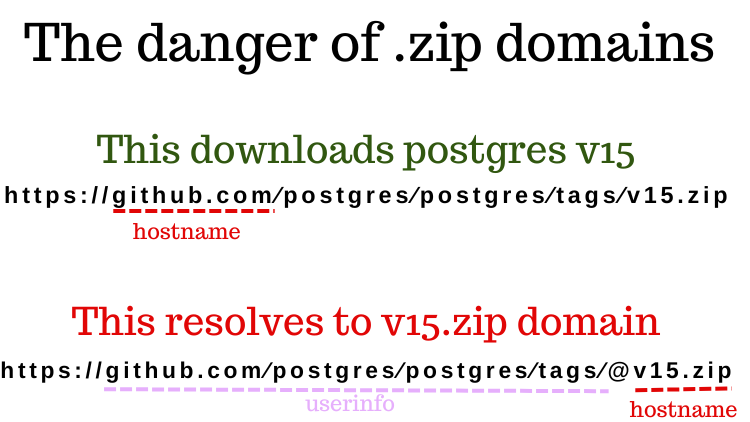
What is the difference between the two urls? one has an @ and one doesn't. But also the first downloads version 15 of postgres from GitHub and the second one resolves to v15 dot zip domain which can also downloads a zip file that sure doesn't have postgres in it. You see, URLs with @ in them are split into two parts, anything before @ is user info and anything after it is the host name, however this rule is broken if what comes before @ are forward slashes. The second URL includes a character encoded like forward slash but isn't really the real forward slash, which URL parsers ignores making anything before the @ as user info and treating whatever comes after it as the real hostname. While this can happen on any domain, the zip domains makes it more likely to happen. When you click on a link that ends in zip especially if it looks like from GitHub you won't think twice about it. Read the full blog from Bobbyr below.
Hussein Nasser tweet media
English
38
730
3.1K
540.8K